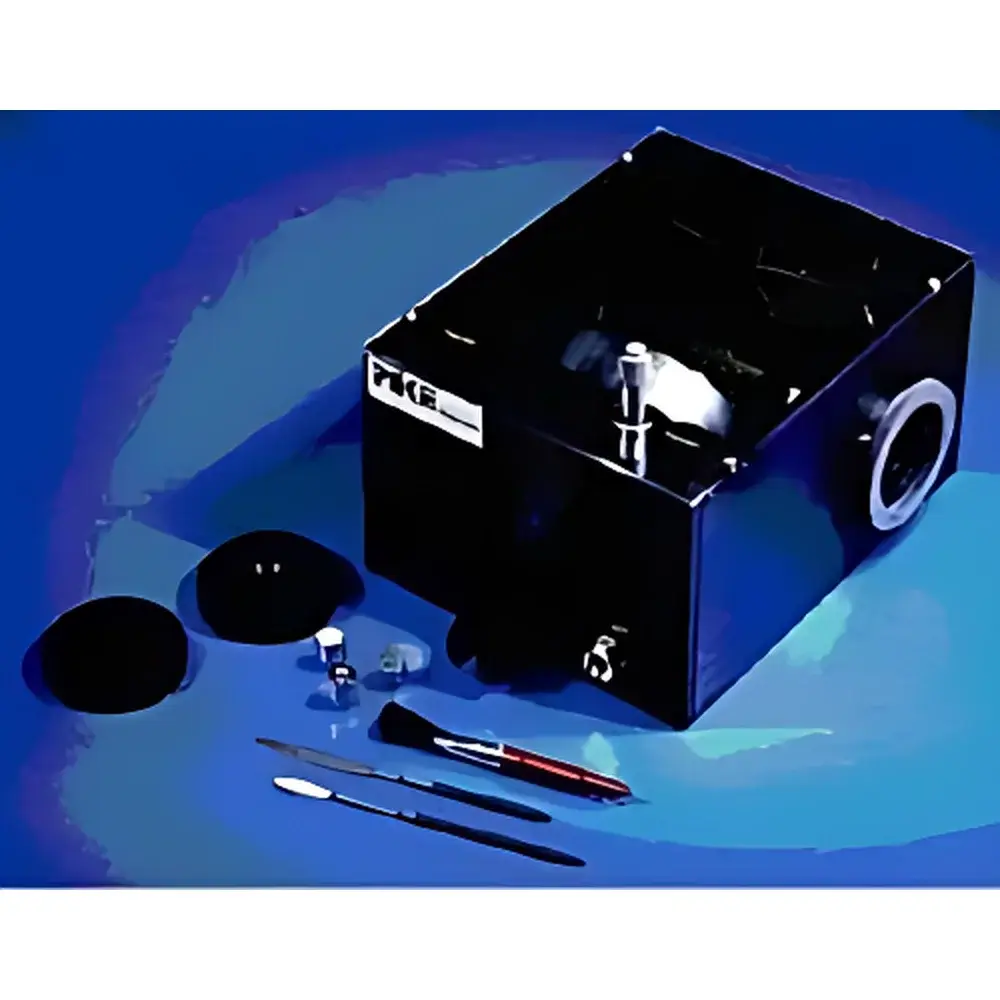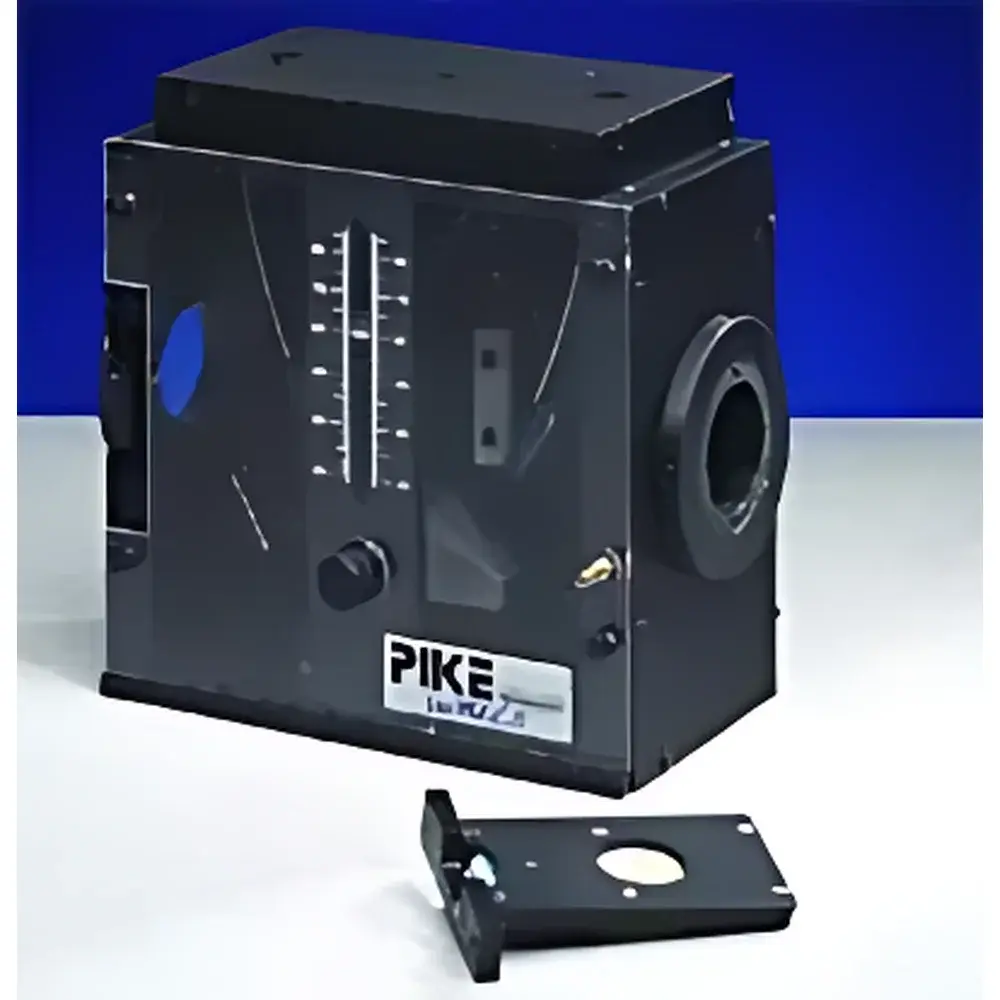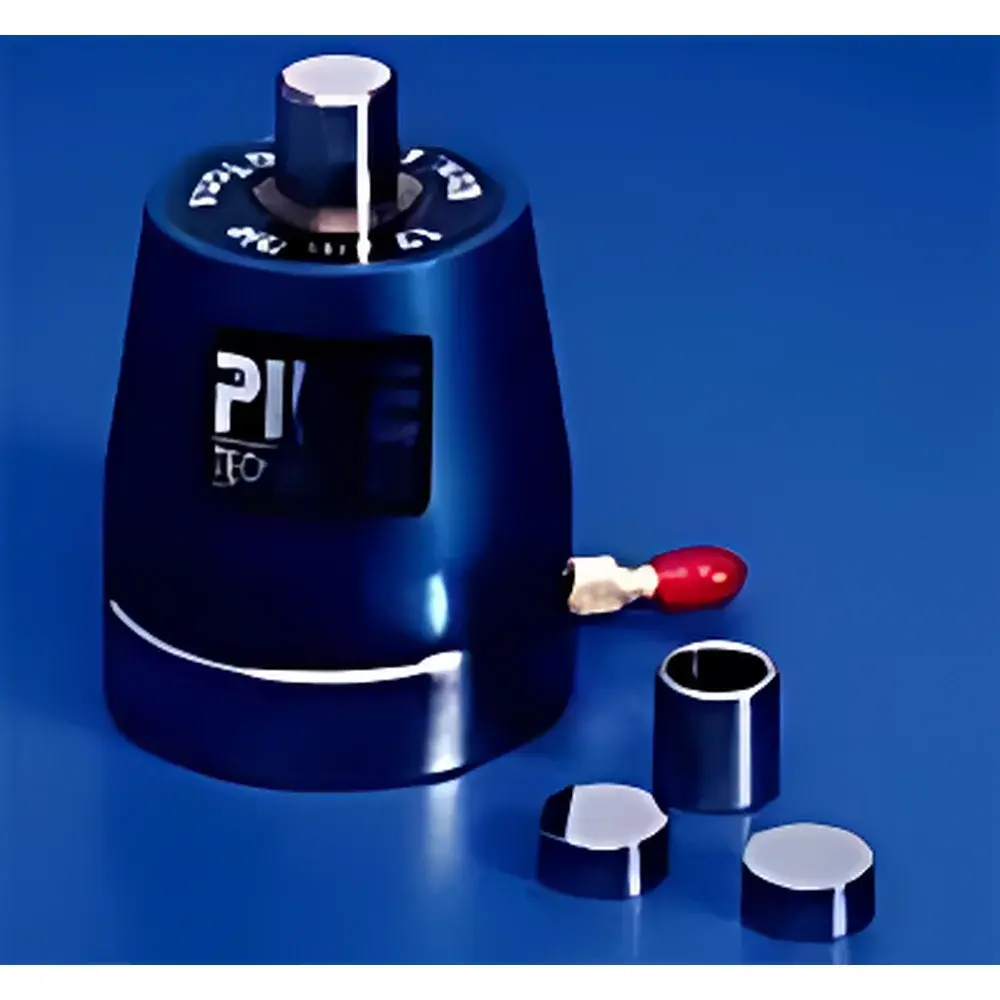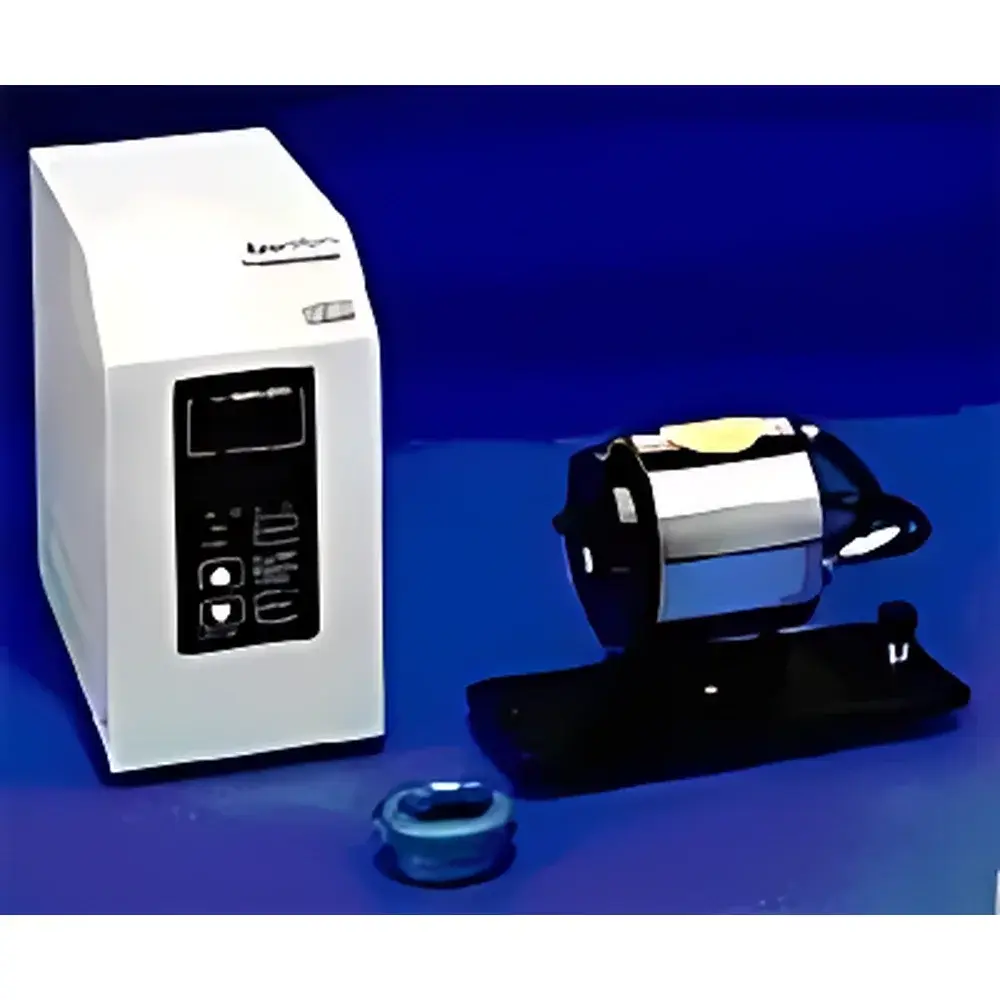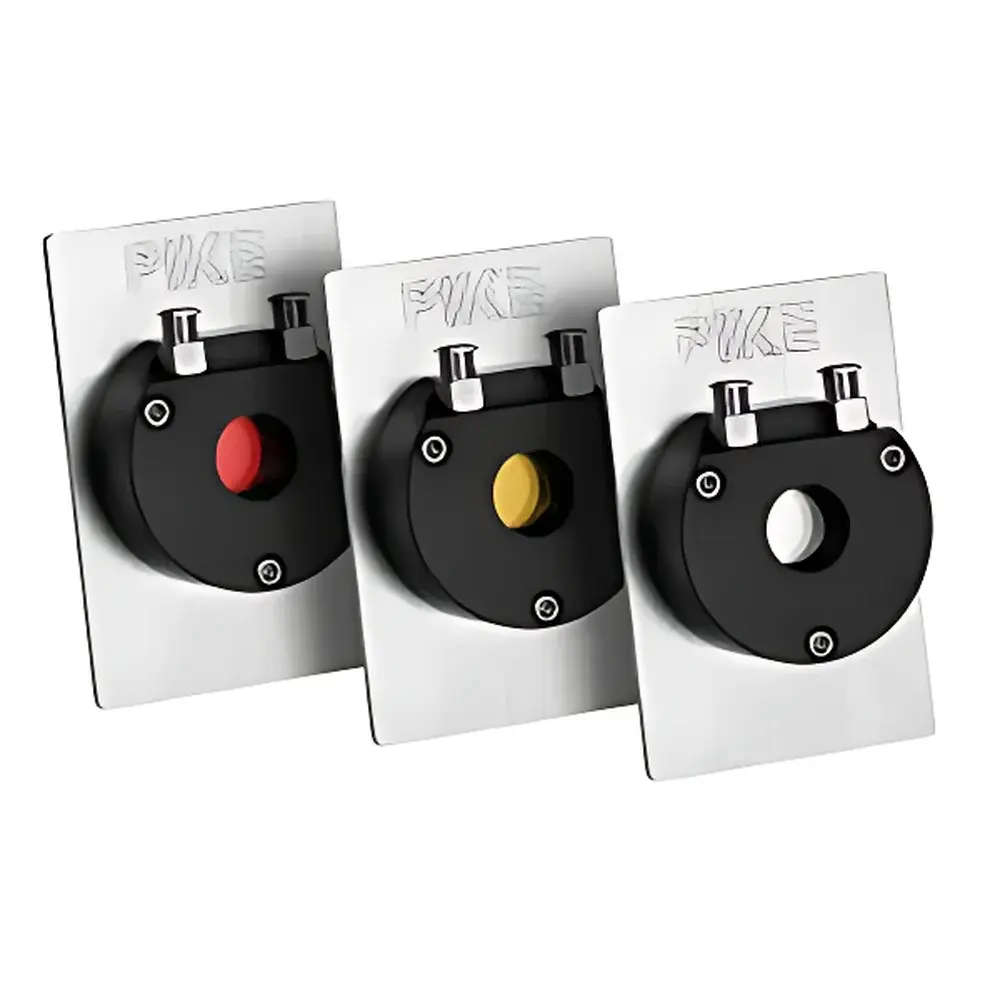
Pike Liquid Cell for FTIR Spectroscopy

| Brand | Pike |
|---|---|
| Origin | USA |
| Manufacturer Type | Authorized Distributor |
| Origin Category | Imported |
| Model | LiquidCell |
| Price Range | USD 0–9,999 |
| Window Materials | KBr, CaF₂, BaF₂, ZnSe, ZnS, SiO₂ |
| Pathlength Options | 0.015, 0.025, 0.05, 0.10, 0.15, 0.20, 0.50, 1.0, 5.0, 10.0 mm |
Ask about pricing, availability and specifications.
Overview
The Pike Liquid Cell is a precision-engineered transmission accessory designed for Fourier Transform Infrared (FTIR) spectroscopy applications requiring quantitative and qualitative analysis of liquid-phase samples. Built on the principles of Beer–Lambert law-based absorbance measurement, this cell enables controlled optical pathlength selection to optimize signal-to-noise ratio and avoid saturation in strongly absorbing regions. Its modular, O-ring-sealed design ensures leak-tight operation with minimal sample volume requirements—critical for precious or hazardous analytes. Manufactured in the United States under stringent quality control protocols, the cell integrates seamlessly with standard FTIR spectrometers equipped with diamond-turned sample compartments and standard beam geometry (e.g., 25 mm circular aperture). The absence of internal reflective surfaces eliminates stray light artifacts, preserving spectral fidelity across the mid-IR range (4000–400 cm⁻¹), depending on window material selection.
Key Features
- Interchangeable window materials—including KBr (hygroscopic, broad mid-IR transmission), CaF₂ (low dispersion, moisture-resistant), BaF₂ (extended UV–IR range), ZnSe (high durability, ideal for aggressive solvents), ZnS (robust thermal stability), and fused silica (SiO₂, optimal for near-IR compatibility)—allow customization for spectral range, chemical resistance, and environmental conditions.
- Precision-machined stainless steel body with electropolished interior surfaces minimizes adsorption and facilitates rapid solvent rinsing between analyses.
- Adjustable, micrometer-controlled spacer system enables repeatable pathlength selection from 15 µm to 10 mm in discrete increments, supporting both trace-level detection (e.g., aqueous electrolyte monitoring) and bulk solution characterization (e.g., polymer melt studies).
- RoHS-compliant construction ensures conformance with EU Directive 2011/65/EU, eliminating restricted substances such as lead, cadmium, mercury, and hexavalent chromium—essential for laboratories operating under ISO/IEC 17025 or GLP-regulated environments.
- Compatible with standard FTIR sample holders (e.g., Pike’s “Quick-Change” mounting interface) and supports optional accessories including temperature-controlled jackets (−20 °C to +150 °C) and gas-purged housings for moisture-sensitive measurements.
Sample Compatibility & Compliance
The Pike Liquid Cell accommodates a wide range of liquid matrices: polar solvents (water, methanol, DMSO), nonpolar hydrocarbons (hexane, toluene), ionic liquids, biological buffers, and viscous solutions (e.g., glycerol, polymer melts). Compatibility is governed by window material selection and operational pathlength; for example, KBr windows are unsuitable for aqueous samples unless sealed under inert atmosphere, whereas ZnSe provides stable performance in water-containing systems up to pH 7. All configurations meet ASTM E1421–22 standards for infrared spectral data acquisition and reporting. Documentation packages include material certifications (e.g., ISO 9001 traceability for machining), RoHS Declaration of Conformity, and compliance statements aligned with FDA 21 CFR Part 11 when used within validated analytical workflows.
Software & Data Management
While the Liquid Cell itself is a passive optical component, it interfaces directly with industry-standard FTIR software platforms—including Thermo OMNIC, Bruker OPUS, and Agilent Resolutions Pro—enabling automated pathlength-aware baseline correction, concentration calibration via built-in Beer–Lambert calculators, and spectral subtraction routines. When integrated into LIMS or ELN environments, metadata (e.g., selected pathlength, window type, date/time stamp) can be exported in .csv or .xml formats for audit-ready recordkeeping. Optional digital calipers and NIST-traceable pathlength verification kits support periodic verification per ISO/IEC 17025 Clause 6.4.10.
Applications
- In-process monitoring of chemical reactions in real time (e.g., esterification kinetics, hydrolysis rates)
- Quantitative analysis of dissolved species in environmental water testing (e.g., nitrate, phosphate, organic contaminants)
- Structural characterization of biomolecules in native solution states (e.g., protein secondary structure via amide I/II bands)
- Quality control of pharmaceutical excipients and active ingredients in liquid dosage forms
- Electrolyte composition analysis in battery R&D (e.g., LiPF₆ decomposition products in carbonate blends)
- Corrosion inhibitor evaluation in industrial cooling fluids
FAQ
What pathlength should I select for aqueous samples?
For most aqueous solutions, 50 µm (0.05 mm) or 100 µm (0.10 mm) pathlengths provide optimal transmittance in the 1800–1500 cm⁻¹ region; thicker cells (>0.5 mm) require deuterium oxide (D₂O) substitution or spectral subtraction to mitigate strong H₂O absorption.
Can the cell be used with aggressive solvents like chloroform or THF?
Yes—ZnSe or CaF₂ windows are recommended for compatibility; avoid KBr or NaCl windows due to dissolution risk.
Is temperature control available?
Yes—Pike offers Peltier-cooled and circulating fluid jacket options (sold separately) with ±0.1 °C stability over −20 °C to +150 °C ranges.
How often should pathlength calibration be performed?
Per ISO/IEC 17025, verify pathlength accuracy before each analytical campaign or daily for regulated QC work using NIST-traceable interferometric gauges.
Does the cell support automated sampling?
It is compatible with autosampler manifolds (e.g., Harrick Q-MAT or Pike AutoFlow) when configured with threaded inlet/outlet ports and pressure-rated seals.