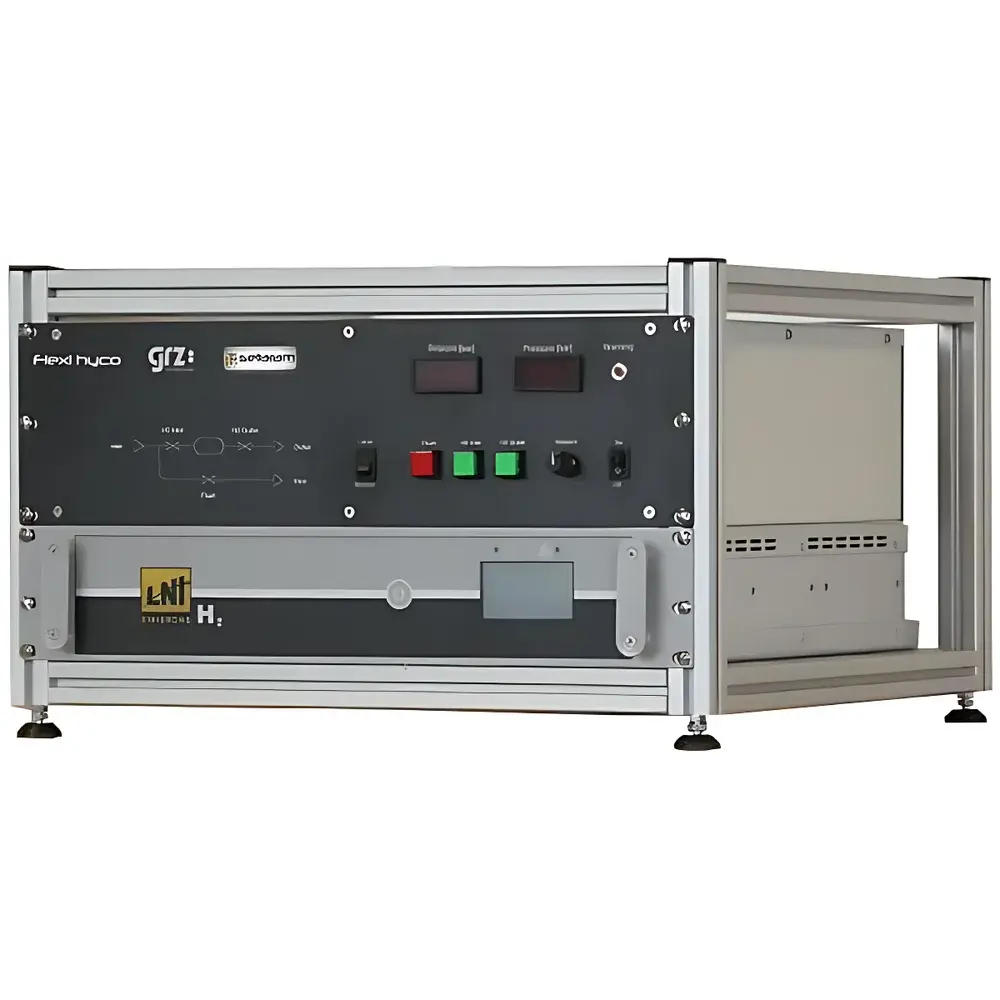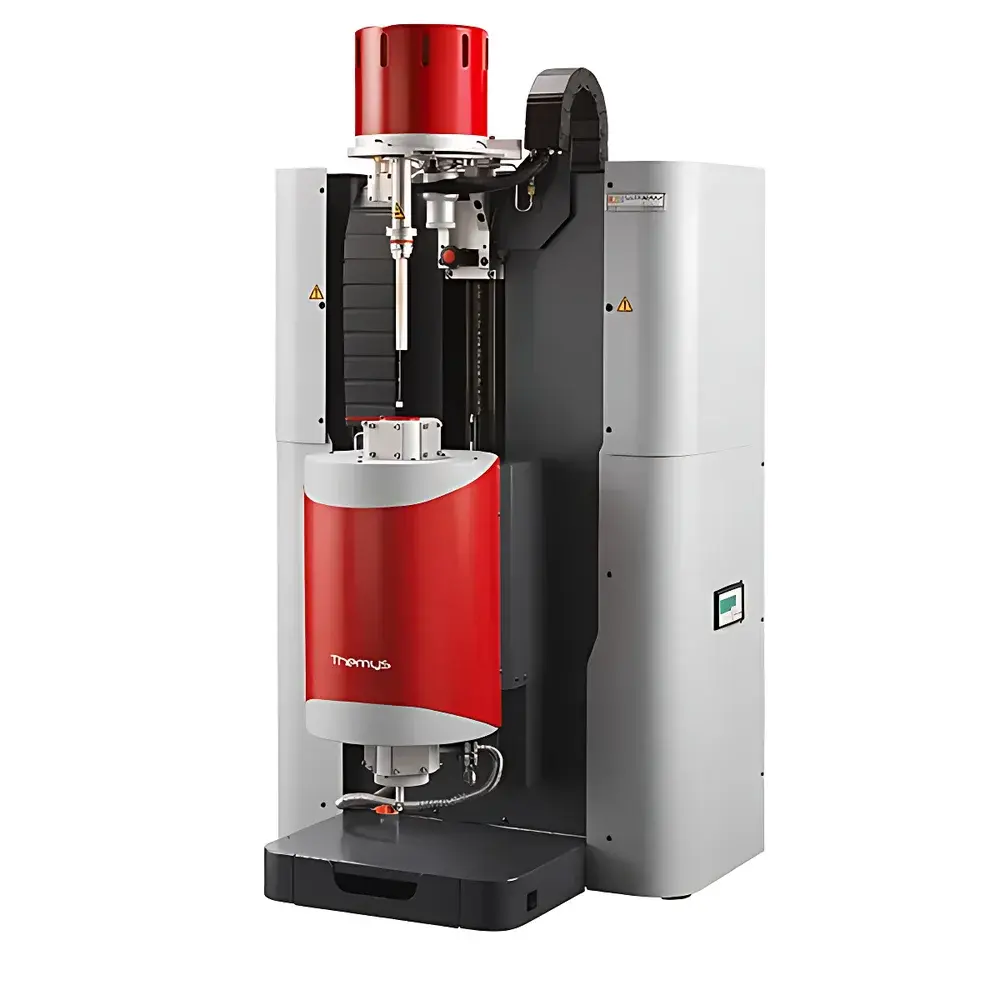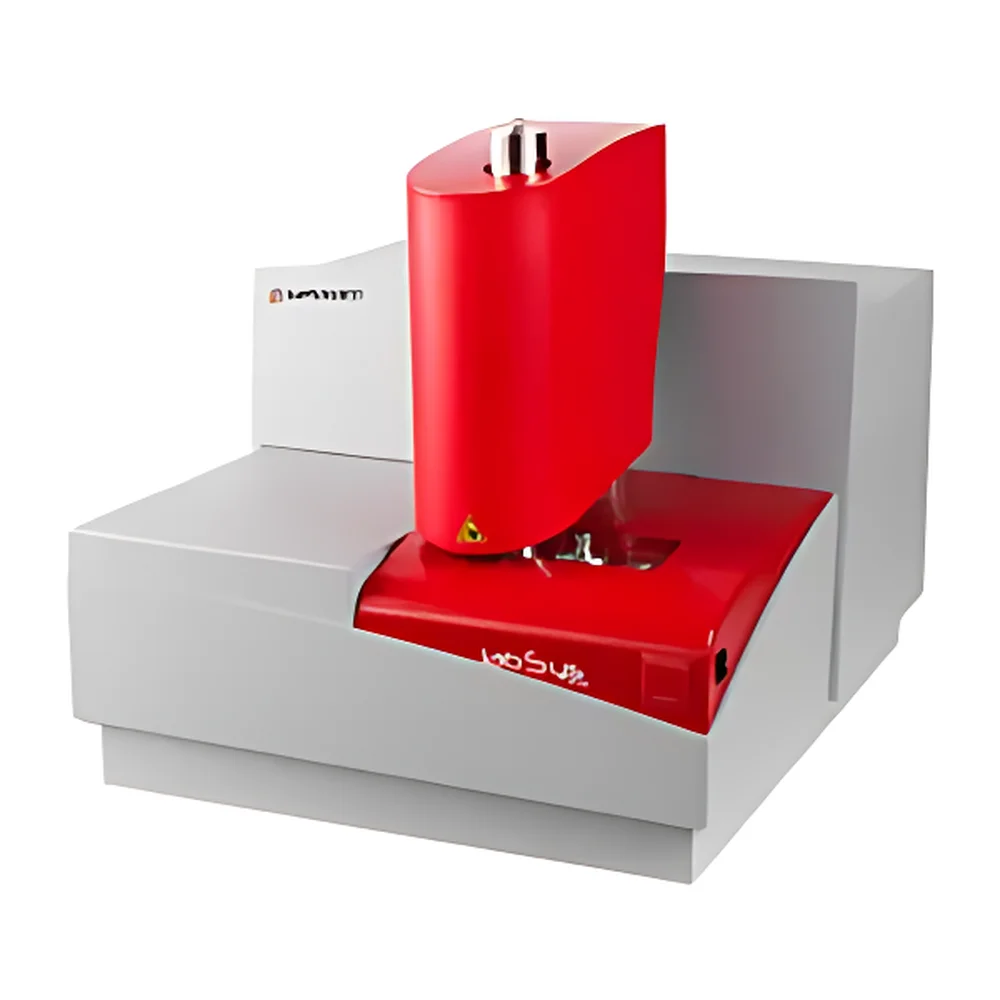
Setaram Labsys Evo STA Simultaneous Thermal Analyzer

| Brand | Setaram |
|---|---|
| Origin | France |
| Model | Evo STA |
| Temperature Range | Ambient to 1600 °C (single furnace) |
| Heating/Cooling Rate | 0.01–100 K/min |
| Balance Capacity | 20 g |
| Balance Resolution | 0.02 µg |
| DSC Sensitivity | 0.4 µW (sensor-dependent) |
| Cp Accuracy | <2% error |
| Atmosphere Control | Inert, oxidative, reductive, static, dynamic, vacuum |
| Gas Channels | 3 carrier + 1 auxiliary/reactive gas, MFC-controlled |
| Sample Capacity | Up to 25 positions (with optional ASC) |
| EGA Compatibility | MS, FT-IR, GC |
| Cooling | Integrated water-cooled circulation system |
| Software | CALISTO v5.x (GLP/GMP-compliant, 21 CFR Part 11 ready) |
Ask about pricing, availability and specifications.
Overview
The Setaram Labsys Evo STA is a high-precision simultaneous thermal analyzer engineered for concurrent measurement of thermogravimetric (TG), differential thermal analysis (DTA), and differential scanning calorimetry (DSC) signals under controlled atmospheric conditions. Based on the classic vertical microbalance architecture and Couette-type furnace design, the Evo STA employs a dual-sensor configuration—integrating a high-stability quartz suspension balance with a proprietary 3D Calvet-type Cp sensor—to deliver synchronized mass change, heat flow, and specific heat capacity data in a single run. Its operating temperature range spans from ambient to 1600 °C using a single-zone metal furnace with a certified isothermal zone ≥25 mm in length, enabling reproducible kinetic studies, phase transition characterization, decomposition pathway analysis, and material stability assessment across academic, industrial R&D, and quality control environments.
Key Features
- Vertical sample loading configuration ensures optimal buoyancy compensation and minimizes convection-induced artifacts during high-temperature TG measurements.
- Patented 3D Calvet sensor architecture provides direct, absolute Cp measurement with ≤2% systematic error—validated against NIST-traceable standards—and eliminates reliance on separate reference calibration runs.
- Modular probe system supports field-swappable sensor cartridges: TG-only, TG-DSC, and TG-DTA configurations—each pre-aligned and factory-calibrated for rapid experimental reconfiguration without realignment or recalibration.
- Multi-gas atmosphere management with three independently controlled carrier gas lines and one auxiliary reactive gas line, all regulated by digital mass flow controllers (MFCs) with ±0.5% full-scale accuracy and programmable ramped mixing ratios.
- Integrated water-cooled recirculation unit maintains stable thermal gradients across the balance and furnace housing, eliminating need for external chillers or bath-based cooling solutions.
- Optional Automated Sample Changer (ASC) accommodates up to 25 crucibles (standard Pt, Al₂O₃, or custom geometries), supporting unattended multi-sample screening with thermal history logging per position.
Sample Compatibility & Compliance
The Evo STA accepts standard crucible formats (e.g., Pt, Al₂O₃, graphite, silica) with maximum sample mass up to 20 g and resolution down to 0.02 µg. It complies with ASTM E1131 (Cp determination), ASTM E1858 (kinetic analysis), ISO 11357 (DSC), and ISO 7111 (TG). The system’s hardware and CALISTO software support audit trail generation, electronic signatures, and secure user role management—fully aligned with FDA 21 CFR Part 11 requirements for regulated laboratories. All gas delivery components meet ISO 8573-1 Class 2 purity specifications, and vacuum-rated furnace seals enable operation down to 10⁻³ mbar.
Software & Data Management
CALISTO v5.x serves as the unified control, acquisition, and analysis platform. It features real-time multi-channel visualization, automated baseline correction, peak deconvolution via Gaussian-Lorentzian fitting, and kinetic modeling modules (e.g., Kissinger, Ozawa-Flynn-Wall, Friedman). Raw data are stored in vendor-neutral HDF5 format with embedded metadata (instrument ID, operator, method version, timestamp, gas composition logs). Export options include CSV, ASCII, and ASTM E1970-compliant XML for LIMS integration. Audit trails record every parameter change, method execution, and report generation event—with immutable timestamps and user attribution.
Applications
- Thermal stability evaluation of battery cathode/anode materials under inert and air atmospheres.
- Decomposition kinetics of pharmaceutical polymorphs and excipients per ICH Q1E guidelines.
- Oxidation onset temperature and enthalpy quantification in metallic alloys and composites.
- Specific heat capacity mapping of ceramics and refractory materials across wide temperature ranges.
- EGA-coupled studies: real-time identification of evolved gases (e.g., H₂O, CO₂, SO₂, NH₃) via synchronized MS or FT-IR output during polymer pyrolysis or catalyst regeneration cycles.
- Educational use: standardized experiments for undergraduate thermodynamics and materials science labs—including TGA-DSC correlation exercises and Cp vs. temperature curve construction.
FAQ
What is the maximum operating temperature for the single-furnace configuration?
The Evo STA achieves a maximum temperature of 1600 °C in its standard single-zone metal furnace, with a certified uniformity zone of ≥25 mm at 1500 °C.
Can the system perform specific heat (Cp) measurements without external calibration standards?
Yes—the integrated 3D Calvet sensor enables absolute Cp determination using only the sample’s geometric and thermal properties; no reference material is required for routine measurements.
Is the CALISTO software compliant with 21 CFR Part 11 for regulated environments?
Yes—CALISTO v5.x includes electronic signature capability, audit trail logging, and role-based access control, meeting core technical requirements of 21 CFR Part 11 and supporting GLP/GMP validation protocols.
How many gas lines can be actively controlled during a single experiment?
Four independent gas channels are available: three programmable carrier gas lines and one dedicated auxiliary/reactive gas line, each with MFC-based flow regulation and mixing capability.
Does the system support coupling to external analytical instruments?
Yes—standardized heated transfer lines (up to 300 °C) and pressure-regulated EGA ports enable seamless hyphenation with quadrupole mass spectrometers (MS), Fourier-transform infrared spectrometers (FT-IR), and gas chromatographs (GC).