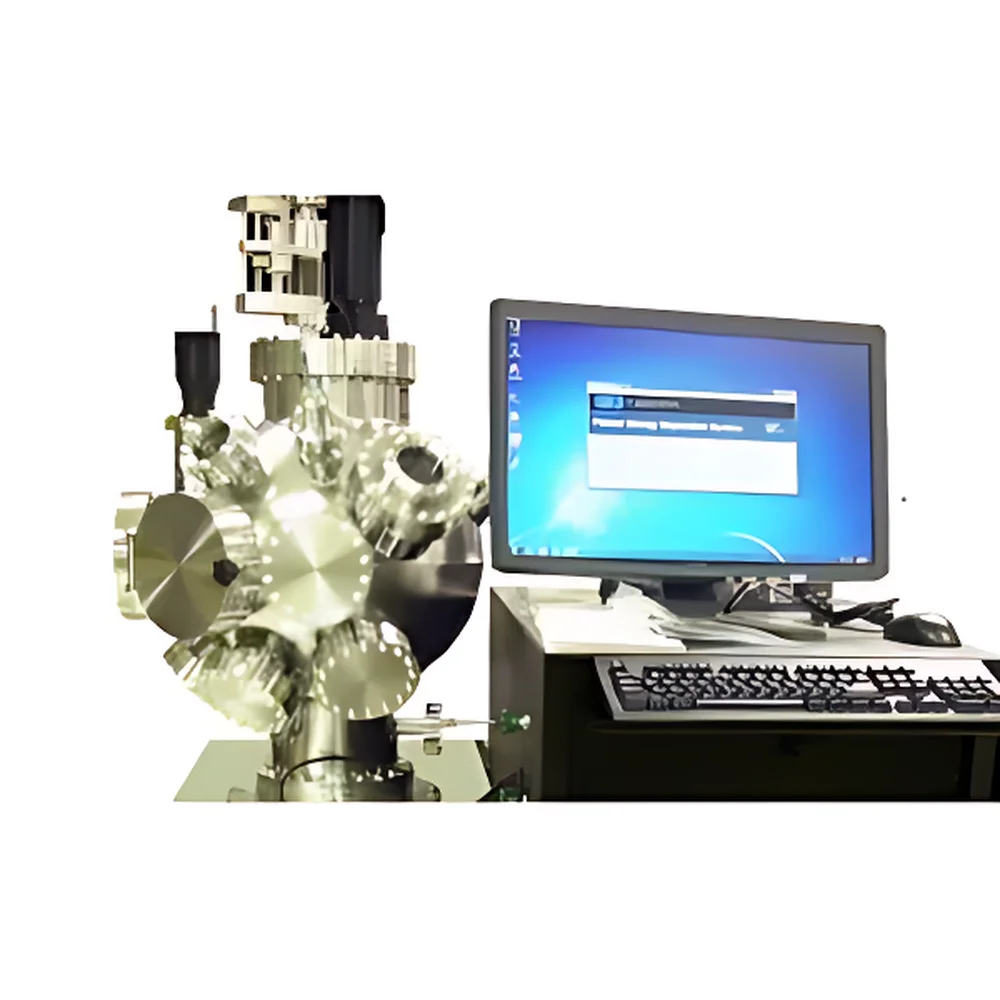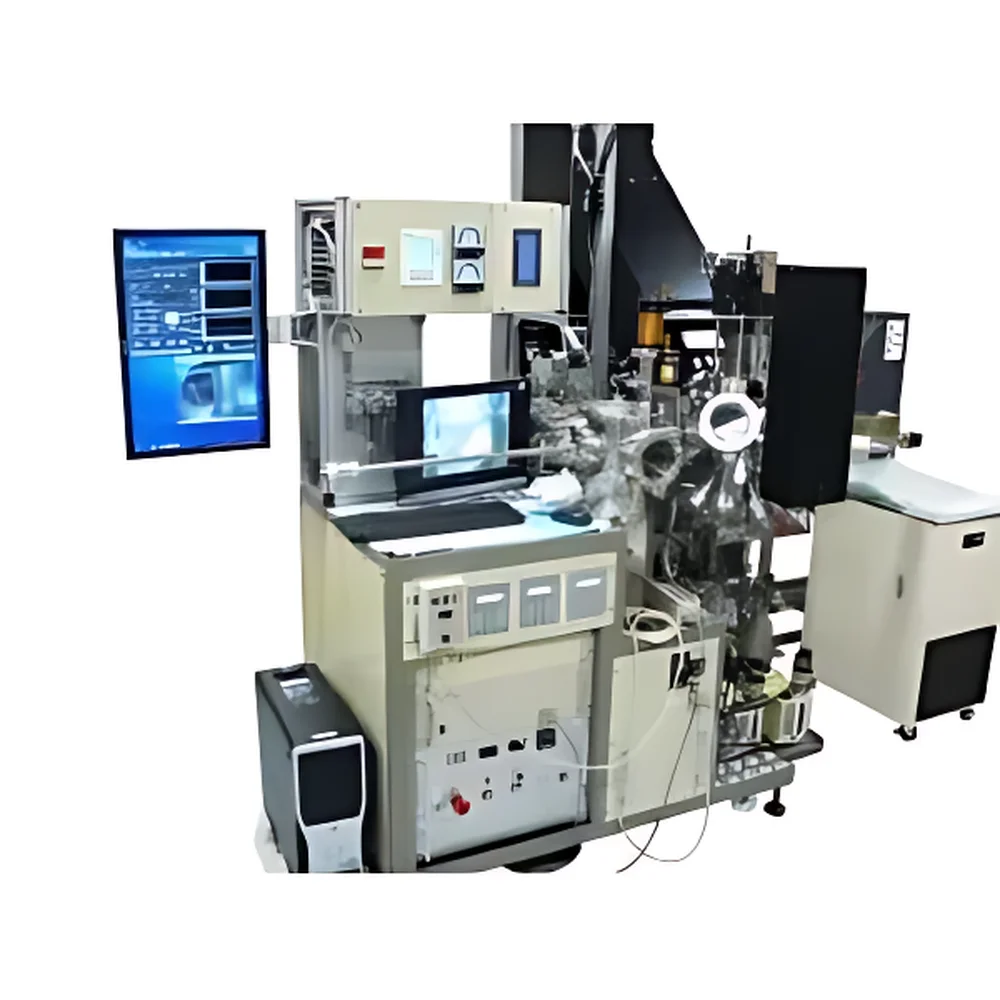
Pascal MC-LMBE / PAC-LMBE Laser Molecular Beam Epitaxy System

| Brand | Pascal |
|---|---|
| Origin | Netherlands |
| Manufacturer Type | Authorized Distributor |
| Product Origin | Imported |
| Model | MC-LMBE / PAC-LMBE |
| Price Range | USD 560,000 – 700,000 (FOB Rotterdam) |
| Minimum Feature Size | Not specified in base configuration |
| Electron Beam Spot Diameter | Not applicable (laser-driven ablation |
| Acceleration Voltage Range | Not applicable (pulsed laser source, not e-beam) |
Ask about pricing, availability and specifications.
Overview
The Pascal MC-LMBE and PAC-LMBE Laser Molecular Beam Epitaxy Systems represent a class of ultra-high-vacuum (UHV) thin-film synthesis platforms engineered for atomic-precision growth of complex functional materials. Unlike conventional electron-beam or thermal effusion MBE systems, Laser MBE employs high-energy pulsed laser irradiation—typically from excimer or Nd:YAG sources—to ablate solid targets within a UHV chamber (<1×10⁻¹⁰ mbar base pressure). This process generates a transient, highly directional plume of stoichiometrically preserved species (atoms, clusters, ions), which condense on heated single-crystal substrates to form epitaxial or polycrystalline thin films. The technique merges the compositional flexibility of Pulsed Laser Deposition (PLD) with the in-situ real-time monitoring and layer-by-layer control traditionally associated with conventional MBE. Growth dynamics are continuously monitored via Reflection High-Energy Electron Diffraction (RHEED), enabling quantitative analysis of surface reconstruction, layer completion, and kinetic evolution through intensity oscillation patterns governed by elastic scattering theory.
Key Features
- UHV-compatible chamber architecture with all-metal seals and bake-out capability to <1×10⁻¹⁰ mbar
- Dual-target carousel with motorized positioning and independent azimuthal rotation for multi-material co-deposition
- Integrated RHEED system with phosphor screen, CCD camera, and real-time intensity logging (1 kHz sampling)
- Differential pumping stages enabling stable operation across partial pressures from 10⁻¹⁰ to 10⁻⁴ mbar (e.g., for oxide growth in O₂ background)
- Substrate manipulator with ±10° tilt, 360° rotation, and resistive heating up to 1100 °C (±0.5 °C stability)
- Laser coupling via fused silica viewport (193–1064 nm compatible); optional harmonic generation modules available
- Modular design supporting future integration of XPS, AES, or in-situ ellipsometry ports
Sample Compatibility & Compliance
The MC-LMBE/PAC-LMBE systems accommodate substrates up to 2 inches in diameter (standard), including Si, sapphire, MgO, STO, LSAT, and flexible metallic foils. Target materials span refractory oxides (e.g., YBCO, LSCO, PZT), nitrides (GaN, AlN), chalcogenides (MoS₂, Bi₂Se₃), organic semiconductors (pentacene, C₆₀), and high-entropy alloys. All vacuum components comply with ISO 10100:2021 (vacuum equipment safety) and PED 2014/68/EU. Electrical subsystems meet IEC 61000-6-4 (EMC emission) and IEC 61000-6-2 (immunity) standards. Optional GLP-compliant audit trail logging (per FDA 21 CFR Part 11) is available for regulated R&D environments.
Software & Data Management
Control is executed via Pascal’s proprietary LMBE-Studio software suite, built on a deterministic real-time Linux kernel (PREEMPT_RT). The interface provides synchronized orchestration of laser firing (pulse energy, repetition rate, delay timing), substrate temperature ramping, shutter sequencing, RHEED acquisition, and gas flow regulation (MFC-controlled O₂, N₂, Ar). Raw RHEED intensity time-series data are stored in HDF5 format with embedded metadata (timestamp, laser fluence, substrate T, chamber pressure). Export options include CSV, MATLAB .mat, and Python-compatible NumPy arrays. Software supports ASTM E2919-22-compliant reporting templates for epitaxial quality assessment.
Applications
- Growth of wide-bandgap nitride heterostructures (AlGaN/GaN HEMTs) for power electronics
- Atomic-layer-resolved synthesis of ferroelectric superlattices (e.g., BaTiO₃/SrTiO₃) for non-volatile memory
- Combinatorial library deposition using programmable mask apertures and spatially resolved substrate heating zones
- In-situ formation of topological insulator interfaces (Bi₂Te₃/Sb₂Te₃) under controlled chalcogen partial pressure
- Integration of organic-inorganic hybrid perovskites (e.g., MAPbI₃ on NiOₓ) with minimized halide segregation
- Fundamental studies of laser–target coupling physics, plume expansion kinetics, and non-equilibrium condensation pathways
FAQ
Does the system incorporate an electron beam source?
No. The MC-LMBE/PAC-LMBE systems are exclusively laser-driven; they do not utilize electron beams. The designation “LMBE” refers to Laser Molecular Beam Epitaxy—not electron beam lithography.
What vacuum level is required for oxide film growth?
For stoichiometric growth of complex oxides (e.g., YBCO), a base pressure ≤5×10⁻¹¹ mbar and controlled O₂ partial pressure (1×10⁻⁶ to 1×10⁻⁴ mbar during growth) are recommended.
Can the system support combinatorial synthesis?
Yes. The PAC-LMBE variant includes a programmable shadow mask translation stage and segmented heater zones, enabling high-throughput compositional mapping across a single substrate.
Is RHEED calibration traceable to NIST standards?
RHEED wavelength calibration is performed using known lattice constants of Au(001) and Si(001) reference samples; full calibration reports follow ISO/IEC 17025 guidelines when requested.
What laser specifications are supported?
Standard integration supports KrF (248 nm), ArF (193 nm), and Nd:YAG (1064 nm / 532 nm / 266 nm); maximum pulse energy ≤1 J, repetition rate 1–10 Hz, pulse width ≤25 ns.