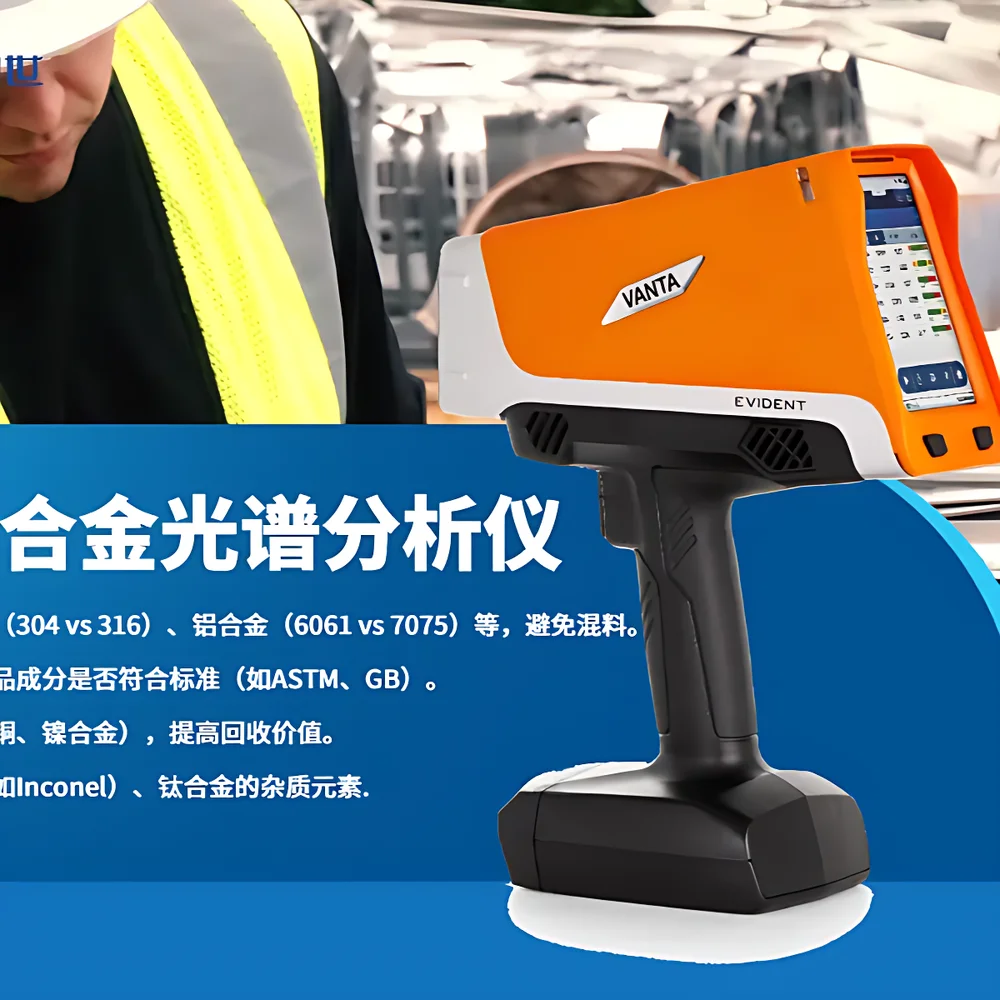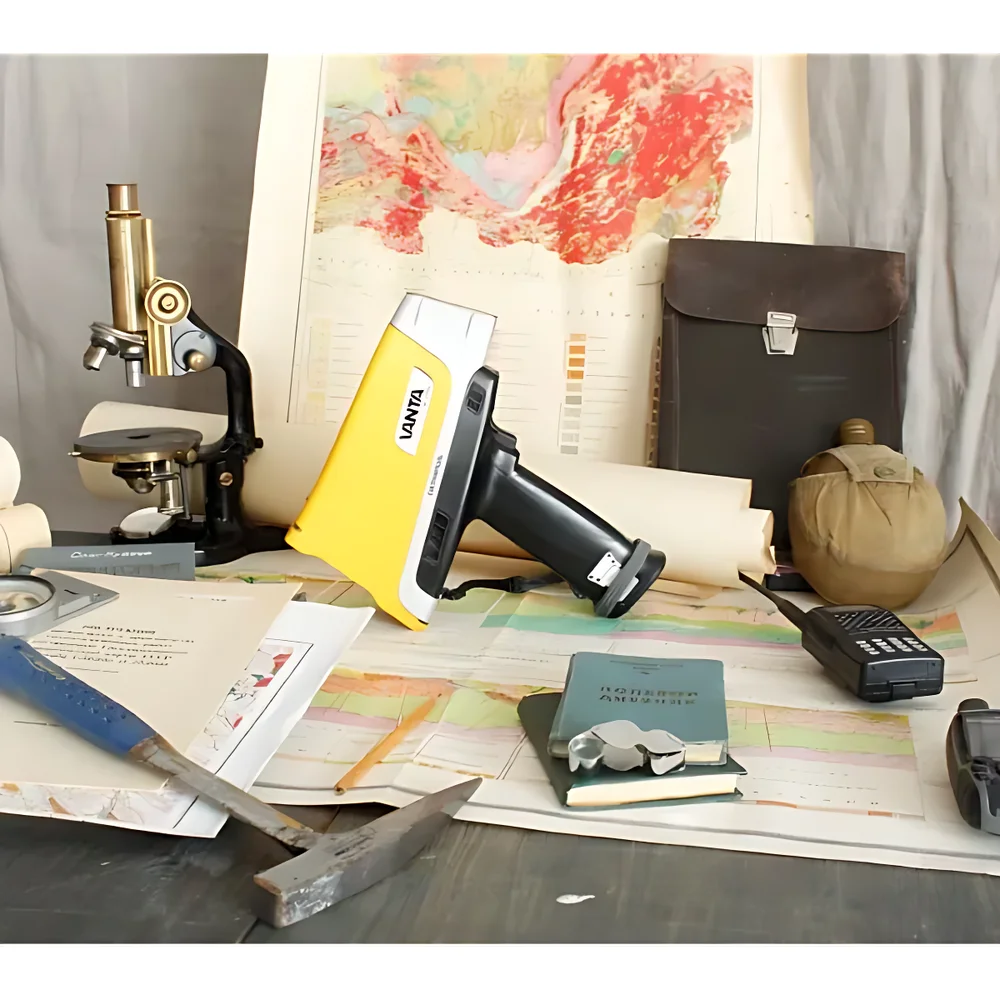
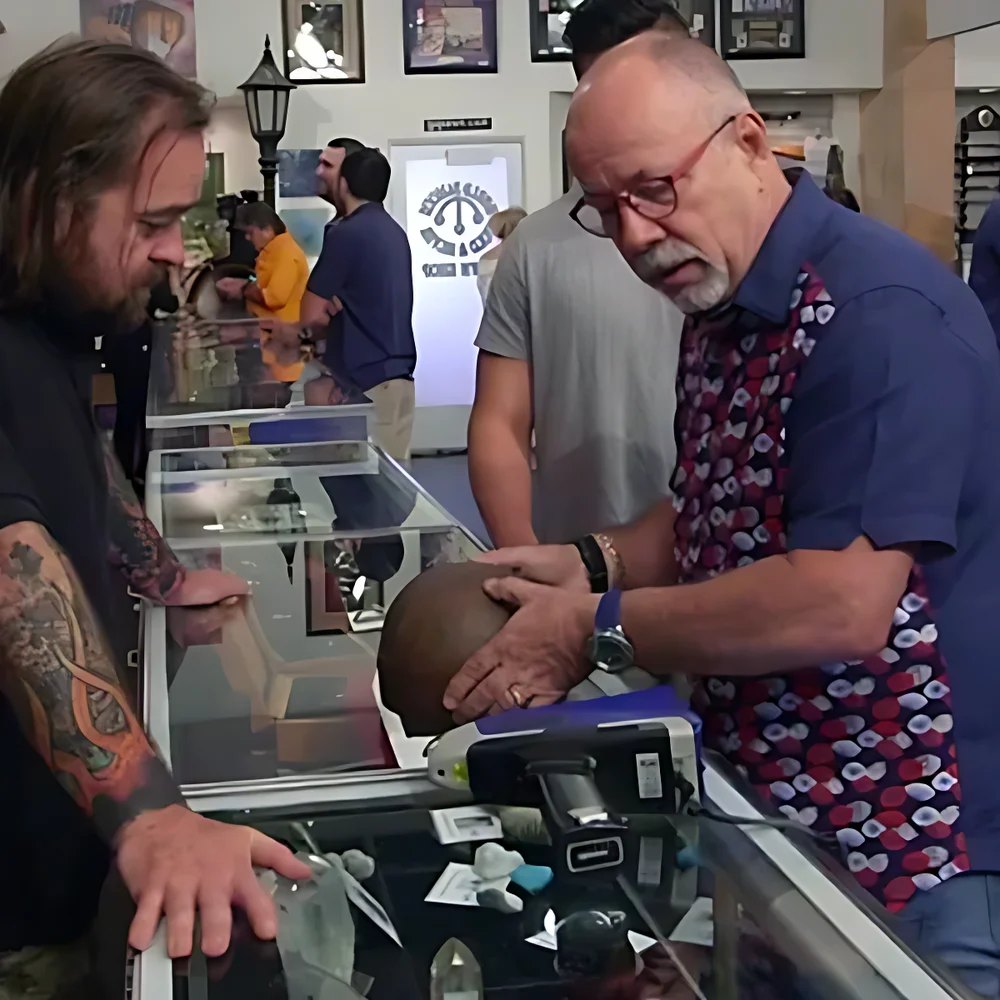
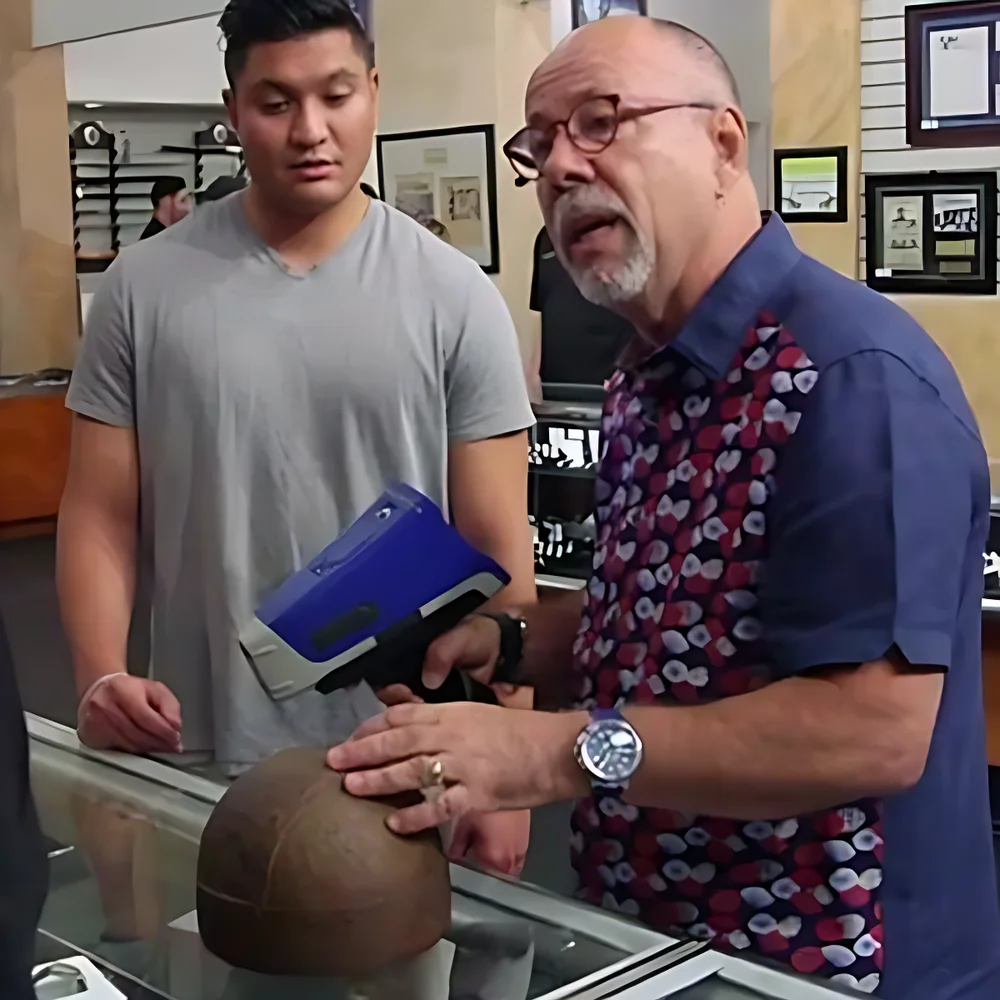
EVDENT Vanta Handheld Energy Dispersive X-Ray Fluorescence (ED-XRF) Spectrometer for Archaeological and Museum Conservation

| Brand | EVDENT |
|---|---|
| Model | Vanta Series (Archaeology & Cultural Heritage Edition) |
| Type | Handheld ED-XRF Spectrometer |
| Compliance | MIL-STD-810G Drop Tested, IP55 Rated (IP54 for M-Series), Operating Temperature: –10 °C to 50 °C |
| Detector | High-Resolution Silicon Drift Detector (SDD) |
| Connectivity | Wi-Fi, Bluetooth, Embedded GPS, Optional 5 MP Camera |
| Software Platform | Vanta PC Suite with Cloud Integration, ASTM E1621 & ISO 3497 Compliant Data Handling |
Ask about pricing, availability and specifications.
Overview
The EVDENT Vanta Handheld Energy Dispersive X-Ray Fluorescence (ED-XRF) Spectrometer is an engineered solution for non-destructive elemental analysis in archaeological fieldwork, museum conservation laboratories, and cultural heritage research. Based on the fundamental principle of energy-dispersive X-ray fluorescence—where primary X-rays excite atoms in a sample, causing emission of characteristic secondary X-rays—the instrument delivers rapid, in-situ quantification of elements from magnesium (Mg, Z=12) to uranium (U, Z=92). Unlike benchtop systems requiring sample preparation or vacuum environments, the Vanta operates in ambient air with minimal surface contact, making it ideal for fragile, irreplaceable artifacts such as bronze ritual vessels, gilded statues, painted ceramics, stained glass fragments, coin hoards, and pigment layers in historic manuscripts. Its analytical performance meets the methodological expectations of international conservation science standards, supporting provenance studies, authenticity verification, corrosion product identification, and material degradation mapping without compromising object integrity.
Key Features
- Axon Technology Architecture: Integrates ultra-low-noise electronics and real-time pulse processing to achieve high count-rate stability (>100,000 cps typical), ensuring reproducible results across repeated measurements—even under variable environmental conditions including temperature fluctuations and electromagnetic interference.
- Ruggedized Industrial Design: Certified to MIL-STD-810G for drop resistance (up to 1.2 m onto concrete) and rated IP55 for dust and water ingress protection (IP54 for M-series), enabling reliable operation in excavation sites, storage vaults, and humid museum basements.
- Adaptive Measurement Intelligence: SmartSort algorithm dynamically adjusts measurement time based on signal-to-noise ratio—delivering alloy grade identification in ≤1 second for Al/Mg/Cu-based systems, while extending dwell time automatically for trace-element detection in low-Z matrices like ceramic glazes or organic pigments.
- Field-Ready Interface: Sunlight-readable 5-inch capacitive touchscreen with glove-compatible industrial joystick and tactile buttons; customizable home screen layout allows conservators to prioritize functions such as “Pigment Mode”, “Bronze Quant”, or “Corrosion Mapping” per project requirement.
- Traceability Infrastructure: Embedded GPS module logs georeferenced coordinates with each spectrum; optional 5 MP panoramic camera captures contextual imagery synchronized with spectral data—enabling GIS-integrated documentation compliant with ICOM-CC documentation guidelines.
Sample Compatibility & Compliance
The Vanta spectrometer supports direct analysis of heterogeneous, irregular, and thermally sensitive surfaces—including oxidized metal patinas, porous terracotta, laminated polychrome wood, and thin gold leaf overlays—without requiring sampling, polishing, or coating. Its optimized beam collimation (3 mm spot size standard) minimizes lateral scattering while preserving spatial resolution for micro-domain analysis. Instrumental calibration adheres to ASTM E1621 (Standard Test Method for Determining Elements in Waste Streams by Portable XRF) and ISO 3497 (Metallic Coatings — Measurement of Coating Thickness — X-Ray Spectrometric Methods), with factory-certified reference materials traceable to NIST SRMs. All spectral acquisition, processing, and reporting workflows are structured to support GLP-compliant audit trails, including user authentication, timestamped spectra, and immutable metadata embedding—facilitating regulatory readiness for federally funded heritage projects subject to US National Historic Preservation Act (NHPA) Section 106 or EU Directive 2014/60/EU on the return of cultural objects.
Software & Data Management
Vanta’s embedded firmware and desktop PC Suite provide end-to-end data governance. Spectra are stored in standardized .vnt binary format with embedded calibration parameters, detector status logs, and environmental sensor readings (temperature, humidity, pressure). Cloud synchronization via secure HTTPS enables centralized spectral library management across multi-institutional consortia—e.g., shared databases of Roman coinage compositions or Tang Dynasty ceramic glaze fingerprints. The software supports custom calibrations for matrix-matched standards (e.g., Cu-Sn-Pb ternary alloys), limit-of-detection (LOD) calculation per element using ISO 11929 methodology, and statistical outlier detection for batch consistency review. Export options include CSV, PDF reports with embedded spectra, and XML files compatible with FAIR-aligned digital repositories such as the European Archaeological Data Service (EADS).
Applications
- Identification of metallurgical technologies in ancient bronzes (e.g., distinguishing tin-bronze vs. arsenical bronze production)
- Quantitative mapping of pigment stratigraphy in Renaissance panel paintings using sequential point analysis
- Discrimination of modern forgeries through trace-element fingerprinting (e.g., Sb/Bi ratios in lead-tin yellow pigments)
- In-field assessment of corrosion mechanisms on iron artifacts (e.g., chloride-induced pitting vs. uniform oxidation)
- Compositional correlation of ceramic shards across excavation trenches to reconstruct trade networks
- Monitoring elemental migration during conservation treatments (e.g., Ca leaching from marble after desalination)
FAQ
Does the Vanta require external cooling or vacuum operation for light-element analysis?
No. The silicon drift detector (SDD) operates at Peltier-cooled temperatures (-35 °C) without liquid nitrogen or mechanical chillers. Air-path analysis enables detection of Mg, Al, and Si in silicate matrices—though quantitative accuracy below Na (Z=11) requires helium purge or vacuum accessories (sold separately).
Can the instrument differentiate between surface contamination and bulk composition?
Yes. By varying tube voltage (6–50 kV) and current (1–200 µA), operators can tune excitation depth—e.g., 15 kV for shallow pigment layer interrogation (100 µm). Depth-profiling mode is available via sequential voltage sweeps.
Is spectral data export compatible with third-party chemometric platforms?
Yes. Raw spectra (.vnt) can be converted to ASCII or .csv format via Vanta PC Suite; peak integration outputs conform to ASTM E1301 multivariate calibration file structures, enabling import into MATLAB, Unscrambler, or R-based PCA workflows.
How does the system ensure data integrity during long-term field deployments?
Each measurement includes cryptographic hash verification, write-once-read-many (WORM) logging, and dual storage (internal eMMC + removable microSD). Firmware enforces mandatory user login with role-based permissions, satisfying 21 CFR Part 11 electronic record requirements when configured with audit trail activation.
What training resources are provided for conservators unfamiliar with XRF fundamentals?
EVDENT provides ISO/IEC 17025-aligned operator certification modules covering radiation safety (IAEA SSG-46), spectral interpretation pitfalls (e.g., matrix effects in high-lead glasses), and CLIA-equivalent validation protocols for qualitative/quantitative modes.
More from EVDENT
View all EVDENT products → EVDENT Handheld X-Ray Fluorescence (XRF) Spectrometer for Alloy Analysis
- EVDENT Vanta Series Portable X-Ray Fluorescence (XRF) Spectrometer for Soil Heavy Metal Screening and Lateritic Nickel Ore Exploration
- Vanta Element XRF Analyzer for RoHS Compliance Screening
- EVDENT Handheld Alloy Analyzer – Energy Dispersive X-Ray Fluorescence (ED-XRF) Spectrometer