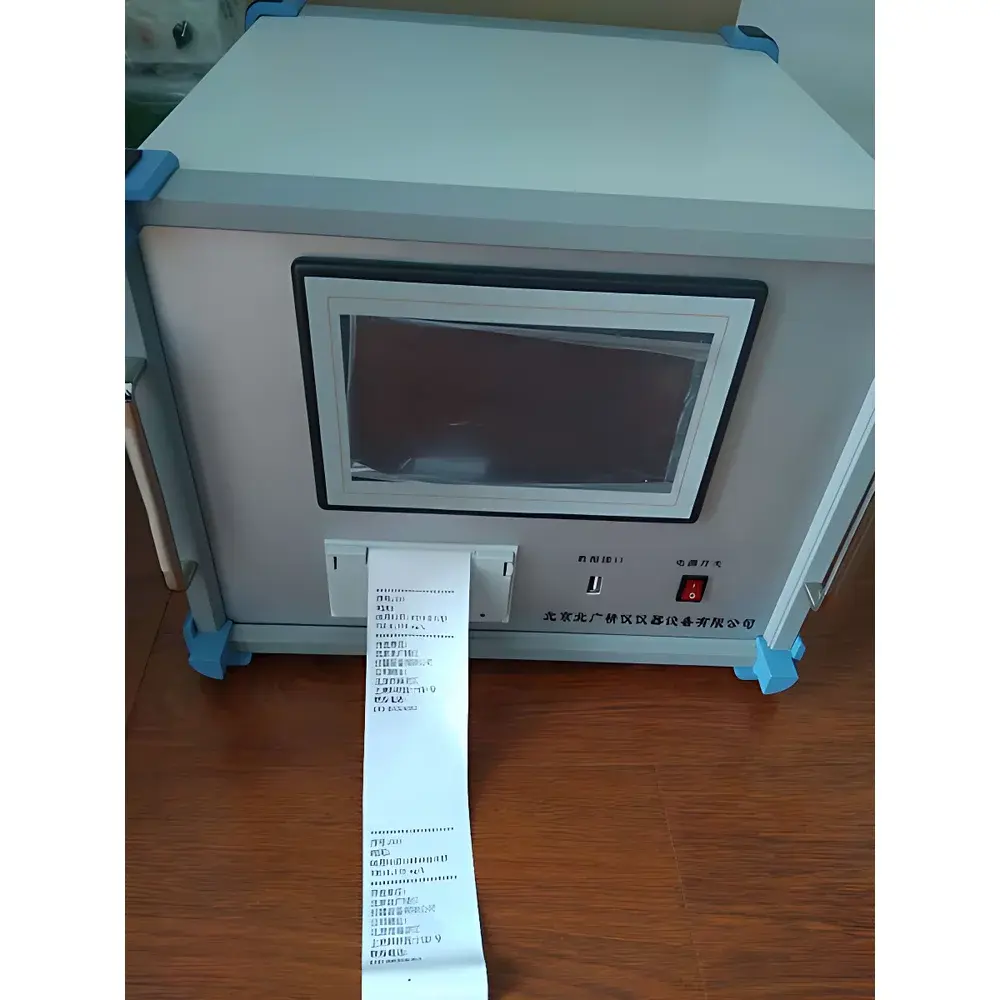
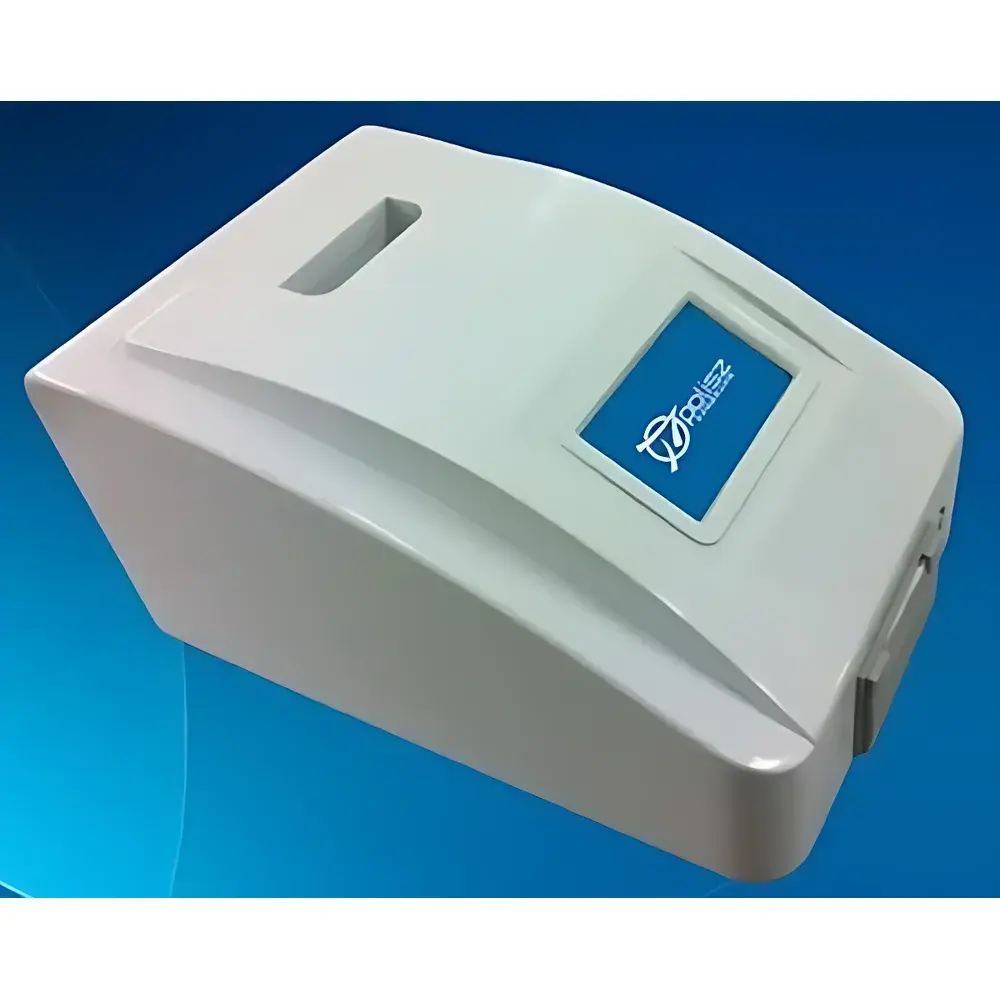
Beiguang Jingyi BC-40A Portable Total Organic Carbon (TOC) Analyzer

| Brand | Beiguang Jingyi |
|---|---|
| Origin | Beijing, China |
| Manufacturer Type | OEM Manufacturer |
| Instrument Type | Portable TOC Analyzer |
| Detection Principle | Direct Conductivity Method |
| Oxidation Method | UV Photolysis (185/254 nm) |
| Measurement Range | 0.001–1.0 mg/L (TC/TIC differential mode) |
| Accuracy | ±4% of reading |
| Resolution | 0.001 mg/L |
| Detection Limit | 0.001 mg/L |
| Repeatability | ≤3% RSD |
| Sample Temperature Range | 1–95 °C |
| Analysis Time | <4 minutes per cycle |
| Power Supply | 220 V AC, 50 Hz |
| Display | 7-inch color TFT touchscreen (640 × 480) |
| Data Storage | Internal memory for ≥6 months of timestamped records |
| Communication Interface | RS232 |
| Compliance | Chinese Pharmacopoeia 2015 Edition, Appendix VIII R |
Ask about pricing, availability and specifications.
Overview
The Beiguang Jingyi BC-40A Portable Total Organic Carbon (TOC) Analyzer is an engineered solution for precise, regulatory-compliant quantification of organic carbon in ultrapure water systems. It operates on the fundamental principle of differential conductivity measurement following ultraviolet (UV) photolytic oxidation — a method validated for pharmaceutical water quality control under Chinese Pharmacopoeia (ChP) 2015 Edition, Appendix VIII R. In this process, dissolved organic compounds are oxidized to CO₂ using dual-wavelength UV light (185 nm for radical generation and 254 nm for direct photolysis). The resulting CO₂ dissolves to form carbonic acid, altering the sample’s electrical conductivity. By sequentially measuring total carbon (TC) and total inorganic carbon (TIC) — the latter via acidification and sparging or non-oxidative baseline subtraction — the instrument calculates TOC as TC − TIC. This approach eliminates reliance on carrier gases, chemical reagents, or moving parts such as peristaltic pumps or catalytic combustion furnaces, thereby enhancing long-term stability and reducing operational overhead.
Key Features
- True portable architecture: Compact footprint (<3.5 kg), battery-compatible power input, and integrated handle enable point-of-use analysis at sampling ports, clean-in-place (CIP) outlets, or distribution loop manifolds.
- Embedded real-time operating system with 7-inch capacitive touchscreen interface; supports multilingual UI (English and Chinese firmware variants available); one-touch start, auto-purge, and self-diagnostic routines.
- UV lamp and fluidic path maintenance designed for field serviceability: Lamp replacement and tubing exchange achievable without disassembly of the main chassis — no calibration drift or alignment recalibration required.
- User-configurable alarm thresholds: Programmable upper limit triggers visual/audible alerts and optional relay output for integration into facility SCADA or PLC systems.
- No consumables beyond UV lamps (rated lifetime ≥12,000 hours) and PTFE/PFA fluidic tubing; zero requirement for phosphoric acid, persulfate, oxygen gas, or catalysts.
- Regulatory-ready architecture: Supports IQ/OQ/PQ documentation packages; audit trail logging (timestamped operator actions, method changes, calibration events) aligns with GLP and GMP expectations.
Sample Compatibility & Compliance
The BC-40A is optimized for low-conductivity aqueous matrices where TOC concentrations fall within the 1–1000 ppb (0.001–1.0 mg/L) range — specifically targeting purified water (PW), water for injection (WFI), and ultrapure water (UPW) used in biopharmaceutical manufacturing, sterile fill-finish operations, and cleanroom utilities. It meets all three mandatory criteria defined in ChP 2015 Appendix VIII R: (i) implementation of the TC–TIC differential calculation algorithm; (ii) pass/fail verification of system suitability via sucrose and 1,4-benzoquinone challenge solutions; and (iii) demonstrated detection capability at or below 0.001 mg/L. While not certified to USP or EP 2.2.44 out-of-the-box, its measurement traceability, linearity (R² ≥0.999 over full range), and repeatability data support qualification for use in FDA-regulated environments when accompanied by site-specific validation protocols.
Software & Data Management
Data integrity is maintained through embedded timestamped storage of raw conductivity signals, calculated TOC values, QC check results, and environmental metadata (sample ID, operator, temperature, date/time). Internal memory retains ≥20,000 test records with automatic overwrite protection. Export options include CSV via USB host port or serial transmission (RS232) to LIMS or ELN platforms. Firmware supports configurable data retention policies and password-protected user roles (Operator, Supervisor, Administrator). All critical events — including calibration initiation, alarm activation, and firmware updates — are logged with immutable timestamps, satisfying ALCOA+ principles for electronic records under 21 CFR Part 11 when paired with appropriate procedural controls.
Applications
Primary deployment domains include: (i) routine release testing of PW/WFI batches in pharmaceutical QC laboratories; (ii) periodic verification of distribution loop integrity during cleaning validation campaigns; (iii) troubleshooting elevated TOC excursions in UPW systems serving semiconductor wafer fabrication tools; (iv) environmental monitoring of treated effluent in municipal water reclamation facilities where low-level organic load assessment is mandated; and (v) incoming raw water screening in food & beverage production sites requiring HACCP-aligned water safety plans. Its portability also facilitates comparative studies across multiple sampling points without requiring dedicated installation infrastructure.
FAQ
Does the BC-40A require carrier gas or chemical oxidants to operate?
No. It relies solely on UV photolysis for oxidation and direct conductivity for detection — eliminating dependency on oxygen, nitrogen, persulfate, or acid reagents.
Can the instrument be validated for compliance with USP or EP 2.2.44?
Yes — though factory certification is aligned with ChP 2015, the underlying methodology, performance specifications, and data handling architecture are technically compatible with USP/EP requirements when supported by site-specific OQ/PQ protocols.
What is the recommended calibration frequency?
Daily system suitability testing is advised per ChP; full calibration (using certified KHP and NaHCO₃ standards) should be performed weekly or after maintenance events.
Is remote monitoring or network integration supported?
The RS232 interface enables integration with building management systems or centralized data loggers; Ethernet or Wi-Fi modules are available as optional accessories upon request.
How is sensor drift managed over time?
The differential measurement design inherently compensates for baseline conductivity drift; automated zero-point correction occurs during each TIC measurement cycle, ensuring long-term stability without manual offset adjustments.