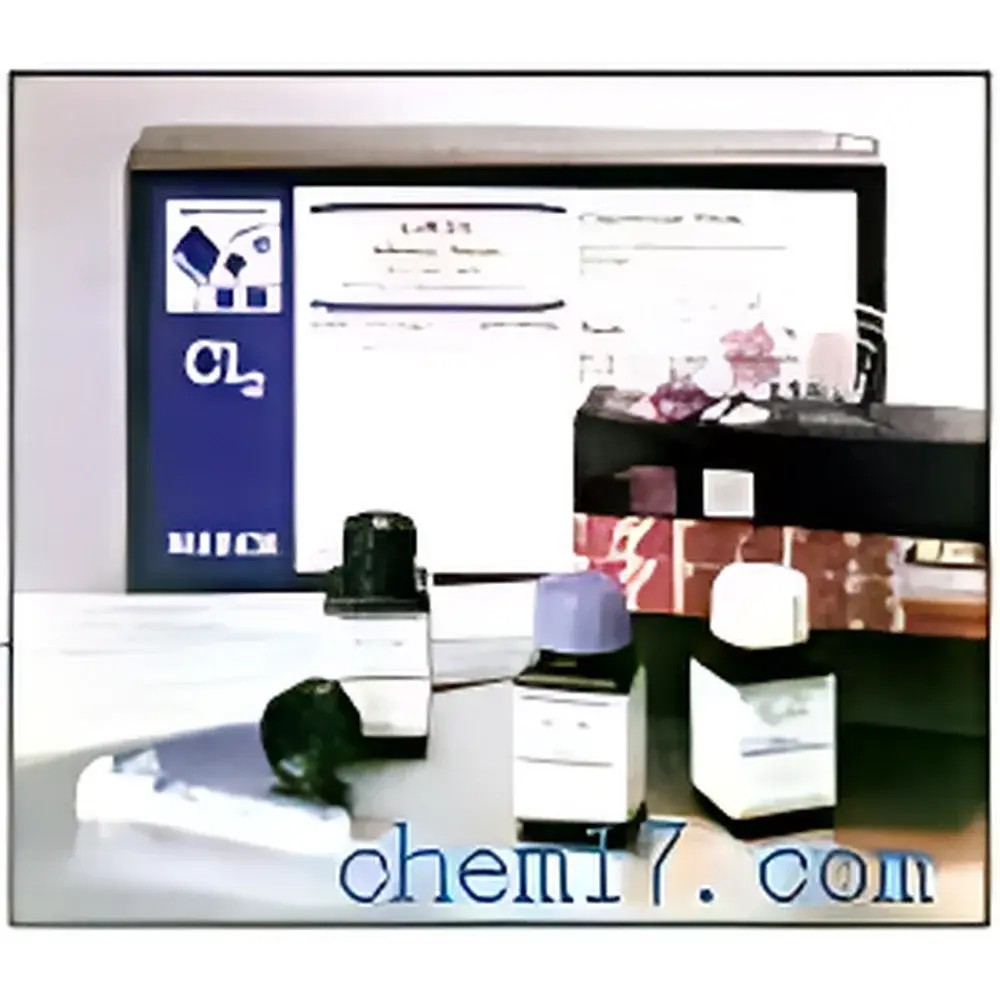
Merck Millipore Aquamerck Water Quality Test Kits

| Brand | Merck Millipore |
|---|---|
| Origin | Germany |
| Product Type | Pre-calibrated Colorimetric Test Kits (AquaQuant®, MicroQuant®, Aquamerck®) |
| Parameter Range | Total Hardness, Free Chlorine, Alkalinity, Phosphate, Ammonia-N, Nitrate, Nitrite, Iron, Copper, Calcium, Magnesium, Dissolved Oxygen, Silica, Sulfate, Cyanide, Ozone, Chlorine Dioxide, and 30+ additional parameters |
| Compliance | ISO 9001-certified manufacturing |
Ask about pricing, availability and specifications.
Overview
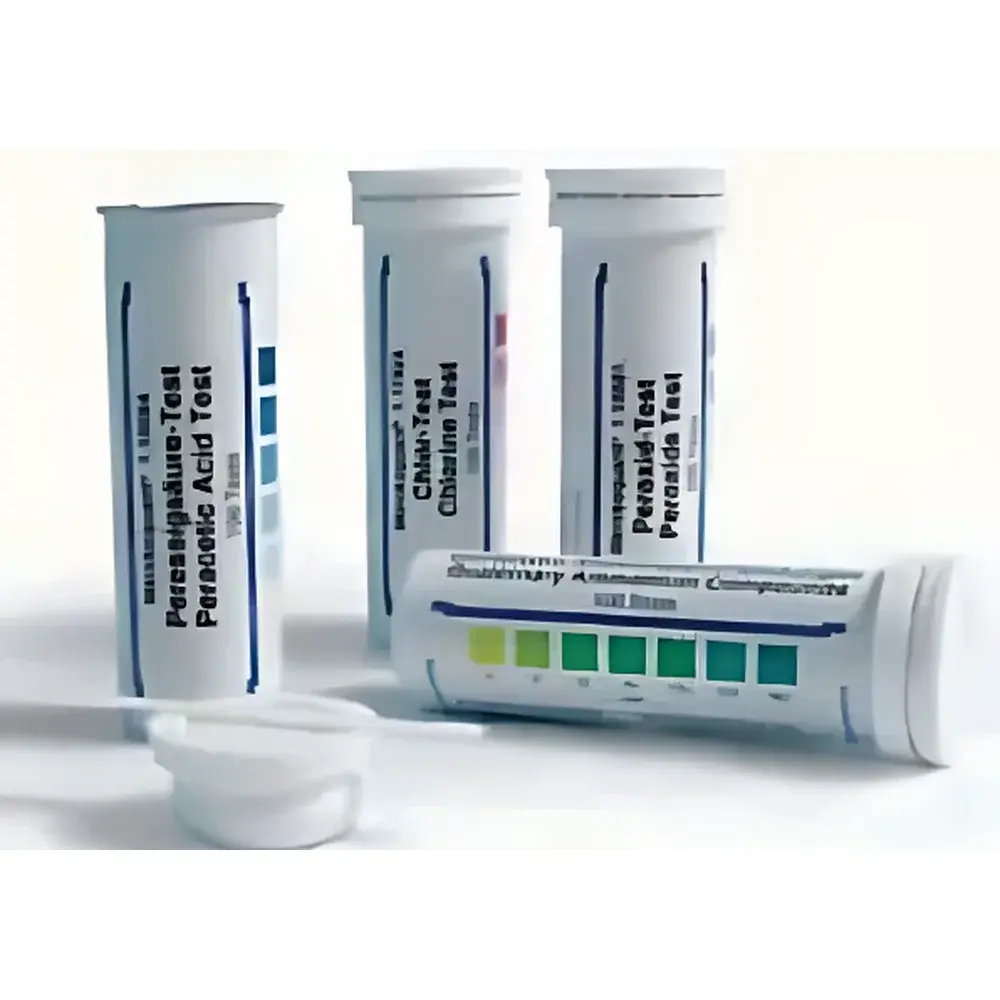
The Merck Millipore Aquamerck Water Quality Test Kits are a family of standardized, ready-to-use colorimetric testing systems engineered for rapid, reliable field and laboratory analysis of drinking water, process water, wastewater, swimming pools, and environmental surface waters. These kits implement well-established wet-chemical methods—including photometric determination via N,N-diethyl-p-phenylenediamine (DPD) for free chlorine, EDTA titration for total hardness, molybdenum blue for phosphate, and indophenol blue for ammonia—each validated against international reference standards. Designed for reproducibility and operator independence, the system eliminates manual reagent preparation and volumetric dilution errors by integrating pre-measured reagents, calibrated sample tubes, and proprietary optical comparison devices. All kits are manufactured in Merck’s ISO 9001-certified facilities in Darmstadt, Germany, and shipped with lot-specific Certificates of Analysis verifying traceability to NIST-traceable standards.
Key Features
- Pre-packaged, single-use reagent formats ensure consistent stoichiometry and shelf-life stability (typically 24–36 months unopened, depending on analyte)
- Three core platform designs: Aquamerck® (AM) general-purpose comparator kits, AquaQuant® (AQ) low-concentration photometric kits with extended optical pathlength (up to 50 mm), and MicroQuant® (MIQ) rotating disc comparator systems enabling high-precision visual matching under controlled illumination
- Robust comparator discs fabricated from UV-stabilized polycarbonate with fade-resistant color standards—validated for ≥5 years of repeated use under ambient lab conditions
- Integrated blank correction capability via dual-tube methodology (sample + reagent vs. sample + blank reagent), minimizing matrix interference from colored or turbid samples
- No external instrumentation required for basic operation; optional compatibility with Merck Spectroquant® portable photometers (e.g., NOVA 60, MOVE 100) for digital readout and data logging
- Each kit includes detailed multilingual instructions (EN/DE/FR/ES), safety data sheets (SDS), and lot-specific CoA confirming calibration against certified reference materials
Sample Compatibility & Compliance
These test kits are validated for use across diverse water matrices: potable water (per WHO Guidelines and EU Directive 98/83/EC), ultrapure water (ASTM D1193 Type I–IV), cooling tower water (ASME PTC 19.11), swimming pool water (CEN/TS 16254), and municipal wastewater effluents. Interference studies confirm robustness against common ions (e.g., Fe²⁺/Fe³⁺, Mn²⁺, Cu²⁺, Cl⁻, SO₄²⁻) within specified concentration thresholds. All kits comply with ISO 8466-1 (calibration of analytical methods), ISO 5667-3 (water sampling), and support adherence to US EPA Methods 330.5 (chlorine), 350.1 (alkalinity), and 365.2 (phosphate). For regulated environments, kits are compatible with 21 CFR Part 11-compliant electronic lab notebooks when paired with Spectroquant® instruments and Quantos® software.
Software & Data Management
While the base kits operate without software, integration with Merck’s Quantos® PC-based data management platform enables automated result calculation, trend analysis, audit trail generation, and PDF report export—including customizable headers, user authentication logs, and electronic signatures. When used with Spectroquant® photometers, all measurements adhere to ALCOA+ principles (Attributable, Legible, Contemporaneous, Original, Accurate, Complete, Consistent, Enduring, Available) and support full GxP compliance. Raw absorbance values, calibration curves, and instrument diagnostics are stored in encrypted SQLite databases with configurable backup intervals and role-based access control.
Applications
- Drinking water utilities: daily verification of disinfectant residual (free/total chlorine), hardness, and alkalinity per regulatory monitoring schedules
- Pharmaceutical manufacturing: routine testing of purified water (PW) and water-for-injection (WFI) per USP and EP 2.2.42
- Food & beverage production: incoming water quality screening, CIP rinse validation, and boiler feedwater monitoring
- Environmental laboratories: rapid field assessment of nutrient loading (N/P), redox indicators (DO), and heavy metals (Cu, Fe, Ni, Zn) in surface and groundwater surveys
- Facility maintenance teams: troubleshooting cooling water corrosion potential via pH, alkalinity, and phosphate control
- Educational labs: hands-on instruction in analytical chemistry fundamentals including Beer-Lambert law, standard addition, and method validation protocols
FAQ
Are these kits suitable for regulatory reporting?
Yes—when used according to Merck’s validated procedures and documented with lot-specific CoAs, results meet data integrity requirements for non-GLP environmental monitoring and internal QC. For GLP/GMP submissions, pairing with Spectroquant® instrumentation and Quantos® software is recommended.
What is the shelf life of an unopened kit?
Typically 24–36 months from manufacture date, printed on each kit box and individual reagent vial. Storage at 15–25°C, protected from direct sunlight and humidity, is required to maintain stability.
Can I measure both free and total chlorine in the same sample?
Yes—the 1.14801.0001 and 1.14803.0001 kits include sequential DPD reagents enabling discrete determination of free chlorine (DPD-1), combined chlorine (DPD-3), and total chlorine (sum), compliant with Standard Methods 4500-Cl G.
Do the comparator discs require recalibration?
No—discs are factory-calibrated and do not drift. However, periodic verification using Merck’s certified color standards (e.g., 1.14980.0001) is advised every 12 months in high-use settings.
Is technical support available for method troubleshooting?
Yes—Merck Millipore provides global application support through regional Technical Service Centers, including method optimization guidance, interference mitigation strategies, and interpretation of anomalous results based on matrix-specific validation data.