METEON 2.0 Data Logger by Kipp & Zonen

| Brand | Kipp & Zonen |
|---|---|
| Origin | Imported |
| Model | METEON 2.0 |
| Input Channels | Up to 5 smart + 1 analog Kipp & Zonen pyranometers/pyrheliometers |
| Additional Input | 1 Mencke & Tegtmeyer PV module temperature sensor |
| Display | Real-time irradiance (W/m²) and temperature (°C) |
| Communication | Modbus RTU over RS-485, analog voltage/current outputs |
| Power | Internal rechargeable battery + external 12 V DC input |
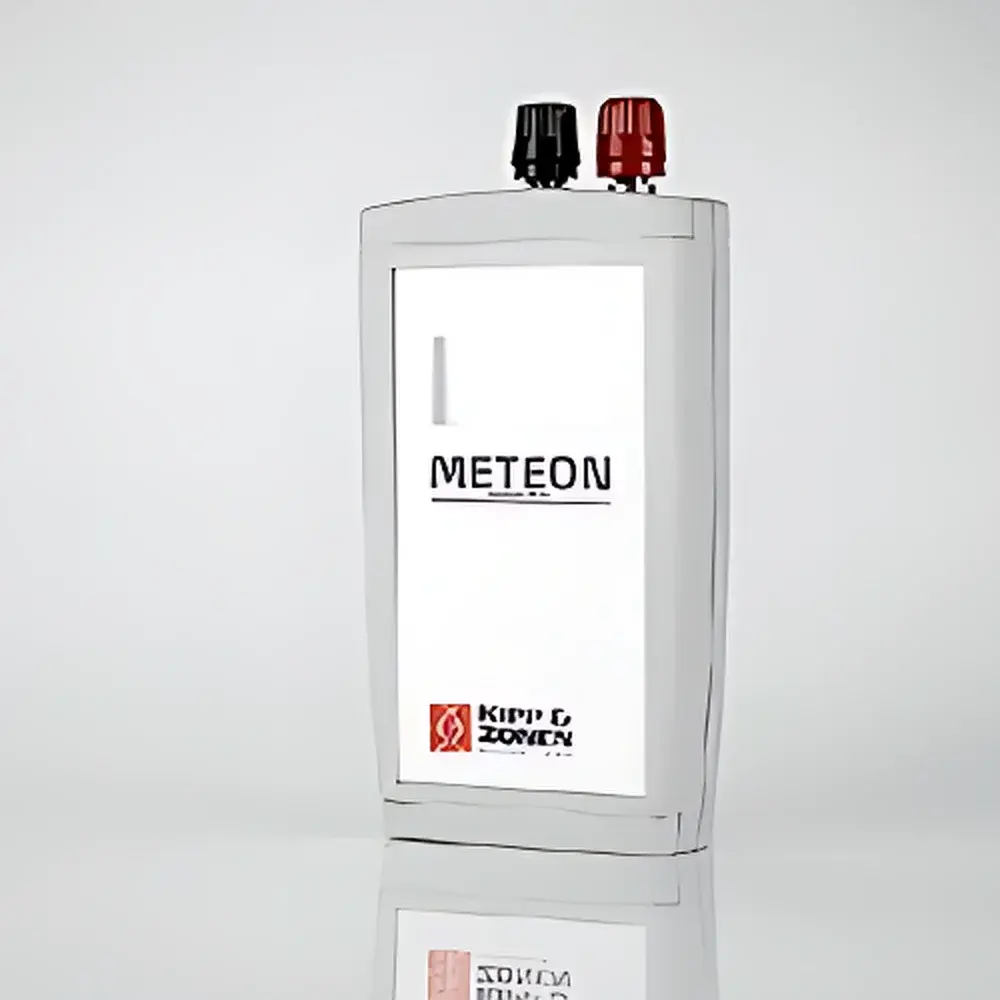
| Enclosure | IP65-rated rugged carry case with integrated mounting for sensors and cabling |
| Operating Temperature | −20 °C to +50 °C |
| Data Storage | Internal microSD card (up to 32 GB), configurable logging interval from 1 s to 24 h |
Ask about pricing, availability and specifications.
Overview
The METEON 2.0 Data Logger by Kipp & Zonen is a compact, field-deployable measurement and recording system engineered specifically for photovoltaic (PV) performance monitoring and solar resource assessment. It operates on the principle of synchronized digital acquisition from calibrated radiometric sensors—primarily thermopile-based pyranometers and pyrheliometers—whose output signals (digital SDI-12 or Modbus, or analog 0–1 V / 4–20 mA) are digitized, timestamped, and stored with traceable metadata. Unlike general-purpose data loggers, the METEON 2.0 integrates native support for Kipp & Zonen’s smart sensor protocol, enabling automatic recognition, firmware-aware configuration, and real-time validation of calibration coefficients directly from sensor memory. Its architecture prioritizes long-term stability in outdoor environments, with low-power consumption design, internal temperature compensation, and robust time synchronization via GPS or manual UTC offset entry—ensuring alignment with IEC 61724-1:2021 requirements for PV system monitoring.
Key Features
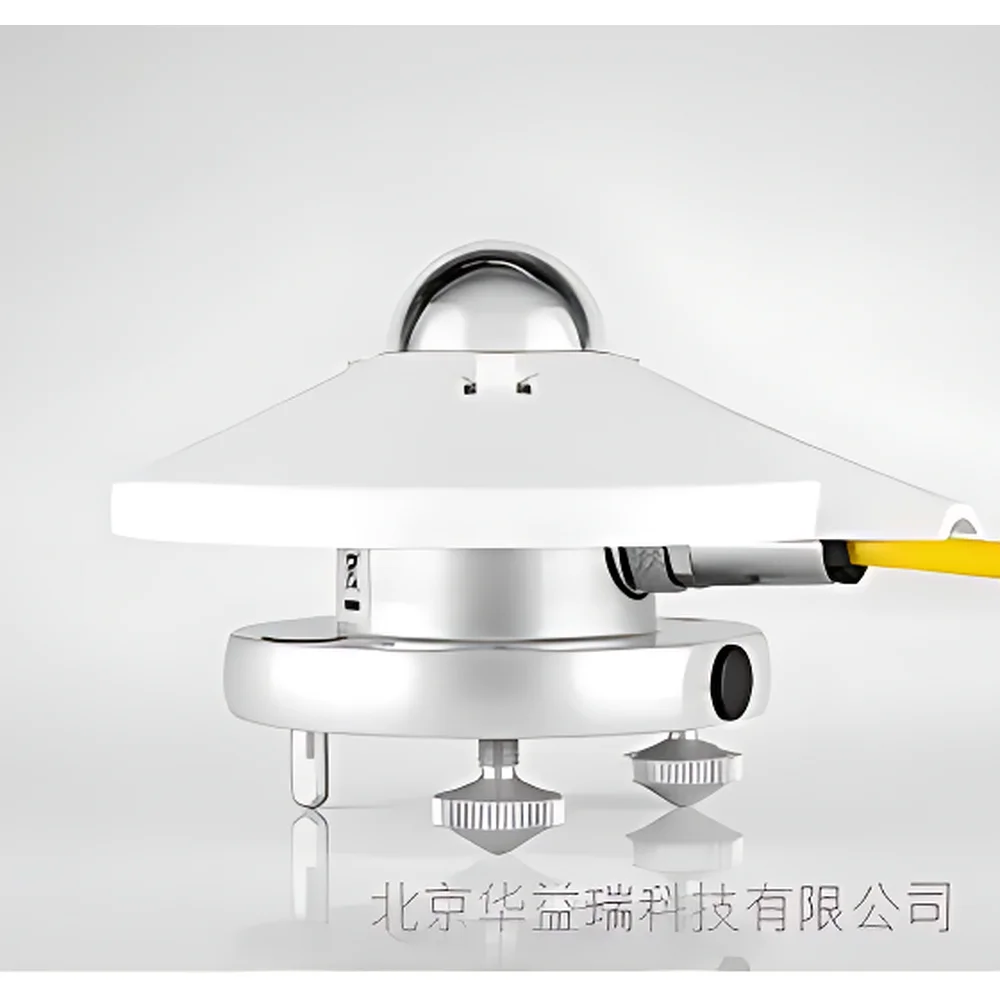
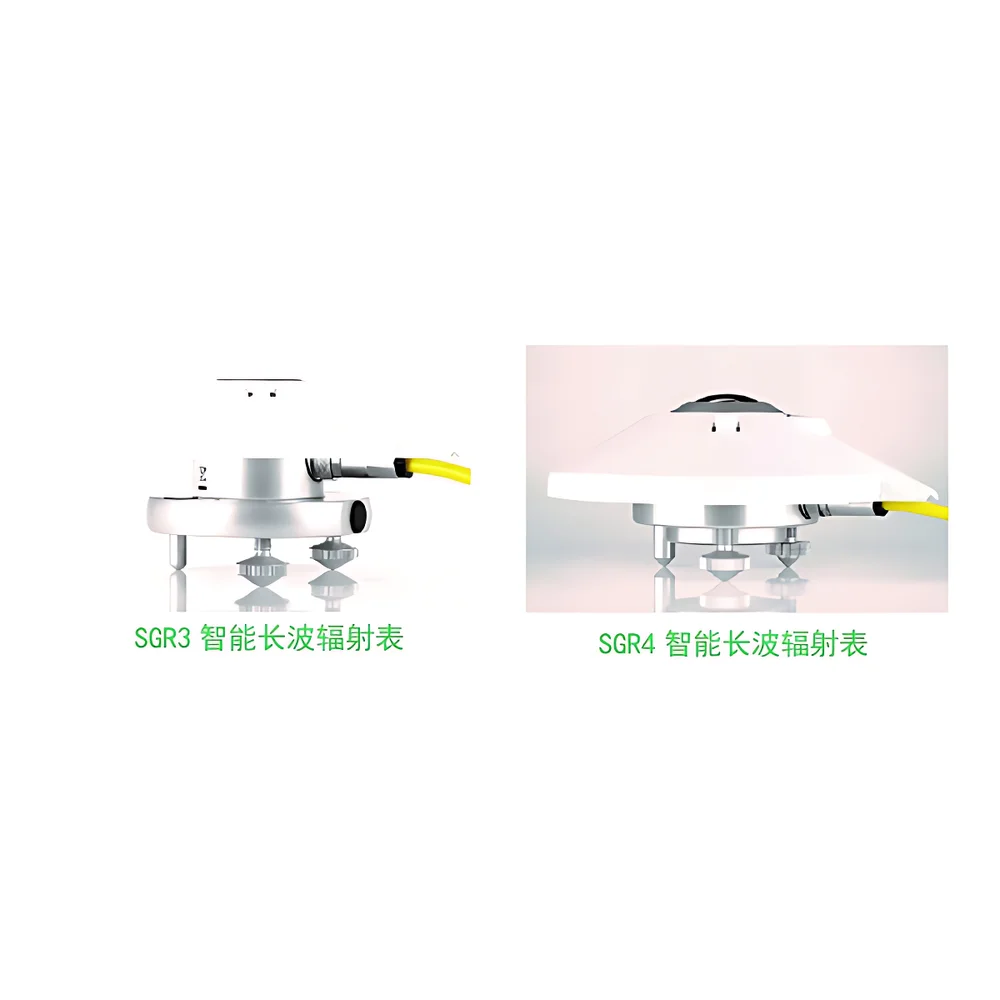
- Simultaneous acquisition from up to five Kipp & Zonen smart sensors (e.g., SMP series pyranometers, CMP series, or CHP 1 pyrheliometer) plus one analog input channel for legacy or third-party irradiance sensors
- Dedicated Mencke & Tegtmeyer PV module temperature sensor interface with excitation and cold-junction compensation for accurate surface temperature derivation per IEC 61215-2 and IEC 61724-1 Annex B
- Integrated Modbus RTU master functionality over RS-485, supporting read/write access to sensor registers for remote diagnostics, zero-offset adjustment, and spectral correction factor application
- Real-time irradiance display (W/m²) with selectable averaging (instantaneous, 1-min, 10-min) and dual-unit support (kWh/m²/day, MJ/m²)
- Configurable logging intervals (1 second to 24 hours), with automatic file rollover, cyclic buffer options, and user-defined trigger conditions (e.g., irradiance > 200 W/m²)
- IP65-rated portable enclosure with internal battery (72 h typical runtime), 12 V DC input, and modular cable management for rapid site deployment and sensor co-location
Sample Compatibility & Compliance
The METEON 2.0 is validated for use with Kipp & Zonen’s ISO 9060:2018 Class A and Class B radiometers—including SMP10, SMP11, CMP11, and CHP 1—as well as compatible third-party devices meeting IEC 61724-1 signal interface specifications. It supports NIST-traceable calibration certificate import and stores sensor-specific calibration dates, uncertainty values, and tilt/azimuth metadata in each data record. The system complies with data integrity requirements outlined in IEC 61724-1:2021 (Annex D), including secure timestamping, audit-ready file structure (CSV/ASCII with header), and non-volatile storage with write-protection options. While not FDA 21 CFR Part 11 certified out-of-the-box, its deterministic logging behavior, immutable file naming convention (e.g., “MET20_20240521_142233.csv”), and absence of post-acquisition editing capability align with GLP-aligned field data governance practices.
Software & Data Management
Data export is supported via removable microSD card (FAT32 formatted, up to 32 GB) or direct USB-C connection to PC using Kipp & Zonen’s free METEON Configuration Tool—a Windows-based utility for firmware updates, channel mapping, alarm threshold setup, and CSV export with customizable column selection (irradiance, temperature, sensor status flags, battery voltage). Raw files include embedded UTC timestamps, sensor serial numbers, and unit identifiers, facilitating automated ingestion into SCADA platforms (e.g., Solar-Log, Sunny Portal) or Python/Pandas-based QA/QC pipelines. No cloud service dependency; all processing occurs locally. Optional integration with Kipp & Zonen’s SOLPOS astronomical engine enables calculated extraterrestrial irradiance and air mass for clear-sky deviation analysis.
Applications
- On-site PV plant commissioning and performance ratio (PR) verification per IEC 61724-1
- Long-term solar resource assessment for feasibility studies and bankable yield modeling
- Reference cell validation and spectrally resolved irradiance intercomparison campaigns
- Automotive solar roof testing under dynamic irradiance and thermal load conditions
- Research-grade meteorological stations requiring synchronized shortwave, diffuse, and module temperature data streams
- Calibration laboratory auxiliary logger for multi-sensor reference array characterization
FAQ
Does the METEON 2.0 support wireless telemetry or cellular upload?
No. It is designed as an offline, edge-level acquisition device with no built-in RF, Wi-Fi, or LTE modules—minimizing power draw and electromagnetic interference risks near sensitive radiometers.
Can it log data while charging?
Yes. Continuous operation is maintained during external 12 V DC power supply, with automatic switchover between battery and mains without interruption.
Is firmware update reversible?
Firmware versions are forward-compatible only; downgrading requires factory reprogramming via JTAG interface and is not supported in-field.
What is the maximum recommended cable length between the logger and a smart pyranometer?
For SDI-12 communication, ≤ 100 m total loop length is advised; for Modbus RS-485, ≤ 500 m with proper twisted-pair shielding and termination resistors.
Does it meet IEC 61724-1:2021 Class A data logger requirements?
It satisfies all functional criteria for Class A (time accuracy ±1 s/day, resolution ≤ 1 W/m², sampling interval ≤ 1 min), though formal certification requires third-party test lab validation against the full standard.