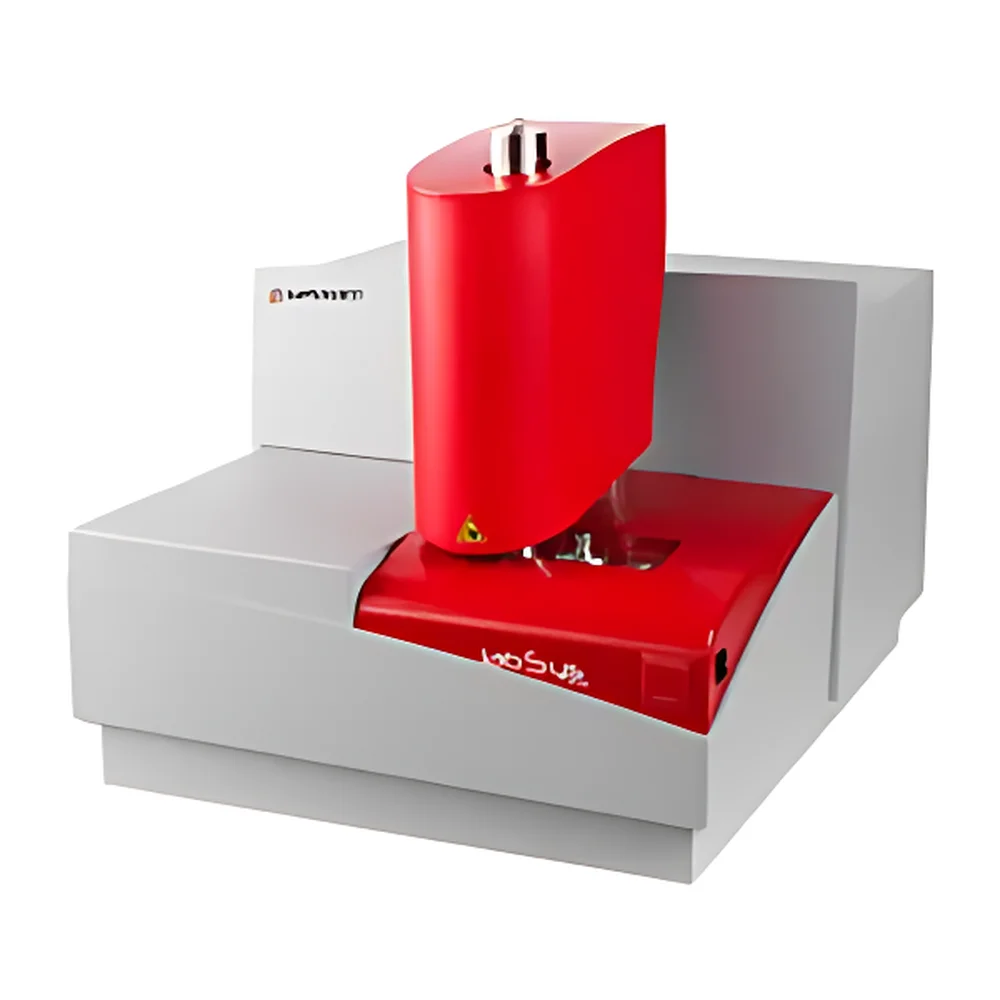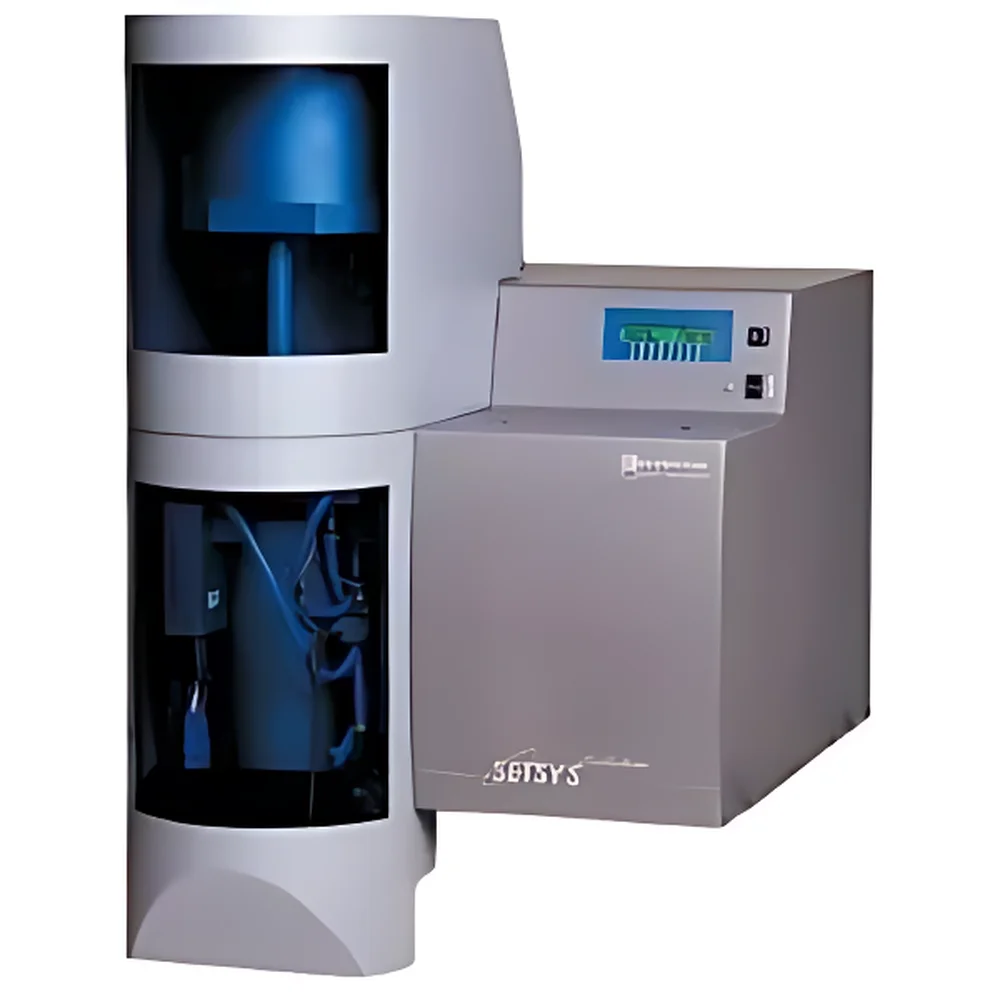
SETARAM Setsys Evolution High-Temperature Simultaneous Thermal Analyzer

| Brand | SETARAM |
|---|---|
| Origin | Germany |
| Model | Setsys Evolution |
| Temperature Range | -150 °C to 2400 °C |
| Programmable Heating Rate | 0–100 K/min |
| Max. Sample Mass | 35 g / 100 g |
| TG Resolution | 0.002 µg / 0.02 µg |
| TG Baseline Repeatability | <10 µg (RT to 1750 °C) |
| DSC Sensitivity | 1 µW |
| DTA Sensitivity | 0.4 µW |
| Atmosphere Control | 3 carrier + 1 reactive gas lines with MFCs and solenoid valves |
| Atmosphere Types | Inert, oxidizing, reducing, steam, corrosive (e.g., SO₂, NH₃, H₂S), static/dynamic, high-vacuum (down to 10⁻⁴ mbar) |
| EGA Compatibility | Standard interface for MS, FT-IR, GC coupling |
| Humidity Control | Optional Wetsys integration for precise RH control |
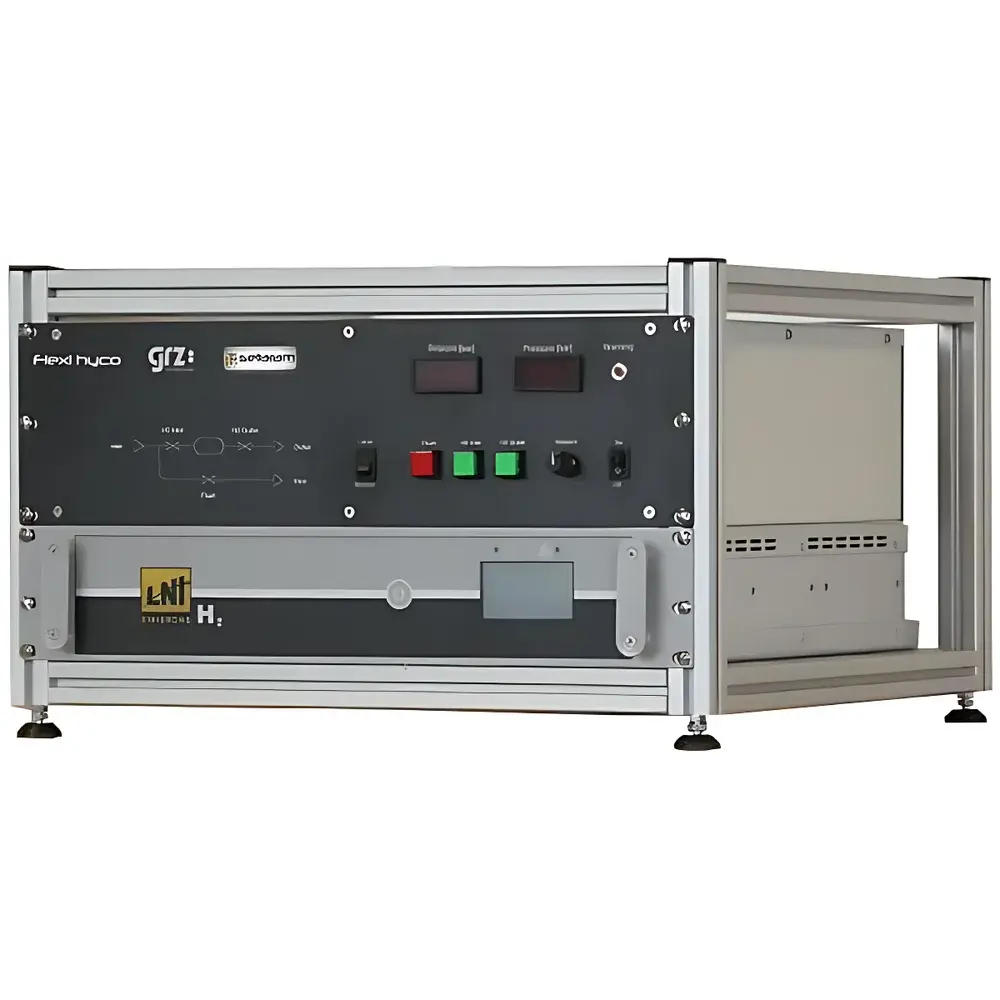
| Safety | Dedicated hydrogen-compatible safety architecture |
| Balance Design | Top-mounted, suspension-type microbalance |
| Furnace | Single graphite furnace with integrated water cooling |
| Sensor Interface | Plug-and-play thermal sensor modules |
Ask about pricing, availability and specifications.
Overview
The SETARAM Setsys Evolution High-Temperature Simultaneous Thermal Analyzer is an engineered platform for precision thermogravimetric analysis (TGA), differential thermal analysis (DTA), and differential scanning calorimetry (DSC) under extreme thermal and atmospheric conditions. Operating on the principle of simultaneous mass and heat flow measurement within a single furnace environment, the instrument enables direct correlation between mass change (e.g., decomposition, oxidation, volatilization) and thermal events (e.g., phase transitions, reactions, crystallization) across an unprecedented temperature range—from cryogenic conditions at –150 °C up to ultra-high temperatures of 2400 °C. Its monolithic graphite furnace, coupled with active water cooling, ensures thermal stability and long-term operational integrity even during extended dwell periods above 1800 °C. The top-mounted suspension balance design minimizes mechanical drift and thermal interference, delivering exceptional baseline stability and sub-microgram mass resolution—critical for detecting subtle mass losses in catalytic or ceramic precursor studies.
Key Features
- Single-furnace architecture supporting continuous operation from –150 °C to 2400 °C without hardware exchange or recalibration
- Modular sensor configuration enabling on-platform switching among TGA, DTA, DSC, TMA, and synchronized TGA-DSC/DTA modes
- Suspension-type microbalance with dual resolution options (0.002 µg and 0.02 µg) and baseline noise ≤0.03 µg
- Triple-couple DTA sensor with enhanced sensitivity (0.4 µW) and corrosion-resistant construction for aggressive sample matrices
- Four-gas manifold (3 carrier + 1 reactive line) controlled via mass flow controllers (MFCs) and solenoid valves; supports dynamic gas mixing, steam generation, and reactive atmosphere programming
- Integrated high-vacuum system capable of reaching 10⁻⁴ mbar, compatible with residual gas analysis (RGA) protocols
- Dedicated hydrogen-safety subsystem including leak detection, pressure interlocks, and purge sequencing compliant with IEC 60079-10-1 zoning guidelines
- Standard EGA port with heated transfer line for seamless coupling to quadrupole mass spectrometers (QMS), Fourier-transform infrared (FT-IR) spectrometers, or gas chromatographs (GC)
Sample Compatibility & Compliance
The Setsys Evolution accommodates diverse sample forms—including powders, pellets, fibers, and bulk metallic alloys—with maximum loading capacities of 35 g (standard) or 100 g (high-capacity crucible option). It meets stringent requirements for materials used in aerospace, nuclear, and advanced ceramics R&D, where reproducibility under oxidizing, reducing, or corrosive atmospheres (e.g., SO₂, H₂S, NH₃) is essential. The system complies with ASTM E1131, ISO 11358, and USP for method validation in regulated environments. Its audit-trail-enabled software supports 21 CFR Part 11 compliance when configured with electronic signatures and role-based access control—making it suitable for GLP and GMP laboratories conducting thermal stability assessments of pharmaceutical excipients or battery cathode materials.
Software & Data Management
Thermal Analysis Software (TAS) v6.x provides full instrument control, real-time data visualization, and post-acquisition analysis—including derivative thermograms (DTG), peak deconvolution, kinetic modeling (e.g., Kissinger, Ozawa-Flynn-Wall), and multi-step reaction fitting. All gas flow parameters, temperature ramps, and atmosphere sequences are programmable and stored with metadata (operator ID, timestamp, calibration history). Raw data files adhere to ASTM E1970-compliant ASCII format for third-party interoperability. Automated report generation includes customizable templates aligned with internal SOPs or regulatory submission standards (e.g., ICH Q5C, Q1A(R2)).
Applications
- Oxidation kinetics and scale adhesion testing of Ni-based superalloys and refractory metals
- Decomposition pathways and thermal stability of MOFs and metal-organic precursors
- In-situ hydration/dehydration behavior of cementitious phases under controlled RH (via Wetsys integration)
- Catalyst deactivation mechanisms under simulated exhaust gas compositions (CO, NOₓ, H₂O, SO₂)
- Phase evolution in SiC/Si₃N₄ composites during sintering and annealing cycles
- EGA profiling of polymer pyrolysis for flame-retardant formulation development
- Redox behavior of battery electrode materials (e.g., Li-rich NMC, sulfur cathodes) under inert and oxygen-deficient atmospheres
FAQ
What is the maximum operating temperature for continuous use?
The Setsys Evolution is rated for continuous operation up to 2400 °C using its water-cooled graphite furnace and optimized insulation stack.
Can the system perform TGA-MS under high vacuum while maintaining thermal stability?
Yes—the integrated vacuum system achieves 10⁻⁴ mbar base pressure, and the furnace’s thermal mass combined with active cooling ensures temperature stability ±0.5 °C during extended EGA experiments.
Is calibration traceable to national standards?
Temperature calibration follows ITS-90 using certified reference materials (e.g., Ni, Fe, Cu, Al₂O₃), and mass calibration employs NIST-traceable weights; full calibration records are exportable per ISO/IEC 17025 requirements.
How is hydrogen safety managed during reducing-atmosphere experiments?
A dedicated hydrogen module includes explosion-proof housings, continuous H₂ concentration monitoring, automatic vent-purge cycles, and emergency shutdown linked to furnace temperature and pressure sensors.
Does the system support automated multi-sample analysis?
While the standard configuration uses manual sample loading, optional autosampler modules (e.g., HTS-24) enable unattended sequential analysis of up to 24 samples with programmable crucible handling and purge synchronization.