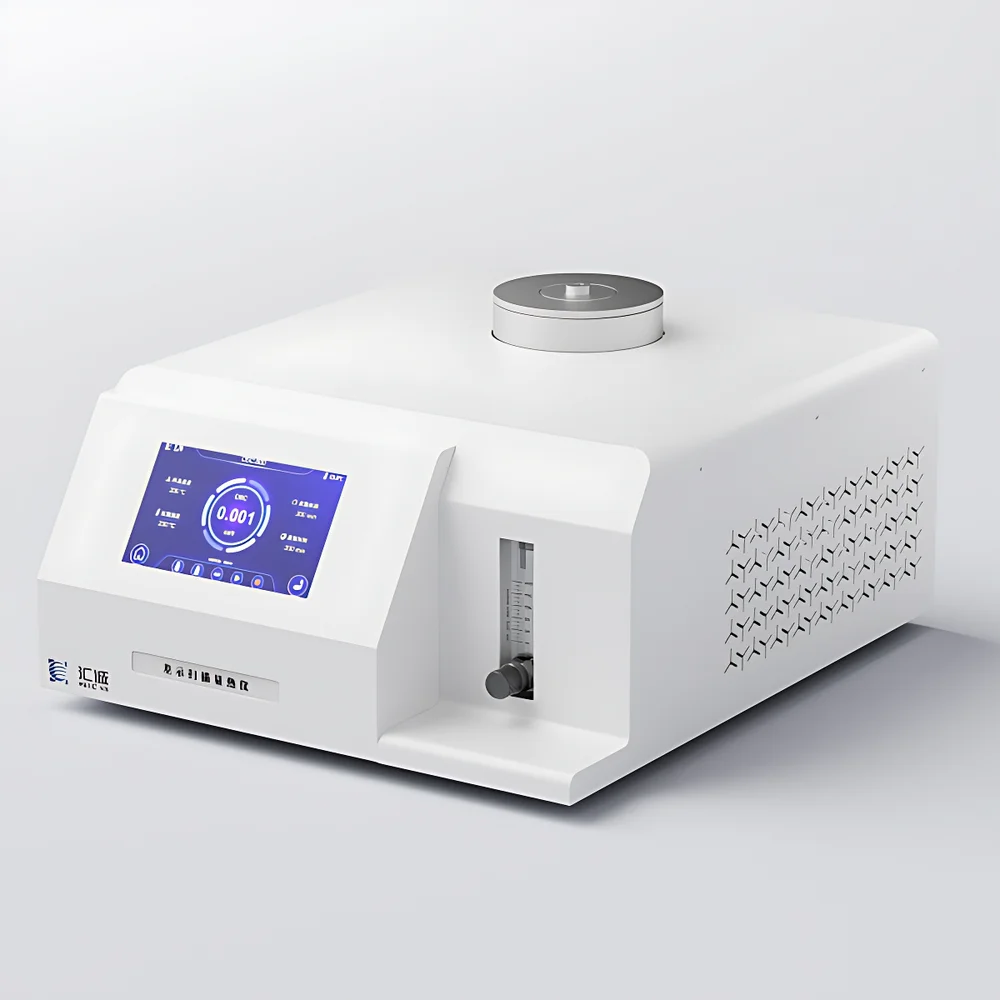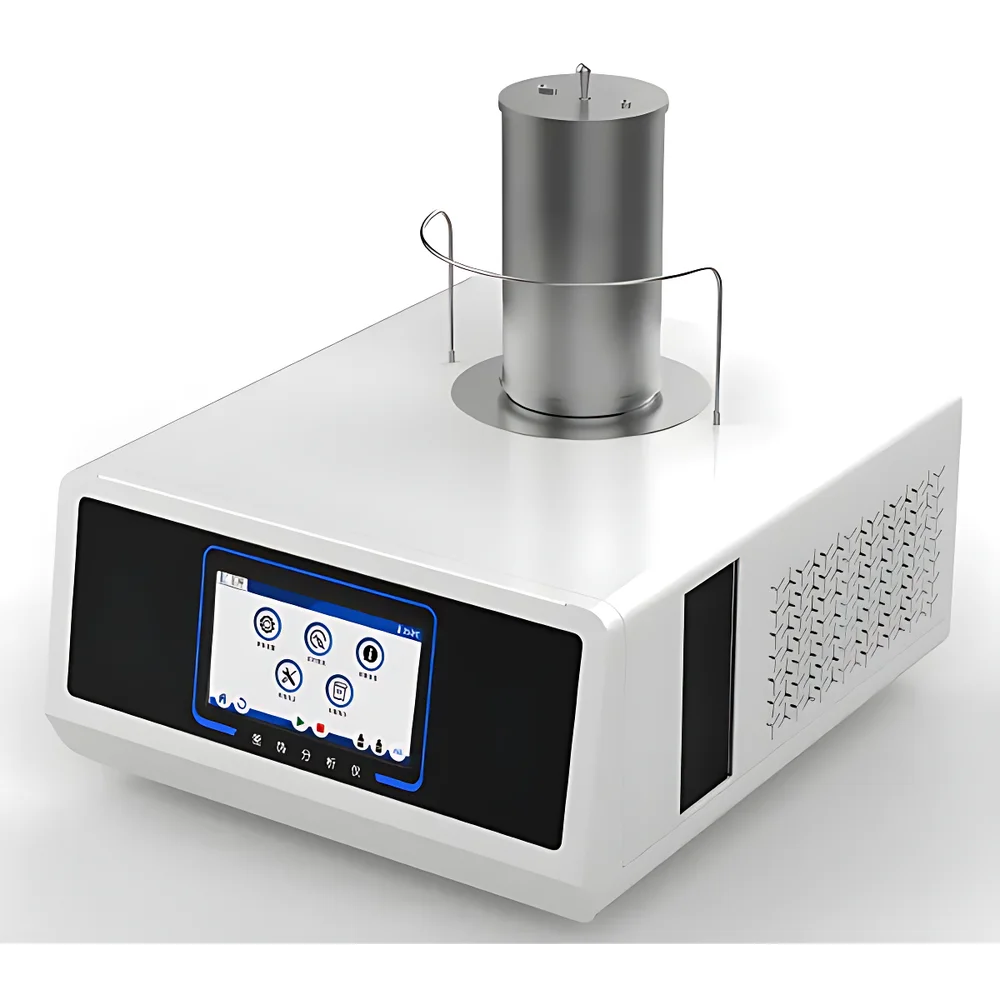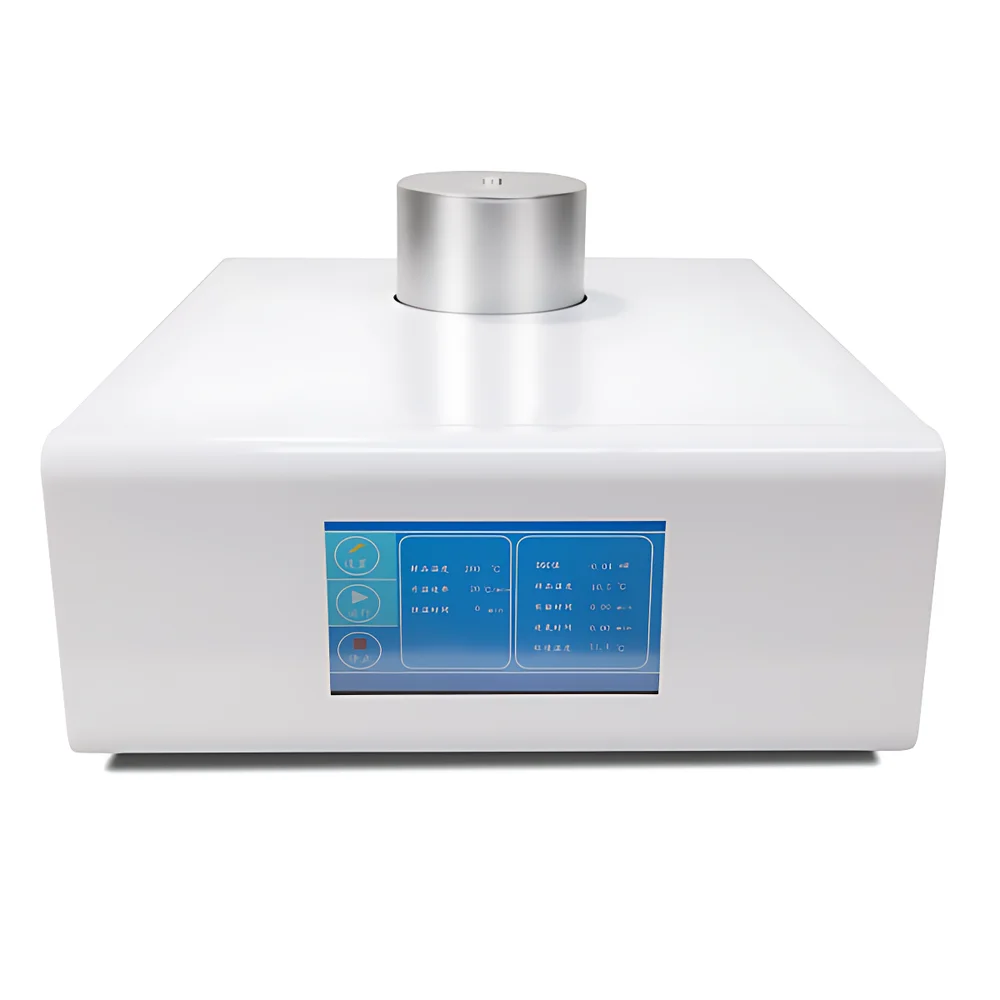
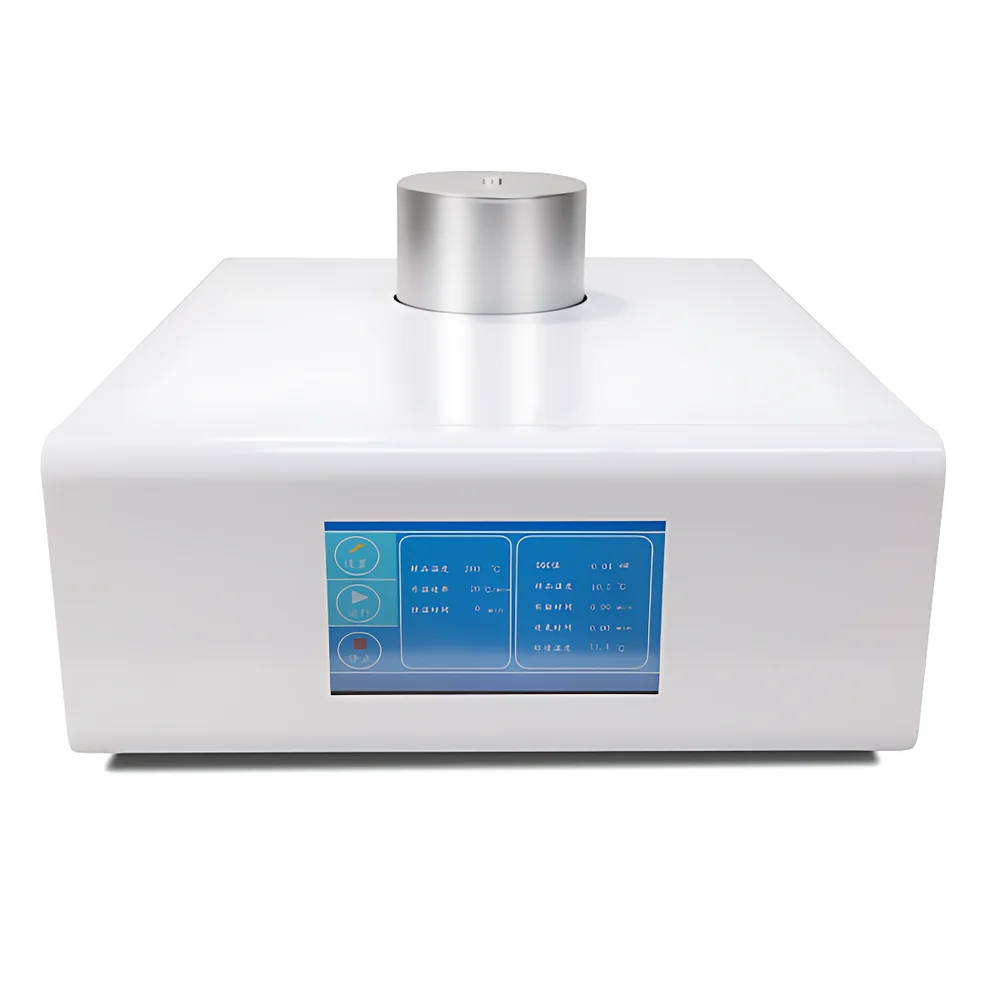
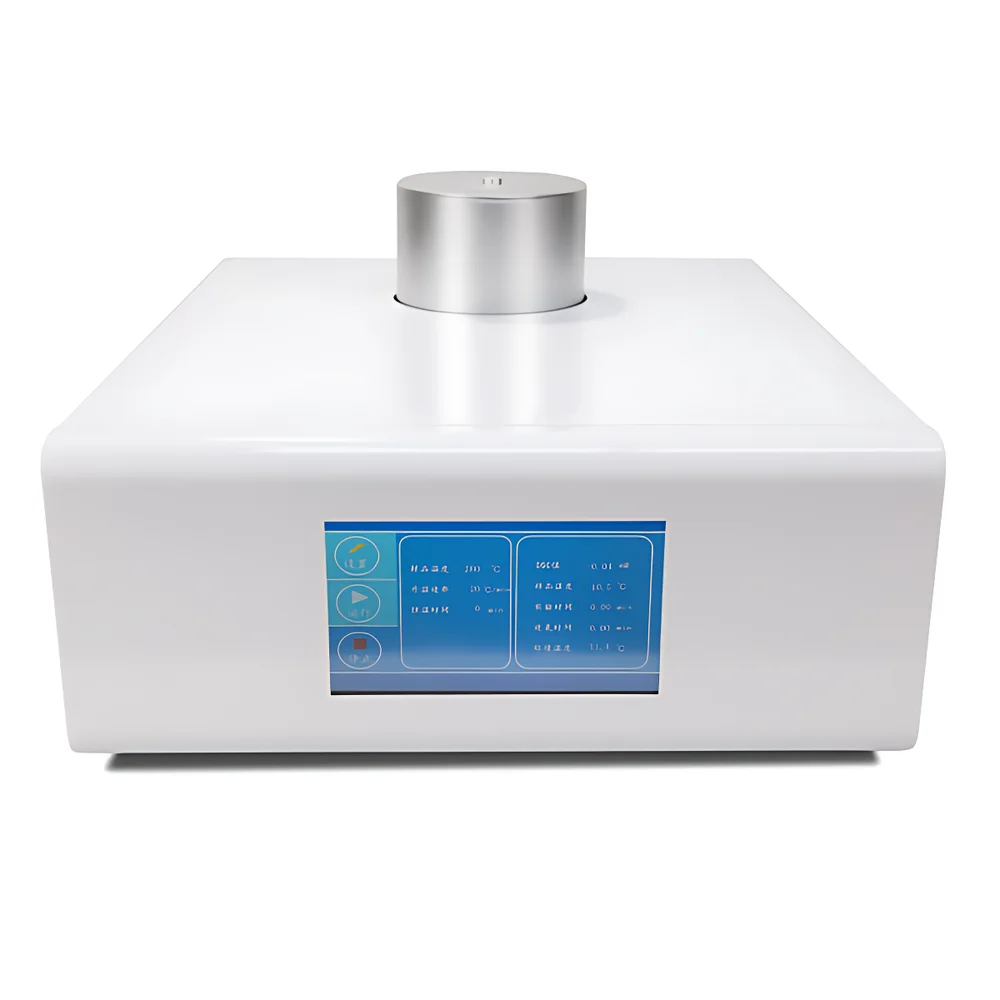
Huicheng Instrument DSC/DTA-600 Differential Scanning Calorimeter

| Brand | Huicheng Instrument |
|---|---|
| Origin | Jiangsu, China |
| Manufacturer Type | Direct Manufacturer |
| Model | DSC/DTA-600 |
| Sample Capacity | Single-sample configuration |
| Instrument Type | Heat-Flux Differential Scanning Calorimeter |
| Temperature Range | –150 °C to 600 °C (with optional liquid nitrogen cooling) |
| Temperature Accuracy | ±0.1 °C |
| Temperature Precision | 0.01 °C |
| Temperature Resolution | 0.01 °C |
| Heating/Cooling Rate | 0.1–80 K/min (heating), 0.1–50 K/min (cooling) |
| DSC Signal Range | 0 to ±2000 mW |
| DSC Noise Level | 0.01 mW |
| DSC Sensitivity | 0.1 mW |
| DSC Resolution | 0.01 mW |
| DSC Accuracy | 0.01 mW |
| Temperature Stability | ±0.1 °C (baseline drift) |
| Atmosphere Control | Dual-gas channel with automated switching and flow regulation (0–200 mL/min, max 0.2 MPa) |
| Control Architecture | ARM Cortex-M3 microcontroller |
| Interface | USB 2.0 bidirectional communication with auto-reconnect capability |
| Display | 7-inch 24-bit color capacitive touchscreen LCD |
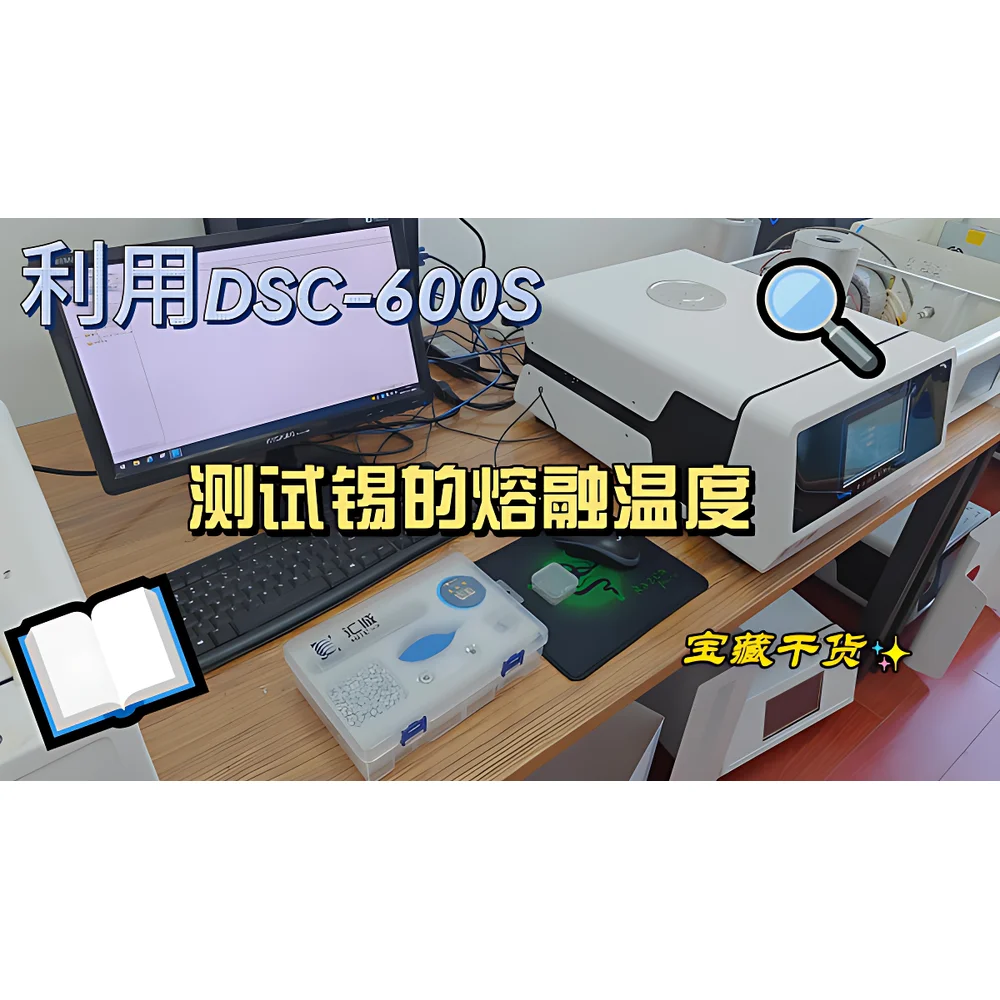
| Calibration | Integrated standard reference materials (e.g., In, Sn, Zn, KCl) with one-click thermal and enthalpy calibration |
| Power Supply | AC 220 V, 50 Hz, 300 W |
Ask about pricing, availability and specifications.
Overview
The Huicheng Instrument DSC/DTA-600 is a high-performance heat-flux differential scanning calorimeter engineered for precise quantification of thermal transitions and energy changes in solid, semi-crystalline, and amorphous materials under controlled temperature programs. Operating on the principle of comparative heat flow measurement between a sample and an inert reference pan within a symmetric, fully enclosed metal furnace, the DSC/DTA-600 delivers exceptional baseline stability and signal-to-noise ratio. Its operational range spans from –150 °C (with integrated liquid nitrogen cooling system) to 600 °C, supporting dynamic thermal analysis across critical material development stages — including polymer processing optimization, pharmaceutical polymorph screening, battery electrode formulation, and inorganic phase stability assessment. The instrument conforms to core international thermal analysis standards, including ASTM E794 (melting point), ASTM E1356 (glass transition), ISO 11357 series (polymer characterization), and USP <1151> (thermal behavior of drug substances).
Key Features
- Fully enclosed, symmetrical aluminum alloy furnace architecture minimizing thermal lag and enhancing resolution for subtle transitions such as cold crystallization or weak glass transitions.
- High-stability alloy-based heat-flux sensor with enhanced corrosion and oxidation resistance, ensuring long-term signal fidelity and reproducibility across repeated thermal cycles.
- Dual independent gas channels with mass-flow-controlled purge (0–200 mL/min) and programmable automatic switching — enabling seamless transition between inert (N₂, Ar), oxidative (air, O₂), or reducing atmospheres without manual intervention.
- Real-time embedded control via ARM Cortex-M3 processor, delivering sub-second temperature response, closed-loop PID tuning, and deterministic execution of multi-stage temperature profiles (up to 12 segments per run).
- Intuitive 7-inch 24-bit color capacitive touchscreen interface with live thermogram overlay, status diagnostics, and direct access to calibration, method setup, and data export functions.
- USB 2.0 interface with robust auto-reconnect protocol ensures uninterrupted data streaming during extended runs (e.g., 72-hr oxidative induction time assays) and compatibility with Windows-based laboratory networks.
- Built-in certified reference materials (indium, tin, zinc, potassium chloride) and one-click calibration workflow compliant with ISO/IEC 17025 traceability requirements for both temperature and enthalpy axes.
Sample Compatibility & Compliance
The DSC/DTA-600 accommodates standard 5–10 mg samples in sealed or vented aluminum, gold-plated, or high-purity ceramic crucibles (compatible with TA Instruments and Netzsch consumables). It supports quantitative analysis of thermally sensitive organics (e.g., APIs, lipids), inorganic oxides, metallic alloys, composites, and battery cathode/anode materials. All hardware and firmware meet CE marking requirements for electromagnetic compatibility (EN 61326-1) and safety (EN 61010-1). Software supports audit trail generation, electronic signatures, and 21 CFR Part 11-compliant user access control when deployed in GLP/GMP environments — configurable via optional software module.
Software & Data Management
Proprietary Huicheng Thermal Analysis Suite (HTAS) provides full instrument control, real-time visualization, and post-run evaluation. Supported operations include baseline subtraction, peak integration (onset, peak, endset), Tg determination via midpoint or inflection methods, crystallinity calculation using enthalpy ratios, oxidative induction time (OIT) extraction per ASTM D3895, and kinetic modeling (e.g., Kissinger, Ozawa-Flynn-Wall). Raw data are stored in vendor-neutral ASCII format (.csv) with metadata headers (timestamp, operator ID, method name, gas conditions); database logging includes all parameter modifications and calibration events. Batch processing, report templating (PDF/Excel), and API-driven integration with LIMS systems are available upon request.
Applications
- Pharmaceuticals: Polymorph identification, hydrate/dehydrate transitions, excipient compatibility screening, and stability-indicating assay development.
- Polymers: Crystallinity degree, melting enthalpy, cold crystallization kinetics, crosslink density estimation, and degradation onset temperature.
- Electrochemical Materials: Solid-electrolyte interphase (SEI) formation enthalpy, cathode thermal runaway thresholds, and binder decomposition profiling.
- Food Science: Fat crystallization kinetics, starch gelatinization enthalpy, and moisture-induced phase transitions in dairy powders.
- Inorganics & Ceramics: Eutectic melting points, polymorphic transformations in TiO₂ or SiO₂, and sintering onset detection.
FAQ
What cooling options are supported for sub-ambient operation?
The DSC/DTA-600 achieves –150 °C using an integrated, pressure-regulated liquid nitrogen cooling system with automated fill-level monitoring and vapor-phase temperature control.
Is the instrument compatible with third-party crucibles and pans?
Yes — standard 40 µL aluminum, gold-coated, and alumina crucibles (diameter 6.7 mm, height 3.5 mm) from major suppliers are mechanically and thermally interoperable.
How is temperature calibration verified across the full range?
Calibration uses NIST-traceable reference materials (In, Sn, Zn, KCl) at five fixed points (–150 °C to 600 °C); HTAS generates deviation reports and applies polynomial correction coefficients automatically.
Can the software generate 21 CFR Part 11-compliant reports?
With the optional GxP Module enabled, HTAS enforces role-based access, electronic signature capture, immutable audit trails, and secure PDF report generation meeting FDA validation expectations.
What maintenance is required for long-term baseline stability?
Annual sensor sensitivity verification and furnace alignment check are recommended; no routine sensor replacement is needed under normal use due to the corrosion-resistant alloy construction.