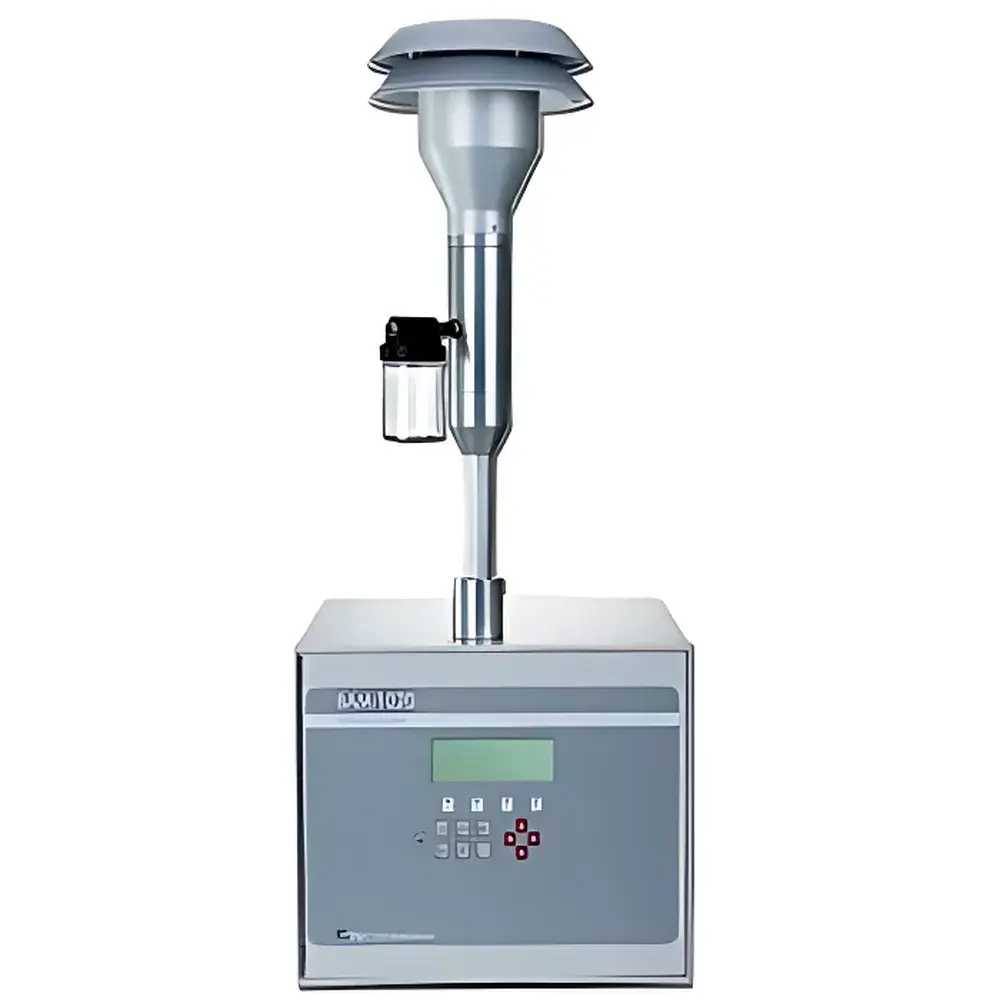
METONE BAM-1020 Beta Attenuation Monitor for PM10 and PM2.5

| Brand | METONE |
|---|---|
| Origin | USA |
| Model | BAM-1020 |
| Measurement Method | Beta Ray Attenuation |
| Measured Parameters | PM10, PM2.5 |
| EPA Certification | EQPM-0798-122 (PM10 FEM), EQPM-0308-170 (PM2.5 Class III FEM) |
| Compliance | CE, NRC, TÜV, CARB, ISO 9001 |
| Range | 0–1000 µg/m³ (configurable up to 10,000 µg/m³) |
| Detection Limit | <1.0 µg/m³ (24-hr), <4.8 µg/m³ (1-hr) |
| Flow Rate | 16.7 L/min (adjustable 0–20 L/min) |
| Filter | Glass fiber tape, 30 mm × 21 m per roll |
| Beta Source | ¹⁴C, 60 µCi ±15 µCi (t₁/₂ = 5730 yr) |
| Data Storage | 182 days of hourly records |
| Operating Temp | –30 °C to +60 °C |
| RH Control | Internal heater, 10–99% RH setpoint |
| Power | 100–230 VAC, 50/60 Hz, <0.4 kW |
| Dimensions | 31 cm (H) × 43 cm (W) × 40 cm (D) |
| Weight | 24.5 kg |
Ask about pricing, availability and specifications.
Overview
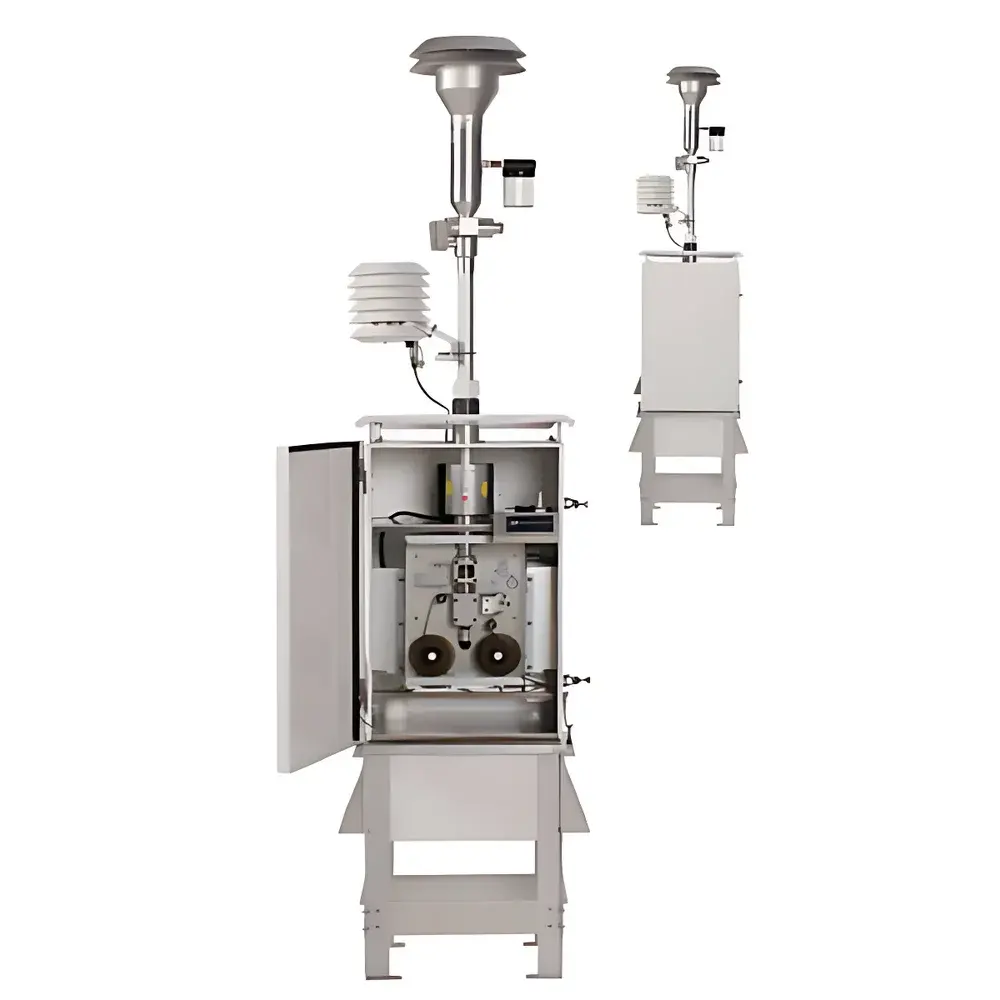
The METONE BAM-1020 Beta Attenuation Monitor is a federally recognized reference-equivalent instrument for continuous ambient air monitoring of particulate matter mass concentration, specifically PM10 and PM2.5. It operates on the physical principle of beta particle attenuation: a calibrated ¹⁴C radioactive source emits high-energy electrons (beta particles) through a moving glass fiber filter tape; as airborne particles deposit onto the tape during sampling, the intensity of transmitted beta radiation decreases proportionally to accumulated mass. This attenuation is quantified by a scintillation detector and converted into mass concentration (µg/m³) using gravimetric calibration relationships and volumetric flow integration. The BAM-1020 is certified by the U.S. Environmental Protection Agency (EPA) as a Federal Equivalent Method (FEM) for both PM10 (EQPM-0798-122) and PM2.5 (EQPM-0308-170, Class III), satisfying regulatory requirements under 40 CFR Part 53 for network-level compliance monitoring. Its design adheres to fundamental metrological principles—traceable calibration, environmental stability, and long-term reproducibility—making it suitable for national air quality networks, regulatory reporting, and long-term trend analysis.
Key Features
- Federally approved FEM for PM10 and PM2.5, validated against EPA performance specifications and internationally accepted in Canada, UK, South Korea, and China
- Automated hourly zero and span calibration using internal reference membranes, eliminating manual intervention during routine operation
- Integrated humidity control via programmable internal heater (10–99% RH setpoint), minimizing hygroscopic bias in particle mass measurement
- Robust mechanical architecture: aluminum housing, stainless-steel tape transport mechanism, and precision-machined flow control system with no moving parts in the critical flow path
- Low-maintenance operational cycle—filter tape replacement every 60–90 days; full system maintenance required only every 1–2 months under continuous deployment
- Onboard data logger with non-volatile memory supporting 182 days of hourly averaged concentration, flow, temperature, pressure, and diagnostic logs
- RS-232 serial interface compliant with standard MODBUS RTU protocol for seamless integration into SCADA or central data acquisition systems
- Modular sensor compatibility: supports up to six auxiliary meteorological sensors (e.g., wind speed/direction, temperature, relative humidity, barometric pressure, precipitation)
Sample Compatibility & Compliance
The BAM-1020 accepts standardized cut-point-selective inlet assemblies—including FRM-certified PM10 and PM2.5 cyclones—and is compatible with third-party sampling heads from BGI Inc. for TSP or custom size-fractionated measurements. All inlet configurations are designed to meet ISO 12103-1 (A2 test dust) and EPA Reference Method PS-1 performance criteria. The instrument complies with multiple international regulatory frameworks: U.S. EPA 40 CFR Part 53 (FEM), Canadian NRC EN 12341:2014 equivalency, EU Directive 2008/50/EC Annex VI, and China’s HJ 653-2013 technical specification for PM monitoring instruments. Its certification documentation includes full traceability to NIST-traceable standards, and its software architecture supports audit-ready data integrity features aligned with GLP and GMP principles where applicable.
Software & Data Management
Data acquisition and configuration are managed via METONE’s MicroMet Plus® and Comet® software suites, which provide secure local or remote access to real-time instrument status, historical datasets, calibration logs, and error diagnostics. The system supports automated data export in CSV, XML, and ASCII formats, with configurable time-stamping and metadata tagging (e.g., site ID, operator ID, QA/QC flags). All stored records include embedded timestamps, flow-corrected volume integrals, raw beta counts, and hardware health indicators (e.g., tape tension, motor current, detector voltage). Software-generated reports conform to EPA Form 1003 and EU Air Quality Reporting Annex V requirements. While the BAM-1020 does not natively implement FDA 21 CFR Part 11 electronic signature controls, its data structure and logging protocol support external validation for regulated environments when deployed with validated third-party middleware.
Applications
- Regulatory ambient air quality monitoring networks operated by national and municipal environmental agencies
- Long-term epidemiological exposure assessment studies requiring high temporal resolution and metrological continuity
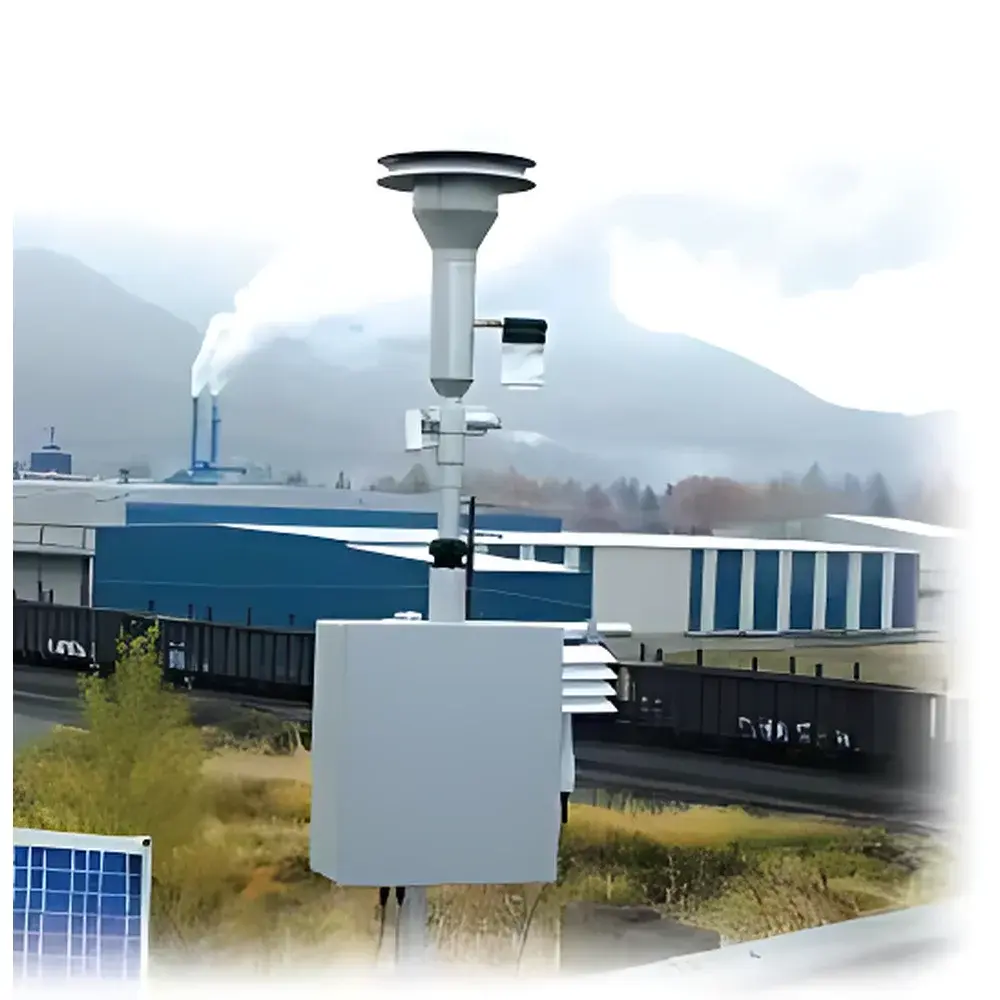
- Industrial fence-line monitoring where real-time PM trends inform process control or emission mitigation strategies
- Research-grade field campaigns evaluating aerosol optical properties, hygroscopic growth, or source apportionment models
- Calibration transfer studies between reference-grade monitors and lower-cost sensor networks
- Compliance verification for construction sites, waste incinerators, and mining operations under permit conditions
FAQ
What is the physical basis of beta attenuation measurement?
Beta attenuation relies on the exponential reduction in beta particle transmission through a medium proportional to its areal mass density. As particles accumulate on the filter tape, attenuation increases linearly with deposited mass, enabling direct gravimetric inference without solvent extraction or thermal treatment.
How often must the ¹⁴C source be replaced?
The ¹⁴C beta source has a half-life of 5730 years; activity decay is negligible over the instrument’s service life—no source replacement is required during normal operation.
Can the BAM-1020 measure TSP?
Yes, when equipped with an appropriate total suspended particulate (TSP) inlet—such as a 100-mm diameter isokinetic sampler—following ISO 10112 and EPA Method 1 protocols.
Is remote firmware update supported?
Firmware updates require local physical access and must be performed using METONE-approved tools and signed binaries; remote updates are disabled by design to ensure regulatory compliance and data integrity.
Does the instrument meet ISO/IEC 17025 requirements for accredited laboratories?
While the BAM-1020 itself is not a laboratory instrument, its measurement methodology, calibration traceability, and documented uncertainty budget align with ISO/IEC 17025 Clause 5.4.2 for field-deployed reference methods when operated within defined environmental and procedural constraints.