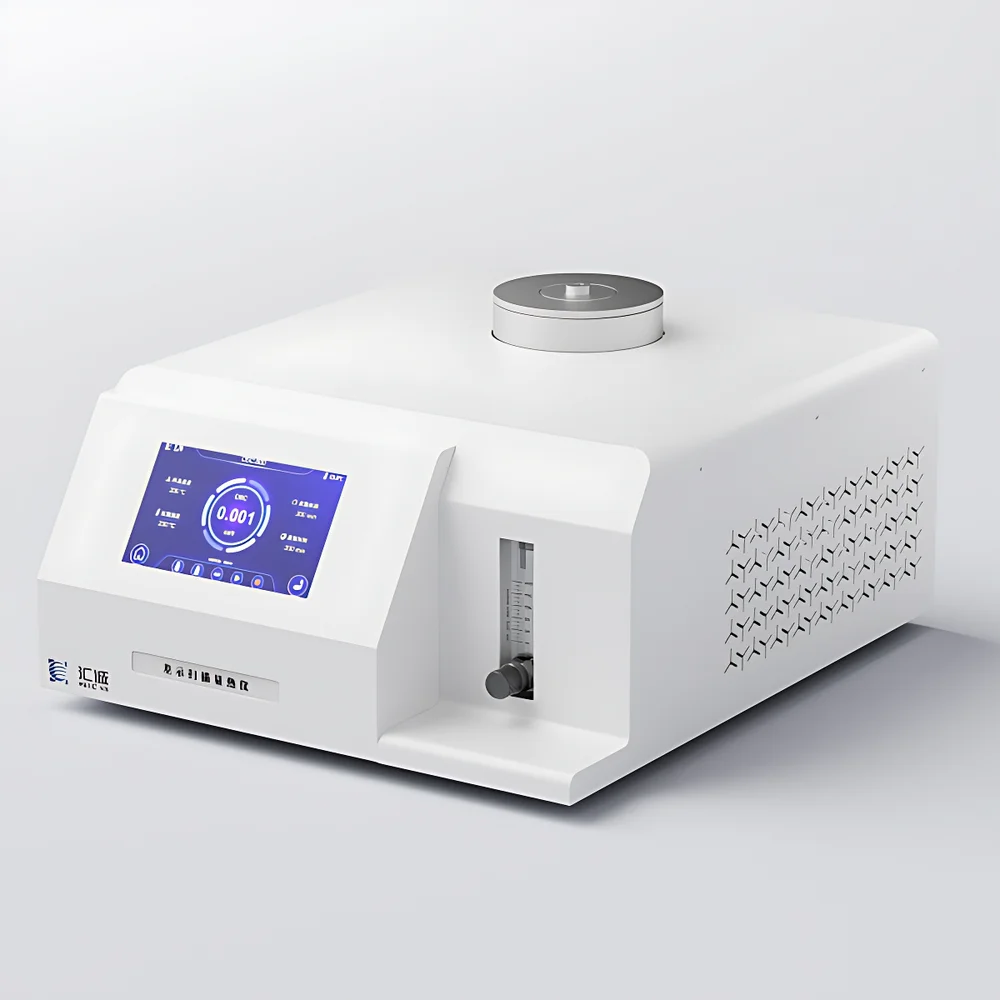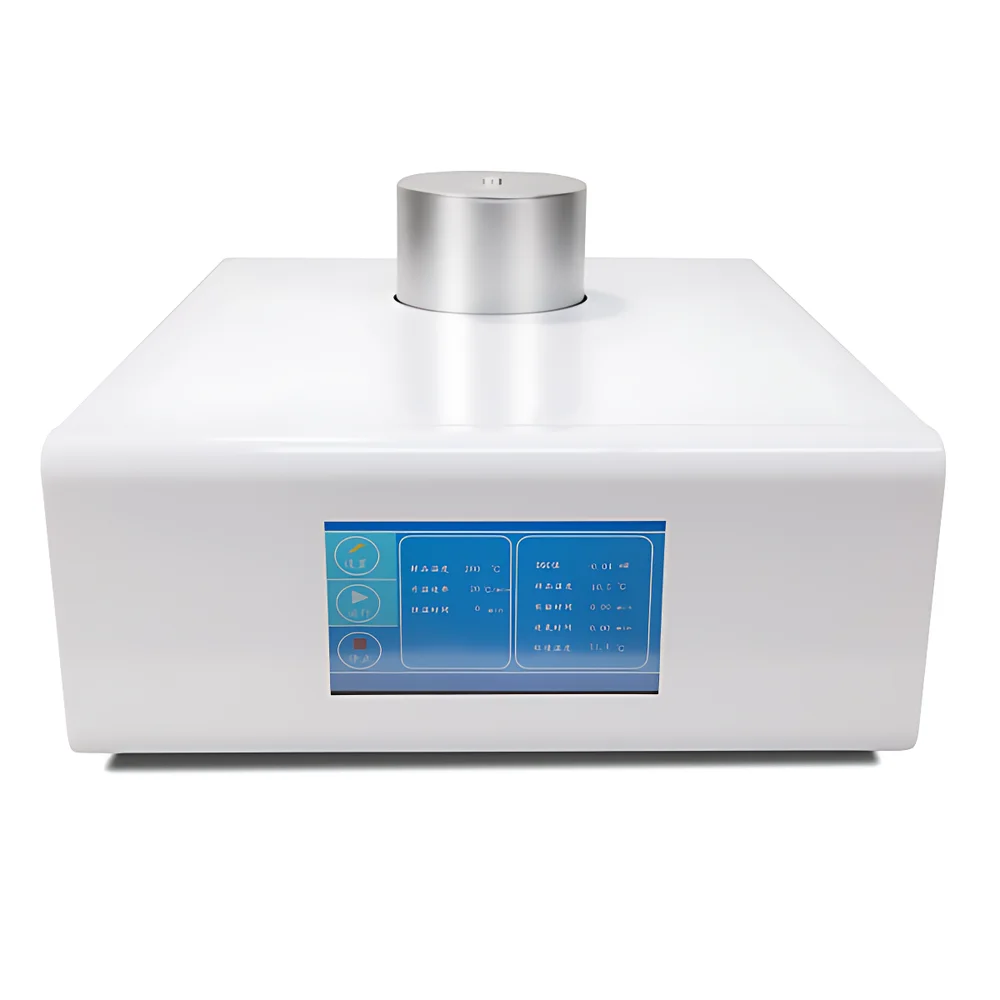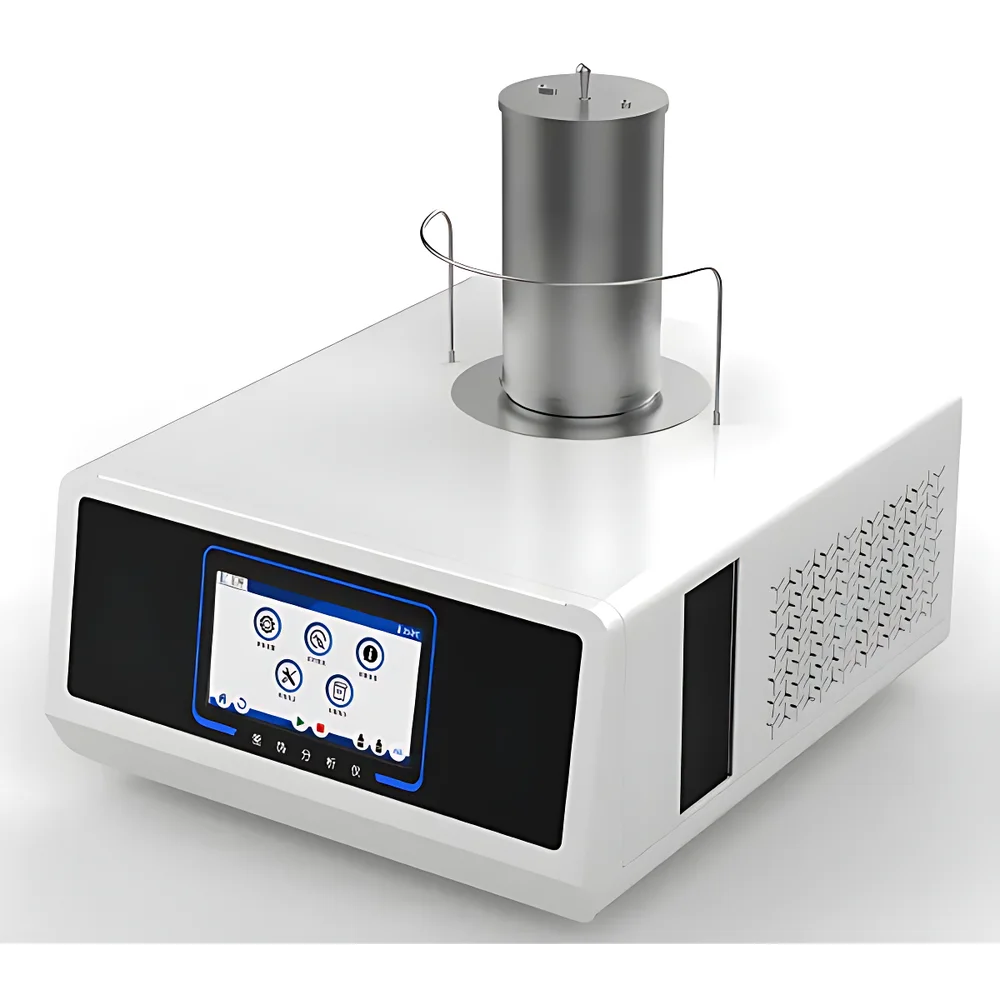
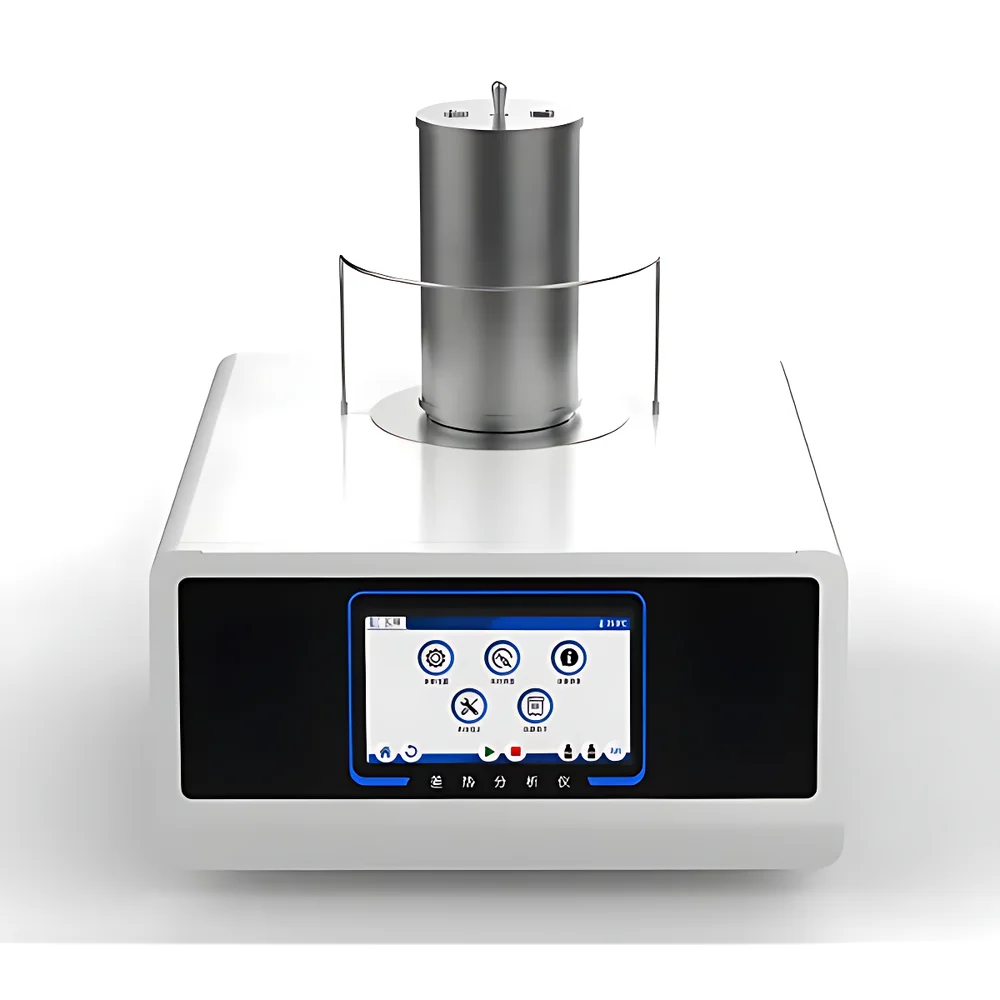
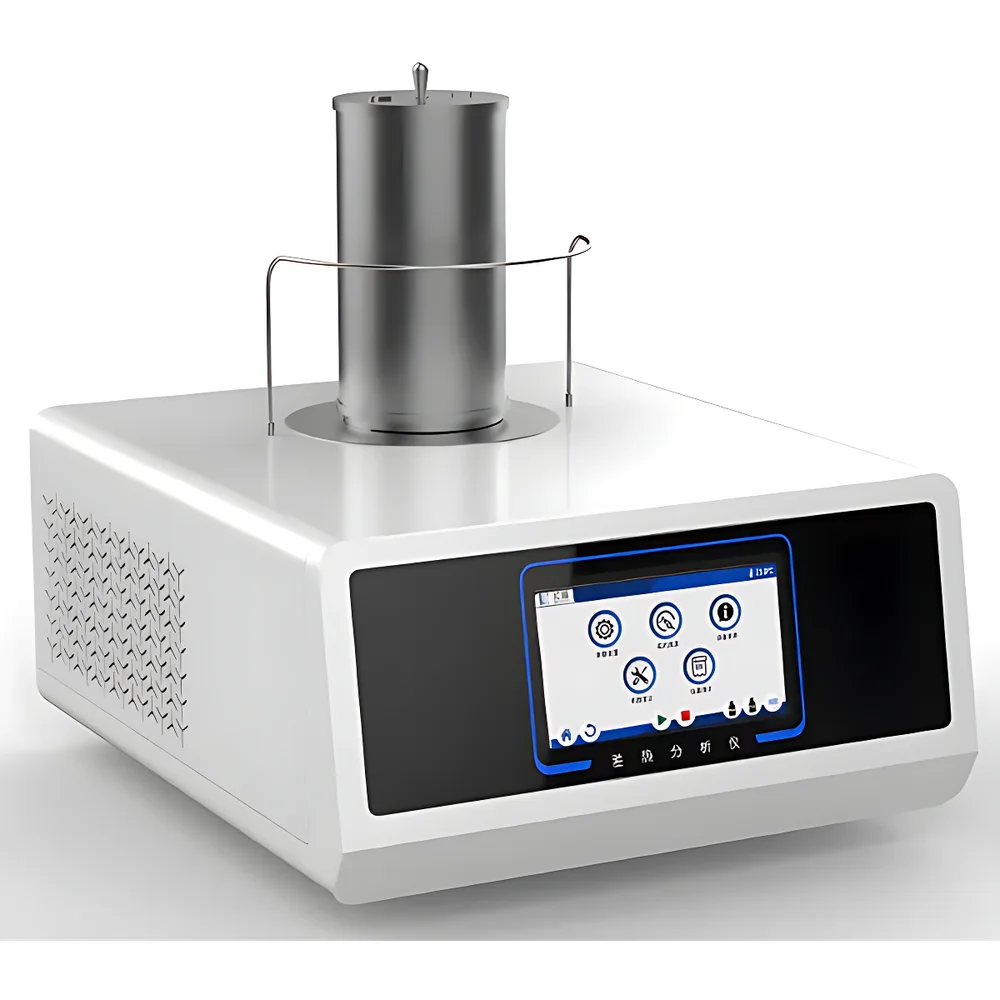
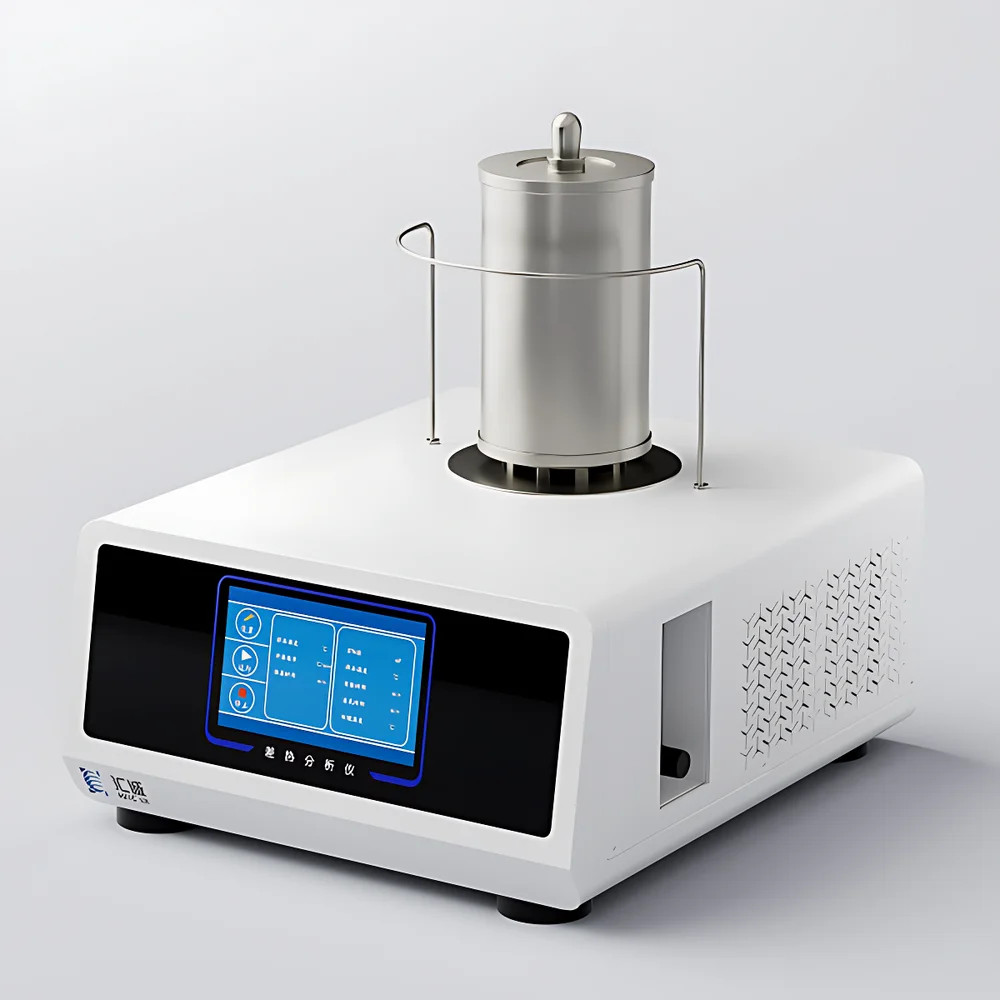
Huicheng Instrument DTA-1550S Differential Thermal Analyzer

| Brand | Huicheng Instrument |
|---|---|
| Origin | Jiangsu, China |
| Manufacturer Type | Direct Manufacturer |
| Model | DTA-1550S |
| Sample Capacity | Single-sample configuration |
| Instrument Type | Differential Thermal Analyzer (DTA) |
| Temperature Range | Ambient to 1550 °C (with Pt/Rh thermocouple) |
| Temperature Accuracy | ±0.01 °C |
| Temperature Resolution | 0.01 °C |
| Temperature Stability | ±0.01 °C |
| Heating/Cooling Rate | 0.1–80 °C/min |
| Temperature Control Modes | FTC (Fixed Temperature Control) and STC (Sample Temperature Control), software-selectable |
| Scan Types | Heating, cooling, isothermal |
| Programmable Temperature Stages | Up to 12-stage linear or non-linear ramp/hold profiles |
| Cycle Repetition | Up to 9999 automatic cycles with auto-save |
| DTA Signal Range | 0 to ±2000 μV |
| DTA Sensitivity | 0.001 μV |
| DTA Resolution | ±0.001 μV |
| Thermocouple Compatibility | S-type (standard), K-type and E-type (optional, software-switchable) |
| Atmosphere Control | Dual independent gas channels with automated switching |
| Data Acquisition Rate | 1–10 Hz, user-configurable |
| Display | 7-inch 24-bit color LCD touchscreen |
| Communication Interface | USB 2.0 bidirectional |
| Calibration | Multi-point temperature calibration supported on both embedded controller (lower-level) and PC software (upper-level) |
| Reference Standards | Compliant with GB/T 19466.3–2004 and ISO 11357-3:1999 (Part 3: Determination of melting and crystallization temperatures and enthalpies) |
Ask about pricing, availability and specifications.
Overview
The Huicheng Instrument DTA-1550S is a high-precision differential thermal analyzer engineered for quantitative measurement of endothermic and exothermic transitions in solid and semi-crystalline materials under controlled thermal conditions. Operating on the fundamental principle of differential thermal analysis (DTA), the instrument continuously monitors the temperature difference (ΔT) between a sample and an inert reference material as both are subjected to identical, programmable thermal histories. Unlike DSC, which measures heat flow, DTA detects relative temperature deviations arising from latent heat effects—such as phase transitions, polymorphic transformations, decomposition, oxidation, reduction, dehydration, and glass transitions—making it especially suitable for qualitative and semi-quantitative thermal event mapping in ceramics, metals, inorganic compounds, and high-temperature polymers.
Key Features
- Ceramic-insulated, fully enclosed furnace architecture optimized for thermal homogeneity and signal-to-noise ratio, enabling stable baselines and enhanced resolution of closely spaced thermal events.
- Dual independent temperature sensing: simultaneous real-time monitoring of furnace zone temperature and sample-stage temperature via separate, high-stability thermocouples—critical for accurate STC-mode operation.
- Programmable 12-stage thermal profiling with support for linear, stepwise, and isothermal segments; full-cycle repetition up to 9999 times with automatic timestamped data archiving.
- Intelligent dual-atmosphere control system with two independently regulated gas lines (e.g., N₂, Ar, O₂, air), automatically switched per method step to maintain precise oxidative or inert environments without manual intervention.
- Advanced dynamic PID algorithm with adaptive tuning across heating, cooling, and hold phases—eliminating overshoot, reducing settling time, and improving reproducibility across wide rate ranges (0.1–80 °C/min).
- Flexible thermocouple compatibility: S-type (standard, rated to 1550 °C), plus optional K-type and E-type sensors—software-selectable to match application-specific sensitivity, temperature range, and chemical compatibility requirements.
- Configurable data acquisition: sampling frequency adjustable from 1 to 10 Hz, balancing temporal resolution with file size and storage efficiency for long-duration isothermal or low-rate experiments.
- Embedded multi-point calibration routines accessible both locally (via touchscreen) and remotely (via PC software), ensuring traceable accuracy across the full operating range using certified reference materials (e.g., In, Sn, Zn, Al, Ag).
Sample Compatibility & Compliance
The DTA-1550S accommodates standard crucibles (alumina, platinum, graphite) with capacities up to 100 mg and supports powders, granules, thin films, and bulk solids. Its design conforms to internationally recognized thermal analysis standards, including ISO 11357-3:1999 (Part 3: Determination of melting and crystallization temperatures and enthalpies) and GB/T 19466.3–2004. While DTA itself does not provide absolute enthalpy values, its high-resolution ΔT detection enables reliable identification and comparative quantification of transition onset, peak, and offset temperatures—essential for QC release testing, raw material verification, and failure analysis in GMP-regulated environments. The system supports audit-ready data logging with electronic signatures, time-stamped metadata, and immutable method files—aligning with FDA 21 CFR Part 11 expectations when deployed with validated software configurations.
Software & Data Management
Control and analysis are performed via a Windows-based application featuring intuitive method building, real-time curve overlay, and automated event detection. The software includes baseline subtraction, tangent-onset and peak-maximum algorithms for Tg, Tm, Tc, and Tonset determination, as well as oxidation induction time (OIT) calculation per ASTM D3895. All raw data (ΔT vs. T/time) are stored in open ASCII format for third-party processing. USB 2.0 communication ensures deterministic latency-free command execution and synchronized data streaming. Firmware and software updates are delivered via secure HTTPS download with version-controlled release notes and change logs.
Applications
- Identification and characterization of solid–solid phase transitions (e.g., martensitic, polymorphic, ferroelectric) in functional ceramics and battery cathode materials.
- Thermal stability assessment of refractory oxides, carbides, and nitrides under inert or oxidizing atmospheres.
- Decomposition kinetics studies of metal hydrates, carbonates, and organic–inorganic hybrids.
- Qualitative screening of polymer crystallinity, crosslink density, and filler–matrix interactions via cold-crystallization and melt-recrystallization behavior.
- Validation of thermal processing parameters (e.g., sintering, annealing, calcination) in advanced manufacturing workflows.
- Supporting GLP-compliant material qualification dossiers for aerospace, nuclear, and medical device applications where thermal history traceability is mandated.
FAQ
What thermocouple types are supported, and how do I select them?
The DTA-1550S ships with an S-type thermocouple (Pt–10%Rh vs. Pt) as standard for high-temperature operation up to 1550 °C. K-type and E-type thermocouples are available as optional accessories and can be selected directly within the software interface prior to method execution.
Can the instrument perform simultaneous heating and cooling scans?
No—the DTA-1550S executes one thermal mode per run (heating, cooling, or isothermal). However, multi-step programs allow sequential heating → hold → cooling sequences within a single method file.
Is the system compliant with ISO/IEC 17025 calibration requirements?
Yes—when used with certified reference materials and documented calibration procedures, the dual-point (furnace + sample) calibration architecture supports metrological traceability to national standards. Full calibration records—including date, operator, reference points, and residuals—are exportable as PDF or CSV.
How is atmosphere purity maintained during switching between gas lines?
The integrated mass-flow-controlled dual-gas manifold includes purge delay timers and pressure-sensing interlocks to ensure complete line purging before valve actuation, minimizing cross-contamination and preserving experimental integrity.
Does the software support automated report generation for regulatory submissions?
Yes—the reporting module generates customizable PDF reports containing method parameters, raw curves, annotated transition points, calibration certificates, and instrument ID metadata—structured to meet internal QA templates and external regulatory review criteria.