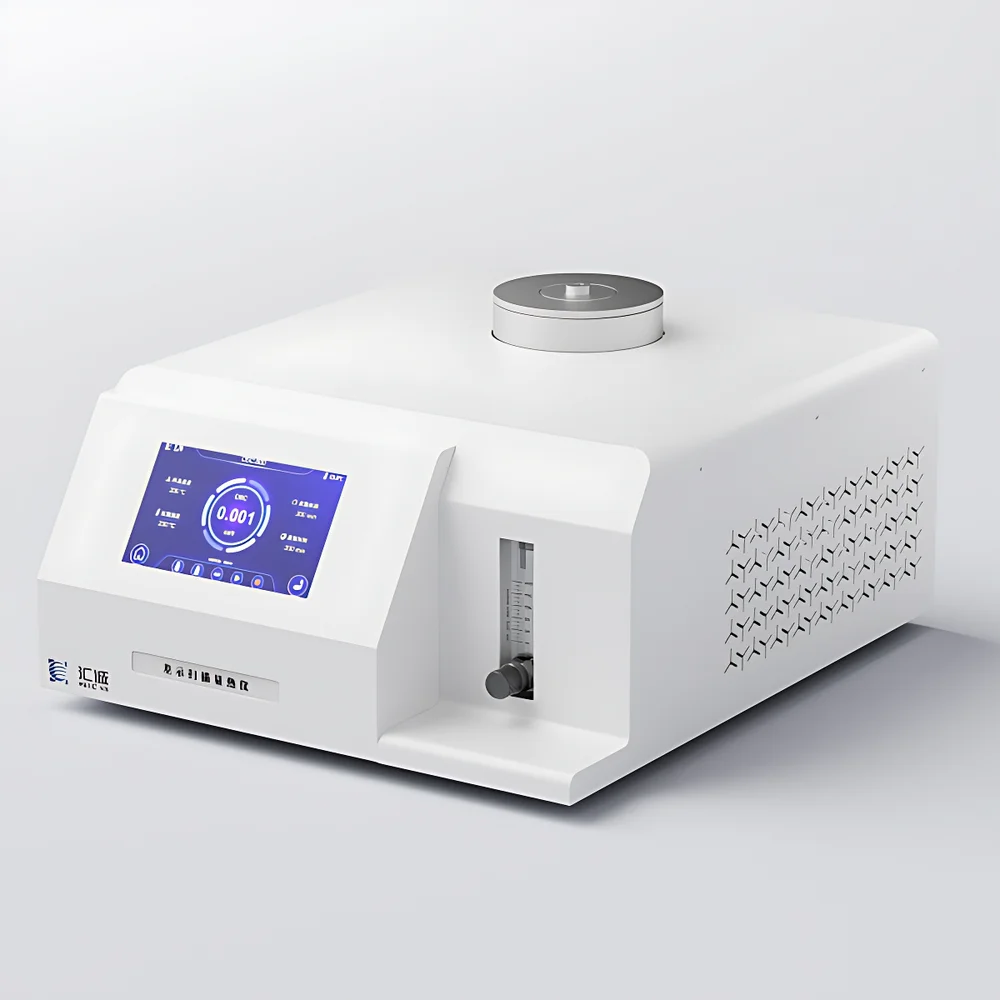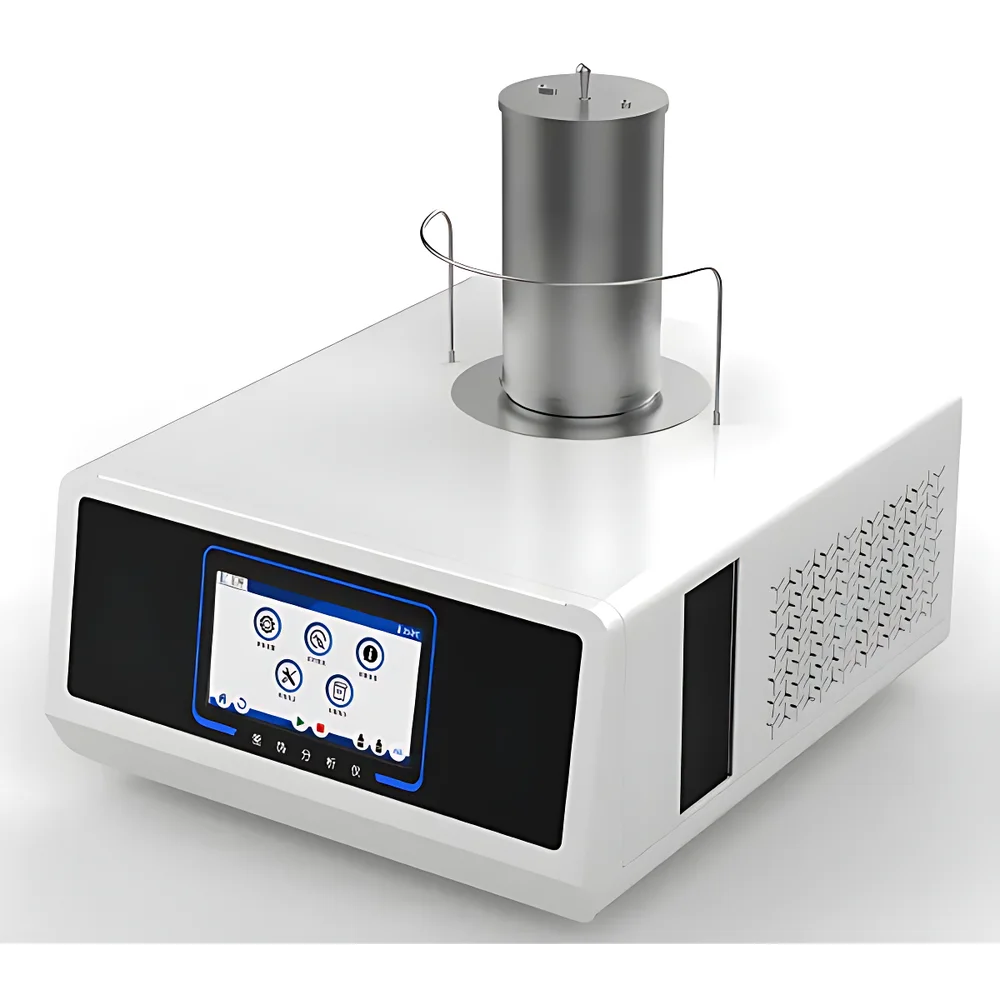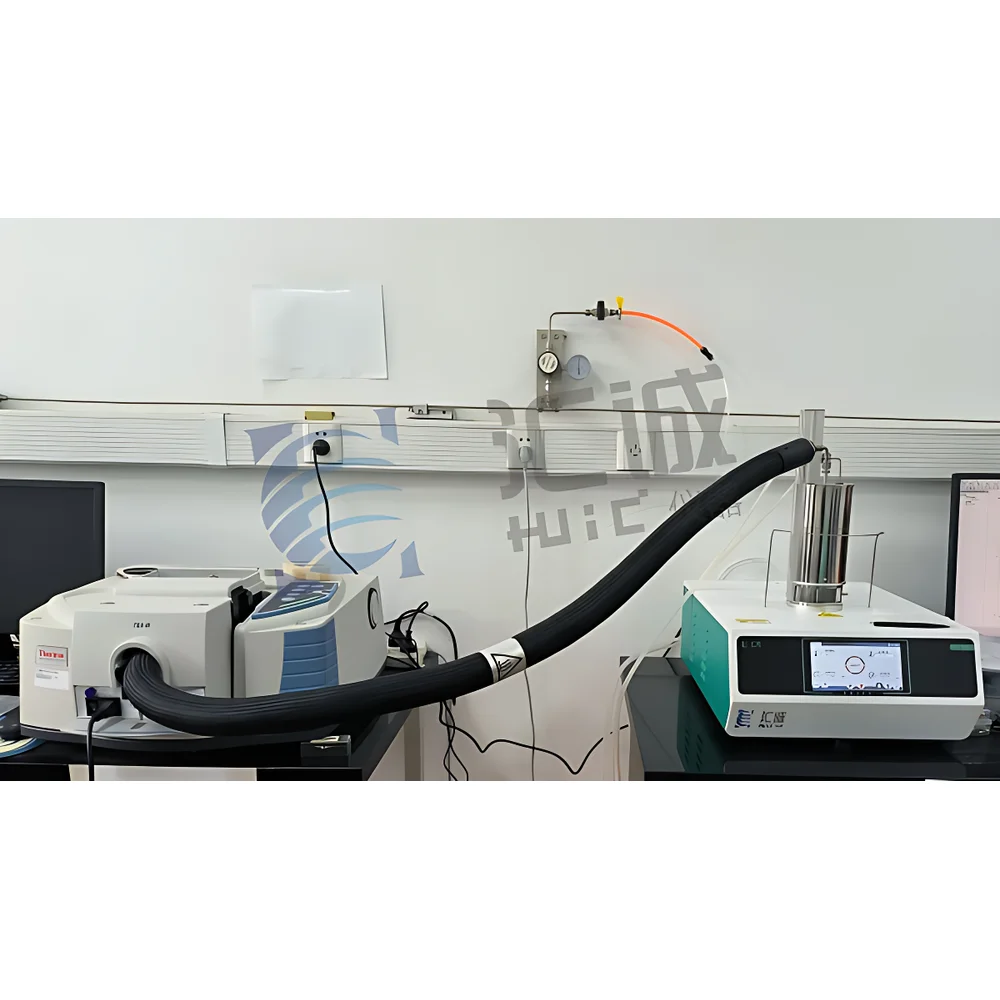
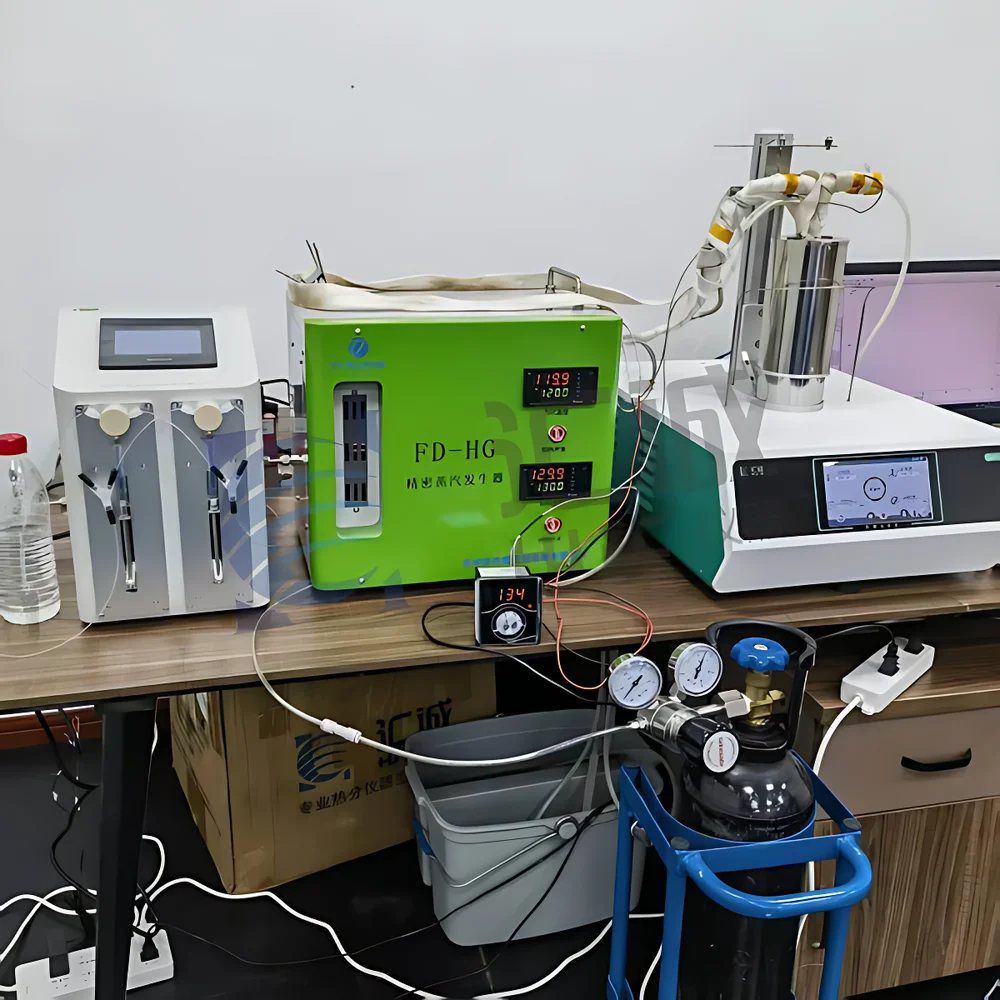
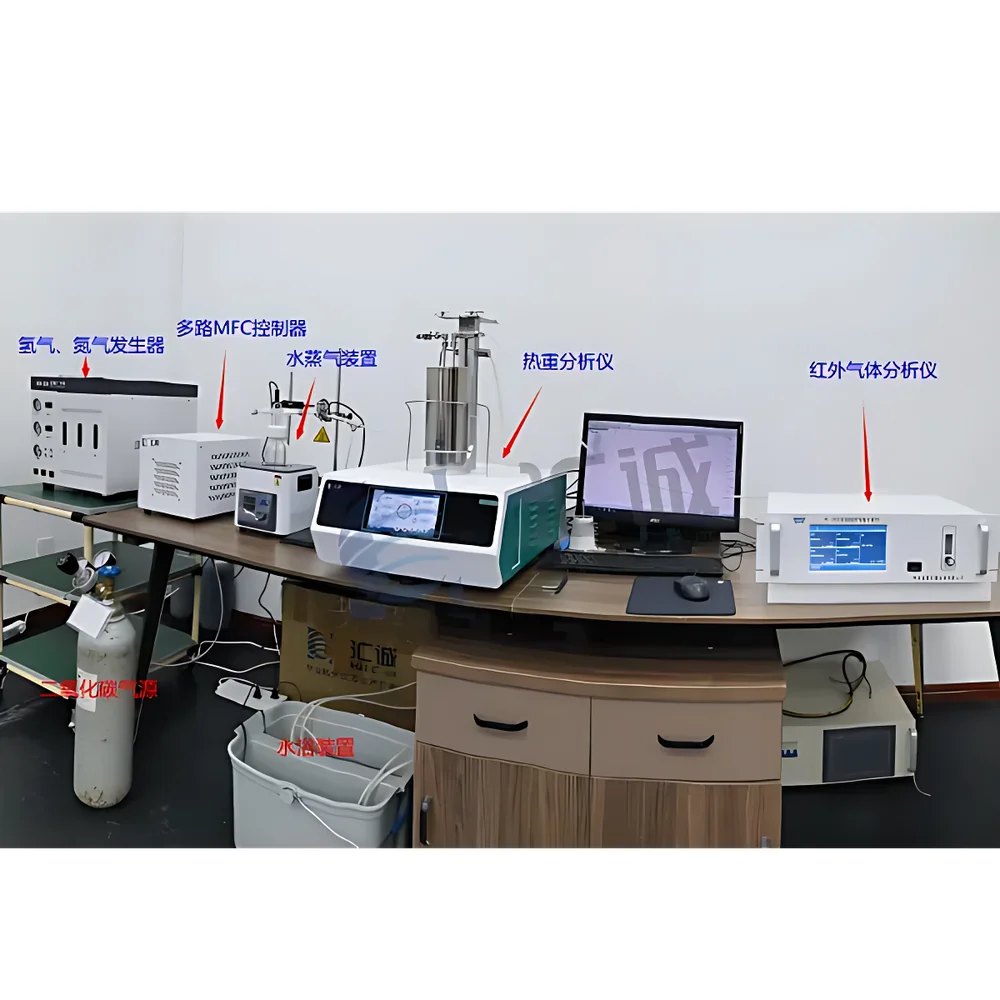
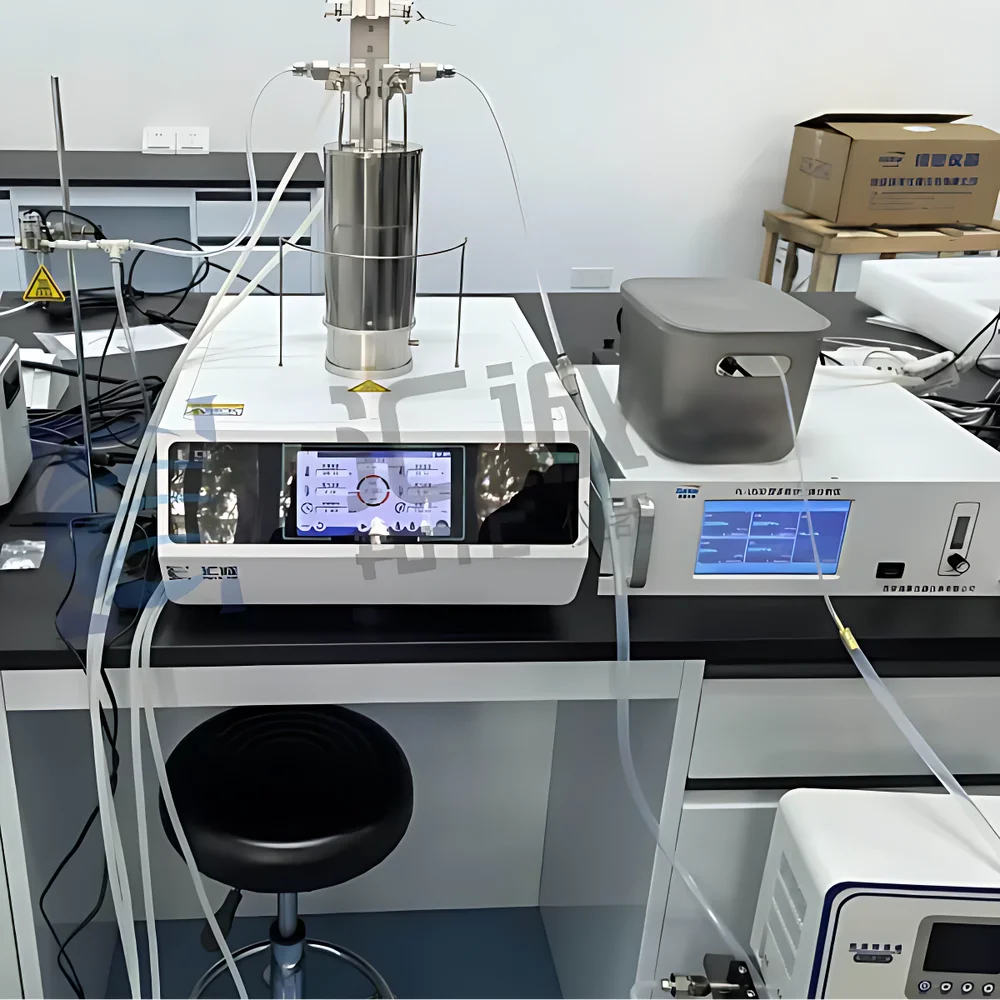
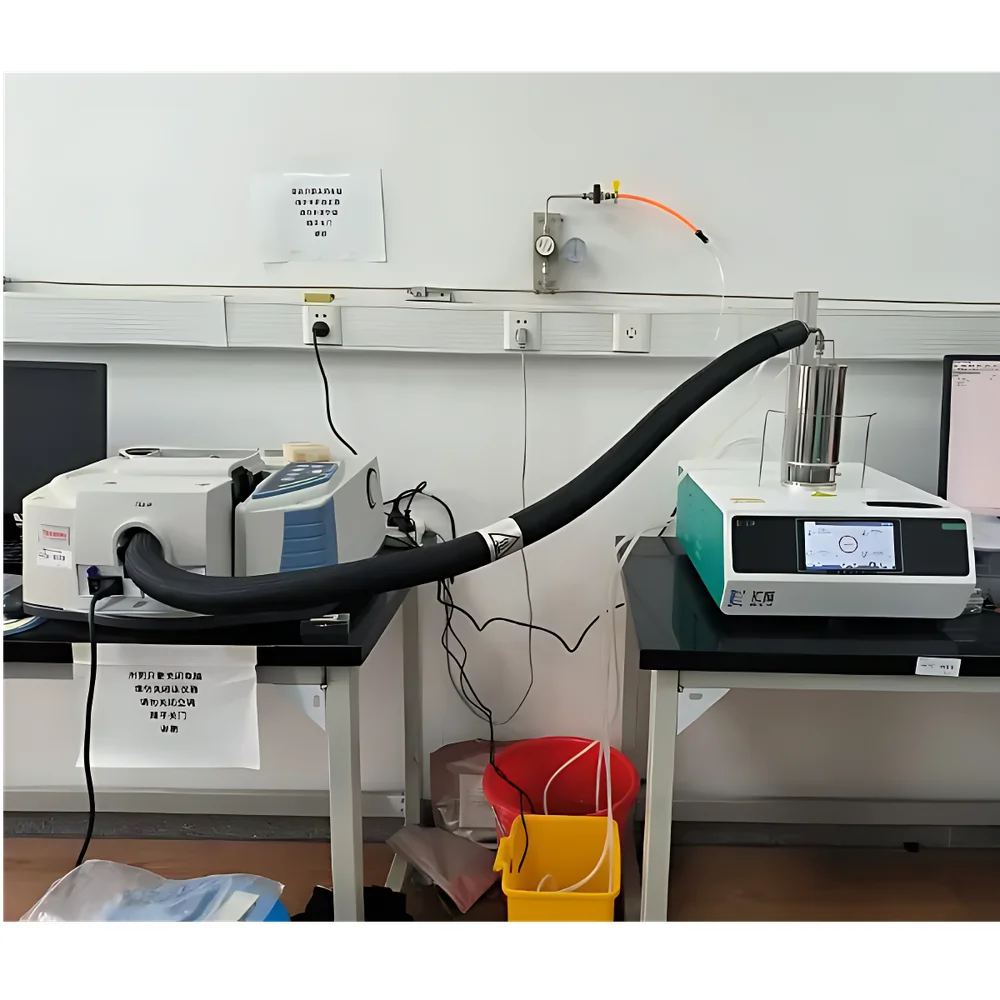
Huicheng Instrument TGA-601S Multi-Atmosphere Coupled Thermal Gravimetric Analyzer with FTIR Interface

| Brand | Huicheng Instrument |
|---|---|
| Origin | Jiangsu, China |
| Manufacturer Type | Direct Manufacturer |
| Origin Category | Domestic (China) |
| Model | TGA-601S |
| Price | USD 22,000 (FOB Jiangsu) |
| Gas Compatibility | N₂, H₂, CO₂, CH₄, H₂O(vapor) |
| Coupling Interface | Standard FTIR effluent port (KBr beam path, 2 m transfer line compatible) |
| Control Architecture | Triple-MFC + microprocessor-driven solenoid valve array with interlock logic |
| Software | Local touchscreen HMI + PC-based control suite with 12-stage programmable gas sequencing, auto-tare, and cyclic experiment management |
Ask about pricing, availability and specifications.
Overview
The Huicheng Instrument TGA-601S Multi-Atmosphere Coupled Thermal Gravimetric Analyzer is an engineered solution for high-fidelity thermogravimetric analysis under dynamically controlled reactive and inert atmospheres. Built upon the robust platform of the TGA-601S baseline system, this configuration integrates a triple-channel mass flow-controlled gas delivery architecture, enhanced furnace sealing, and standardized coupling interfaces for real-time evolved gas analysis—most commonly with Fourier Transform Infrared (FTIR) spectrometers. The instrument operates on the principle of precision microbalance measurement (±0.1 µg resolution) synchronized with programmable thermal ramps (0.1–100 °C/min) and precisely timed gas environment transitions. It is designed for laboratories requiring reproducible quantification of mass loss, gain, or retention events—such as oxidative degradation, catalytic reduction, carbonate decomposition, or hydrate dehydration—under atmospheres including dry/wet nitrogen, hydrogen, carbon dioxide, methane, and saturated water vapor. Its architecture conforms to fundamental requirements for GLP-compliant thermal analysis workflows, supporting traceable calibration, audit-ready data logging, and operator-defined atmosphere profiles aligned with ASTM E1131, ISO 11358, and USP residual solvent methodology frameworks.
Key Features
- Triple independent gas channel control via calibrated MFCs (0–100 mL/min range, ±1% FS accuracy), enabling simultaneous or sequential delivery of N₂, H₂, CO₂, CH₄, and humidified N₂
- Three-tier gas conditioning architecture: (1) primary MFC-regulated inlet streams; (2) dual-path nitrogen splitting (dry/wet) with integrated saturator and temperature-stabilized humidification chamber; (3) programmable solenoid valve matrix with hardware-enforced interlocks preventing concurrent dry/wet N₂ activation
- Redesigned furnace assembly featuring high-purity alumina insulation, metal-ceramic sealed gas inlets, and leak-tested quartz sample chamber—validated to <1×10⁻⁸ mbar·L/s He leak rate per ASTM E407
- Dedicated FTIR coupling port with heated transfer line (up to 250 °C), KBr optical window, and pressure-balanced purge interface to minimize condensation and spectral distortion
- Integrated local HMI touchscreen with real-time MFC flow display, manual override buttons, and emergency gas cutoff triggers
- PC-based software with 12-stage atmosphere programming—each stage independently assignable to any supported gas, flow rate, and dwell time, fully synchronized with temperature ramp segments
Sample Compatibility & Compliance
The TGA-601S coupled system accommodates solid and powdered samples up to 100 mg in standard platinum or alumina crucibles (diameter: 5 mm, depth: 5 mm). It supports quantitative analysis of polymers, catalysts, battery electrode materials, pharmaceutical excipients, and geological carbonates under atmospheres relevant to industrial process simulation—including reducing (H₂), carburizing (CH₄/CO₂), and hydrolytic (H₂O/N₂) environments. All gas handling components comply with ISO 8573-1 Class 4 purity standards for compressed gases. System firmware and data acquisition modules are structured to support 21 CFR Part 11-compliant electronic records when deployed with validated software configurations, including user access control, electronic signatures, and immutable audit trails for method parameters, raw TGA curves, and FTIR spectral metadata.
Software & Data Management
Control is executed through a dual-interface architecture: a local 7-inch resistive touchscreen provides immediate access to gas selection, flow adjustment, and emergency shutdown without PC dependency; the desktop application delivers advanced experimental orchestration. Key software capabilities include automatic tare compensation prior to each run, cyclic experiment sequencing (up to 99 repetitions with individual file naming and timestamped metadata), and synchronized export of time-aligned TGA mass-loss derivatives (DTG), temperature, gas flow logs, and FTIR absorbance spectra in ASTM E131-compliant .spa format. Data files are stored in hierarchical folders with embedded XML metadata describing instrument state, calibration history, and operator credentials—facilitating integration into LIMS or ELN platforms.
Applications
- Catalyst stability assessment under simulated reforming conditions (e.g., Ni/Al₂O₃ in CH₄/H₂O mixtures at 700–900 °C)
- Quantitative determination of bound water, crystalline solvent, and polymer backbone cleavage in pharmaceutical APIs per ICH Q5C guidelines
- In-situ monitoring of metal oxide reduction kinetics using H₂/Ar gradients during battery cathode synthesis
- Decomposition pathway elucidation of flame retardants via coupled TGA-FTIR identification of PO•, Br•, and aromatic fragments
- Carbon capture material screening—measuring CO₂ adsorption capacity and regeneration energy under cyclic temperature–atmosphere protocols
FAQ
Does the system support automatic switching between reducing and oxidizing atmospheres within a single run?
Yes—the 12-stage programmable gas controller enables seamless, temperature-triggered transitions between H₂, CO₂, O₂ (via optional fourth MFC), and inert gases without manual intervention.
Is the humidified nitrogen path capable of delivering stable relative humidity levels across temperature ramps?
The saturator chamber maintains constant water vapor partial pressure up to 200 °C; RH accuracy is ±3% over 20–90% RH range when paired with external dew point monitoring.
Can FTIR spectral libraries be imported and used for real-time evolved gas identification?
The software supports user-defined spectral libraries in JCAMP-DX format and enables peak-matching against reference spectra during acquisition, with configurable match thresholds and false-positive suppression filters.
What maintenance intervals are recommended for the MFCs and solenoid valves?
MFC recalibration is advised every 6 months or after 500 operational hours; solenoid valves require cleaning and functional verification every 12 months per ISO 55001 asset management protocols.
Is remote operation supported via Ethernet or industrial communication protocols?
Standard Ethernet TCP/IP communication is provided; Modbus TCP and OPC UA gateways are available as optional add-ons for integration into automated lab infrastructure.