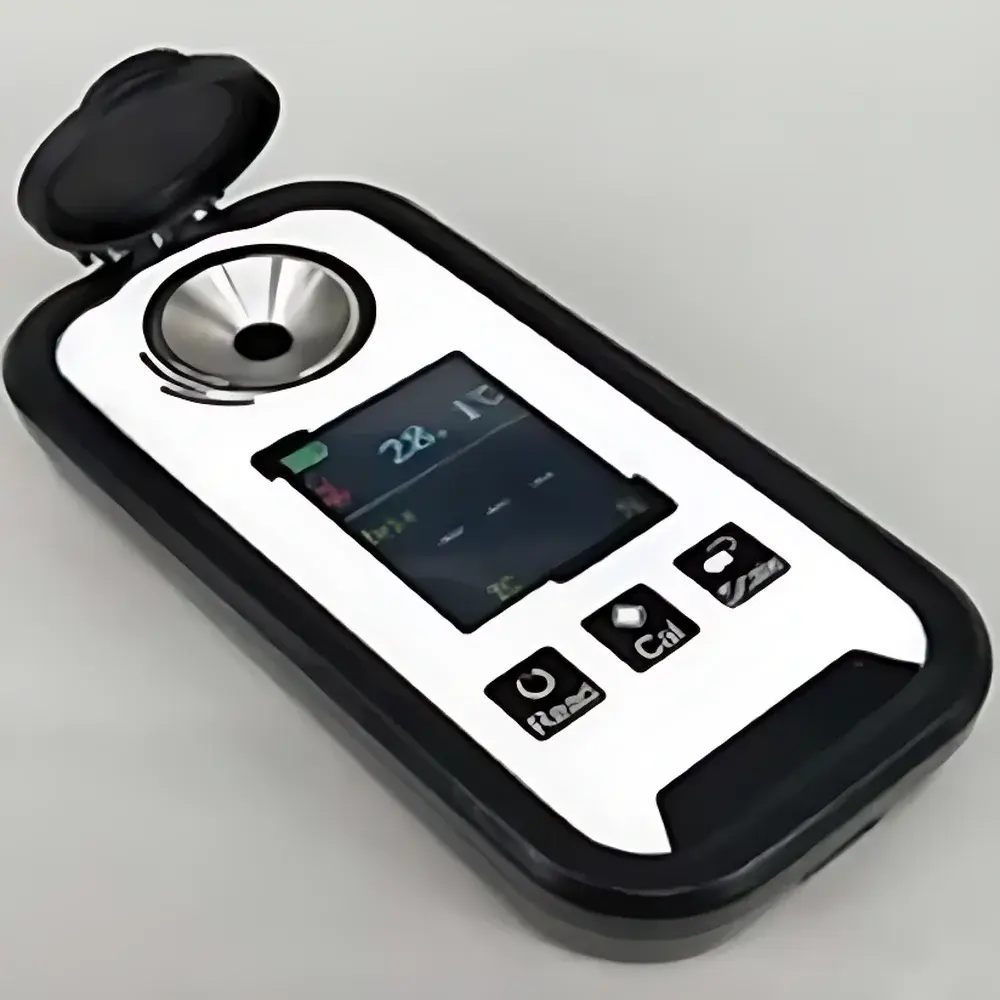
TCT Handset P2 Digital Automotive Urea Refractometer

| Brand | TCT (Xiamen Tongchuang) |
|---|---|
| Model | Handset P2 |
| Type | Handheld Digital Refractometer |
| Origin | Fujian, China |
| Temperature Compensation | Yes (0–40 °C) |
| Display | LCD Digital |
| Measurement Range (Urea Concentration) | 0–51.0 wt% |
| Resolution (Urea) | 0.1 wt% |
| Accuracy (Urea) | ±0.2 wt% |
| Measurement Range (Refractive Index) | 1.3330–1.4200 nD |
| Resolution (nD) | 0.0001 nD |
| Accuracy (nD) | ±0.0003 nD |
| Power | 1 × AAA 1.5 V battery |
| Weight | 110 g (instrument only) |
| Dimensions | 121 × 58 × 25 mm |
| Compliance | GB 29518–2013 |
| External Light Inhibition (E.L.I.) Function | Yes |
| PC Software Interface | Yes |
| Optional Bluetooth Thermal Printer Support | Yes |
Ask about pricing, availability and specifications.
Overview
The TCT Handset P2 Digital Automotive Urea Refractometer is a precision handheld optical instrument engineered for rapid, field-deployable quantification of aqueous urea solution concentration—specifically AdBlue®/AUS 32 (Aqueous Urea Solution, 32.5 wt% urea)—used in Selective Catalytic Reduction (SCR) systems of diesel-powered vehicles. It operates on the fundamental principle of refractometry: measuring the refractive index (nD) of a liquid sample at 589.3 nm (sodium D-line wavelength), then converting that value to urea mass fraction via a pre-calibrated polynomial algorithm traceable to GB 29518–2013. The instrument incorporates an Abbe-type prism assembly with high-transmission optical glass and temperature-compensated optics, enabling direct, non-destructive analysis without reagents or consumables. Its design targets operational reliability under variable ambient conditions—particularly critical for quality verification at vehicle manufacturing lines, fleet maintenance depots, fueling stations, and urea distribution centers where real-time compliance assessment against regulatory thresholds is mandatory.
Key Features
- High-precision dual-scale measurement: Simultaneous digital readout of urea concentration (0–51.0 wt%, resolution 0.1 wt%, accuracy ±0.2 wt%) and refractive index (1.3330–1.4200 nD, resolution 0.0001 nD, accuracy ±0.0003 nD)
- Automatic Temperature Compensation (ATC) across 0–40 °C, using integrated thermistor feedback to correct nD values to the reference temperature of 20 °C per ISO 21748 and GB/T 611–2006
- E.L.I. (External Light Inhibition) optical shielding system minimizes stray-light interference during outdoor or uncontrolled lighting conditions, ensuring measurement stability
- One-second measurement cycle with single-button operation; ergonomic form factor (121 × 58 × 25 mm) and ultra-lightweight construction (110 g net) enable prolonged one-handed use
- Robust prism cover mechanism protects the measuring surface from contamination and mechanical damage while maintaining optical alignment integrity
- Integrated LCD display with backlight-independent contrast optimization for legibility in both indoor and daylight environments
- Zero calibration using deionized water at 20 °C—fully compliant with GB 29518–2013 Annex A calibration protocol
Sample Compatibility & Compliance
The Handset P2 is validated exclusively for aqueous urea solutions conforming to ISO 22241-1 and GB 29518–2013 specifications. It is not intended for viscous, turbid, or particulate-laden samples. Its measurement range (0–51.0 wt% urea) fully encompasses the specification window for AUS 32 (31.8–33.2 wt% urea), including allowable tolerance bands for industrial-grade material. Instrument validation data are aligned with national metrological verification procedures outlined in JJG 619–2021 (Refractometers Verification Regulation). All factory calibration certificates reference NIM-traceable standards, and the device supports GLP-compliant audit trails when paired with optional PC software.
Software & Data Management
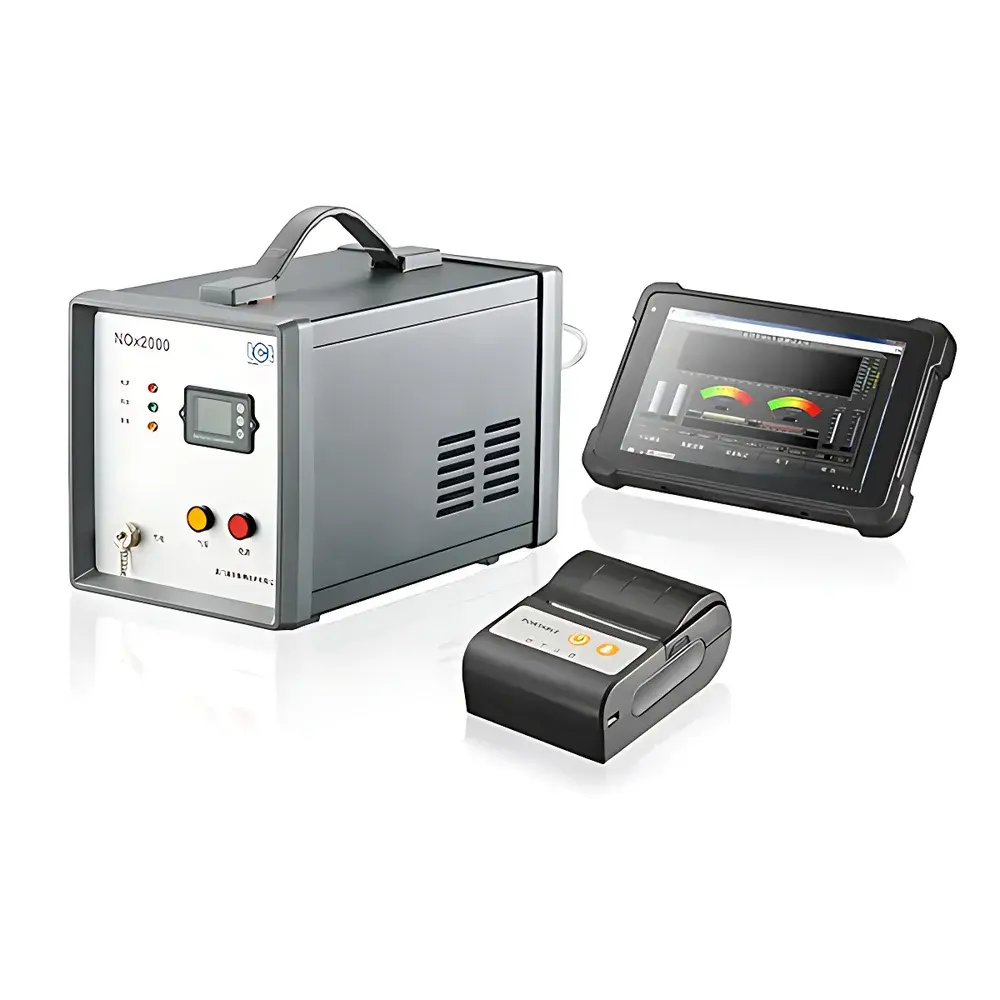
The Handset P2 communicates via Bluetooth 4.0 to dedicated Windows-compatible PC software (TCT RefData v2.1), enabling batch data logging, statistical process control (SPC) charting, export to CSV/PDF, and user-defined report templates. The software enforces electronic signature capture, time-stamped measurement records, and configurable pass/fail thresholds based on GB 29518–2013 limits (e.g., 32.5 ± 0.7 wt%). Optional Bluetooth thermal printers generate tamper-evident hardcopy reports with instrument ID, operator code, timestamp, and environmental temperature—supporting FDA 21 CFR Part 11 readiness when configured with audit-log archiving and role-based access controls.
Applications
- On-site verification of AUS 32 conformity at diesel vehicle OEM assembly lines and Tier-1 SCR system suppliers
- Routine QC screening at urea solution blending facilities and bulk storage terminals
- Field inspection by municipal transport authorities auditing bus and truck fleets for SCR fluid compliance
- Technical support diagnostics at service garages troubleshooting NOx emission failures linked to diluted or adulterated urea
- Supplier qualification testing for distributors handling multiple urea brands across regional supply chains
FAQ
What standard does the Handset P2 comply with for automotive urea testing?
It is calibrated and verified per GB 29518–2013, the mandatory Chinese national standard for diesel engine exhaust fluid, with full traceability to ISO 22241 series requirements.
Does the instrument require periodic recalibration by an accredited lab?
Field zero calibration with certified deionized water at 20 °C is sufficient for daily use; annual verification against NIST-traceable refractive index standards is recommended for GLP/GMP environments.
Can it measure other aqueous solutions besides AUS 32?
No—the S01/S02 scales are fixed to urea/water binary system thermodynamic models; cross-application to glycol, ethanol, or salt solutions will yield non-validated results.
Is the ATC function active during zero calibration?
Yes—temperature compensation remains engaged during both calibration and measurement to ensure consistent baseline referencing across ambient conditions.
How is measurement repeatability ensured across different operators?
The prism cover design enforces standardized sample volume (≈0.5 mL) and contact pressure; combined with E.L.I. and ATC, this yields RSD <0.15% (n=10) under controlled conditions per JJG 619–2021 repeatability test protocol.