
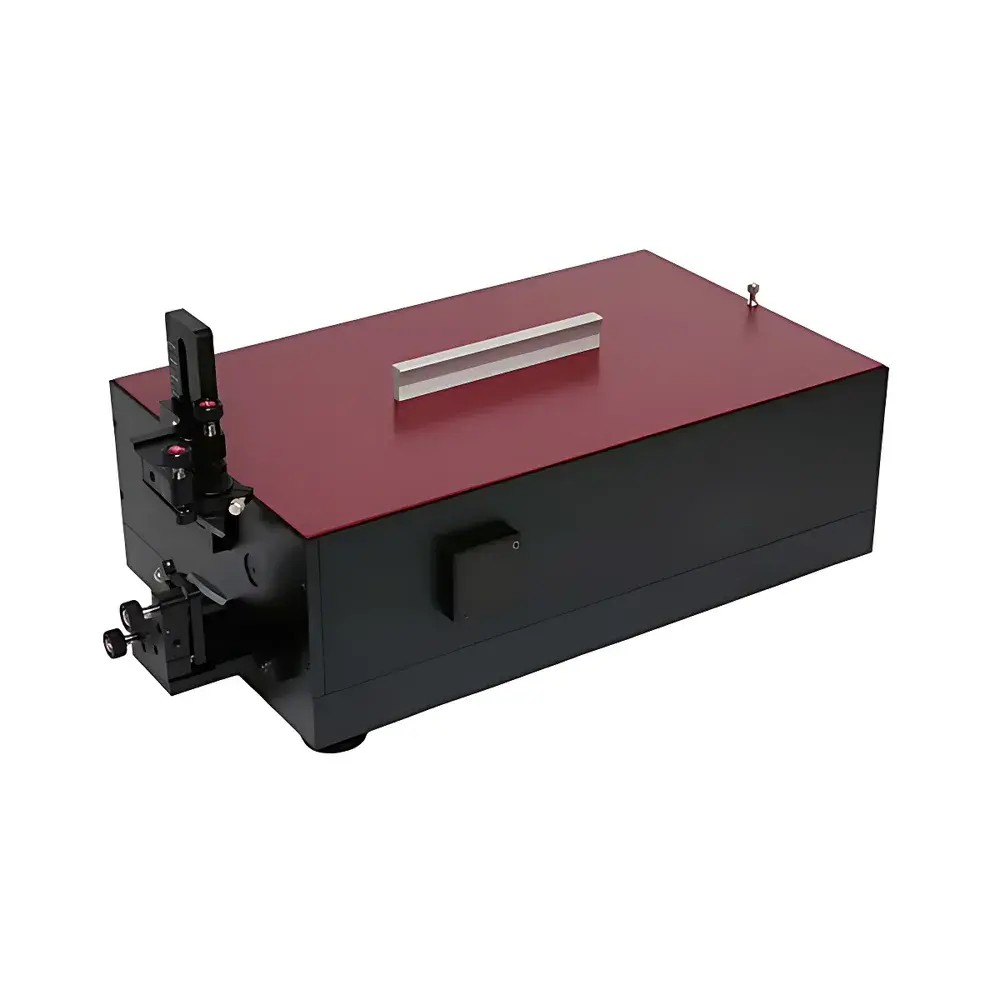
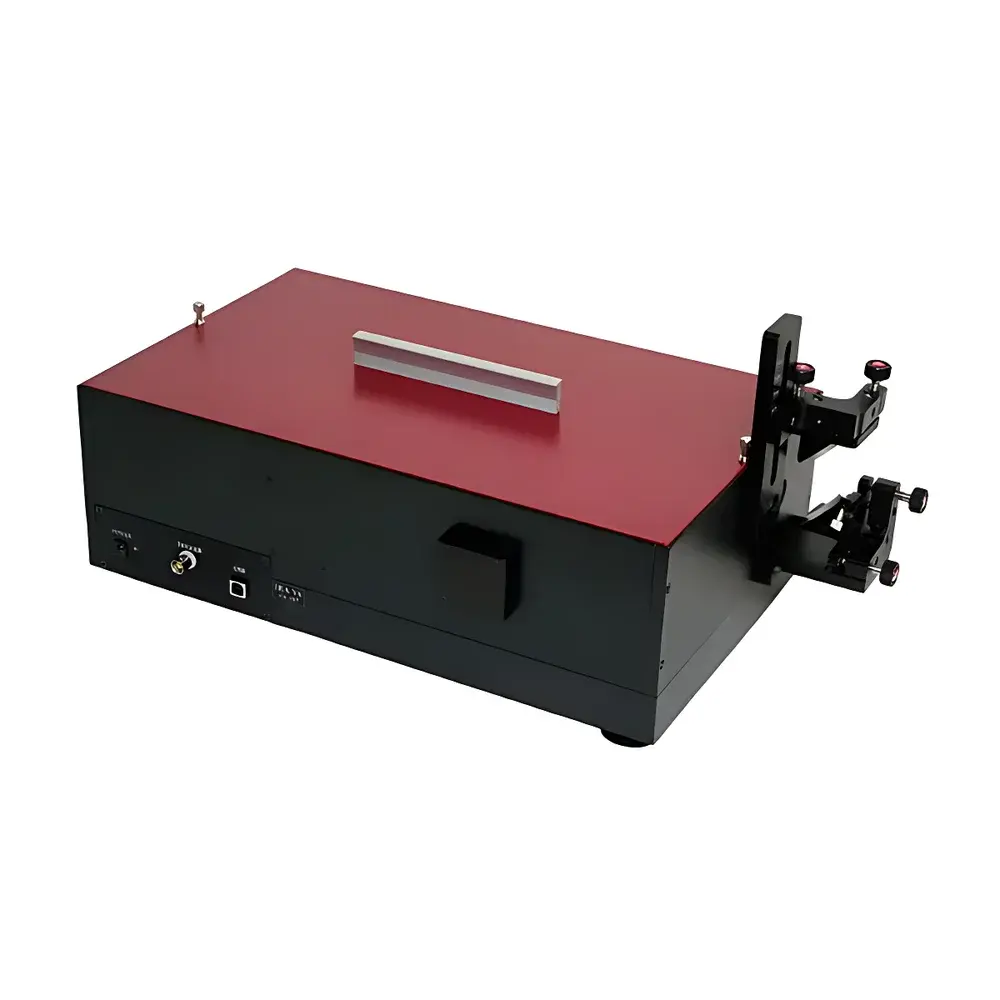
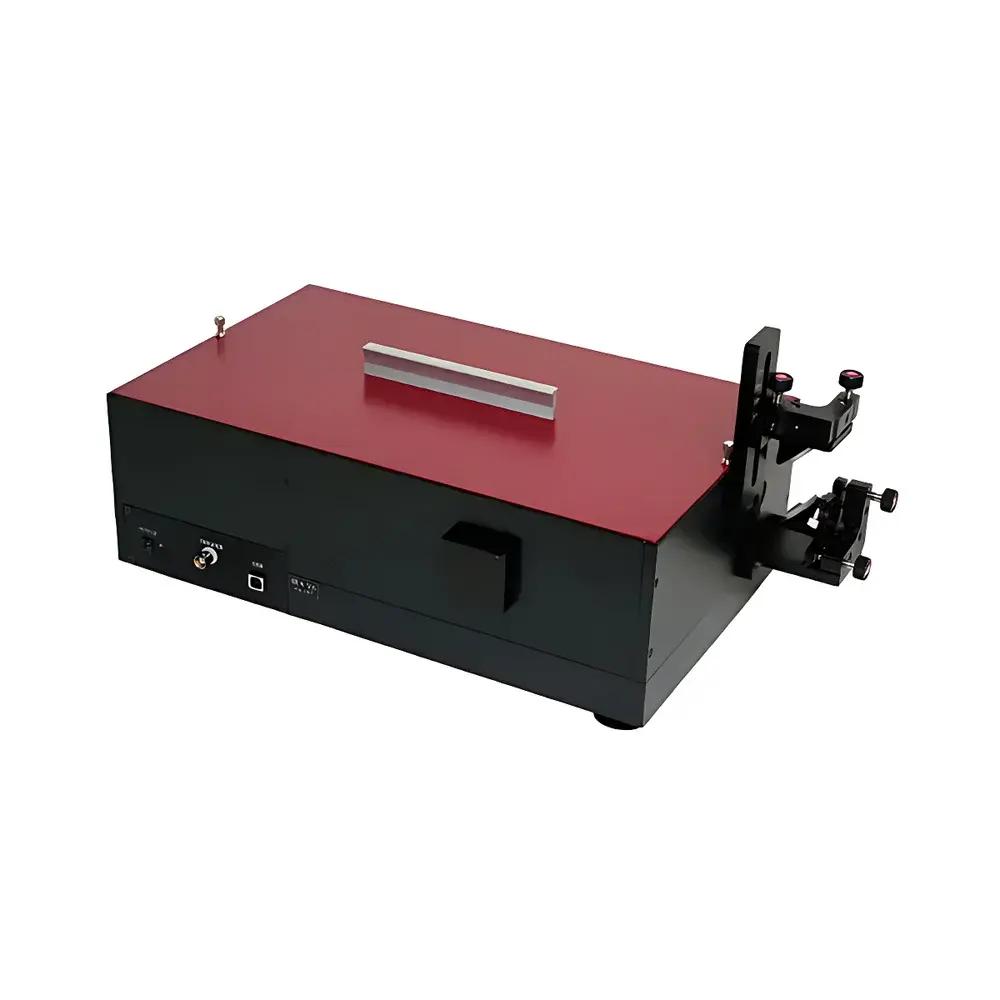
ATSEVA IRA-0.45-3 Infrared Broadband Scanning Autocorrelator
| Brand | ATSEVA |
|---|---|
| Origin | Russia |
| Model | IRA-0.45-3 |
| Wavelength Range | 450 nm – 11 µm |
| Pulse Duration Range | 50 fs – 250 ps |
| Input Pulse Energy (typ.) | >1 nJ (50 fs–1 ps, thin NL crystal) / >3 nJ (1–250 ps, thick NL crystal) |
| Max. Avg. Input Power | 1 W |
| Repetition Rate | 10 Hz – 100 MHz |
| Polarization | Linear, horizontal |
| Delay Line Time Resolution | 8.3 fs |
| Full Scan Range | 850 ps |
| Interface | USB |
| Software | Windows-based acquisition & analysis suite |
| Dimensions (Optical Unit) | 450 × 250 × 210 mm |
| Dimensions (Control Unit) | 250 × 180 × 90 mm |
| Power Supply | 110/220 V, 50/60 Hz ±10% |
Overview
The ATSEVA IRA-0.45-3 Infrared Broadband Scanning Autocorrelator is a precision optical instrument engineered for the direct temporal characterization of ultrashort laser pulses in both oscillator and amplifier systems. It operates on the principle of intensity autocorrelation via second-harmonic generation (SHG) in nonlinear optical (NLO) crystals, enabling quantitative measurement of pulse duration and contrast ratio without requiring phase retrieval algorithms. Designed for broadband operation across the visible to long-wave infrared spectrum—from 450 nm to 11 µm—the system supports modular configuration through interchangeable optical components, including NLO crystals, beam splitters, bandpass filters, and IR-optimized photodetectors. This architecture ensures high-fidelity autocorrelation traces with sub-10 fs temporal resolution and robust signal-to-noise performance under real-world laboratory conditions.
Key Features
- Ultra-broad spectral coverage: 450 nm – 11 µm, segmented into five calibrated sub-ranges (VIS, NIR1, NIR2, MIR1, MIR2) for optimized nonlinear conversion efficiency
- High temporal resolution: 8.3 fs mechanical delay line step size with 850 ps full scan range, supporting accurate reconstruction of pulses from 50 fs to 250 ps
- Modular optical design: Field-replaceable NLO crystals (e.g., BBO, BiBO, GaSe, ZnGeP₂), dichroic coatings, and detector assemblies enable rapid reconfiguration for specific wavelength bands
- USB-controlled operation with real-time data acquisition: Fully integrated control electronics and low-latency communication protocol minimize setup overhead
- Dual-crystal energy optimization: Thin crystals for high-sensitivity femtosecond measurements (>1 nJ threshold); thick crystals for picosecond-range stability (>3 nJ threshold)
- Linear horizontal polarization requirement ensures compatibility with standard ultrafast laser outputs and minimizes alignment complexity
- Maximum average power handling up to 1 W enables direct measurement of amplified systems without external attenuation
Sample Compatibility & Compliance
The IRA-0.45-3 accommodates free-space collimated beams from Ti:sapphire oscillators, Yb-fiber amplifiers, OPA systems, and quantum cascade lasers. Its optical path is optimized for minimal dispersion and group-delay dispersion (GDD) compensation within each sub-band. The instrument meets general requirements for laboratory-grade optical metrology equipment per ISO/IEC 17025 guidelines for calibration traceability. While not certified as a medical or industrial safety device, its enclosure complies with IEC 61010-1 for electrical safety in measurement instruments. All firmware and software adhere to standard USB CDC class protocols, ensuring plug-and-play compatibility with Windows 10/11 x64 platforms without proprietary drivers.
Software & Data Management
Bundled Windows-native software provides synchronized hardware control, real-time autocorrelation trace visualization, Gaussian/sech² pulse fitting routines, FWHM calculation, pedestal estimation, and contrast ratio quantification. Raw data export is supported in CSV and HDF5 formats for post-processing in MATLAB, Python (NumPy/SciPy), or Igor Pro. The application includes built-in calibration utilities for delay-line position verification and SHG efficiency normalization across wavelength sub-ranges. Audit trails—including timestamped parameter logs, user annotations, and acquisition metadata—are retained locally and may be exported for GLP-compliant documentation. No cloud connectivity or telemetry is implemented; all processing occurs locally to preserve data sovereignty and experimental integrity.
Applications
- Temporal diagnostics of femtosecond and picosecond laser sources, including Ti:sapphire, Cr:forsterite, Yb-doped fiber, and Er-doped fiber oscillators/amplifiers
- Characterization of optical parametric amplifiers (OPAs) and difference-frequency generation (DFG) sources in the mid-IR
- Quality assurance testing in ultrafast laser manufacturing and R&D laboratories
- Monitoring pulse stability and drift in industrial ultrafast micromachining systems
- Validation of dispersion compensation in chirped-pulse amplification (CPA) and divided-pulse amplification (DPA) architectures
- Supporting spectroscopic pump-probe experiments where precise knowledge of excitation pulse width is critical
FAQ
What pulse shapes can the IRA-0.45-3 resolve?
It provides accurate FWHM estimates for near-Gaussian and hyperbolic secant (sech²) temporal profiles. Deconvolution factors are applied based on assumed pulse shape during analysis.
Is alignment required when switching between wavelength sub-ranges?
Yes—each sub-range requires physical replacement of optical components; however, mechanical mounts and kinematic alignment features ensure repeatability within ±5 µm beam displacement.
Can the system operate at repetition rates below 10 Hz?
Yes, but single-shot acquisition mode must be enabled; trigger synchronization via external TTL input is supported for low-repetition-rate sources.
Does the software support automated calibration routines?
Yes—delay-stage calibration, SHG efficiency mapping, and baseline noise profiling are accessible via the instrument’s maintenance menu.
Is the device compatible with vacuum or purged environments?
The optical unit is sealed against dust and ambient moisture but is not rated for vacuum operation or inert-gas purging without modification.




