
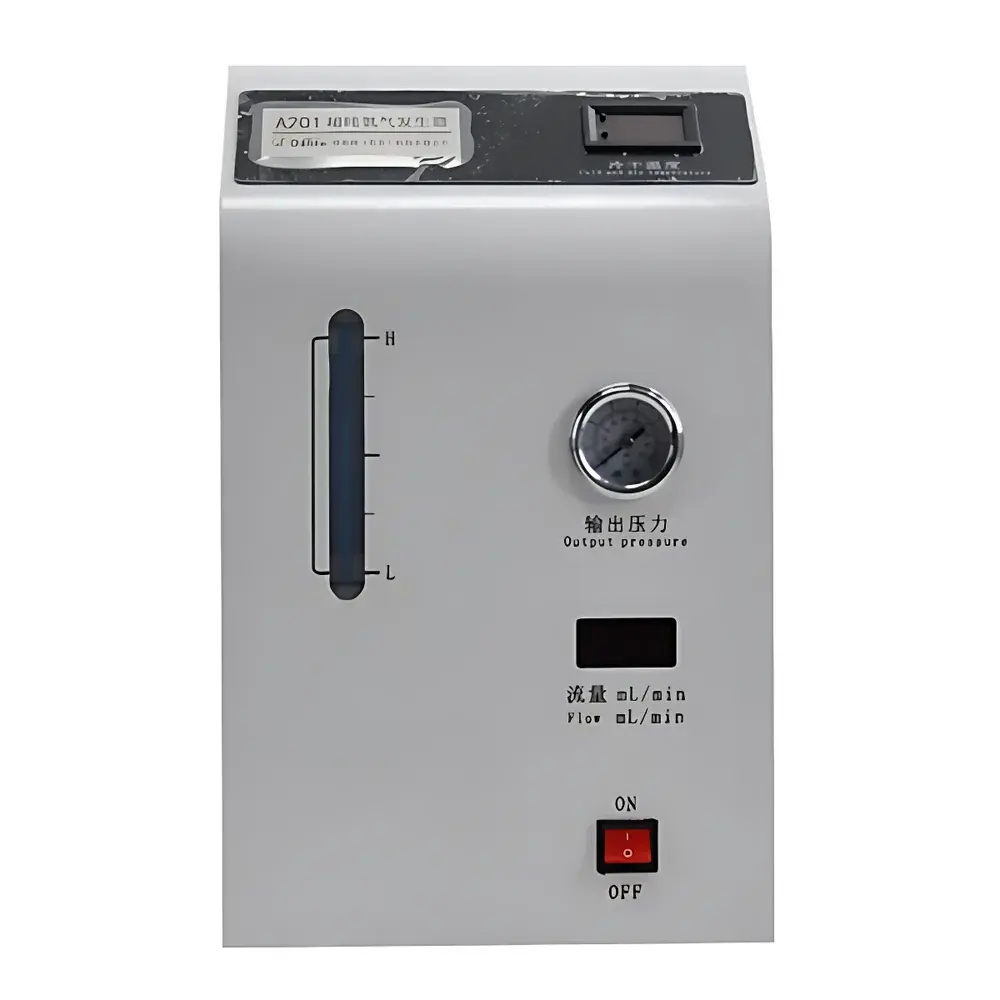
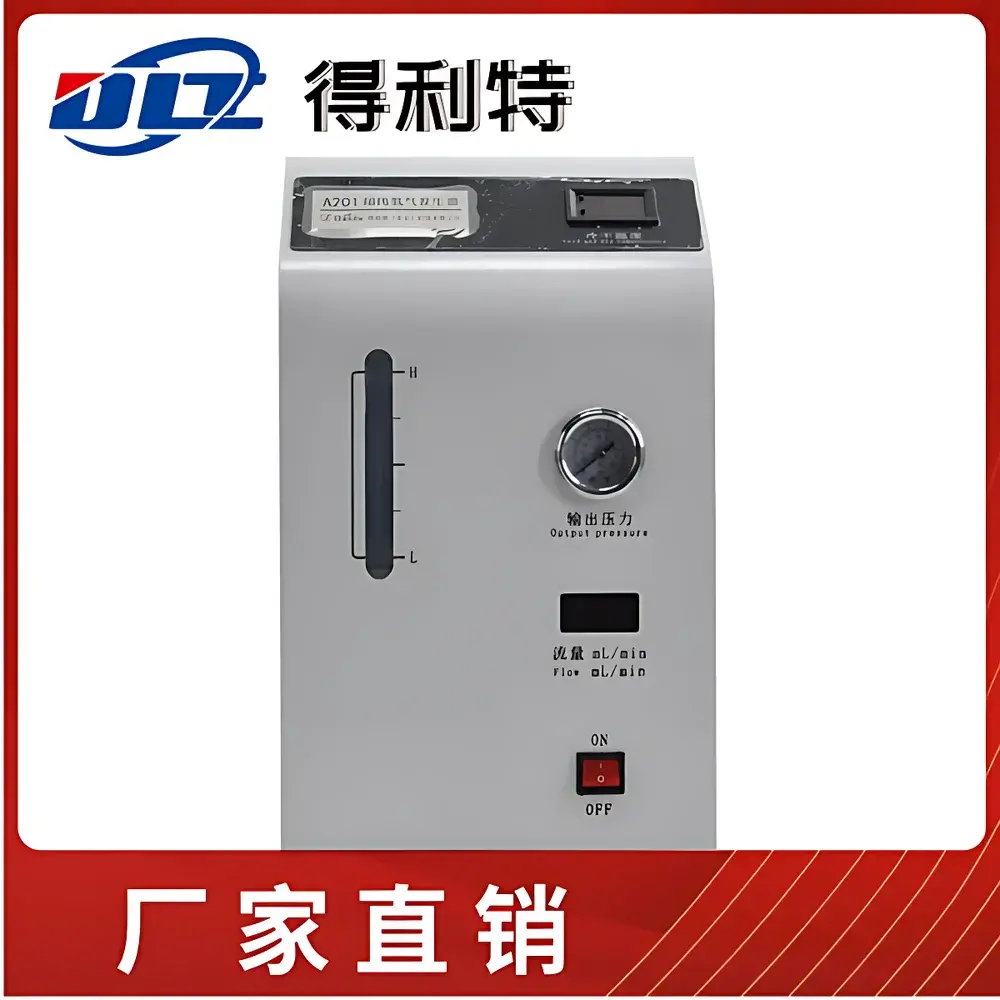
Delite A201 Hydrogen Generator
| Brand | Delite |
|---|---|
| Origin | Beijing, China |
| Manufacturer Type | OEM Manufacturer |
| Country of Origin | China |
| Model | A201 |
| Hydrogen Generation Principle | Pure Water Electrolysis |
| Output Flow Rate | 600 mL/min |
| Output Pressure Range | 43–116 psi (0.3–0.8 MPa) |
| Hydrogen Purity | ≥99.9995% |
| Power Consumption | 100 W |
| Net Weight | ~5 kg |
| Dimensions (L×W×H) | 400 × 280 × 360 mm |
| Flow Display | Yes |
| Pressure Display | Yes |
| Low-Water Protection | Yes |
| Dual-Stage Pressure Control | Photocell Pressure Sensor + Mechanical Pressure Switch |
| Quick Purge Valve | Yes |
| Integrated Moisture & Oxygen Removal | Yes |
| LED-Lit Water Level Indicator | Yes |
| Removable Purification Cartridge | Yes |
| Liquid Trap in Gas Path | Yes |
Overview
The Delite A201 Hydrogen Generator is an on-demand, membrane-based pure water electrolysis system engineered for continuous, low-risk hydrogen supply in analytical laboratories. It operates on the principle of proton exchange membrane (PEM)-assisted alkaline electrolysis—using deionized water as the sole reactant—to generate high-purity hydrogen gas without chemical reagents or metal hydride cartridges. Unlike pressurized cylinder systems, the A201 produces hydrogen at user-defined flow rates up to 600 mL/min and adjustable output pressures between 43 and 116 psi (0.3–0.8 MPa), minimizing static gas inventory and eliminating high-pressure storage hazards. Its design complies with core safety expectations for laboratory-grade gas generators per IEC 61010-1 and incorporates fail-safe architecture aligned with GLP-compliant instrument deployment protocols.
Key Features
- Pure Water Electrolysis Core: Utilizes ultra-pure deionized water (≥1 MΩ·cm resistivity) as the only consumable—no KOH solutions or catalyst replenishment required—ensuring long-term operational consistency and reducing maintenance overhead.
- Dual-Stage Pressure Safety System: Integrates a high-sensitivity photocell-based pressure transducer with a redundant mechanical pressure switch; automatic electrolysis shutdown occurs if pressure exceeds preset thresholds, meeting ISO 13849-1 Category 3 functional safety requirements.
- Integrated Gas Purification: Features a front-accessible purification chamber containing self-regenerating oxygen scavenger and desiccant media, with colorimetric saturation indicators visible through the transparent front panel for real-time media life assessment.
- Thermally Optimized Electrolyzer Stack: Active thermal management via conduction-cooled cell core ensures stable electrolysis efficiency across ambient temperatures from 15–35°C, sustaining rated output under continuous 24/7 operation.
- Intelligent Fluid Monitoring: LED-backlit water level sensor provides clear visual status even in low-light environments; automated shutdown triggers when reservoir volume falls below operational minimum, preventing dry-electrolyte damage.
- Gas Path Integrity Protection: Built-in liquid trap prevents carryover of electrolyte mist into downstream instrumentation—critical for safeguarding sensitive GC detectors and FTIR sample cells.
- Tool-Free Maintenance Access: Modular purification cartridge design allows full replacement of desiccant and oxygen removal media without disassembly or calibration recalibration.
- Quick-Purge Functionality: Integrated vent valve enables rapid depressurization and line purging without disconnecting tubing—facilitating routine system validation, leak checks, and detector conditioning.
Sample Compatibility & Compliance
The A201 delivers hydrogen meeting ASTM D7622–22 specifications for carrier and fuel gas purity in gas chromatography applications. Its ≥99.9995% H₂ output (with residual O₂ & H₂O <0.1 ppm each) satisfies USP <691>, EP 2.5.27, and ISO 8573-1:2010 Class 1 compressed air equivalency for trace-gas-sensitive instrumentation. The unit is CE-marked per Machinery Directive 2006/42/EC and EMC Directive 2014/30/EU. Its firmware supports audit-trail-capable event logging (power cycles, low-water events, pressure excursions), enabling alignment with FDA 21 CFR Part 11–compliant data integrity frameworks when integrated with validated LIMS or CDS platforms.
Software & Data Management
While the A201 operates as a standalone analog-controlled generator, its pressure and flow outputs are monitored via calibrated digital displays with RS-232 optional interface (available upon request). All operational events—including low-water alerts, overpressure cutoffs, and purge actuations—are timestamped and stored in non-volatile memory for up to 1,000 entries. Exportable logs support CSV-formatted review for preventive maintenance scheduling and regulatory documentation. No proprietary software installation is required; configuration remains hardware-based to ensure deterministic response behavior and eliminate cybersecurity attack surfaces common in networked lab devices.
Applications
- Carrier gas supply for capillary GC and GC-MS systems requiring ultra-high-purity hydrogen
- Fuel gas source for FID, HID, and PDD detectors operating under EPA Method 8260/8270 conditions
- Hydrogenation reaction feedstock in small-scale catalytic screening setups
- Calibration gas blending support in environmental monitoring labs (e.g., VOC analysis per TO-14A/TO-15)
- Replacement for high-pressure H₂ cylinders in confined lab spaces where ventilation and storage compliance are restrictive
FAQ
What water quality is required for optimal operation?
Deionized water with resistivity ≥1 MΩ·cm and total organic carbon (TOC) <50 ppb is mandatory. Tap or distilled water will cause rapid electrode fouling and void warranty coverage.
Can the A201 be used with GC systems requiring >1000 mL/min flow?
No—the A201 is rated for maximum continuous output of 600 mL/min. For higher-demand configurations, parallel operation of two units or selection of the A301 series is recommended.
Is remote monitoring supported out-of-the-box?
Standard units feature local digital displays only. RS-232 serial output is available as a factory-configurable option for integration with building management systems or centralized lab monitoring platforms.
How often must the purification cartridge be replaced?
Under typical GC carrier gas usage (30–50 mL/min), replacement is required every 6–12 months depending on inlet water quality and ambient humidity; the front-panel indicator changes from orange to dark brown when saturation is reached.
Does the unit require periodic calibration?
No—flow and pressure sensors are factory-calibrated and sealed. Only verification using NIST-traceable secondary standards is advised annually as part of laboratory quality assurance procedures.
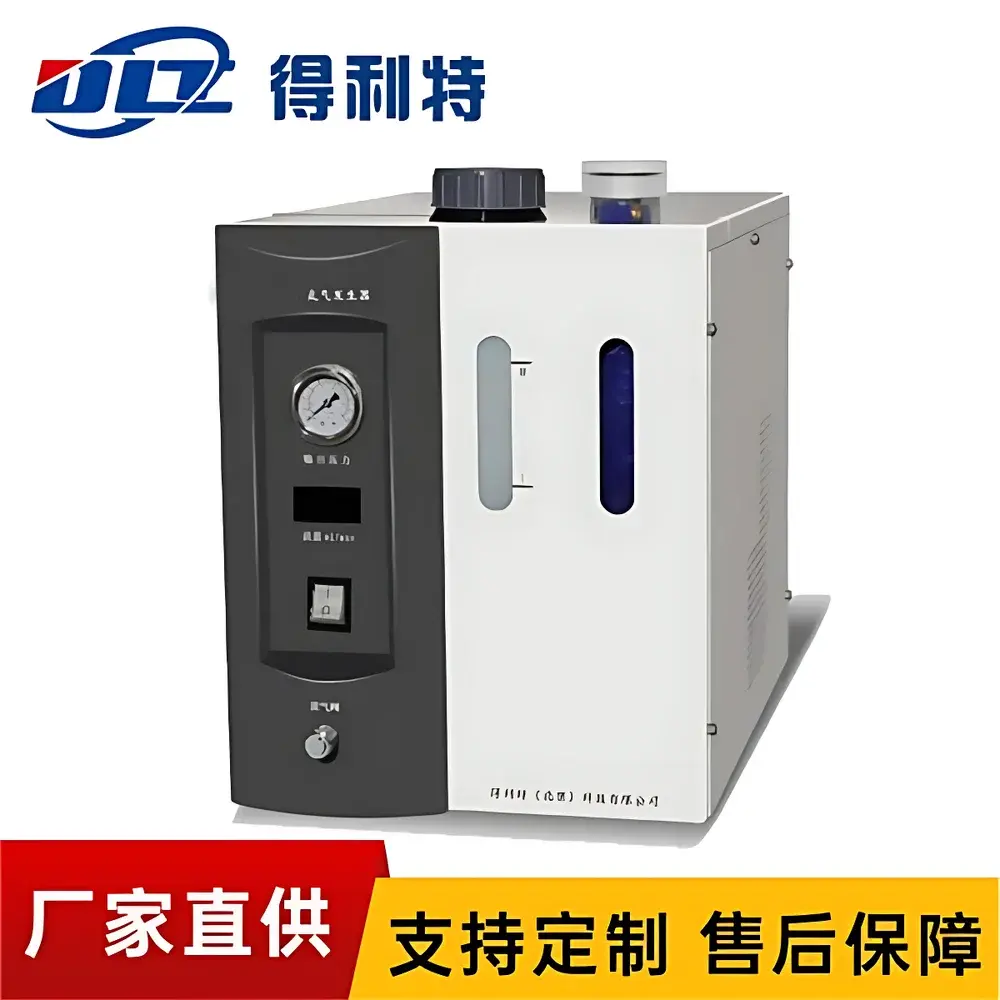
Related Products



