
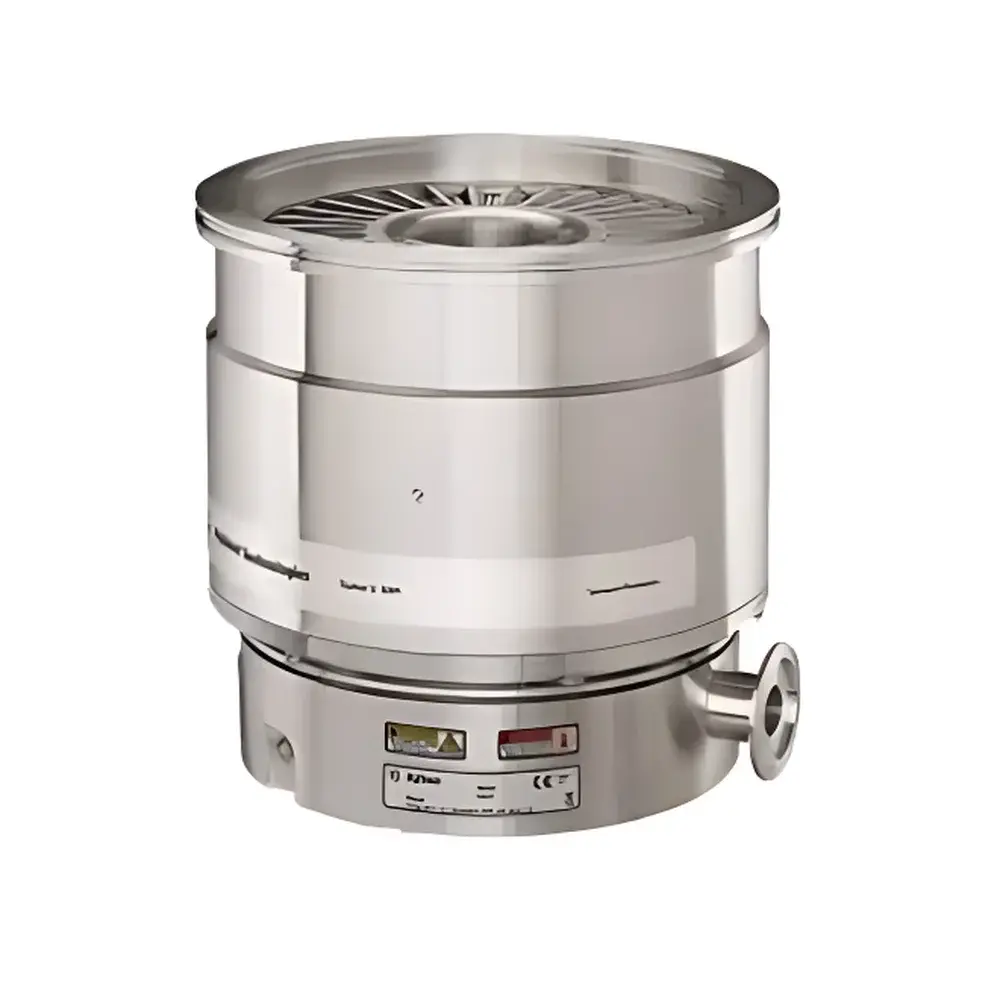
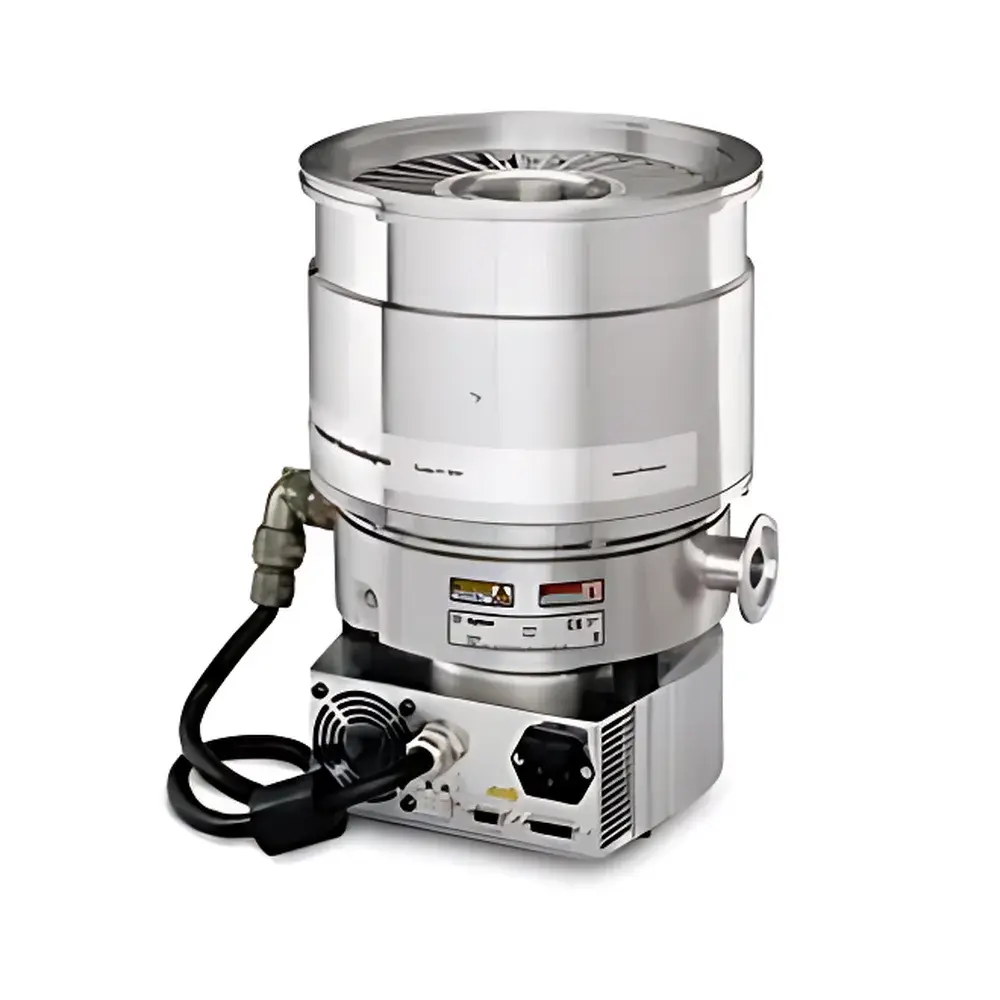
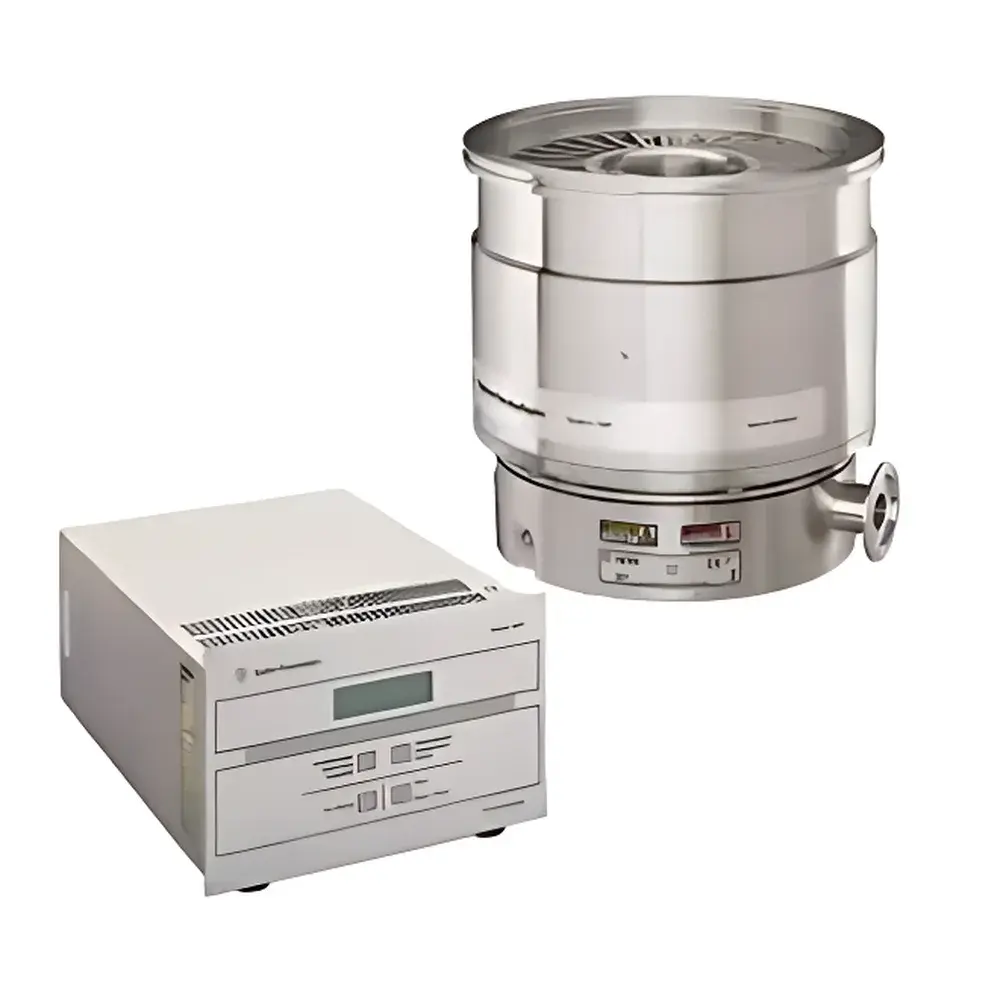
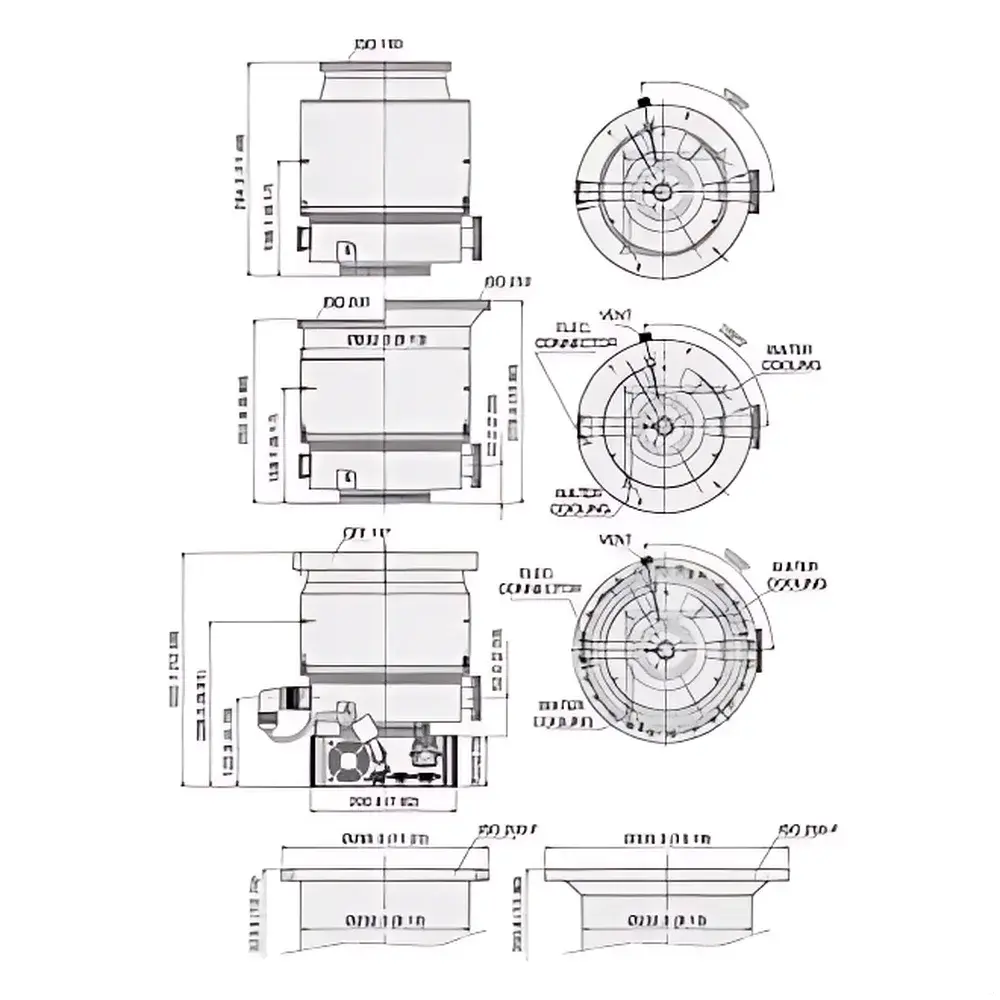
Agilent Turbo-V 1001 Navigator Turbomolecular Pump
| Brand | Agilent Technologies |
|---|---|
| Origin | USA |
| Manufacturer Type | Original Equipment Manufacturer (OEM) |
| Product Category | Imported Vacuum Pump |
| Model | Turbo-V 1001 Navigator |
| Pump Type | Oil-Free Turbomolecular Pump |
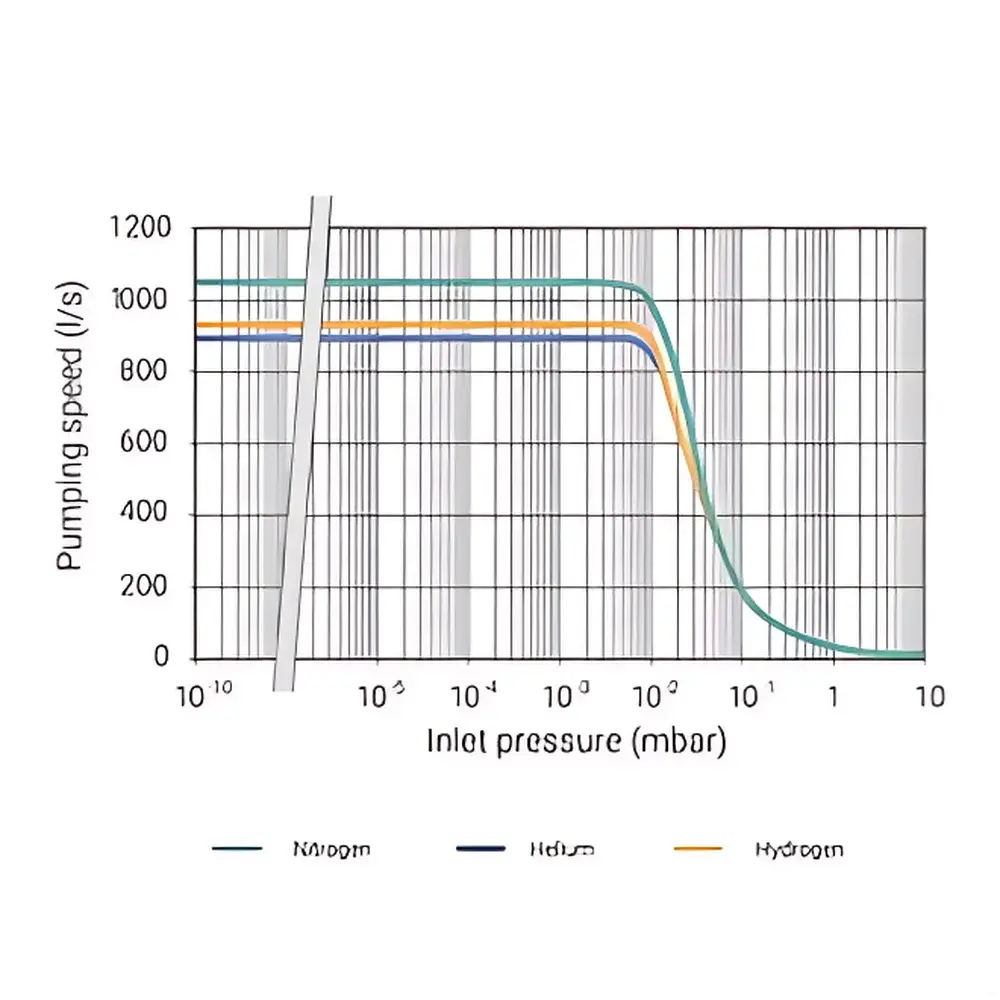
| Maximum Pumping Speed | 1050 L/s (at DN 250 flange, N₂) |
| Ultimate Pressure | <1 × 10⁻¹⁰ mbar |
| Weight | 21.2 kg |
| Mounting Flexibility | All-Position Installation |
| Bearing System | Maintenance-Free Magnetic or Hybrid Bearings |
| Control Interface | Wired Remote (up to 100 m) + Wireless via Vacuum Link App |
| Environmental Robustness | Radiation-Hardened & Magnet-Resistant Design |
| EMI Emission | Ultra-Low Electromagnetic Interference |
| Acoustic Noise | <45 dB(A) |
| Vibration Level | <0.5 µm RMS (at 1 kHz) |
Overview
The Agilent Turbo-V 1001 Navigator is a high-performance, oil-free turbomolecular vacuum pump engineered for ultra-high vacuum (UHV) and extreme environment applications. Based on the proven principles of molecular drag and momentum transfer in high-speed rotor-stator geometry, the Turbo-V 1001 operates by accelerating gas molecules from the inlet toward the exhaust using a multi-stage turbine rotor rotating at up to 90,000 rpm. Its optimized blade geometry delivers exceptional compression ratios—particularly for light gases such as hydrogen and helium—enabling stable UHV operation down to <1 × 10⁻¹⁰ mbar when backed by an appropriate forepump (e.g., dry scroll or diaphragm pump). Designed for integration into demanding scientific and industrial systems—including electron microscopy chambers, surface science UHV beamlines, ion implantation tools, nuclear physics instrumentation, and synchrotron end-stations—the Turbo-V 1001 meets stringent requirements for cleanliness, electromagnetic compatibility, mechanical stability, and long-term reliability without scheduled maintenance.
Key Features
- Oil-free operation ensures zero hydrocarbon backstreaming, preserving sample integrity and eliminating contamination risks in sensitive analytical and deposition processes.
- Maintenance-free bearing architecture—either hybrid ceramic or active magnetic levitation—eliminates lubricant degradation, wear particulates, and associated downtime; rated for >30,000 hours MTBF under continuous operation.
- Radiation-hardened and magnetically inert construction: no embedded microcontrollers or ferromagnetic components, enabling safe deployment in MRI-adjacent facilities, particle accelerator tunnels, and radioisotope handling environments.
- Ultra-low vibration (<0.5 µm RMS) and acoustic signature (<45 dB[A]) minimize coupling into adjacent optical tables, interferometers, or cryogenic stages—critical for high-resolution TEM, STM, or quantum sensing platforms.
- Flexible mounting orientation (horizontal, vertical, inverted) simplifies integration into space-constrained or gravity-sensitive vacuum architectures without performance penalty.
- Dual-mode control interface: standard RS-485/RS-232 wired remote (up to 100 m cable length) plus optional Bluetooth/Wi-Fi connectivity via Agilent’s Vacuum Link mobile application for real-time status monitoring, parameter adjustment, and event logging.
Sample Compatibility & Compliance
The Turbo-V 1001 is compatible with standard ISO-KF, CF, and ISO-F flanges (DN 160, DN 200, DN 250), supporting seamless integration into existing UHV systems per ISO 2861–1 and ASTM F2657–18 specifications. Its all-metal, electropolished stainless-steel body conforms to USP and ISO 10100 cleanroom compatibility guidelines. As a Class I, Division 2 certified device (UL/cUL 61010-1), it complies with IEC 61000-6-3 (EMC emission limits) and IEC 61000-6-2 (immunity to electrostatic discharge, RF fields, and magnetic interference). Full audit trails, user-access logs, and password-protected configuration settings support FDA 21 CFR Part 11 and EU Annex 11 compliance when deployed in regulated GMP/GLP environments.
Software & Data Management
Vacuum Link software provides secure, platform-agnostic (iOS, Android, Windows) remote supervision with encrypted TLS 1.2 communication. Real-time telemetry includes rotational speed, bearing temperature, motor current, foreline pressure, and error code history. Configurable alarms trigger email/SMS notifications upon threshold breach (e.g., excessive vibration, abnormal power draw). All operational data are timestamped and exportable in CSV/JSON format for traceability, trending analysis, and preventive maintenance scheduling. Firmware updates are digitally signed and validated to ensure integrity across lifecycle management.
Applications
- Transmission and scanning electron microscopy (TEM/SEM) column vacuum systems requiring rapid pump-down and sub-10⁻⁹ mbar base pressure.
- Surface analysis tools including XPS, AES, LEED, and SIMS where hydrocarbon-free vacuum is mandatory for monolayer-level chemical quantification.
- Nuclear physics experiments involving beamline vacuum sections exposed to neutron flux or gamma radiation fields.
- Ion implanters and plasma etch tools demanding high-throughput gas handling with minimal process drift.
- Quantum computing infrastructure, particularly dilution refrigerator shielding and superconducting qubit test benches, where EMI and vibration sensitivity are critical.
FAQ
What forevacuum pump is recommended for optimal Turbo-V 1001 performance?
A dry scroll pump rated ≥12 m³/h or a diaphragm pump with ≥8 m³/h capacity and ultimate pressure ≤1 × 10⁻² mbar is advised to maintain rotor stability during startup and sustain full pumping speed.
Can the Turbo-V 1001 operate continuously at its maximum pumping speed?
Yes—its thermal management system and bearing design support indefinite operation at rated speed under nominal gas load and ambient temperatures between 10–40 °C.
Is the Turbo-V 1001 compatible with aggressive process gases such as Cl₂ or NF₃?
Standard configuration is suitable for inert and reactive gases; for extended exposure to halogenated or corrosive species, optional nickel-plated or Hastelloy-coated rotor/stator components are available per custom order.
Does the pump require periodic calibration?
No routine calibration is required; however, Agilent recommends annual verification of rotational speed accuracy and pressure readback against traceable standards in accordance with ISO/IEC 17025 laboratory practices.
How is firmware updated, and is it backward-compatible?
Firmware updates are delivered via Vacuum Link app and retain full backward compatibility with prior configuration files and control protocols (Modbus RTU, ASCII command set).
Related Products



