
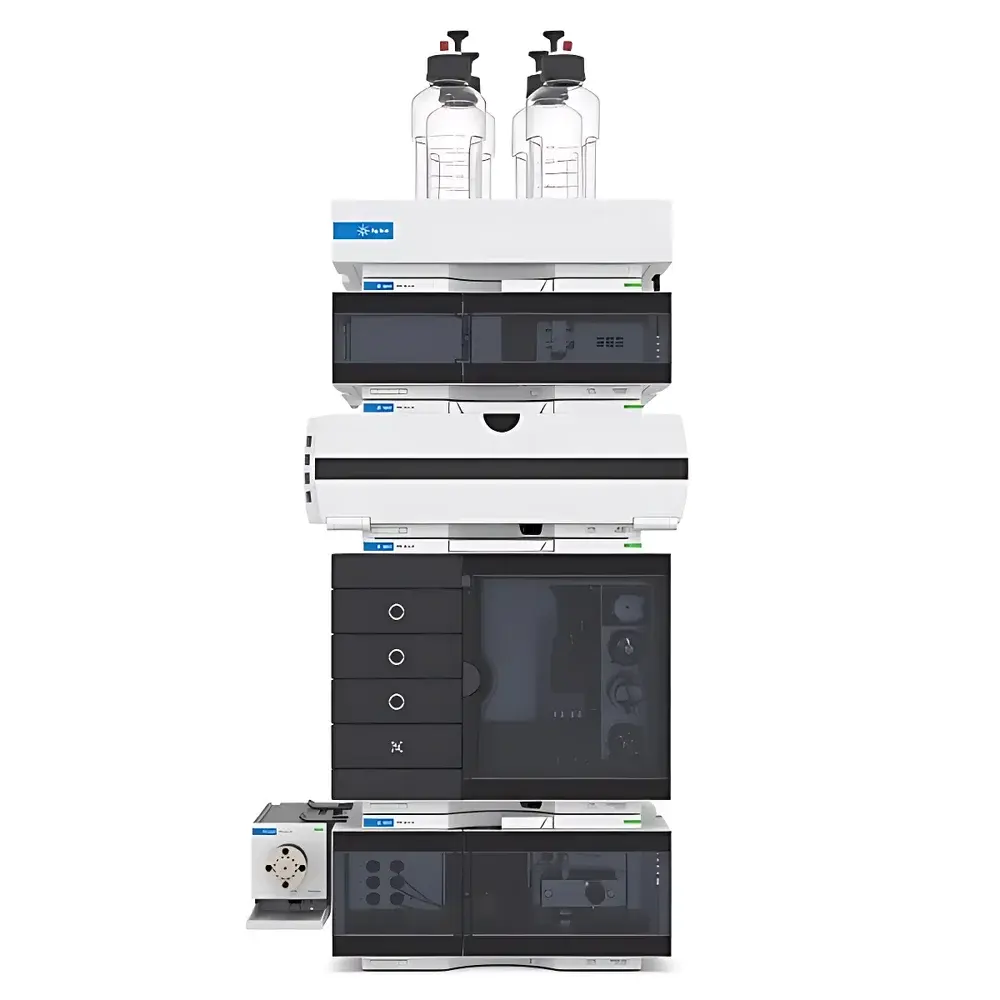
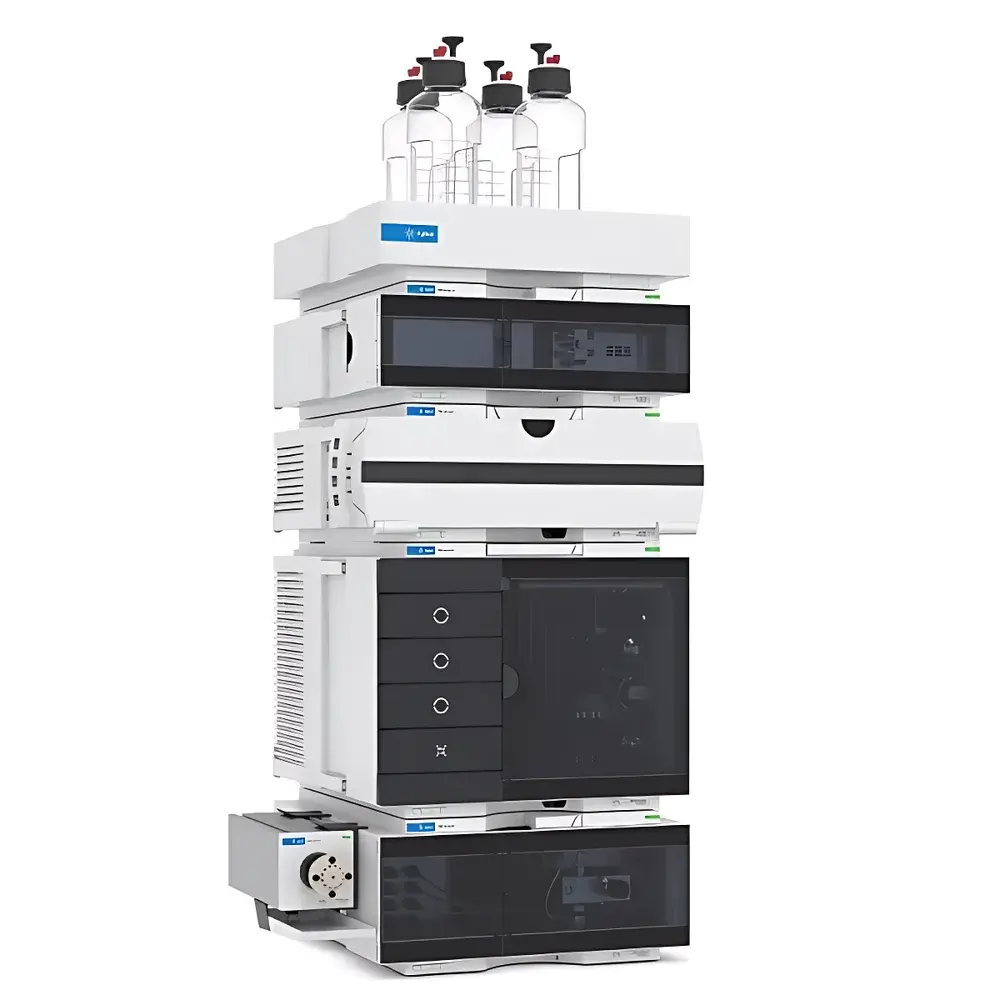
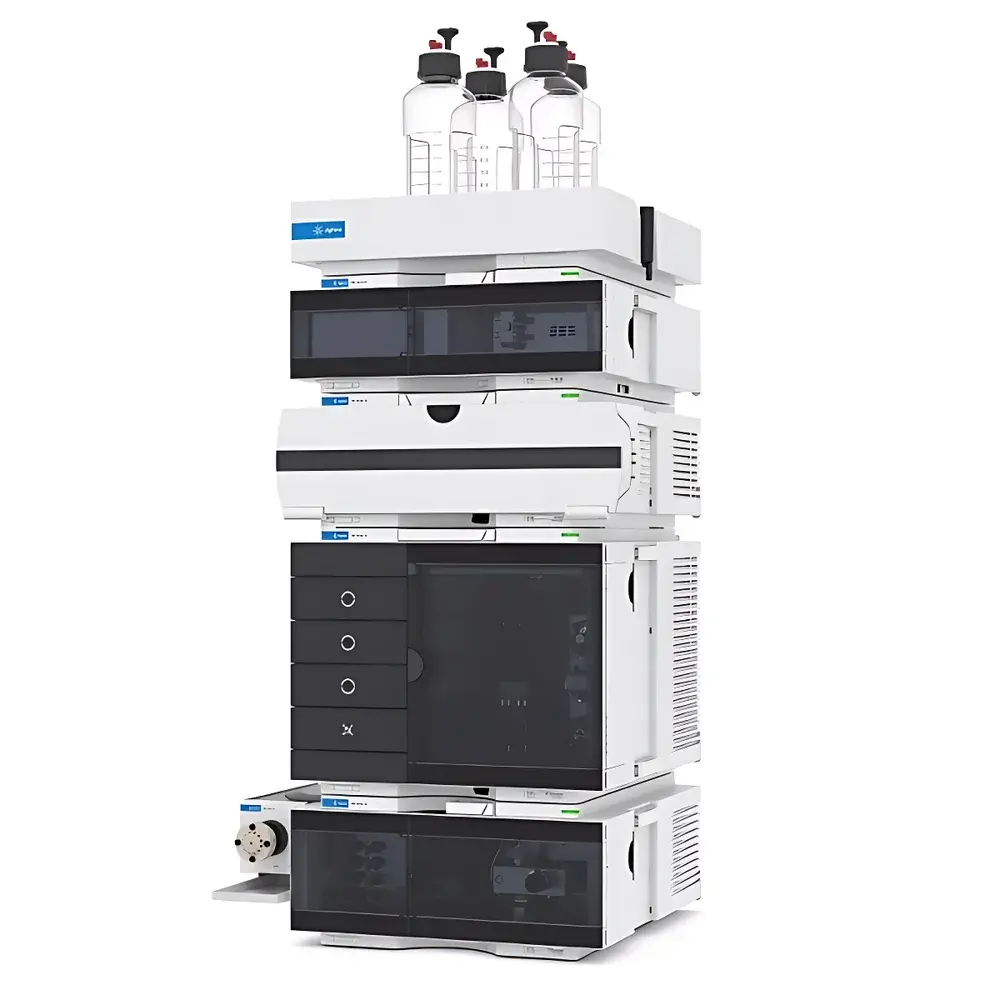
Agilent 1260 Infinity III Multimethod System
| Brand | Agilent Technologies |
|---|---|
| Origin | Germany |
| Manufacturer Type | Original Equipment Manufacturer (OEM) |
| Origin Category | Imported |
| Model | 1260 Infinity III Multimethod |
| Instrument Type | Conventional High-Performance Liquid Chromatograph (HPLC) |
| Application Scope | General-purpose analytical laboratory use |
| Flow Rate Range | up to 5 mL/min (with G7104C, G7112B modules) |
| Maximum Operating Pressure | 800 bar |
| Injection Volume Range | 0.1–100 µL |
Overview
The Agilent 1260 Infinity III Multimethod System is a modular, high-pressure liquid chromatography platform engineered for maximum system utilization and minimal manual intervention in shared-lab environments. Built upon the proven architecture of the 1260 Infinity III Prime LC system, it implements advanced hardware orchestration and intelligent method sequencing to enable concurrent execution of diverse HPLC methods—each with distinct column chemistries, mobile phase compositions, gradient profiles, and detection parameters—on a single instrument. Its core operational principle relies on automated solvent selection, column switching, and injection path reconfiguration under centralized software control, eliminating manual hardware changes between analyses. This multimethod capability supports true multi-user workflows without compromising method integrity or analytical reproducibility, making it particularly suited for quality control laboratories, contract research organizations (CROs), and academic core facilities where method diversity, instrument uptime, and audit-ready traceability are critical operational requirements.
Key Features
- Automated column switching across up to four independently controlled columns, including optional column ID reader integration for hardware-level method verification
- Integrated solvent selection valve supporting up to 15 mobile phase reservoirs, enabling complex gradient programming and buffer blending without external dilution
- BlendAssist software functionality for real-time dynamic mixing of stock solutions, ensuring precise pH and ionic strength control during method execution
- Dual-needle autosampler configuration (optional) with independent fluidic paths, permitting simultaneous handling of challenging matrices and clean-up steps without cross-contamination
- ISET (Intelligent System Emulation Technology) compatibility for seamless method transfer from legacy Agilent 1100/1200 series instruments, preserving retention time fidelity and peak shape
- Robust pressure tolerance up to 800 bar, supporting both conventional 3–5 µm particle-packed columns and newer sub-2-µm superficially porous particle (SPP) columns
- ACT-certified (My Green Lab Accredited Certification Tool) sustainability profile, validated through third-party life-cycle assessment covering energy consumption, material sourcing, and end-of-life recyclability
Sample Compatibility & Compliance
The system accommodates a broad range of sample types—including small-molecule pharmaceuticals, natural products, peptides, and polar metabolites—across reversed-phase, normal-phase, HILIC, and ion-exchange separations. It complies with regulatory frameworks governing analytical instrumentation in GLP and GMP environments, including full support for 21 CFR Part 11-compliant electronic records and signatures when deployed with OpenLab CDS or MassHunter software. Hardware-level audit trails, user-access controls, and method-locking capabilities ensure data integrity throughout the analysis lifecycle. The system meets ISO/IEC 17025:2017 requirements for testing and calibration laboratories when operated within documented SOPs and routine performance qualification protocols.
Software & Data Management
Control and data acquisition are managed via Agilent OpenLab CDS (ChemStation Edition or EZChrom Edition), providing method development tools, sequence scheduling, real-time monitoring, and integrated reporting. The multimethod scheduler enables pre-defined method chains with conditional logic (e.g., run QC check after every 10 samples), automatic column equilibration timers, and error-recovery routines. All instrument events—including valve actuations, pressure transients, and injection triggers—are timestamped and logged with cryptographic hashing for forensic traceability. Raw data files adhere to AIA/ANDI standards, facilitating long-term archival and interoperability with LIMS and ELN platforms.
Applications
This system serves as a central analytical hub for laboratories requiring concurrent operation of pharmacopeial assays (USP , EP 2.2.46), stability-indicating methods, impurity profiling, dissolution testing, and environmental contaminant screening. Its flexibility supports rapid reconfiguration between bioanalytical sample prep workflows (e.g., protein precipitation followed by LC-UV quantitation) and high-throughput small-molecule screening. In academic settings, it enables graduate researchers to maintain individual method libraries while sharing instrument access under centrally administered queue management.
FAQ
Can the system run multiple methods without manual intervention between injections?
Yes—automated column switching, solvent selection, and gradient reprogramming occur between injections based on predefined method sequences.
Is method transfer from older Agilent HPLC systems supported?
Yes—via ISET technology, which emulates legacy pump dwell volume and detector response characteristics to preserve method performance.
Does the system support biocompatible flow paths?
Standard configuration is stainless steel; optional titanium and PEEK-lined components are available for biomolecule applications.
What is the minimum injection volume precision achievable?
At 0.1 µL, the system delivers ≤3% RSD (n=6) using the low-volume needle option and optimized rinse protocol.
How is compliance with 21 CFR Part 11 enforced?
Through role-based user authentication, electronic signature capture, immutable audit trails, and configurable electronic record retention policies within OpenLab CDS.






