
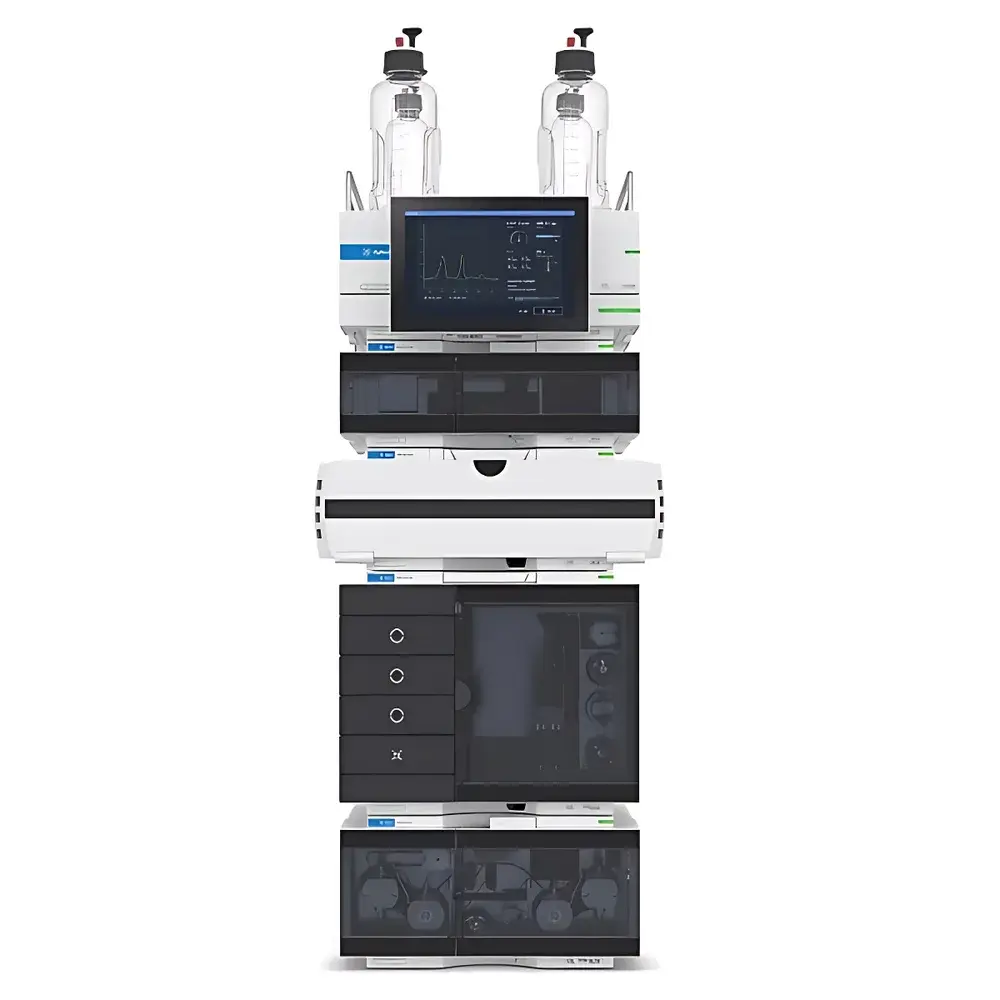
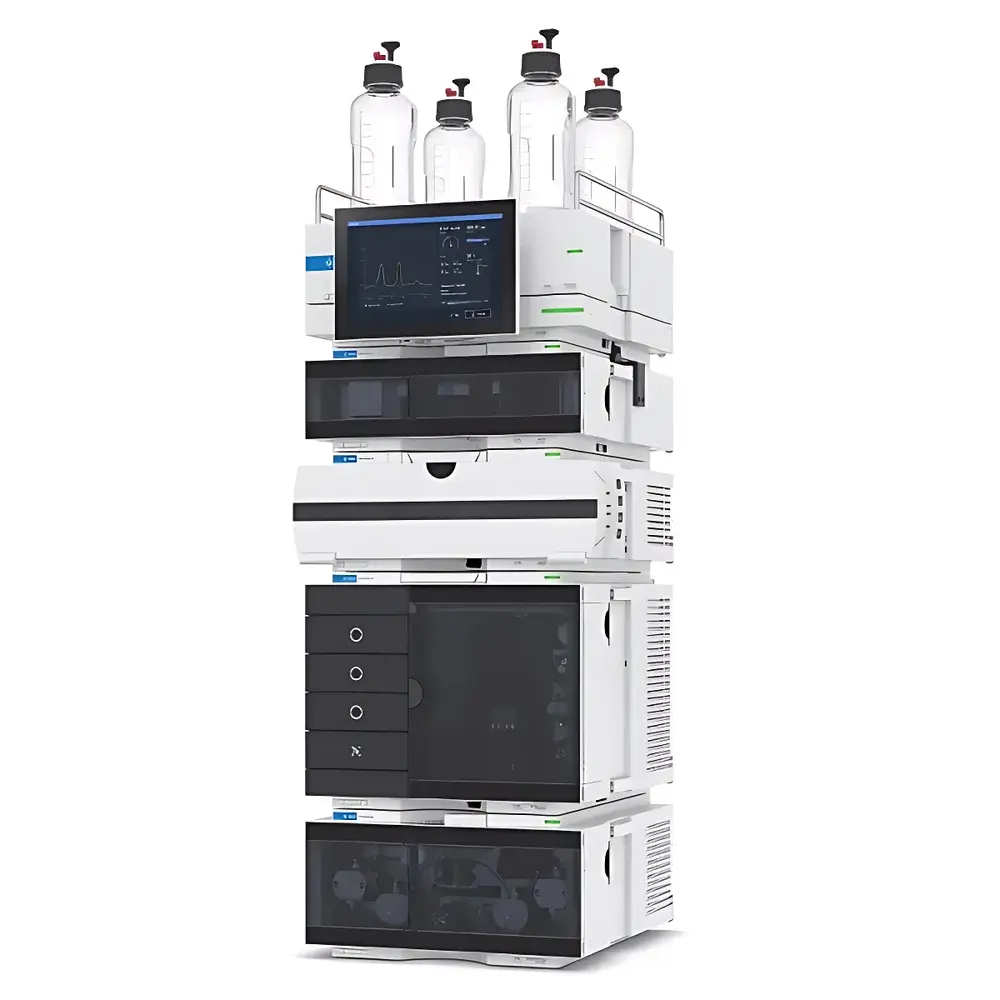
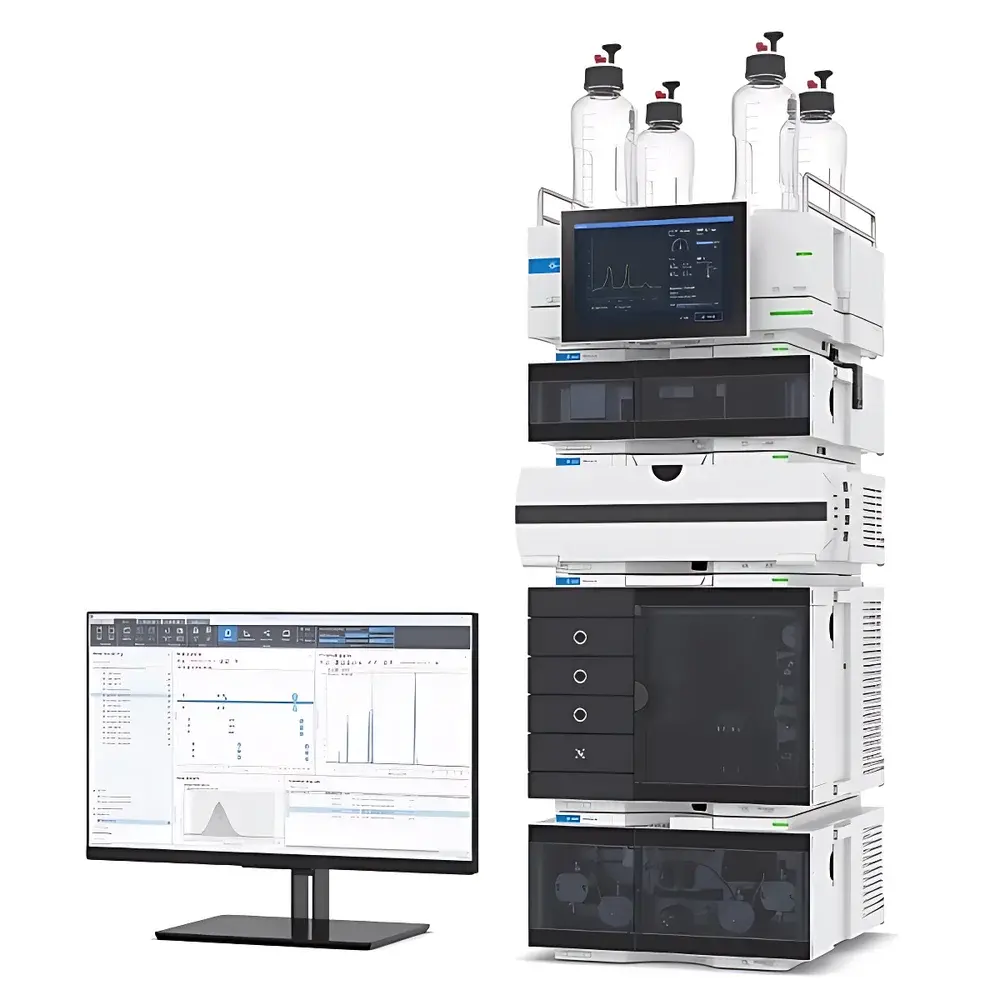
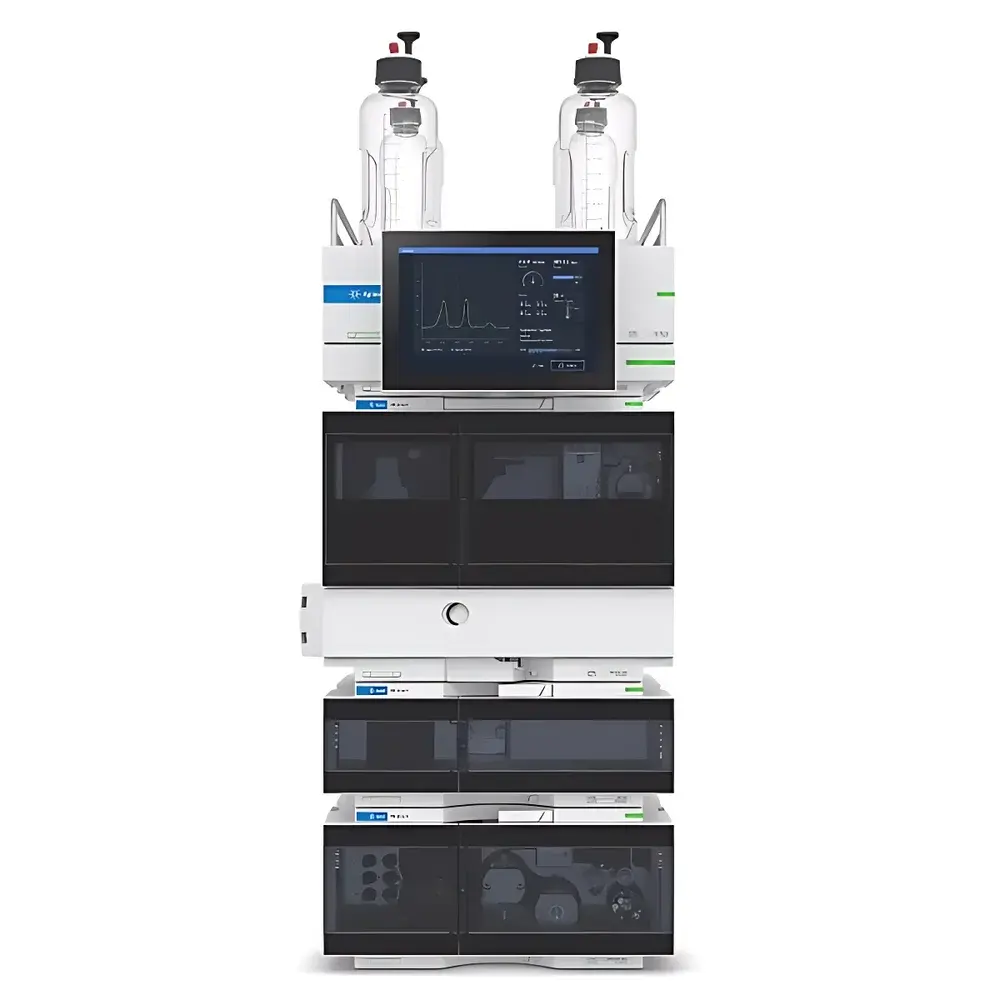
Agilent 1290 Infinity III Liquid Chromatography System
| Brand | Agilent Technologies |
|---|---|
| Origin | Shanghai, China |
| Manufacturer Type | Original Equipment Manufacturer (OEM) |
| Regional Classification | Domestic (China-manufactured) |
| Model | 1290 Infinity III LC |
| Instrument Type | Conventional High-Performance Liquid Chromatograph (HPLC) / Ultra-High-Performance Liquid Chromatograph (UHPLC) |
| Application Scope | General-purpose analytical chromatography |
| Flow Rate Range | up to 5 mL/min (with G7120A binary pump and G7104A quaternary pump) |
| Maximum Operating Pressure | up to 1300 bar |
| Injection Volume Range | 0.1–100 µL (expandable to 0.1–1500 µL with Multi-Draw Kit) |
Overview
The Agilent 1290 Infinity III Liquid Chromatography System is an ultra-high-performance liquid chromatograph engineered for precision, robustness, and method transfer fidelity in regulated and research-intensive laboratory environments. Based on the principles of high-pressure liquid chromatography (HPLC) and ultra-high-performance liquid chromatography (UHPLC), it employs low-diffusion fluidic pathways, minimized dwell volume (<10 µL), and pressure-stable binary or quaternary pumping to deliver exceptional resolution, reproducibility, and retention time stability across diverse column formats—from narrow-bore (e.g., 2.1 mm ID) to standard (4.6 mm ID) and preparative configurations. Its architecture supports both conventional HPLC methods (≤600 bar) and demanding UHPLC applications (up to 1300 bar), enabling seamless migration of legacy methods without revalidation. The system’s modular design integrates seamlessly into existing laboratory infrastructures, supporting both standalone operation and networked deployment under GLP/GMP-compliant workflows.
Key Features
- High-pressure capability: Sustained operation at up to 1300 bar, compatible with sub-2-µm particle-packed columns for enhanced peak capacity and resolution.
- Flexible flow control: Dual-pump options—G7120A binary pump and G7104A quaternary pump—support flow rates from 0.001 to 5.0 mL/min with ≤0.1% RSD precision.
- Ultra-low carryover: Multisampler with multi-stage needle wash and active solvent purge reduces cross-contamination to <10 ppm—even for highly adsorptive analytes such as chlorhexidine.
- Intelligent sample handling: Integrated sample ID reader automates vial position recognition and sample tracking; InfinityLab Assist software enables remote monitoring and workflow orchestration.
- Dynamic solvent management: Real-time solvent level sensing predicts depletion prior to sequence completion, preventing run interruption and costly reanalysis.
- Thermal control: High-capacity column compartment (G7116B) maintains temperature from –20 °C to +110 °C with ±0.1 °C stability; accommodates up to eight columns with optional MCT configuration.
- Scalable autosampling: Standard stack holds up to 6144 samples; dual-needle injection cuts cycle time by ~30%, increasing throughput without compromising precision.
Sample Compatibility & Compliance
The 1290 Infinity III LC supports a broad range of sample matrices—including aqueous environmental extracts (e.g., PFAS in drinking water), pharmaceutical actives and impurities (e.g., nitrosamine contaminants in APIs), biologics, natural products, and polymer additives. It complies with key regulatory requirements for analytical instrumentation: ASTM D8255 (PFAS analysis), USP (chromatographic separations), ICH Q2(R2) (method validation), and FDA 21 CFR Part 11 when deployed with OpenLab CDS or MassHunter software featuring audit trail, electronic signatures, and secure user access controls. Column ID readers and hardware-level method locking support instrument qualification (IQ/OQ/PQ) documentation per ISO/IEC 17025 and GxP guidelines.
Software & Data Management
The system operates natively with Agilent OpenLab CDS (ChemStation Edition or CDS 2.x) and MassHunter Workstation for LC/MS data acquisition and processing. Method transfer is enabled via Intelligent System Emulation Technology (ISET), which emulates legacy Agilent 1100/1200/1260 systems or selected third-party platforms (e.g., Waters ACQUITY, Thermo Scientific Vanquish) to preserve gradient delay, dwell volume, and mixing behavior—reducing method re-development time by >70%. Instrument Control Framework (ICF) provides standardized API-based integration with enterprise LIMS, ELN, and third-party CDS platforms including Waters Empower and Thermo Chromeleon. All raw data files adhere to ANDI/NetCDF format standards for long-term archival and interoperability.
Applications
- Environmental Analysis: Quantification of per- and polyfluoroalkyl substances (PFAS) in drinking water and wastewater using validated eMethod workflows with LC/MS/MS detection (detection limits <0.1 ng/L).
- Pharmaceutical Quality Control: Trace-level determination of mutagenic nitrosamine impurities (e.g., NDMA, NDEA) in drug substances and products per ICH M7(R2), leveraging triple quadrupole MS coupling and optimized UHPLC separation.
- Biopharmaceutical Characterization: Peptide mapping, intact mass analysis, and glycan profiling using wide-pH-range columns and elevated temperature gradients.
- Food & Beverage Safety: Pesticide residue screening, mycotoxin quantification, and vitamin profiling across complex matrices with minimal sample preparation.
- Academic & Contract Research: High-throughput method scouting, column screening, and kinetic optimization for novel stationary phases and mobile phase chemistries.
FAQ
Is the 1290 Infinity III LC compliant with 21 CFR Part 11?
Yes—when configured with OpenLab CDS or MassHunter software with audit trail, role-based access control, and electronic signature modules.
Can it run legacy HPLC methods without modification?
Yes—via ISET emulation mode, which replicates dwell volumes, gradient profiles, and pump dynamics of older Agilent and select third-party systems.
What is the minimum dwell volume achievable?
As low as 10 µL with the G7120A binary pump and low-volume detector flow cells—optimized for fast gradients on narrow-bore columns and LC/MS coupling.
Does it support column switching and heart-cutting 2D-LC?
Yes—through optional valve modules (e.g., G7152A 10-port/2-position valve) and synchronization with OpenLab CDS 2D-LC templates.
How is thermal stability maintained in the column compartment?
Using dual-zone Peltier cooling/heating with independent PID control per zone, achieving ±0.1 °C accuracy over –20 °C to +110 °C range.
What consumables are required for routine maintenance?
Standard items include pump seals (G7111-60053), autosampler syringe needles (G7129-60010), and column frits (5063-6591); all part numbers are traceable via Agilent’s InfinityLab Consumables Portal.





