
APL LIBSProbe-60 Submersible Laser-Induced Breakdown Spectroscopy System
| Brand | APL/Applied Photonics Ltd |
|---|---|
| Origin | United Kingdom |
| Manufacturer Status | Authorized Distributor |
| Product Origin | Imported |
| Model | LIBS Probe 60 |
| Instrument Type | Handheld |
| Integration | Integrated Unit |
| Laser Pulse Energy | 50–60 mJ |
| Operating Depth | 10–30 m underwater |
| Laser Source | Air-Cooled, Flashlamp-Pumped Passive Q-Switched Nd:YAG |
| Repetition Rate | Up to 1 Hz |
| Gas Purge Mechanism | Compressed Air Jet for Optical Path Drying |
Overview
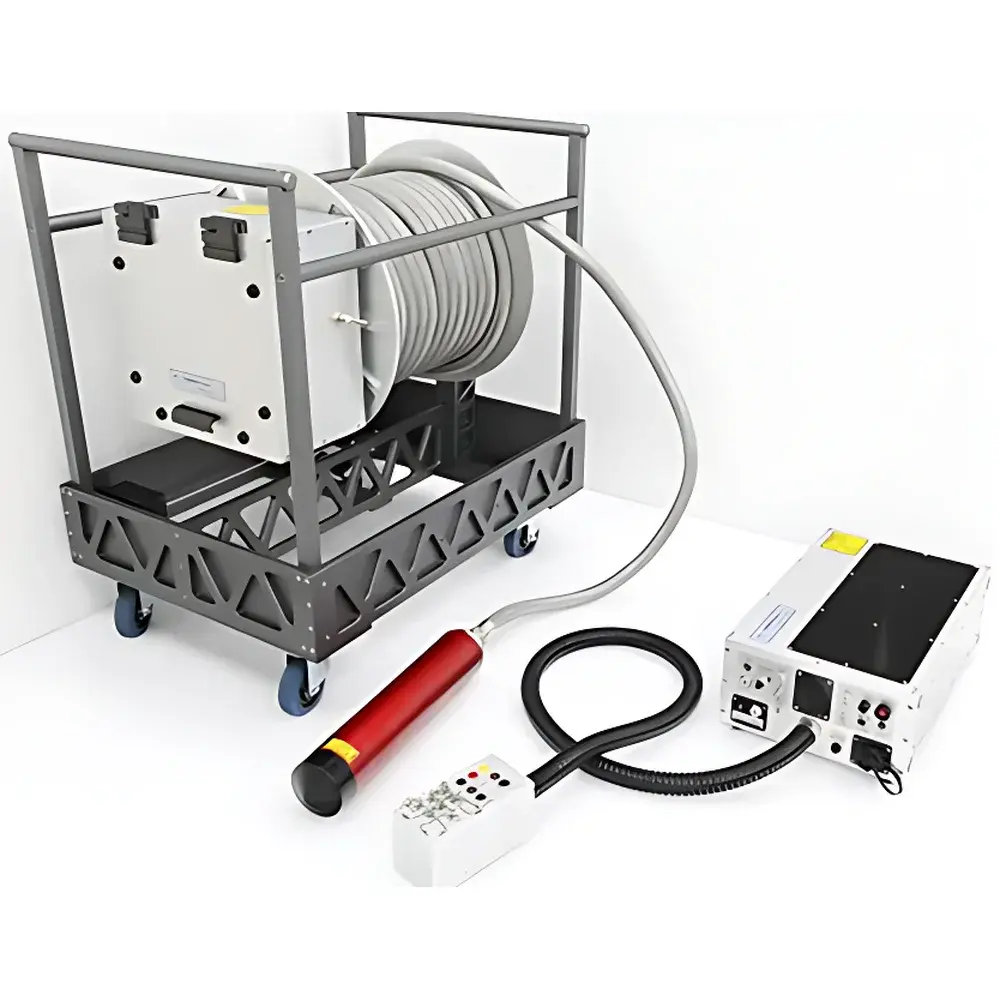
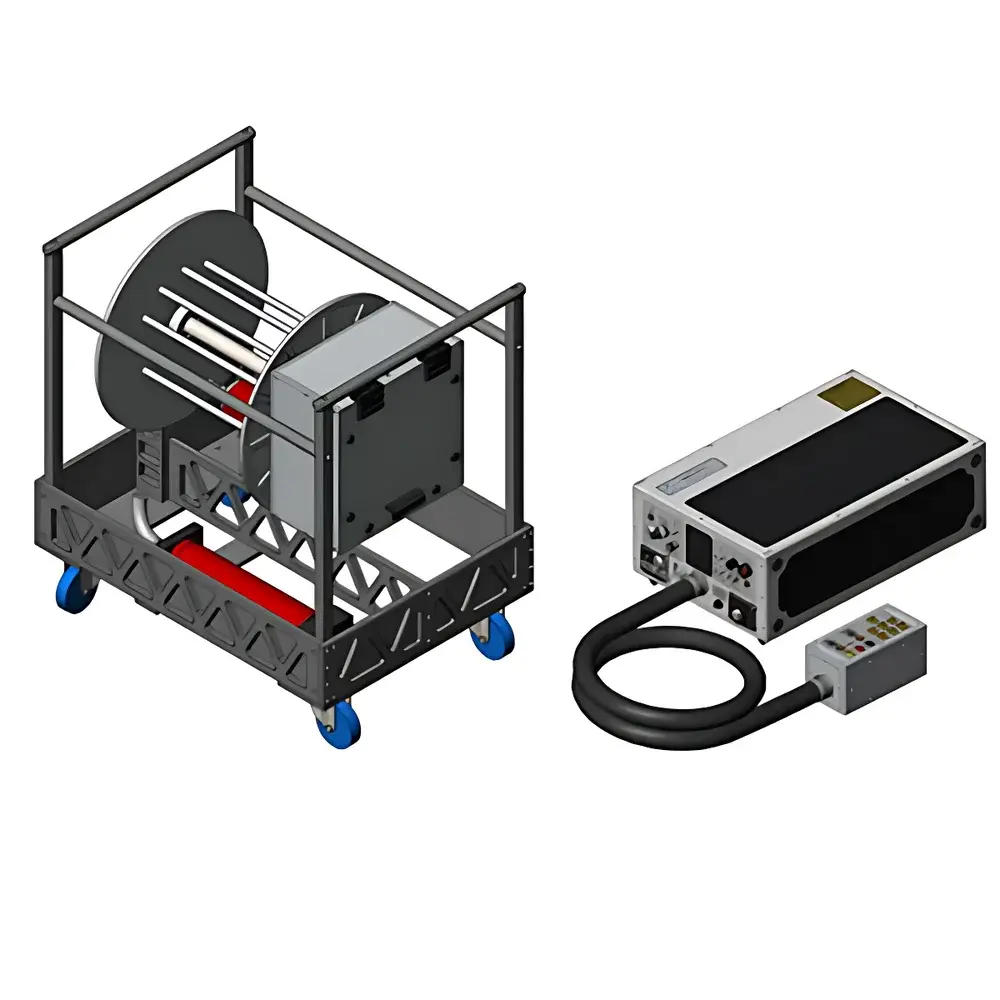
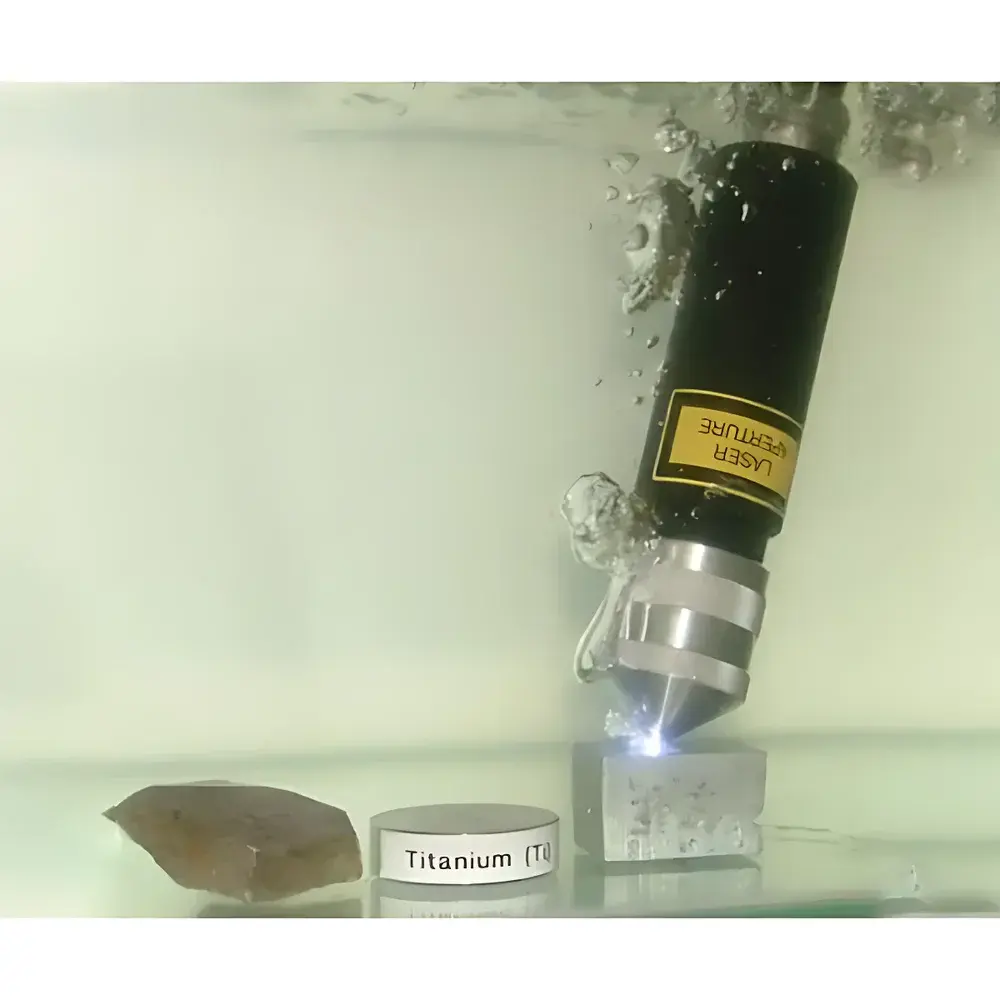
The APL LIBSProbe-60 is a purpose-engineered submersible Laser-Induced Breakdown Spectroscopy (LIBS) system designed for in situ elemental analysis of solid materials immersed in aqueous environments. Unlike conventional LIBS instruments constrained to ambient-air or inert-gas chambers, the LIBSProbe-60 operates at depths of 10–30 meters by integrating a ruggedized, pressure-rated optical probe with an embedded Nd:YAG laser and compact spectrometer. Its core measurement principle relies on pulsed laser ablation—where a high-energy laser pulse (50–60 mJ) is focused onto a submerged target surface, generating a transient microplasma. Emitted atomic and ionic line spectra from this plasma are collected via a co-axial optical path and resolved by a broadband spectrometer (typically covering 200–900 nm), enabling qualitative and semi-quantitative elemental identification without sample retrieval. The system’s operational viability underwater is achieved not through water-tolerant plasma formation—which severely degrades spectral signal-to-noise ratio—but via active gas purging: compressed air is directed through a concentric nozzle to displace water from the laser focal zone, establishing a transient gaseous environment around the ablation site. This enables LIBS acquisition under conditions closely approximating standard atmospheric LIBS protocols.
Key Features
- Integrated submersible probe housing rated for continuous operation at 30 m water depth (3 bar hydrostatic pressure)
- On-probe passive Q-switched Nd:YAG laser (1064 nm fundamental wavelength), air-cooled, flashlamp-pumped, delivering 50–60 mJ per pulse at ≤1 Hz repetition rate
- Optimized beam delivery and focusing optics co-located within the probe head, eliminating fiber-coupled laser transmission and minimizing energy loss and spatial dispersion
- Dual-path optical architecture: separate collimated paths for laser delivery and plasma emission collection, ensuring high spectral throughput and minimal stray light interference
- Real-time gas purge system using externally supplied compressed air (regulated flow: 2–5 L/min), dynamically clearing the optical aperture and ablation zone prior to each laser pulse
- IP68-rated electronics enclosure with corrosion-resistant titanium and marine-grade stainless-steel components
- Handheld ergonomic design with integrated depth-rated tether cable (flexible, armored, dual-core: one for laser trigger/synchronization, one for spectral data transmission)
Sample Compatibility & Compliance
The LIBSProbe-60 is validated for direct analysis of conductive and non-conductive solid substrates—including metals, alloys, ceramics, concrete, mineral deposits, and biofouled surfaces—while fully submerged. It does not require sample preparation, drilling, or drying. Compatibility extends to irregular, curved, or sediment-covered surfaces typical of underwater infrastructure (e.g., nuclear spent fuel pool walls, ship hulls, archaeological artifacts). The system complies with IEC 60529 (IP68), ISO 8502-3 (surface cleanliness assessment), and meets mechanical safety requirements per EN 61000-6-2/6-4 for electromagnetic compatibility in marine environments. While not certified as intrinsically safe for explosive atmospheres, its low-duty-cycle operation (≤1 Hz) and absence of continuous electrical arcing mitigate ignition risk in non-hazardous zones. Data acquisition workflows support audit-ready documentation aligned with GLP principles, including timestamped spectral metadata, environmental parameters (depth, temperature, salinity input), and operator ID logging.
Software & Data Management
Control and spectral acquisition are managed via APL’s proprietary LIBSControl Suite v4.x, a Windows-based application supporting real-time spectral preview, automated background subtraction, peak identification using NIST Atomic Spectra Database (ASD) libraries, and customizable calibration curve generation. All raw spectra are stored in HDF5 format with embedded metadata (laser energy, gate delay, integration time, purge status flag). The software supports 21 CFR Part 11-compliant user access control, electronic signatures, and immutable audit trails for spectral acquisition events. Export options include CSV, ASCII, and .spc formats compatible with third-party chemometric platforms (e.g., MATLAB, Python SciPy, Unscrambler). Remote operation via Ethernet-over-tether enables offline data review and batch processing without physical probe retrieval.
Applications
- Nuclear facility inspection: In-situ verification of cladding composition, corrosion product identification (e.g., Fe, Cr, Ni, Zn, U isotopes), and spent fuel pool liner integrity assessment
- Marine archaeology: Non-invasive elemental fingerprinting of submerged ceramics, bronze statuary, and shipwreck metallurgy without excavation or desalination
- Offshore infrastructure monitoring: Real-time detection of biofouling species (Ca, Mg, Sr, P), weld seam homogeneity (Mn, Si, Mo), and coating degradation (Ti, Zn, Al)
- Environmental sediment analysis: Rapid screening for heavy metal contamination (Pb, Cd, As, Hg) in benthic layers adjacent to industrial outfalls
- Underwater construction QA/QC: On-site verification of concrete aggregate composition (Si, Ca, Al, Fe) and rebar alloy grade (C, Mn, Cr)
FAQ
What is the maximum operating depth, and how is pressure sealing ensured?
The LIBSProbe-60 is rated for continuous operation at 30 m depth. Sealing is achieved via O-ring–based static compression joints, titanium pressure housings, and hermetically sealed optical windows with anti-reflective coatings optimized for 1064 nm and broadband UV-VIS transmission.
Can the system operate in seawater versus freshwater?
Yes—performance is consistent across salinities (0–35 ppt). The gas purge mechanism mitigates chloride-induced lens fouling; however, post-dive rinsing with deionized water is recommended to prevent long-term salt crystallization on external nozzles.
Is spectral quantification possible with this system?
Semi-quantitative analysis is supported via matrix-matched reference standards and internal normalization (e.g., using Ca or Fe lines as intensity references). Full quantitative calibration requires empirical calibration curves generated under identical purge, depth, and standoff distance conditions.
How is laser synchronization maintained during data acquisition?
A hardware TTL trigger signal is transmitted over the tether cable to synchronize laser firing, spectrometer gate opening, and data capture—ensuring sub-microsecond timing accuracy independent of host PC latency.
Does the system support multi-point mapping?
Yes—integrated motion tracking (via optional ROV-mounted IMU or manual XYZ stage interface) enables automated raster scanning. Position-stamped spectra can be reconstructed into 2D elemental distribution maps using LIBSControl Suite’s spatial analysis module.




