
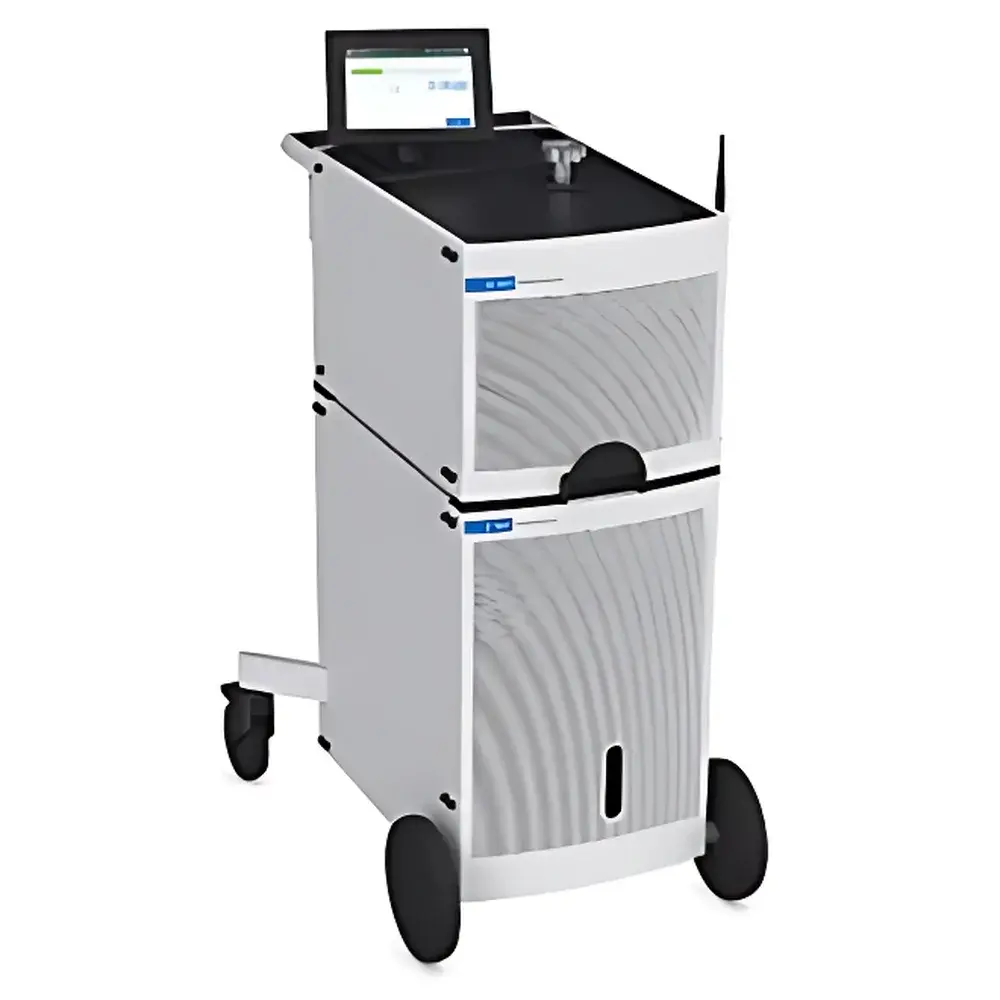
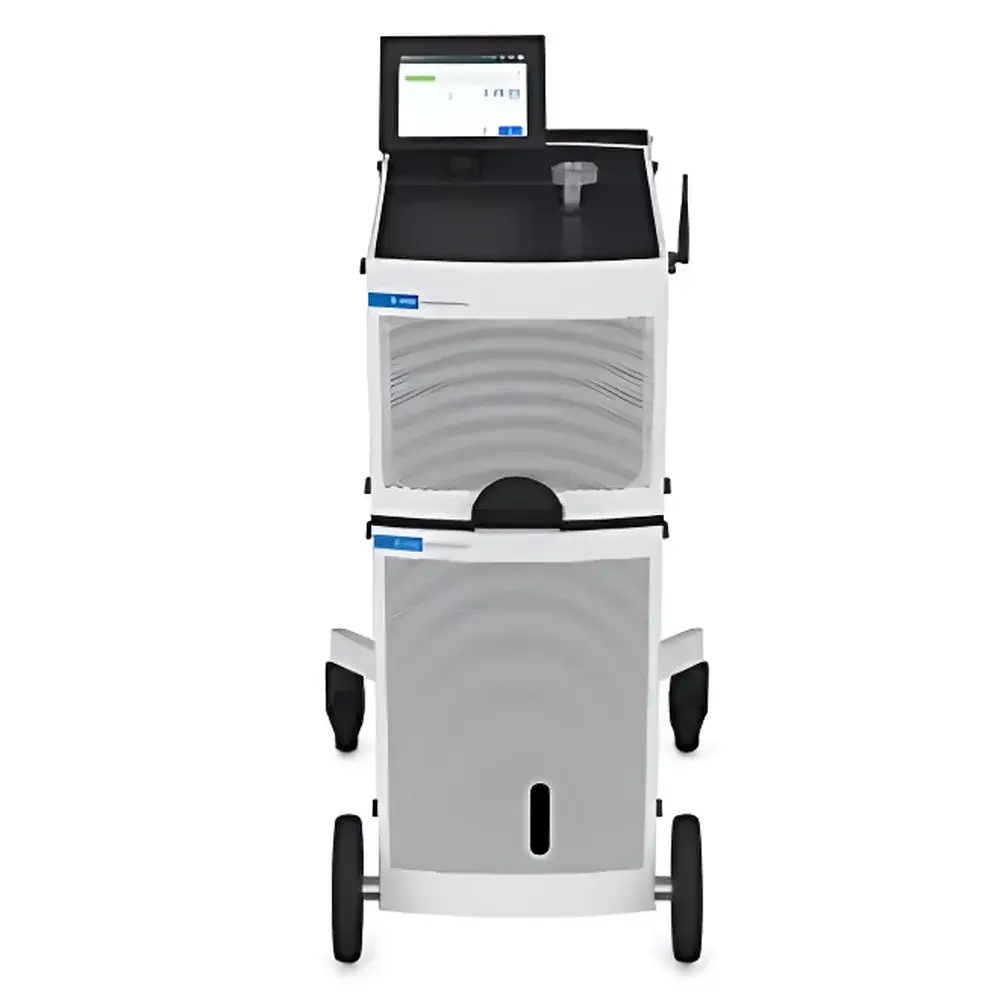
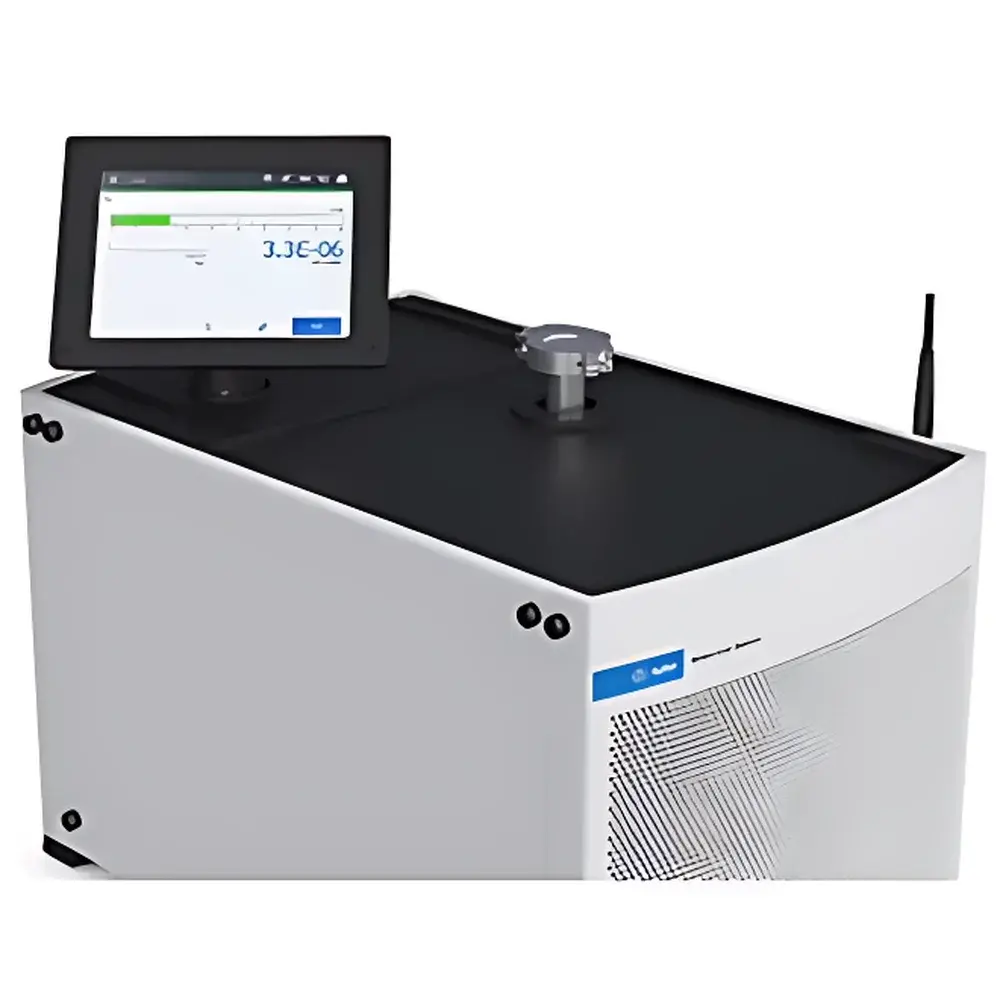
Agilent HLD MR30 Mobile Helium Mass Spectrometer Leak Detector
| Brand | Agilent Technologies |
|---|---|
| Origin | USA |
| Manufacturer Type | Original Equipment Manufacturer (OEM) |
| Origin Category | Imported |
| Model | HLD MR30 |
| Pricing | Available Upon Request |
Overview
The Agilent HLD MR30 Mobile Helium Mass Spectrometer Leak Detector is a high-performance, field-deployable instrument engineered for quantitative and qualitative detection of minute leaks in vacuum-enclosed systems using helium (⁴He) as a tracer gas. It operates on the principle of magnetic sector or quadrupole mass spectrometry—optimized specifically for the 4 atomic mass unit (amu) peak—enabling selective, interference-free detection of helium against background gases. Unlike broad-spectrum residual gas analyzers, the HLD MR30 integrates a dedicated helium-optimized ion source, mass filter, and electron multiplier detector to deliver high sensitivity (detection limit typically <5 × 10⁻¹² mbar·L/s under optimal conditions), excellent signal-to-noise ratio, and minimal cross-sensitivity to hydrogen, water vapor, or hydrocarbons. Designed for integration into manufacturing QC workflows, maintenance operations, and R&D validation protocols, the system supports both vacuum-integrated (vacuum mode) and sniffer-based (pressure-rise or probe mode) leak testing configurations—compliant with ASTM E1003, ISO 9934-3, and SEMI F27-0304 standards for leak detection methodology.
Key Features
- Integrated mobile platform with four industrial-grade swivel casters and ergonomic handle for seamless repositioning in production floors, cleanrooms, and confined service corridors.
- 180° rotatable industrial-grade capacitive touchscreen interface with anti-glare coating, supporting glove operation and offering intuitive flat-menu navigation—no nested submenus beyond two levels.
- Six pre-configured application wizards—including HVAC coil testing, semiconductor chamber validation, pharmaceutical isolator integrity verification, vacuum furnace inspection, cryogenic system screening, and automotive EV battery enclosure assessment—each auto-adjusting ion source bias, emission current, and scan parameters per ISO/IEC 17025-aligned test protocols.
- Dual-pump architecture: Agilent DS-602 dual-stage rotary vane pump (pumping speed: 30 m³/h at 50 Hz) for rapid rough pumping and background helium purge between cycles; coupled with a high-reliability turbomolecular pump (base pressure <1 × 10⁻⁷ mbar) for stable mass spectrometer operation.
- Enhanced data visualization suite featuring time-synchronized dual-axis plots (leak rate vs. time, chamber pressure vs. time), zoomable waveform inspection, color-coded threshold overlays (green/yellow/red bands per user-defined pass/fail limits), and real-time derivative calculation for transient leak identification.
- Extended vacuum hold function: Automated shutdown sequence maintains turbomolecular pump rotor spin-down under controlled vacuum (<5 × 10⁻⁶ mbar), preserving bearing integrity and eliminating need for venting before restart—reducing downtime by up to 40% in high-cycle environments.
Sample Compatibility & Compliance
The HLD MR30 accommodates a wide range of test objects—from small electronic enclosures (≥5 cm³ volume) to large vacuum vessels (>2 m³)—via flexible port configurations (KF-40, CF-63, and ISO-KF adaptors included). It supports both hard-line connection (for vacuum-mode testing per ASTM E499) and handheld helium spray/sniffer probe operation (per ASTM E1418). All firmware and calibration routines comply with FDA 21 CFR Part 11 requirements for electronic records and signatures, including full audit trail logging (user ID, timestamp, parameter changes, calibration events). Instrument design conforms to IEC 61000-6-2 (immunity) and IEC 61000-6-4 (emissions), and meets CE, UL 61010-1, and RoHS 3 directives. Factory calibration certificates are traceable to NIST SRM 1549 (helium-in-nitrogen standard).
Software & Data Management
The embedded Agilent LeakSuite™ firmware (v3.2+) provides local data storage (≥10,000 test records on internal SSD), CSV export via USB 3.0, and optional Ethernet/Wi-Fi connectivity for integration into LIMS or MES platforms. Each test record includes metadata (operator ID, GPS-tagged location if enabled, environmental temperature/pressure logs from integrated sensors), raw spectral snapshots, and annotated leakage curves. Role-based access control (admin/operator/auditor profiles) enforces GLP/GMP compliance. Optional Agilent ConnectCloud™ subscription enables remote diagnostics, predictive maintenance alerts (e.g., pump oil degradation estimation), and over-the-air firmware updates validated per IEC 62443-4-2 security guidelines.
Applications
- Validation of hermetic seals in implantable medical devices (ISO 11607-2) and diagnostic cartridges.
- In-line leak screening of lithium-ion battery modules prior to electrolyte filling (UN 38.3 thermal runaway mitigation).
- Qualification of ultra-high-vacuum chambers used in thin-film deposition (PVD/CVD) and surface analysis tools (XPS, AES).
- Pre-commissioning integrity testing of HVAC refrigerant circuits (ASHRAE Standard 110).
- Maintenance verification of fusion reactor first-wall cooling channels and tokamak vacuum vessel welds.
- Leak mapping of semiconductor process tools (etch, ALD, epitaxy reactors) during preventive maintenance windows.
FAQ
What is the minimum detectable leak rate under standard vacuum-mode operation?
Typical base sensitivity is ≤3 × 10⁻¹² mbar·L/s (helium) at 1×10⁻⁷ mbar chamber pressure, verified per ASTM E1418 Annex A1 using calibrated leak standards.
Can the HLD MR30 be used in hazardous locations (e.g., Class I Div 1)?
No—the system is rated for general-purpose industrial use (IP54 enclosure); explosion-proof variants require custom engineering and third-party certification (ATEX/IECEx not factory-installed).
Is external helium supply required for sniffer-mode testing?
Yes—a regulated helium source (Grade 5.0, ≥99.999% purity) with pressure regulator (0.1–2 bar output) and calibrated spray nozzle is mandatory for reliable tracer gas application.
How often does the turbomolecular pump require maintenance?
Under continuous operation at <80% capacity, scheduled bearing inspection is recommended every 12,000 operating hours; full rebuild interval is ≥36,000 hours per Agilent TM-260 service bulletin.
Does the instrument support automated pass/fail reporting per ISO 15549?
Yes—user-defined acceptance criteria (e.g., “leak rate <1 × 10⁻⁹ mbar·L/s for 60 s”) trigger auto-generated PDF reports with digital signature fields, compliant with ISO 15549 Annex B.
Related Products






