
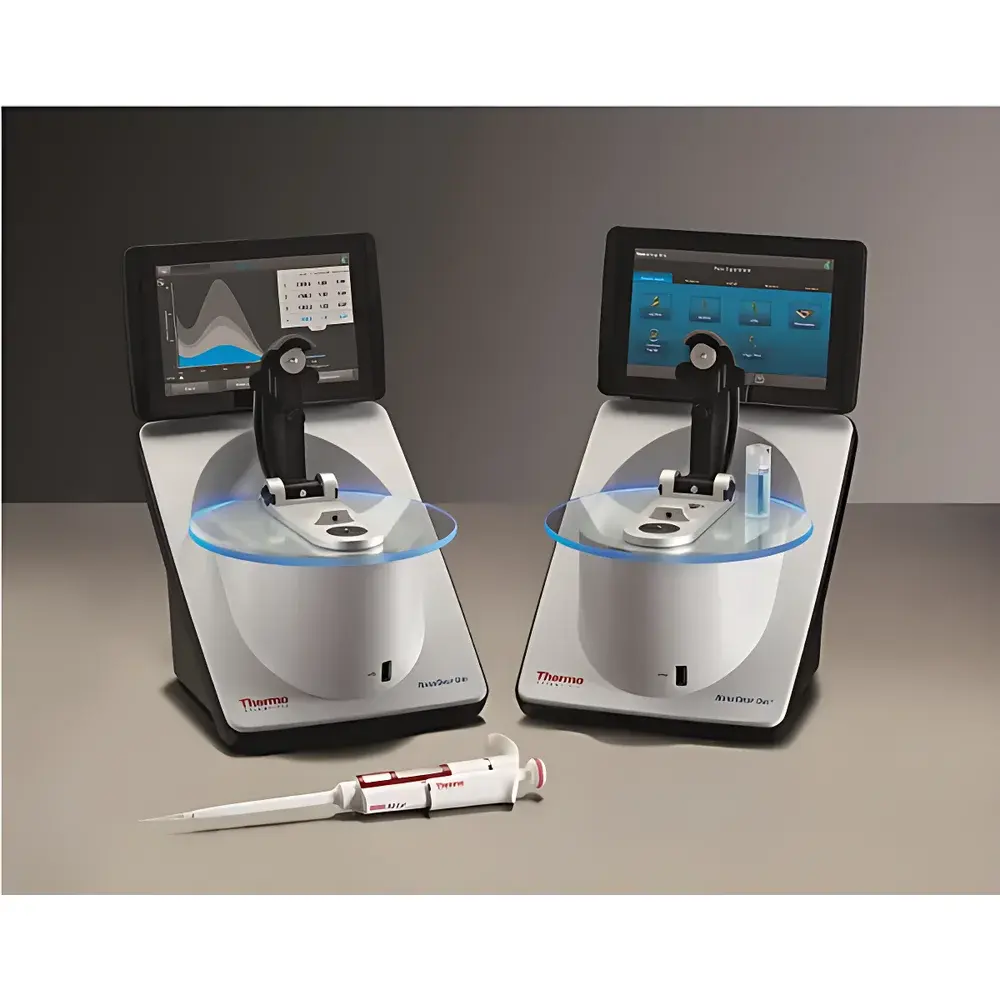
Thermo Fisher NanoDrop™ One/OneC Microvolume UV-Vis Spectrophotometer
| Brand | Thermo Fisher |
|---|---|
| Origin | USA |
| Manufacturer | Thermo Fisher Scientific |
| Product Type | Imported Instrument |
| Model | NanoDrop™ One/OneC |
| Optical Design | Dual-beam |
| Detector | CCD (Charge-Coupled Device) |
| Wavelength Range | 190–850 nm |
| Wavelength Automation | Fully Automatic |
| Spectral Bandwidth | ≤1.8 nm |
| Wavelength Accuracy | ±1.0 nm |
| Stray Light | ≤0.01% T |
Overview
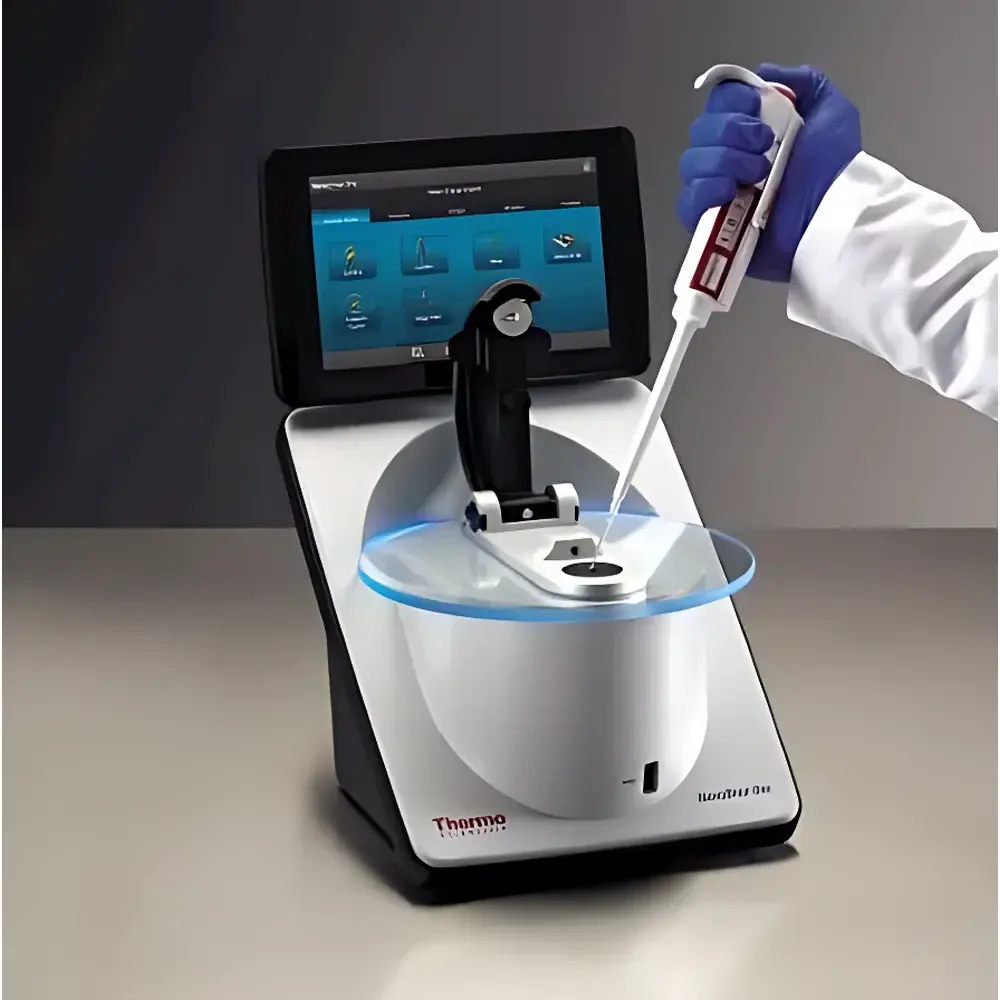
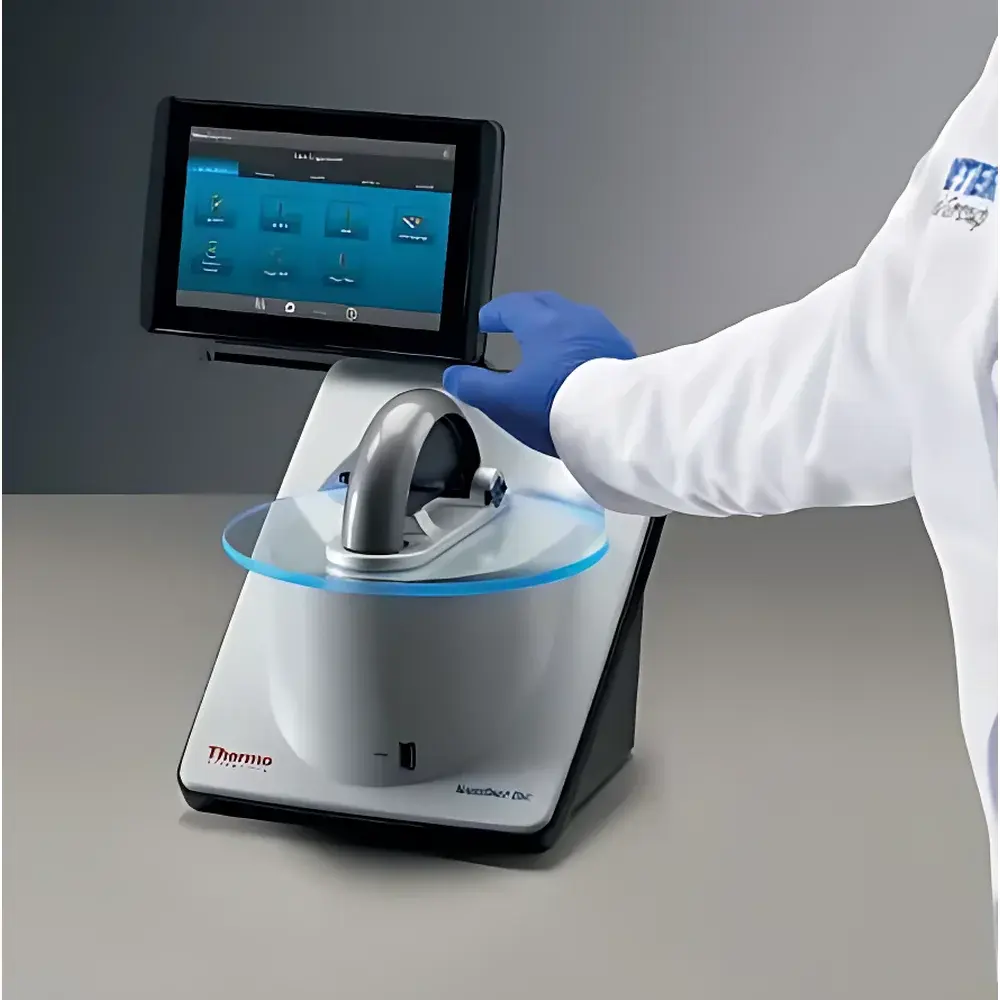
The Thermo Fisher NanoDrop™ One/OneC Microvolume UV-Vis Spectrophotometer is an integrated, benchtop analytical instrument engineered for rapid, accurate, and sample-sparing quantification and quality assessment of nucleic acids, proteins, and other UV-absorbing analytes. It operates on the principle of microvolume absorbance measurement using surface tension–based sample retention—eliminating the need for cuvettes or capillaries in base-mode analysis. The system combines dual-beam optical architecture with a high-resolution CCD detector to deliver precise spectral acquisition across a broad 190–850 nm range. Unlike conventional spectrophotometers requiring fixed-pathlength cells and serial dilution, the NanoDrop One/OneC employs patented variable pathlength technology (U.S. Patents 6,628,382 and 6,809,826), dynamically adjusting optical pathlength from 0.05 mm to 1.0 mm based on sample concentration—enabling direct measurement of highly concentrated dsDNA (up to 27,500 ng/µL) and BSA (up to 820 mg/mL) without manual dilution. Its embedded Android™ operating system, touchscreen interface, and standalone design eliminate dependency on external PCs while supporting secure data export via Wi-Fi*, Ethernet, or USB.
Key Features
- Microvolume capability: Requires only 0.5–2 µL of undiluted sample per measurement in pedestal mode
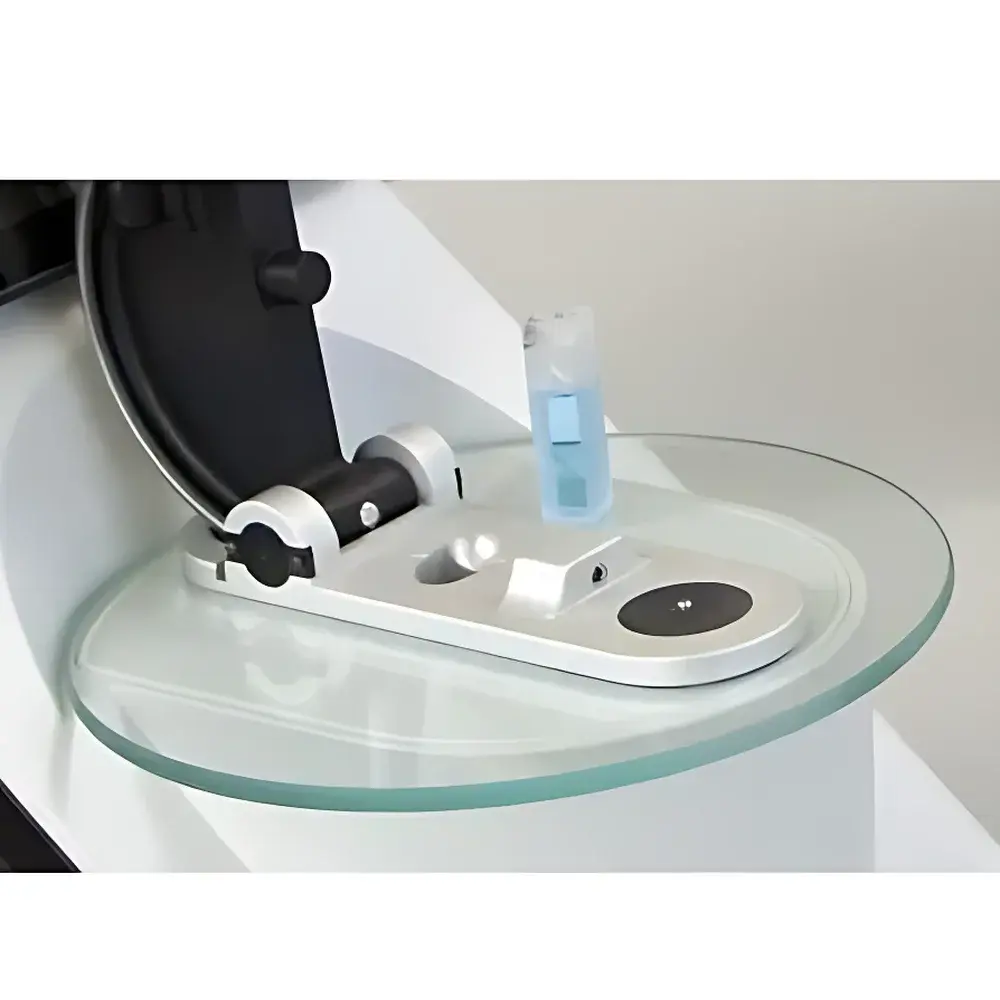
- Dual-measurement modality: Integrated pedestal (microvolume) and temperature-controlled cuvette module (with stirring and Peltier-based thermal regulation up to 45 °C)
- Acclaro Sample Intelligence technology: Simultaneously reports corrected concentration, identifies common contaminants (e.g., guanidine, phenol, EDTA, carbohydrates), and calculates A260/A280 and A260/A230 ratios with contextual interpretation
- Automated workflow: One-touch arm lowering initiates auto-zeroing and measurement; no manual alignment or calibration required between samples
- Embedded learning center: On-device access to technical documentation, application notes, video tutorials, and troubleshooting guides
- Robust optical performance: ≤1.8 nm spectral bandwidth, ±1.0 nm wavelength accuracy, and stray light <0.01% T ensure compliance with ASTM E275 and ISO 6425 standards for UV-Vis instrumentation
Sample Compatibility & Compliance
The NanoDrop One/OneC supports diverse biomolecular and chemical applications across academic, pharmaceutical, and industrial laboratories. It is validated for quantification of dsDNA, ssDNA, RNA, oligonucleotides, purified proteins (A280), labeled proteins, gold nanoparticles (520 nm), and colorimetric assays including BCA (562 nm), Bradford (595 nm), Modified Lowry (650 nm), and Pierce 660 (660 nm). Optical density measurements at 600 nm enable routine monitoring of bacterial culture density. All preconfigured methods adhere to standard assay protocols referenced in USP , CLSI EP10-A3, and ISO/IEC 17025–compliant workflows. While intended for research use only (RUO), the instrument’s audit-trail-enabled software meets foundational requirements for GLP environments, including user authentication, timestamped event logging, and exportable measurement records compatible with LIMS integration.
Software & Data Management
The instrument runs a customized Android™ OS with a purpose-built application providing intuitive method selection, real-time spectral visualization, and automated report generation. Data files are stored locally in CSV and PDF formats and support metadata tagging (user ID, date/time, method name, lot numbers). Export options include encrypted USB transfer, network share (SMB/CIFS), or cloud-synced repositories via configurable enterprise file servers. Software versioning follows Thermo Fisher’s documented release cycle, with all updates distributed through verified firmware channels. Audit trail functionality captures operator logins, method modifications, and result overrides—facilitating traceability in regulated settings where 21 CFR Part 11 alignment is pursued via complementary institutional IT controls.
Applications
- Nucleic acid QC in NGS library preparation and CRISPR editing workflows
- Routine protein quantification during purification and formulation development
- Verification of labeling efficiency in fluorescent or biotinylated conjugates
- Monitoring nanoparticle synthesis (e.g., AuNP plasmon resonance at 520 nm)
- Colorimetric assay validation for enzyme kinetics and inhibitor screening
- OD600 tracking of microbial growth in fermentation and bioprocess optimization
- Raw material verification in excipient and buffer component analysis
FAQ
Is the NanoDrop One/OneC compliant with FDA 21 CFR Part 11?
The instrument provides foundational features—including electronic signatures, audit trails, and secure user access—but full Part 11 compliance requires site-specific validation and supplementary procedural controls as defined by organizational SOPs.
Can the cuvette module perform kinetic measurements?
Yes—the temperature-controlled cuvette module supports time-resolved absorbance acquisition at user-defined intervals, enabling enzyme activity assays and ligand-binding studies.
What is the minimum detectable concentration for dsDNA?
In pedestal mode, the lower limit is approximately 2.0 ng/µL dsDNA (using 260 nm absorbance and 50 µg/mL extinction coefficient), verified against NIST-traceable standards.
Does Acclaro technology replace traditional purity assessment methods?
Acclaro augments—not replaces—orthogonal techniques such as agarose gel electrophoresis or HPLC; it serves as a rapid first-pass QC tool to flag potential contamination prior to downstream functional assays.
How often does the instrument require recalibration?
No routine recalibration is required; factory calibration is stable over time. Users may perform optional performance verification using supplied quartz reference standards per Thermo Fisher’s recommended schedule (e.g., quarterly or after physical relocation).



