
Thermo Fisher MDS Mobile Radiation Search System (Vehicle- and Aircraft-Mounted)
| Brand | Thermo Fisher |
|---|---|
| Origin | USA |
| Manufacturer | Thermo Fisher Scientific |
| Country of Origin | Imported |
| Model | MDS |
| Instrument Type | Portable Dose Rate Meter |
| Measurement Principle | Scintillation Detection & Neutron Proportional Counting |
| Detector Types | 5-L Plastic Scintillator (Primary), Optional He-3 Neutron Detector |
| Measurement Range | 1 nSv/h – 20 µSv/h |
| Sensitivity | 20,000 cps/µSv/h (for Cs-137) |
| Energy Response | 50 keV – 3 MeV |
| Background Count Rate | ~500 cps |
| Minimum Detectable Increase | ≥2 nSv/h above background |
| GPS | 6-Channel Satellite Receiver with Real-Time Georeferencing |
| Operating Temperature | −20 °C to +55 °C |
| Relative Humidity | 5–95% RH (non-condensing) |
| Power Supply | 12 V DC |
| Internal Battery | 8 h continuous operation |
| Enclosure | Zargus MIL-STD-810G Certified Transport Case |
| Weight | 15 kg |
| Dimensions (Detector Unit) | 40 × 60 × 35 cm |
Overview
The Thermo Fisher MDS Mobile Radiation Search System is a purpose-engineered, vehicle- and aircraft-deployable radiation detection platform designed for wide-area radiological survey, source localization, and rapid response in nuclear security, emergency preparedness, and environmental monitoring scenarios. Built upon scintillation-based dose rate measurement and optionally enhanced with thermal neutron detection capability, the system operates on the principle of pulse-height-integrated gamma-ray counting in a large-volume plastic scintillator—optimized for high sensitivity across the 50 keV to 3 MeV energy range. Its real-time, GPS-synchronized data acquisition enables dynamic mapping of radiation fields onto digital terrain models, supporting both reconnaissance-level scanning and forensic-level source identification. The MDS system meets NATO STANAG 4551 requirements for mobile radiological search equipment and has been formally certified as standard issue for multiple NATO-led peacekeeping and CBRN defense units.
Key Features
- Large-volume (5 L / 5,000 cm³) plastic scintillation detector providing exceptional sensitivity—20,000 counts per second per microsievert per hour (cps/µSv/h) for Cs-137—enabling reliable detection of weak or shielded sources during motion-based surveys.
- Optional integrated He-3 proportional neutron detector (calibrated to Cf-252) for simultaneous gamma-neutron discrimination—critical for identifying special nuclear materials (SNM) and mixed-field threats.
- Real-time geospatial correlation via embedded 6-channel GPS receiver with sub-5-meter horizontal accuracy (CEP), synchronized at 1 Hz to radiation count rate data streams.
- Ruggedized, MIL-STD-810G-compliant Zargus transport case rated for shock, vibration, temperature extremes (−20 °C to +55 °C), and humidity (5–95% RH, non-condensing).
- Onboard data acquisition unit with embedded Linux OS, capable of autonomous logging with timestamp, GPS coordinates, dose rate, count rate, and spectral summary metrics.
- Plug-and-play integration with industry-standard GIS software and Thermo Fisher’s proprietary radiation mapping suite for post-mission analysis and report generation compliant with IAEA RS-G-1.9 and ANSI N42.42 data formats.
Sample Compatibility & Compliance
The MDS system is optimized for detection of gamma-emitting radionuclides—including but not limited to Cs-137, Co-60, Ir-192, Am-241, and Eu-152—as well as thermal neutrons from isotopes such as Cf-252 and Pu-239. It does not require sample preparation or laboratory handling; measurements are performed in situ under ambient conditions. The system complies with NATO AEP-55 (Radiological Monitoring Equipment Requirements), meets EU Directive 2013/59/Euratom for radiation protection instrumentation, and supports audit-ready data export aligned with ISO/IEC 17025 documentation practices. All firmware and data logs retain full traceability for GLP/GMP-aligned deployments.
Software & Data Management
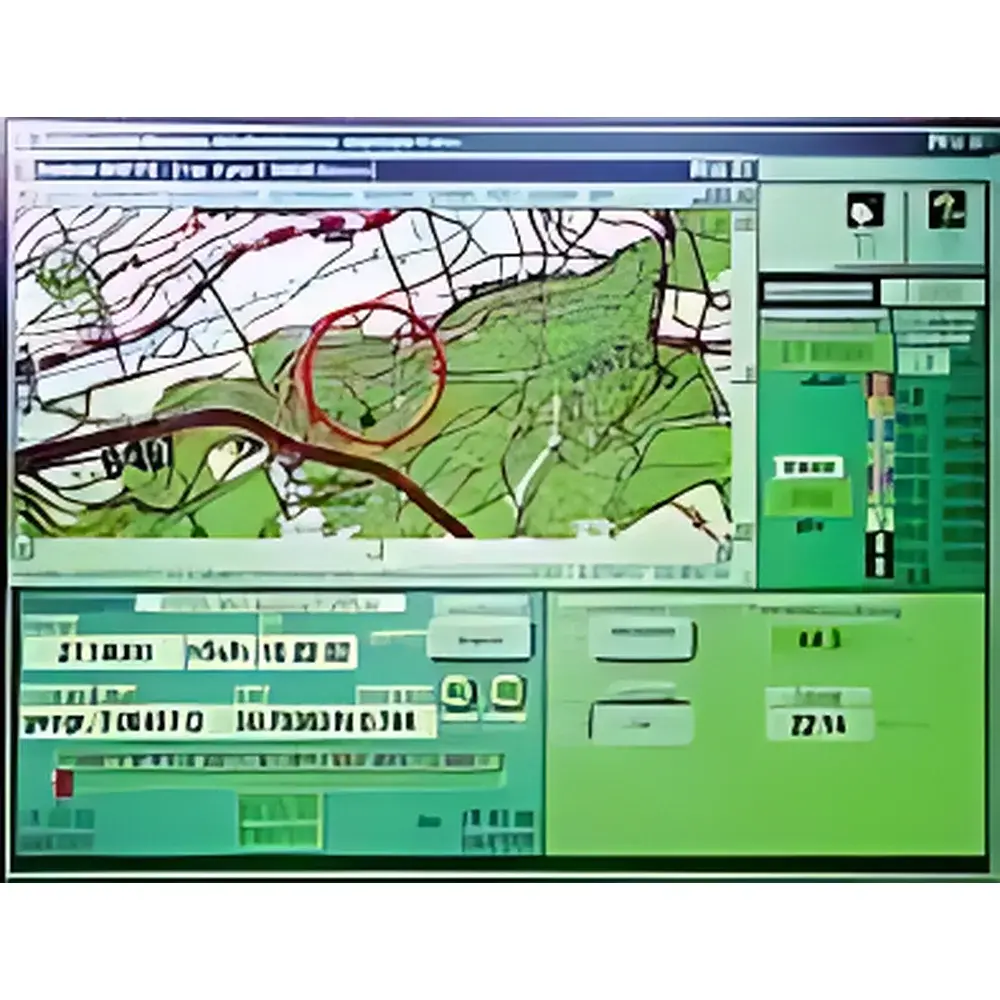
Data acquisition and visualization are managed through Thermo Fisher’s MDS Control Suite—a Windows-based application supporting live telemetry, contour mapping, anomaly flagging, and automated hotspot triangulation. Raw count data, GPS metadata, and environmental timestamps are stored in binary .RAD files conforming to ANSI N42.42-2019 format, ensuring interoperability with third-party platforms including ArcGIS, QGIS, and DOE’s RadResponder Network. Audit trails include user authentication, configuration change logs, and calibration history—all accessible without administrative override. Software updates are delivered via secure HTTPS channel with SHA-256 signature verification, satisfying FDA 21 CFR Part 11 electronic record integrity requirements.
Applications
- Nuclear emergency response: Rapid deployment for plume tracking, contamination boundary delineation, and shelter-in-place decision support following radiological dispersal device (RDD) incidents.
- Border and port security: Mobile screening of cargo containers, vehicles, and aircraft for illicit radioactive materials under operational traffic flow conditions.
- Military CBRN reconnaissance: Integration into armored platforms (e.g., German FOX NBC reconnaissance vehicle) for persistent, all-weather surveillance in contested environments.
- Decommissioning and legacy site characterization: Wide-area scanning of former nuclear facilities, waste storage yards, and scrap metal recycling centers to locate orphan sources.
- Regulatory compliance verification: Field validation of dose rate compliance against national limits (e.g., ICRP 103 recommendations, US NRC 10 CFR 20) during routine inspections.
FAQ
Is the MDS system suitable for airborne deployment?
Yes—the system is qualified for fixed-wing and rotary-wing aircraft integration, with vibration-damped mounting options and low-power consumption (12 V DC) compatible with avionics power buses.
Does the system provide energy discrimination or spectroscopic identification?
No—the MDS is a dose-rate optimized survey instrument, not a spectrometer. It delivers high-sensitivity gross-count detection and spatial localization, not nuclide-specific ID. For isotopic identification, pairing with a NaI(Tl) or HPGe spectrometer is recommended.
What is the minimum detectable activity (MDA) for Cs-137 at 1 m distance?
Based on system sensitivity and geometry, the MDA is approximately 37 kBq (1 µCi) for Cs-137 at 1 m under typical background conditions (0.1 µSv/h), assuming 10-second dwell time and 3σ confidence.
Can the system operate while connected to external AC power?
Yes—field units support dual-mode operation: internal rechargeable battery (8 h) or direct 12 V DC input from vehicle alternators or AC/DC converters.
Is firmware upgrade supported remotely?
Firmware updates require local USB connection and authenticated credentials; remote over-the-air updates are intentionally disabled to maintain cyber-resilience per NIST SP 800-171 and IEC 62443-3-3 requirements.







