
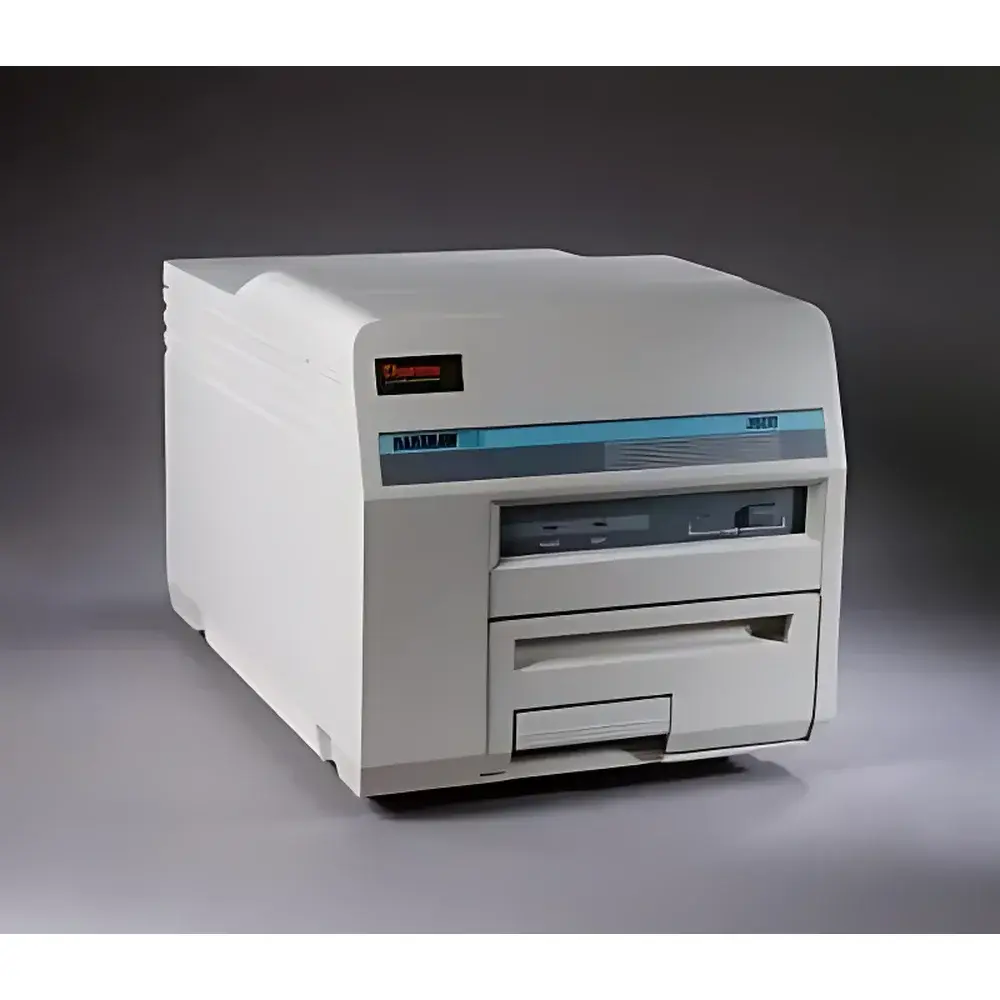
TLD3500 Thermoluminescence Dosimeter System for Irradiated Food Detection
| Origin | USA |
|---|---|
| Manufacturer Type | Authorized Distributor |
| Origin Category | Imported |
| Model | TLD3500 |
| Instrument Class | Radiation Dose Meter |
| Instrument Form Factor | Portable |
| Detectable Radiation Types | Photons (E > 5 keV), Neutrons (thermal–100 MeV), Beta particles (E > 70 keV) |
| Measurement Quantities | Photon dose, neutron fluence, beta dose |
| Dose Range | 10 μGy – 1 Gy (linear response) |
| Sensitivity Threshold | < 1 kGy |
| Temperature Range | 15 °C – 600 °C |
| Heating Rate | 1–50 °C/s |
| Temperature Stability | ±1 °C |
| System Stability | ±0.005% |
| Operating Ambient | 15–40 °C |
| Output Units | nC, gU, mrad, mrem, mGy, Gy, µSv, mSv, Sv |
Overview
The TLD3500 Thermoluminescence Dosimeter System is a calibrated, portable analytical platform engineered for the regulatory-specified detection of ionizing radiation treatment in food commodities. It operates on the fundamental principle of thermoluminescence (TL): crystalline dosimetric materials—primarily lithium fluoride doped with magnesium and titanium (LiF:Mg,Ti)—absorb and store energy from ionizing radiation during irradiation. Upon controlled thermal stimulation, this stored energy is released as visible light (typically in the blue–UV region), the intensity and spectral profile of which are quantitatively proportional to the absorbed radiation dose. The TLD3500 precisely measures this luminescent output following standardized heating protocols, enabling unambiguous discrimination between irradiated and non-irradiated samples across a broad spectrum of dry and semi-dry food matrices—including spices, herbs, dried mushrooms, teas, nuts, seeds, and select fresh produce where silicate-containing fragments (e.g., soil residues, plant epidermal cells) serve as intrinsic dosimeters.
Key Features
- Integrated high-precision temperature-controlled planchet heater with thermocouple feedback loop, ensuring ±1 °C thermal stability over the full 15–600 °C operating range.
- Programmable linear heating rates from 1 to 50 °C/s, supporting method-specific thermal ramp profiles required by EN 1788 and JIS Z 3290.
- Dual-channel photomultiplier tube (PMT) detection system optimized for low-light TL signal acquisition, with dark-current compensation and pulse-height discrimination.
- Pre-calibrated LiF:Mg,Ti thermoluminescent dosimeter (TLD) elements supplied in sterile, traceable batches—certified for food-grade use and compliant with ISO/IEC 17025 reference material requirements.
- Fully software-driven operation: all measurement parameters—including ramp rate, peak hold time, cooling delay, and integration window—are defined, executed, and archived via the embedded control interface.
- Built-in quality control diagnostics, including real-time PMT gain monitoring, heater resistance validation, and background noise profiling prior to each readout cycle.
- Portable form factor with integrated battery backup (optional), enabling field-deployable verification at border inspection points, cold-chain distribution hubs, or third-party testing laboratories.
Sample Compatibility & Compliance
The TLD3500 is validated for analysis of foods containing natural or residual silicates—such as quartz, feldspar, or clay particles—as intrinsic TL dosimeters. This includes but is not limited to: dried spices (black pepper, turmeric, paprika, cumin), herbal products (oregano, parsley, bay leaf), dried fungi (shiitake, wood ear), tea leaves (oolong, pu-erh, barley), and root vegetables with adherent soil traces (potatoes, ginger, turmeric rhizomes). The system conforms to the procedural requirements of EN 1788:2001 “Foodstuffs — Detection of irradiated food using thermoluminescence” and JIS Z 3290:2018 “Method for detection of irradiated foods by thermoluminescence.” It supports audit-ready data generation compliant with GLP principles and meets the instrumental performance criteria outlined in IAEA Technical Reports Series No. 409 and Codex Alimentarius Standard CXS 106-1983 (Rev. 1-2021).
Software & Data Management
The TLD3500 operates with dedicated Windows-based acquisition and analysis software that provides full traceability per FDA 21 CFR Part 11 requirements. Each measurement session generates a timestamped, digitally signed record containing raw glow curve data (intensity vs. temperature), instrument configuration metadata, operator ID, sample ID, and QC flag status. The software enables batch processing of up to 24 glow curves simultaneously, automated baseline subtraction, peak deconvolution using Gaussian fitting algorithms, and dose calculation via comparative calibration against reference irradiated TLDs. Export formats include CSV, PDF analytical reports, and XML for LIMS integration. Audit trails log all parameter modifications, user logins, and report generation events.
Applications
- Regulatory screening of imported spices and dried botanicals for compliance with EU Regulation (EC) No 1999/1995 and US FDA 21 CFR §179.26.
- Verification of commercial irradiation claims in organic-certified supply chains, where irradiation is prohibited under NOP standards.
- Post-treatment validation in industrial food sterilization facilities using gamma, X-ray, or electron beam sources.
- Forensic analysis in food fraud investigations involving undeclared irradiation to extend shelf life or suppress pathogens.
- Research applications in radiation biology and dosimetry methodology development, particularly for low-dose (<1 kGy) TL response characterization in complex organic matrices.
FAQ
What types of food samples are suitable for TL analysis using the TLD3500?
Samples must contain mineral silicates—either naturally occurring (e.g., soil residues on roots, epidermal cells in herbs) or introduced during processing (e.g., grinding media fragments). High-moisture or lipid-rich foods without silicate content are not analyzable without exogenous dosimeter addition.
Does the TLD3500 require external calibration standards for routine use?
Yes. Traceable LiF:Mg,Ti reference dosimeters irradiated to known doses (e.g., 0.5 kGy, 1 kGy, 5 kGy) must be measured alongside unknowns to establish the instrument’s dose–response curve. Calibration is recommended before each analytical batch.
Can the system detect irradiation performed with electron beams or X-rays?
Yes. The TLD3500 responds to all ionizing radiation types capable of inducing TL in silicates—gamma, X-ray, and high-energy electrons—provided the delivered dose exceeds the system’s detection threshold of <1 kGy.
Is the software compatible with modern Windows OS versions and LIMS environments?
The current software release supports Windows 10 and 11 (64-bit), and provides ODBC-compliant database export and HL7-compatible structured reporting for seamless LIMS integration.
How is data integrity ensured during long-term archival?
All raw and processed data files are stored with SHA-256 checksums; the software enforces write-once-read-many (WORM) behavior for analytical records and maintains immutable audit logs synchronized with system clock and NTP servers.
Related Products







