
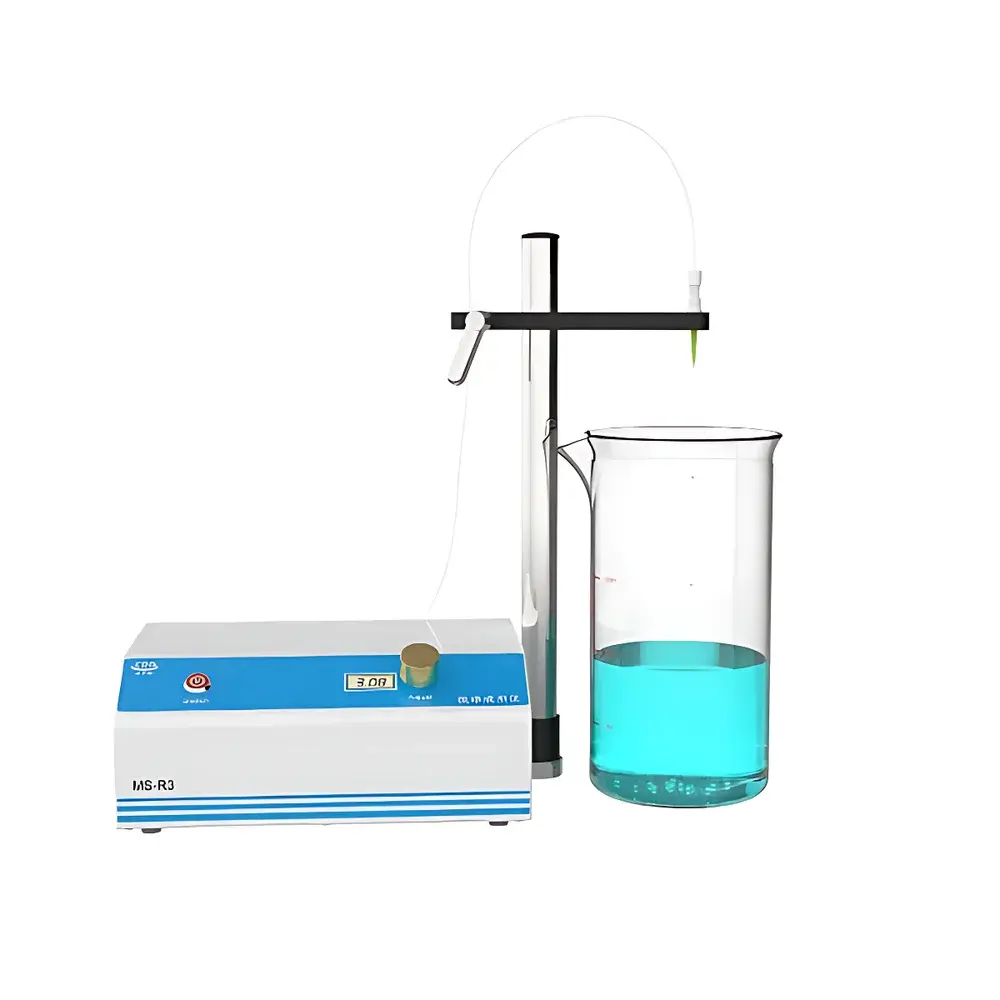
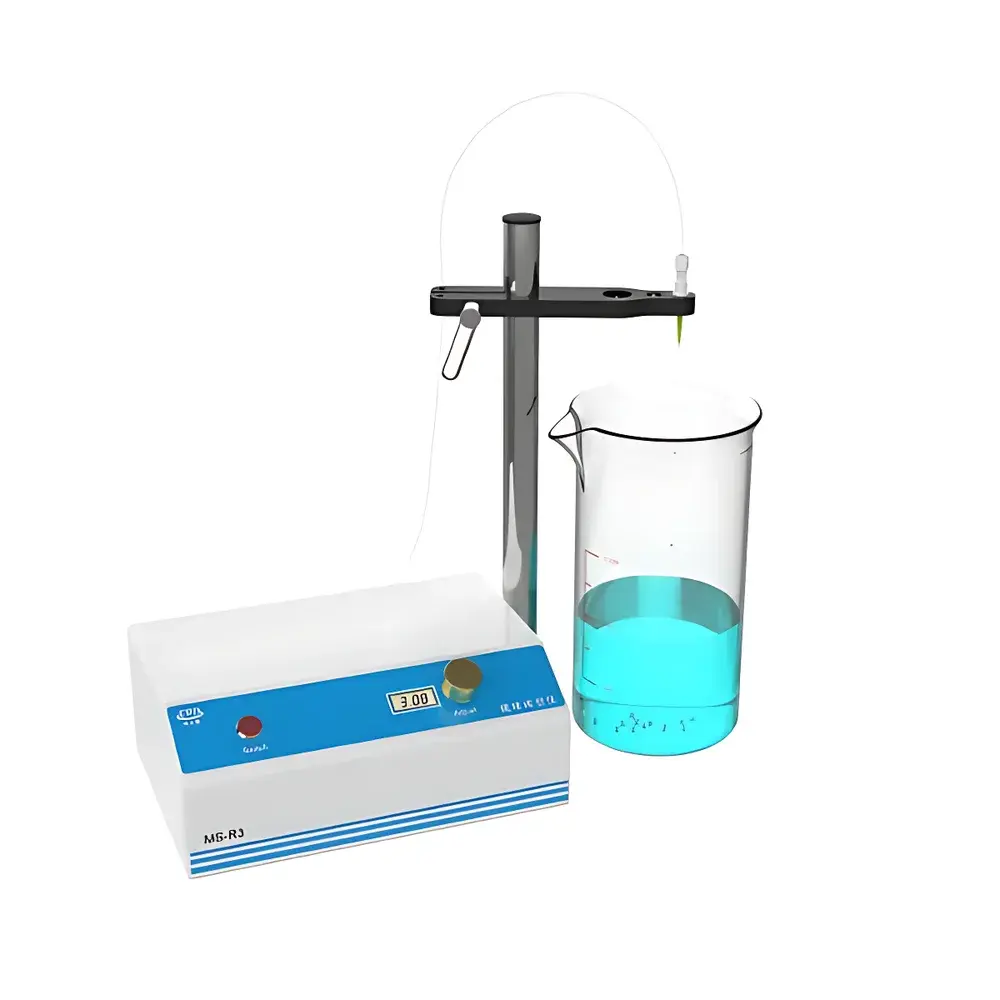
AA OPTO Electronic MS-R3 Sodium Alginate-Specific Microsphere Forming Instrument
| Brand | AA OPTO Electronic |
|---|---|
| Origin | Beijing, China |
| Manufacturer Type | Authorized Distributor |
| Country of Origin | China |
| Model | MS-R3 |
| Viscosity Range | <1500 cP |
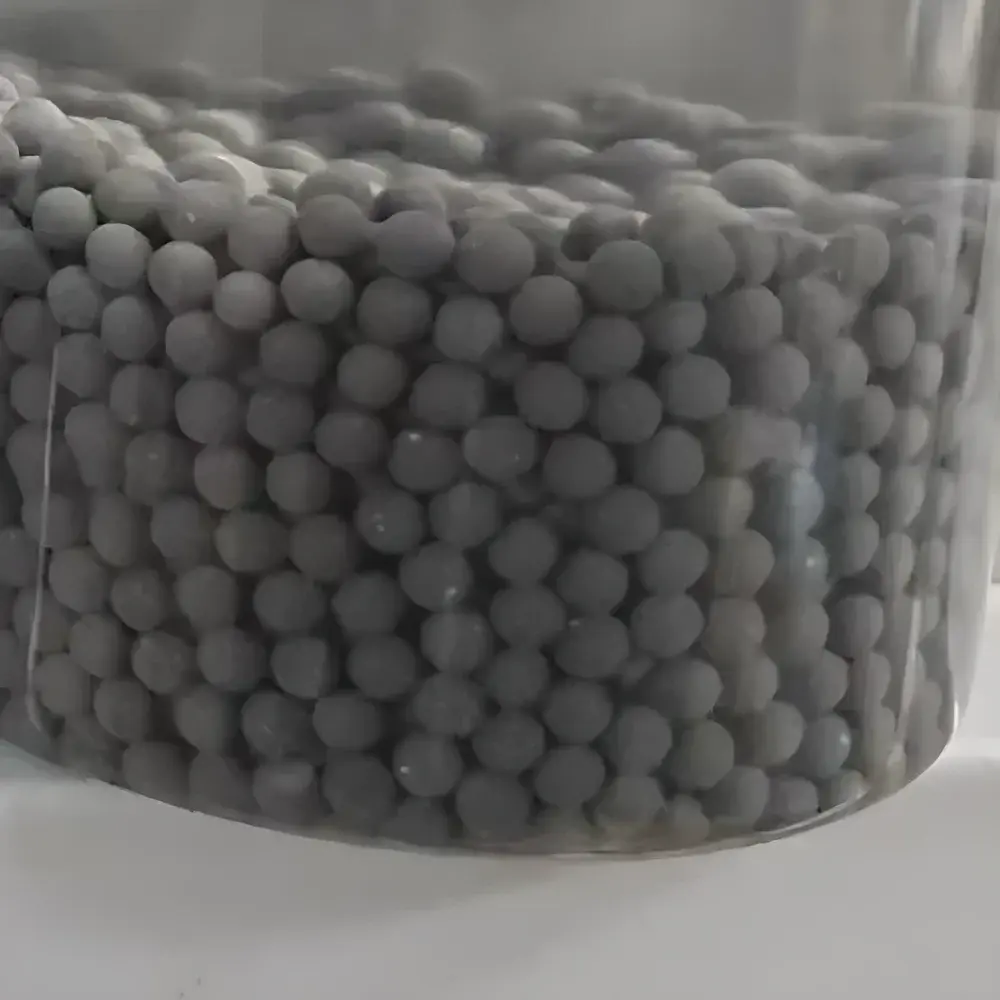
| Spherical Diameter Range | 1.5–4 mm |
| Flow Rate | 0–0.5 L/min |
| Pump Body Material | Stainless Steel |
| Gear Material | PEEK |
| Operating Temperature Range (Pump Head) | 5–70 °C |
| Power Supply | 220 V, 50 Hz |
| Power Consumption | 50 W |
| Net Weight | 2 kg |
| Dimensions (L×W×H) | 300 × 180 × 120 mm |
Overview
The AA OPTO Electronic MS-R3 Sodium Alginate-Specific Microsphere Forming Instrument is a precision-engineered droplet-based microencapsulation system designed for controlled, reproducible fabrication of hydrogel microspheres—primarily from sodium alginate and other ionotropic gelling polymers. It operates on the principle of extrusion-dripping followed by in-situ crosslinking in a reactive bath (e.g., calcium chloride solution or liquid nitrogen for cryogenic structuring), enabling formation of monodisperse or narrowly distributed spherical particles via gravity-driven or pump-assisted fluid dispensing. The instrument integrates a low-pulsation, high-accuracy peristaltic or gear-type positive displacement pump (PEEK gears, stainless steel housing) to deliver viscous precursor solutions at precisely regulated flow rates—critical for achieving consistent bead morphology, internal porosity, and surface integrity. Its compact benchtop architecture (300 × 180 × 120 mm) and low thermal load (5–70 °C pump head range) support integration into GMP-compliant labs, academic core facilities, and pilot-scale formulation development workflows.
Key Features
- Optimized for sodium alginate and analogous polyanionic biopolymers requiring Ca²⁺-mediated gelation or rapid solvent-induced phase separation
- PEEK gear pump with stainless steel body: chemically inert, wear-resistant, and compatible with aqueous and mildly acidic/basic formulations up to 1500 cP viscosity
- Brushless DC motor drive: eliminates carbon brush wear, ensures long-term operational stability, zero spark risk, and reduced maintenance intervals
- Adjustable flow control (0–0.5 L/min) via calibrated speed regulation—enabling fine-tuning of droplet volume, fall height interaction, and final sphere diameter (1.5–4 mm)
- Thermally stable pump head (5–70 °C operating range) supports temperature-sensitive biomaterials (e.g., probiotics, enzymes, live cells) during extrusion
- Low-noise operation (<55 dB(A)) suitable for shared laboratory environments and continuous unattended runs
Sample Compatibility & Compliance
The MS-R3 accommodates a broad spectrum of gellable precursors beyond sodium alginate—including chitosan, pectin, carrageenan, gelatin-methacryloyl (GelMA), and hybrid polymer blends. Its material-wetted path complies with USP Class VI and ISO 10993-5 standards for cytotoxicity, supporting applications in pharmaceutical microcarriers and diagnostic reagent manufacturing. While not intrinsically certified for ISO 13485 or FDA 21 CFR Part 11, the device is engineered to interface with validated drying systems (e.g., lyophilizers meeting ICH Q5C), and its repeatable dispensing performance aligns with ASTM D6984-20 (Standard Practice for Evaluating Microsphere Size Distribution) when coupled with image-based particle analysis. Users implementing it in regulated environments are advised to perform IQ/OQ/PQ qualification and integrate audit-trail-capable software logging.
Software & Data Management
The MS-R3 operates via analog or digital (0–10 V / 4–20 mA) speed input, allowing seamless integration with programmable logic controllers (PLCs), LabVIEW-based automation platforms, or custom SCADA systems. Though standalone operation requires no embedded firmware, optional RS-485 Modbus RTU communication enables remote parameter setting, real-time flow monitoring, and synchronization with downstream processes (e.g., bath agitation, cooling rate modulation). For full data traceability, users typically pair the instrument with time-stamped video capture (for droplet break-up analysis) and post-processing tools such as ImageJ/Fiji or Malvern Panalytical Morphologi software—supporting GLP-aligned reporting of size distribution (Dv10/Dv50/Dv90), circularity, and sphericity metrics.
Applications
- Pharmaceutical microencapsulation: sustained-release drug carriers, enteric-coated microbeads, peptide-loaded alginate matrices
- Diagnostics: immobilized enzyme reactors, antibody-conjugated beads for lateral flow assays, magnetic alginate composites for immuno-separation
- Biotechnology: probiotic encapsulation for gastric acid protection, microbial cell entrapment for biocatalysis or wastewater treatment
- Materials science: templated synthesis of mesoporous alumina, ceramic microspheres for thermal barrier coatings, catalyst supports with high surface area retention
- Food science: texture-modifying hydrocolloid microgels, flavor encapsulation, prebiotic delivery systems
FAQ
Can the MS-R3 handle highly viscous shear-thinning solutions like methylcellulose or hyaluronic acid?
Yes—within the specified 1500 cP limit at operational shear rates; however, non-Newtonian behavior may require empirical calibration of flow vs. rotational speed due to transient elasticity effects.
Is sterilization of the pump head possible between batches?
The stainless steel/PEEK wetted components tolerate autoclaving (121 °C, 15 psi, 20 min) and ethanol/IPA wipe-downs; disassembly instructions and torque specifications are provided in the technical manual.
Does the instrument support multi-nozzle configurations for parallel production?
Not natively—but third-party manifolds with matched hydraulic resistance can be integrated upstream of the outlet tubing; flow uniformity across channels must be verified using gravimetric testing.
What validation documentation is supplied with the unit?
Each shipment includes a Factory Acceptance Test (FAT) report verifying flow accuracy (±3% FS), temperature stability, and electrical safety (IEC 61010-1); user-defined OQ protocols are supported via downloadable templates.



