
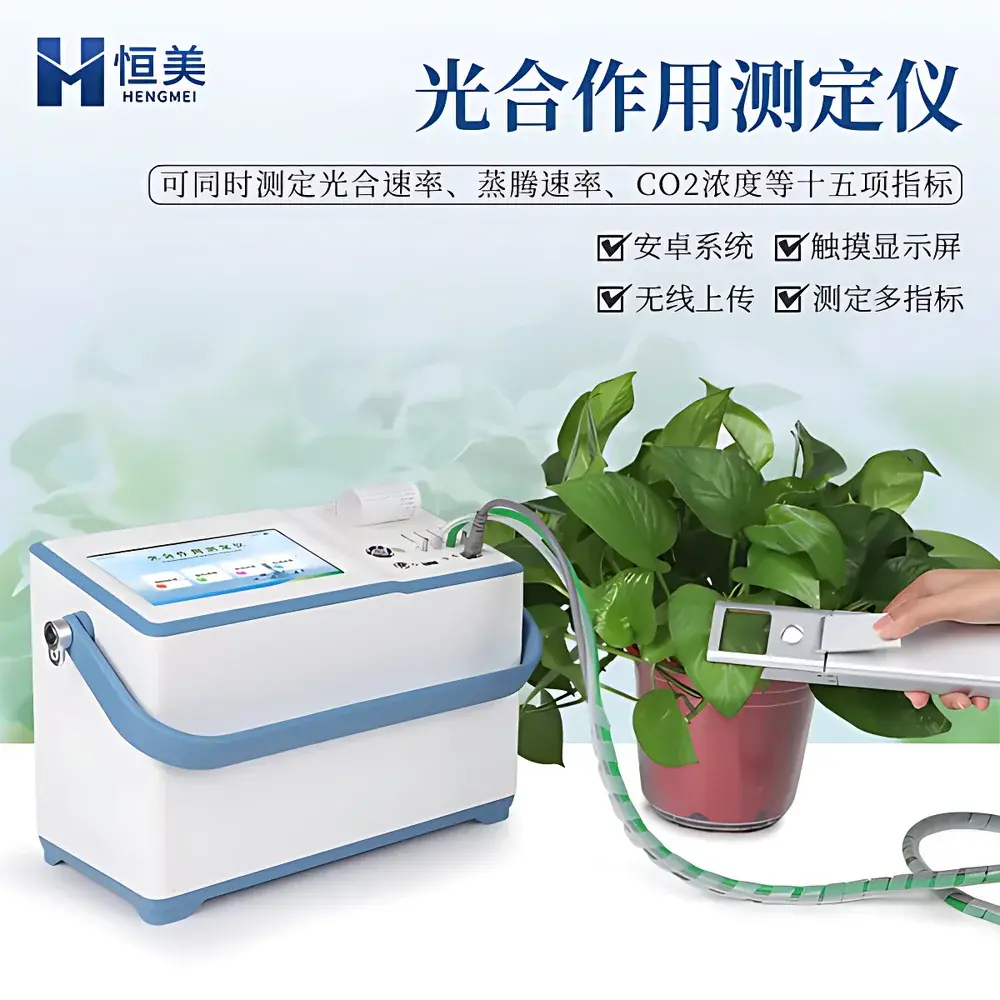
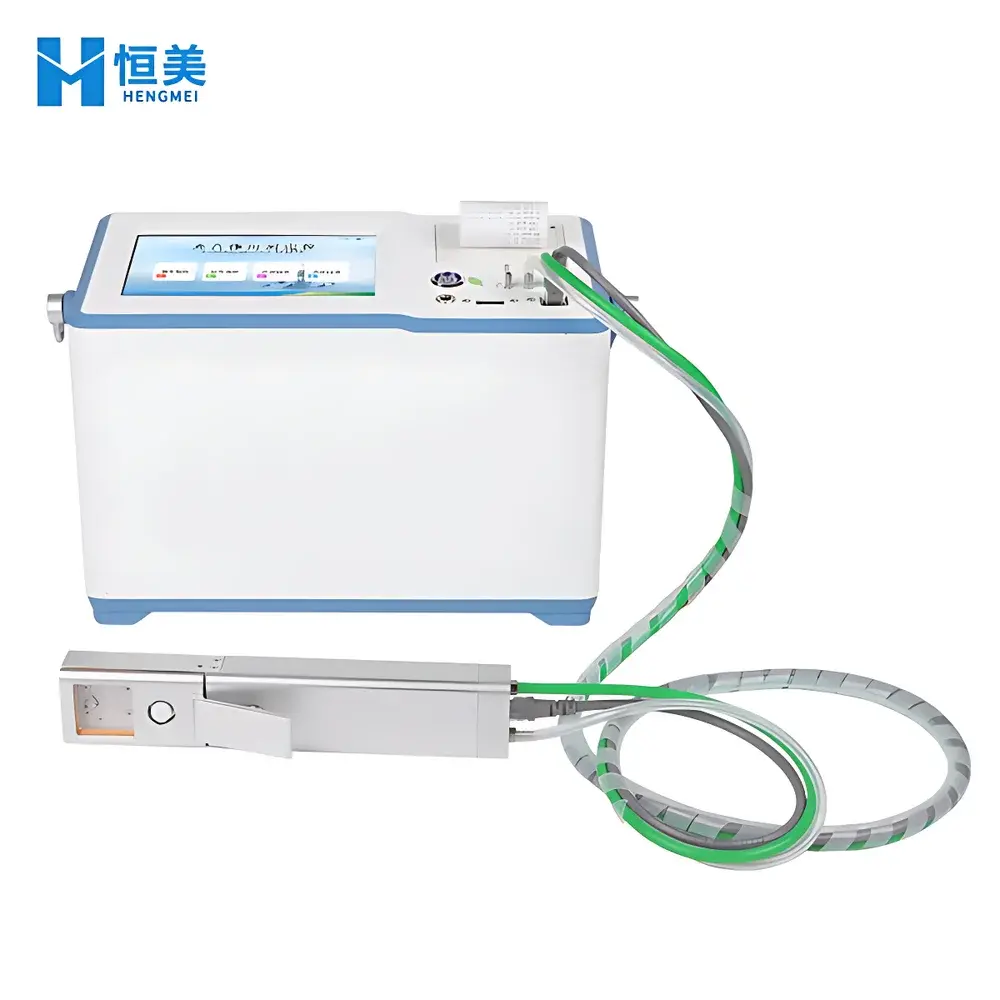
Hengmei HM-GH2 Portable Photosynthesis Measurement System
| Brand | Hengmei |
|---|---|
| Origin | Shandong, China |
| Manufacturer Type | OEM Manufacturer |
| Country of Origin | China |
| Model | HM-GH2 |
| Price | USD 6,950 (FOB Qingdao) |
| RH Range | 0–100% RH |
| CO₂ Range | 0–3000 µmol/mol |
| PAR Range | 0–3000 µmol/(m²·s) |
| Operating Temp | 0–50 °C |
| Battery Life | 10–12 h (fully charged) |
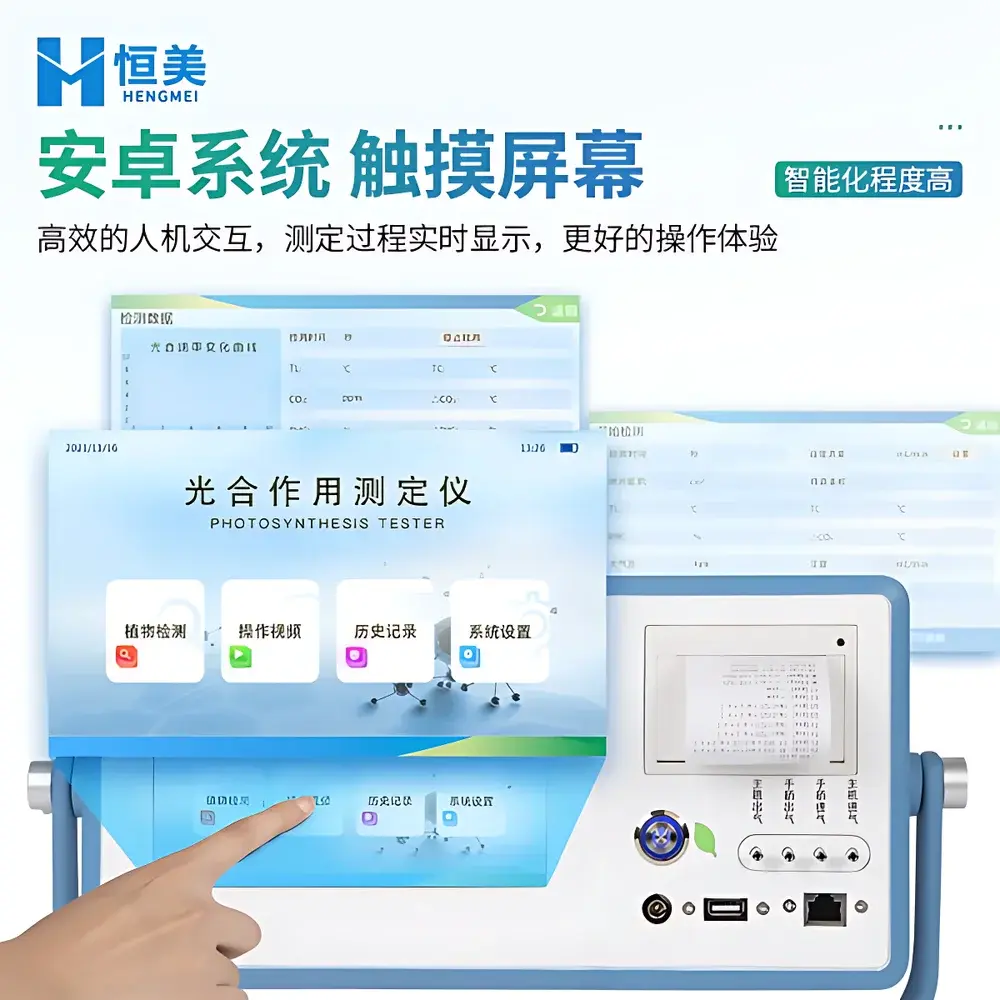
| Display | 7-inch capacitive touchscreen |
| Data Transfer | Wi-Fi, Bluetooth, USB, U-disk export |
| Cloud Platform Integration | Yes |
| Leaf Chamber Size | 3.3 × 3.3 cm |
| Weight | 4.0 kg (main unit), 0.7 kg (handle) |
Overview
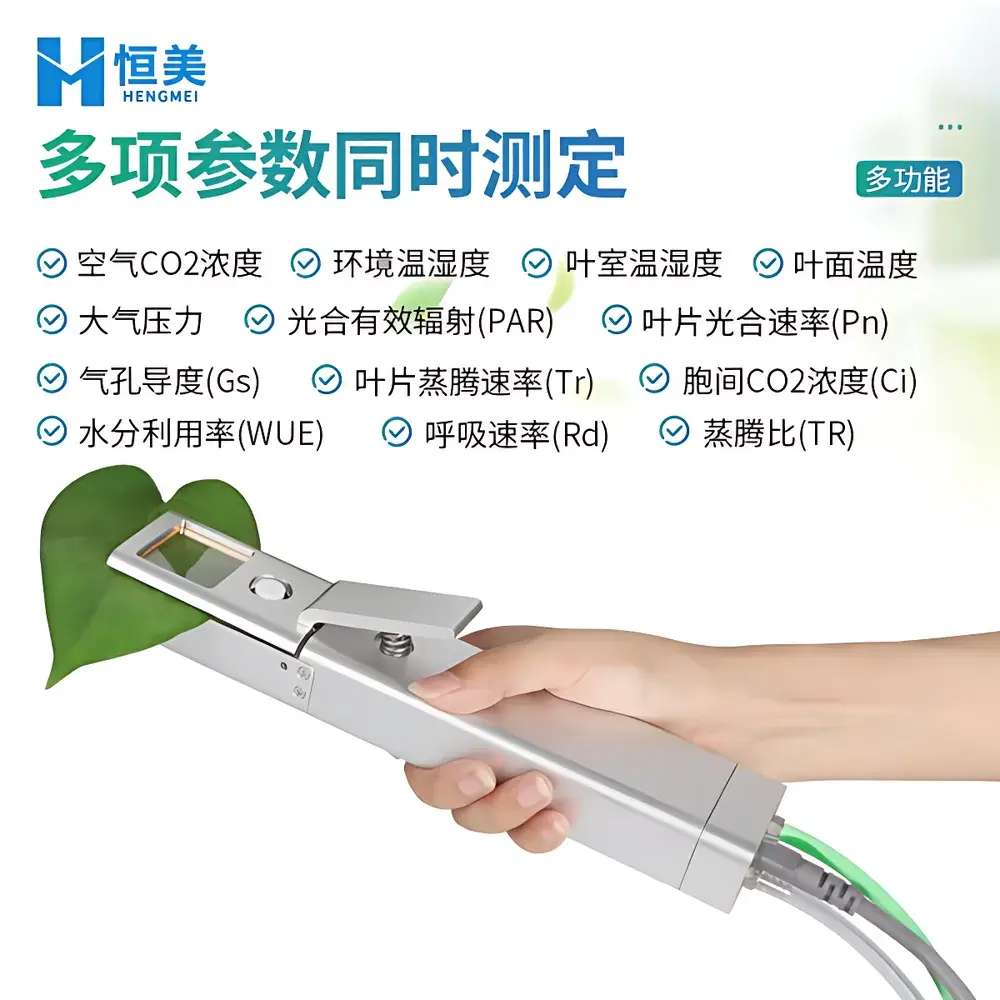
The Hengmei HM-GH2 Portable Photosynthesis Measurement System is a field-deployable, closed-system gas exchange instrument engineered for real-time, non-destructive quantification of leaf-level photosynthetic physiology under controlled or natural environmental conditions. It operates on the principle of infrared gas analysis (IRGA) coupled with precision microclimate sensing to simultaneously measure net photosynthetic rate (Pn), stomatal conductance (Gs), transpiration rate (Tr), intercellular CO₂ concentration (Ci), and derived physiological indices—including water use efficiency (WUE), dark respiration rate (Rd), and transpiration ratio (TR). Designed for high reproducibility in dynamic environments—such as growth chambers, greenhouses, open-field plots, and forest understories—the HM-GH2 integrates dual-wavelength IRGA for CO₂ detection, temperature-compensated humidity sensors, pressure-corrected flow control, and quantum-sensing PAR measurement with spectral correction filters. Its architecture adheres to foundational methodologies described in ASTM E2884-13 (Standard Guide for In Situ Photosynthetic Gas Exchange Measurements) and aligns with experimental protocols referenced in ISO 11277:2023 (Soil quality — Determination of particle size distribution) for ecological context integration.
Key Features
- Android-based operating system (ARM Cortex-A7 RK3288 quad-core, 1.88 GHz) with responsive 7-inch capacitive touchscreen interface for intuitive field operation and real-time parameter visualization.
- Dual-wavelength non-dispersive infrared (NDIR) CO₂ analyzer with integrated temperature stabilization and atmospheric pressure compensation—reducing thermal drift and improving long-term accuracy to ≤±3% FS across 0–3000 µmol/mol range.
- Simultaneous acquisition of 15 core biophysical parameters: Pn, Gs, Tr, Ci, WUE, Rd, TR, ambient & chamber CO₂, ambient & chamber RH (0–100% RH, ±1% RH accuracy), ambient & leaf surface temperature (0–50 °C, ±0.2 °C), atmospheric pressure (30–110 kPa, ±0.06 kPa), and PAR (0–3000 µmol/(m²·s), ±5 µmol/(m²·s)).
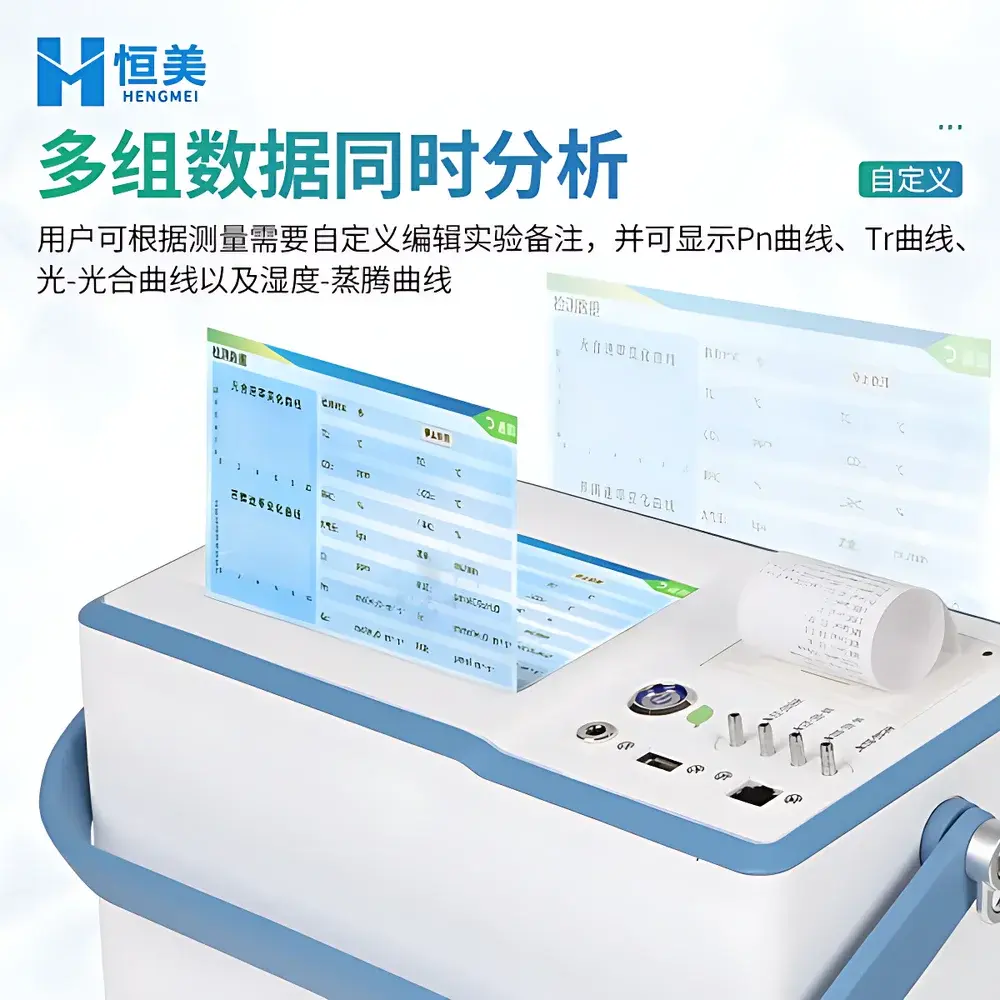
- User-configurable measurement protocols: Customizable annotation fields, dynamic curve plotting (Pn vs. time, Tr vs. RH, light-response curves), and multi-experiment overlay for comparative analysis.
- Robust power management: 8000 mAh Li-ion battery enabling 10–12 hours of continuous field operation; dual-status LED charging indicator (red = charging, green = full); universal AC adapter (100–240 V).
- Modular ergonomic design: Compact main unit (325 × 160 × 230 mm) with detachable handle (250 × 30 × 48 mm); total system weight < 4.7 kg—optimized for single-operator mobility and repeated sampling across heterogeneous terrain.
Sample Compatibility & Compliance
The HM-GH2 accommodates broad plant functional types via its standard 3.3 × 3.3 cm leaf chamber, suitable for dicot leaves (e.g., Arabidopsis, tomato, soybean), monocot blades (e.g., maize, wheat, rice), and broad-leaved perennials (e.g., poplar, grapevine). Chamber gasket design ensures reliable seal integrity across varying leaf thicknesses and surface topographies. All sensor calibrations follow traceable NIST-referenced standards where applicable; humidity and temperature modules comply with IEC 60751 Class A tolerance specifications. The system supports GLP-aligned data integrity workflows: timestamped measurements, operator ID tagging, and immutable metadata logging—including GPS coordinates (via paired smartphone), ambient light history, and chamber sealing status. While not certified for FDA 21 CFR Part 11 out-of-the-box, audit-trail export functionality enables integration into validated laboratory information management systems (LIMS) compliant with ISO/IEC 17025:2017 requirements.
Software & Data Management
Data acquisition, visualization, and export are managed through the embedded Android OS application, featuring native support for Wi-Fi and Bluetooth 4.2 LE connectivity. Field-collected datasets—including raw sensor voltages, computed physiological rates, and user-defined annotations—are stored locally in CSV and SQLite formats. Post-acquisition, users may export batches directly to cloud platforms (Hengmei Cloud or third-party services via REST API) for longitudinal trend analysis, spatial mapping, or statistical modeling. USB host mode permits plug-and-play U-disk transfer without driver installation. Multi-experiment comparison tools allow overlay of up to eight Pn–PAR response curves with color-coded legends and automatic parameter extraction (e.g., light saturation point, quantum yield, dark respiration intercept). Exported files include metadata headers compliant with MIAPPE v1.1 (Minimum Information About a Plant Phenotyping Experiment) for FAIR data sharing.
Applications
The HM-GH2 serves as a primary tool in academic and applied plant science domains requiring high-temporal-resolution gas exchange phenotyping. Key use cases include: evaluation of drought, heat, or salinity stress responses via diurnal Gs and WUE trajectories; screening of elite germplasm for improved carbon assimilation efficiency under elevated CO₂; validation of stomatal conductance models (e.g., Ball-Berry, Medlyn) using concurrent Pn–Ci and Gs–humidity relationships; assessment of herbicide mode-of-action on photosynthetic electron transport; monitoring recovery kinetics following photoinhibitory exposure; and calibration of canopy-scale eddy covariance flux towers. Its portability and rapid setup make it especially valuable for collaborative field campaigns across agroecological zones—from arid-steppe rangelands to humid subtropical orchards—and for teaching laboratories emphasizing hands-on plant ecophysiology methodology.
FAQ
What calibration procedures are required before field deployment?
The HM-GH2 requires zero-point calibration using CO₂-free air (N₂ scrubbed through soda lime) and span calibration with certified 300 ppm CO₂ gas prior to each day’s measurements. Relative humidity and temperature sensors auto-compensate but benefit from periodic verification against traceable reference hygrometers.
Can the system operate continuously for multi-day unattended monitoring?
No—it is designed for operator-assisted spot measurements (typically 1–5 min per leaf), not autonomous long-term logging. For extended deployments, external power banks or solar chargers may extend operational window, but chamber sealing integrity and battery thermal management limit unattended duration to < 8 hours.
Is PAR sensor cosine response corrected for angular light incidence?
Yes—the silicon photodiode incorporates a precision diffuser and optical filter calibrated to CIE photopic response, achieving ±5% cosine error up to 80° zenith angle per ISO 9060:2018 Class B specifications.
Does the cloud platform support role-based access control (RBAC) for multi-user research teams?
Basic cloud accounts permit shared folder access and dataset commenting; advanced RBAC (e.g., read-only vs. edit permissions per project) requires enterprise-tier subscription and integration with institutional SSO infrastructure.
Are replacement leaf chambers or custom-sized chambers available?
Standard 3.3 × 3.3 cm chambers are stocked; custom chambers (e.g., 2 × 2 cm for seedlings, 5 × 5 cm for large leaves) can be ordered as OEM accessories with lead time of 6–8 weeks and NDA-compliant mechanical drawings provided upon request.






