
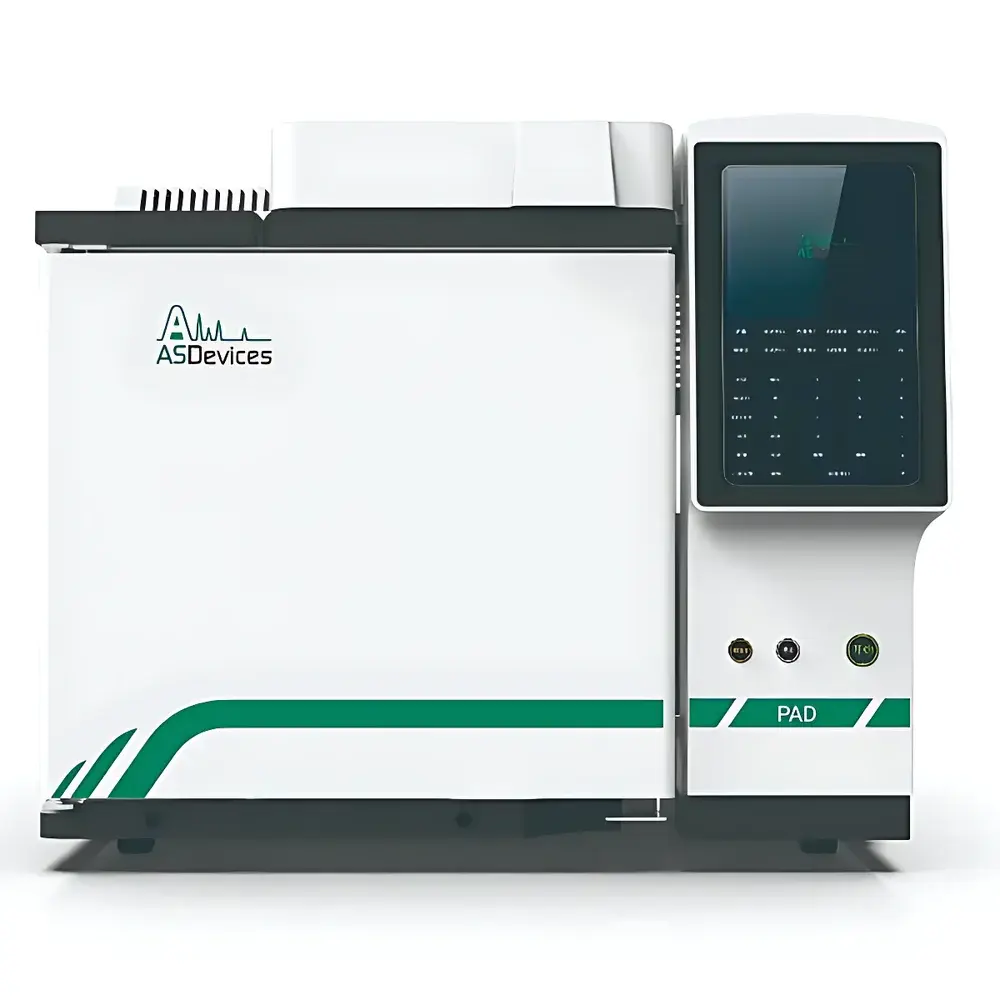
ASD PAD Comprehensive Two-Dimensional Gas Chromatograph
| Brand | ASD |
|---|---|
| Origin | Canada |
| Model | PAD |
| Instrument Type | Laboratory Gas Chromatograph |
| Application Field | Coal Industry-Specific |
| Temperature Control Range | −4 °C to 450 °C |
| Oven Ramp Rate | 30–60 °C/min |
| Oven Cool-Down Rate | 30–60 °C/min |
| Carrier Gas Flow Range & Control | 20–50 mL/min |
| Carrier Gas Pressure Range & Control | 90–100 psig |
| Injector Maximum Operating Temperature | 200 °C |
| Injector Pressure Setting Range | 5–15 psig |
| Injector Total Flow Setting Range | 20–30 mL/min |
Overview
The ASD PAD Comprehensive Two-Dimensional Gas Chromatograph is a purpose-engineered laboratory-scale GC platform designed for high-resolution separation of complex, co-eluting volatile and semi-volatile organic mixtures. Unlike conventional one-dimensional GC systems, the PAD implements comprehensive two-dimensional gas chromatography (GC×GC) based on active flow modulation — a carrier-gas-driven, cryogen-free modulation technique that eliminates reliance on liquid nitrogen or mechanical cryo-coolers. This architecture enables precise, reproducible modulation cycles with sub-second temporal resolution, essential for resolving structurally similar compounds in coal-derived tars, Fischer–Tropsch liquids, petrochemical streams, and environmental extracts. The system integrates a thermally stabilized dual-column oven, dual independent temperature-controlled injectors, and a dedicated flame ionization detector (FID) or optional mass spectrometric detection interface (e.g., single-quadrupole or time-of-flight MS), all synchronized via deterministic real-time control firmware.
Key Features
- Cryogen-free active flow modulation: Achieves consistent modulation periods (typically 2–10 s) using dynamically controlled carrier gas pulses — no consumables, no refrigerants, no moving parts in the modulator zone.
- High-precision thermal management: Dual-zone oven with independent PID control supports simultaneous operation of first-dimension (¹D) and second-dimension (²D) columns across −4 °C to 450 °C, with ramp rates up to 60 °C/min and cool-down rates matching ramp performance.
- Modular injector configuration: Two independently programmable split/splitless injectors, each supporting pressure- and flow-controlled operation (5–15 psig; 20–30 mL/min total flow), optimized for both large-volume injection and trace-level analysis.
- Carrier gas delivery system: Digital mass flow controllers (MFCs) maintain carrier gas flow (20–50 mL/min) and pressure (90–100 psig) within ±0.1% setpoint stability under dynamic GC×GC conditions.
- Integrated hardware synchronization: All timing-critical events — modulation triggers, detector sampling, valve actuation, and oven ramp transitions — are governed by a centralized FPGA-based timing engine, ensuring sub-millisecond coordination.
Sample Compatibility & Compliance
The PAD platform is validated for use with standard fused-silica capillary columns (e.g., DB-5ms, HP-INNOWAX, BPX-50) in both ¹D and ²D configurations, accommodating column inner diameters from 0.10 mm to 0.25 mm and lengths up to 60 m. It complies with ASTM D7213 (standard test method for determination of hydrocarbon types in middle distillates by multidimensional gas chromatography), ASTM D7901 (GC×GC analysis of coal tar fractions), and ISO 17930 (petroleum products — determination of aromatic hydrocarbons in diesel fuels). Data acquisition and instrument control meet audit-trail requirements per FDA 21 CFR Part 11 when operated with compliant software modules, supporting GLP/GMP laboratory workflows in regulated coal utilization and environmental testing laboratories.
Software & Data Management
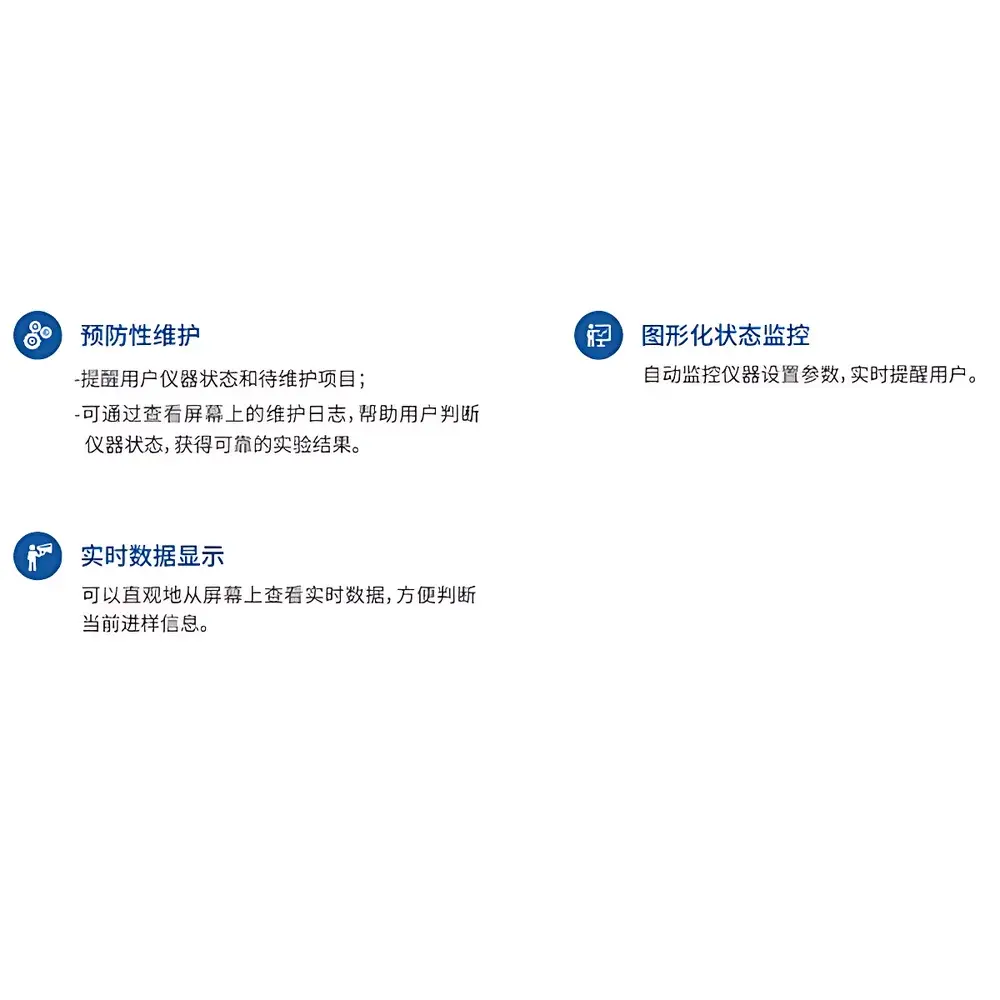
The PAD is operated via GC×GC-specific acquisition and processing software, featuring a unified interface for method development, real-time instrument monitoring, and post-run data visualization. The software includes automated peak deconvolution using retention time correlation across both dimensions, structured peak table generation with compound class annotation (e.g., PAHs, alkylbenzenes, heterocyclics), and export-ready reporting in CSV, CDF, and AIA formats. Raw data files are stored with embedded metadata (instrument parameters, calibration history, user ID, timestamp), enabling full traceability. Software updates follow a documented change control process aligned with ISO/IEC 17025 clause 5.9, and electronic signatures are supported for method validation and report approval.
Applications
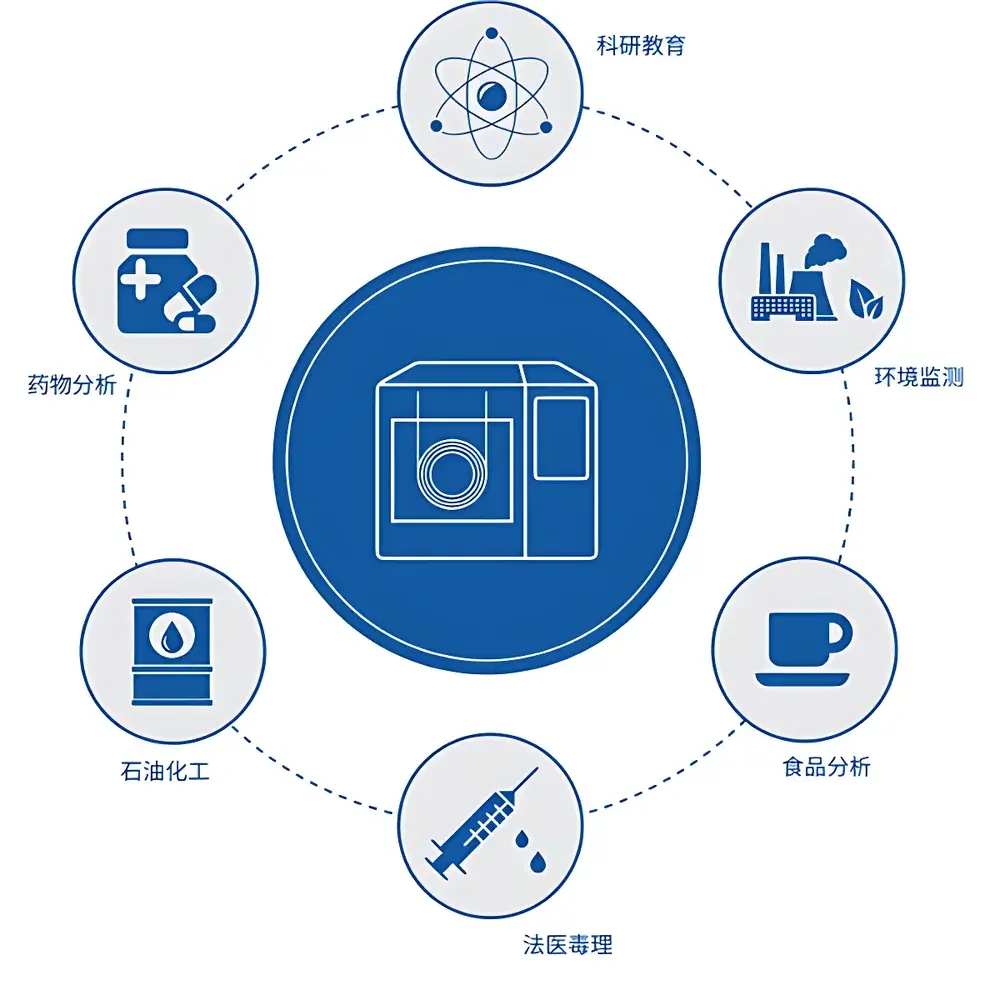
The PAD system delivers analytical specificity critical for coal science and downstream processing: quantification of polycyclic aromatic hydrocarbons (PAHs) and oxygenated derivatives in coal liquefaction products; speciation of sulfur- and nitrogen-containing compounds in coking plant emissions; fingerprinting of coal-tar pitch fractions for carbon electrode manufacturing; and profiling of volatile organic compounds (VOCs) in mine air and leachate samples. Its GC×GC resolution also supports cross-sector applications including food authenticity (e.g., edible oil adulteration), environmental forensics (e.g., petroleum hydrocarbon weathering patterns), and flavor chemistry (e.g., terpene and ester profiling in fermented beverages).
FAQ
Does the PAD require liquid nitrogen or other cryogenic agents for modulation?
No — the PAD uses active flow modulation, which relies solely on precisely timed carrier gas pressure pulses. No cryogens, refrigerants, or consumable modulator components are required.
Can the system be configured for both FID and mass spectrometric detection?
Yes — the PAD features a standardized detector interface compatible with FID, NPD, ECD, and multiple MS platforms (including benchtop quadrupole and TOF instruments) via industry-standard transfer line connections and synchronization protocols.
Is method transfer possible between different PAD units?
Yes — all method parameters (temperature programs, flow profiles, modulation timing, detector settings) are stored in portable XML-based method files, enabling direct import/export between PAD instruments without recalibration.
What column configurations are recommended for coal tar analysis?
A common configuration uses a non-polar ¹D column (e.g., 30 m × 0.25 mm, 0.25 µm DB-5ms) coupled with a polar ²D column (e.g., 2 m × 0.10 mm, 0.10 µm BPX-50), providing orthogonal separation space for aromatic and aliphatic compound classes.
How is system performance verified during routine operation?
Built-in diagnostic routines include retention time stability checks, peak shape assessment (asymmetry, tailing), modulation duty cycle verification, and detector response linearity validation using certified reference standards traceable to NIST SRMs.





