
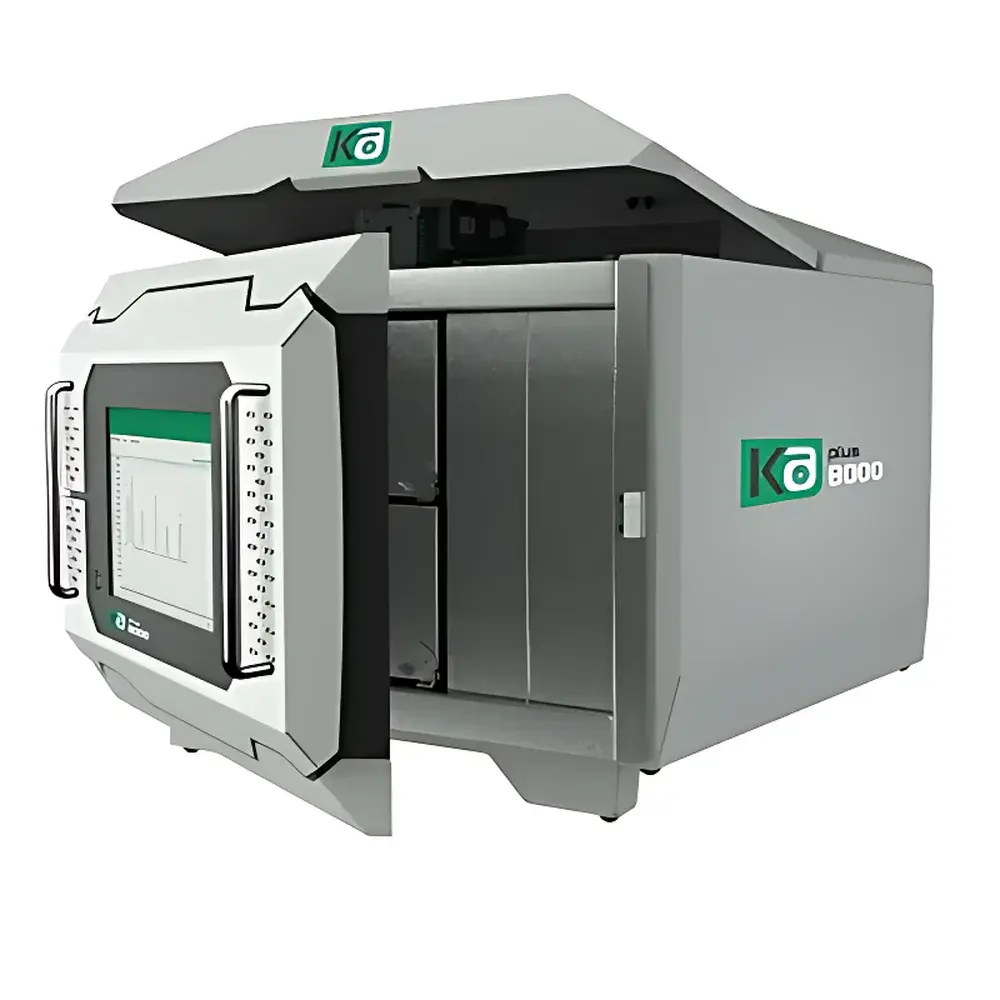
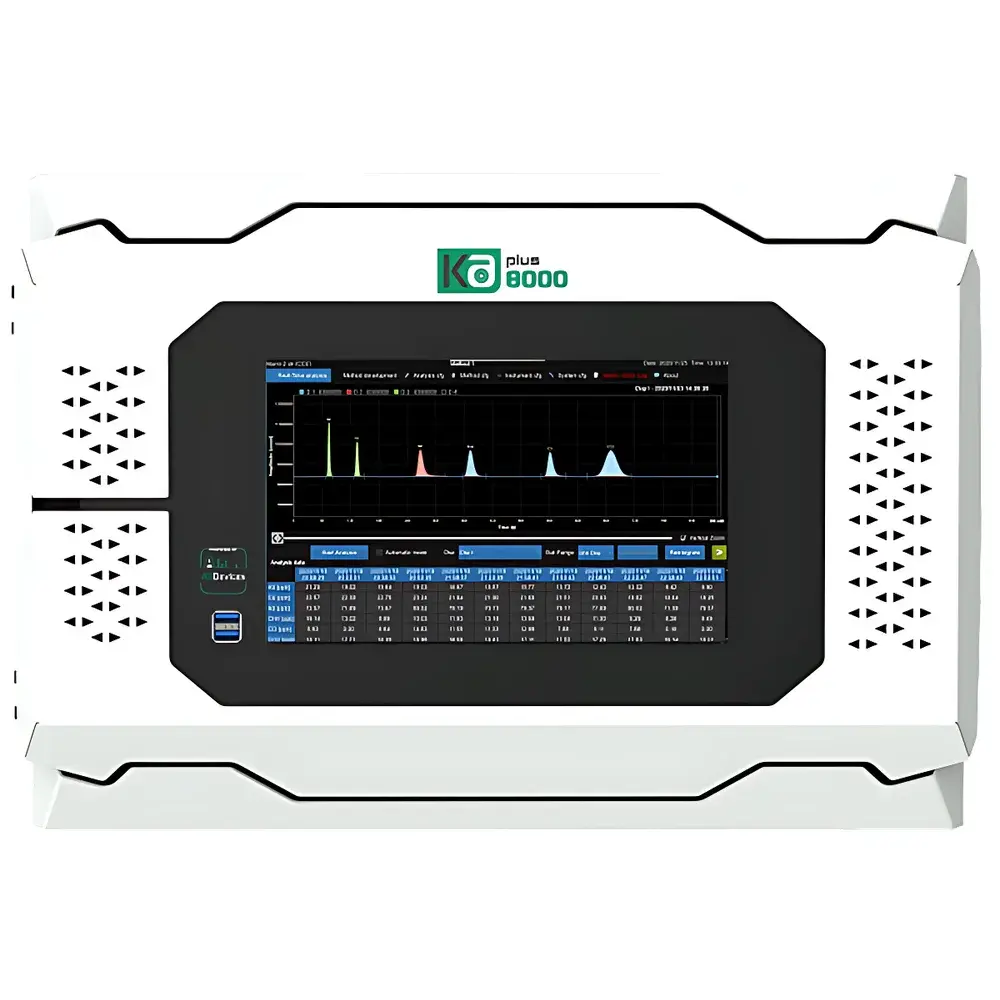
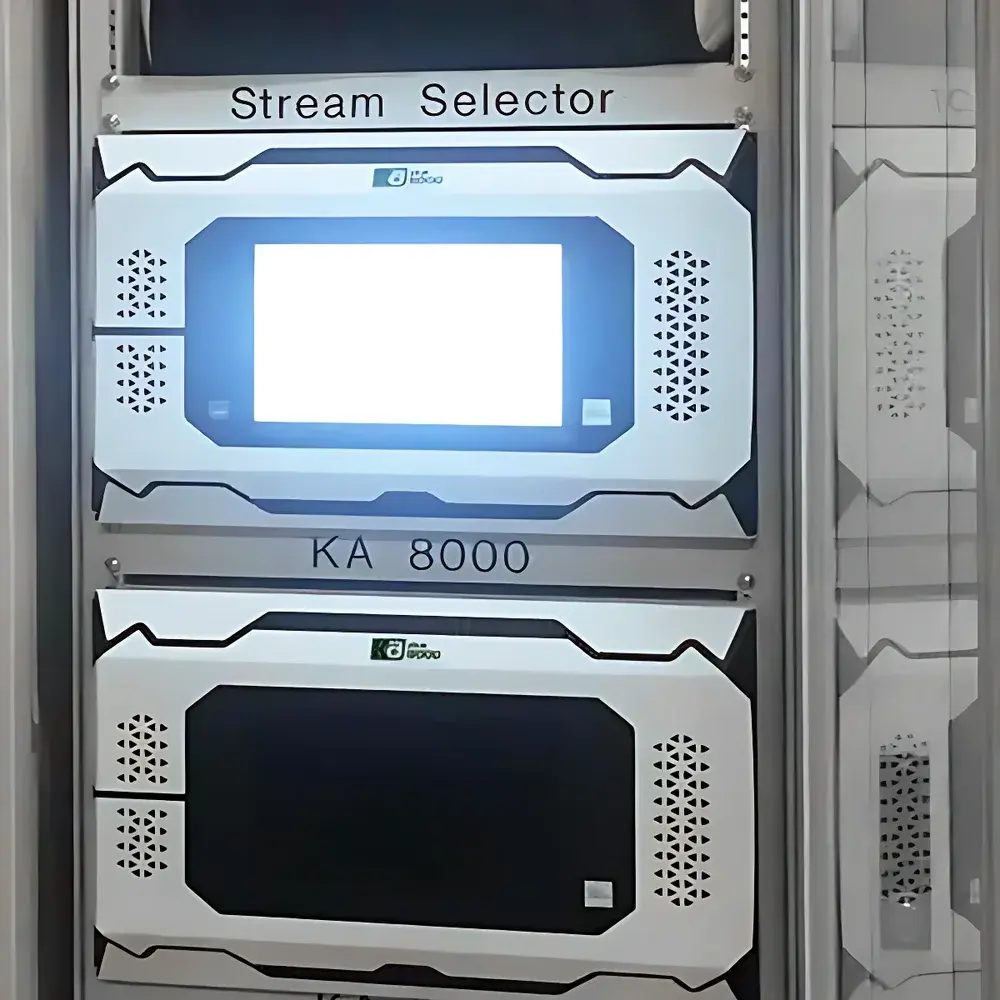
ASD KA8000 Online Gas Chromatograph
| Brand | ASD |
|---|---|
| Origin | Canada |
| Model | KA8000 |
| Instrument Type | Online Gas Chromatograph |
| Temperature Control Range | Ambient + 4 °C to 450 °C |
| Ramp Rate | 30–60 °C/min |
| Cool-down Rate | 30–60 °C/min |
| Carrier Gas Flow Range & Control | 20–50 mL/min |
| Carrier Gas Pressure Range & Control | 90–100 psig |
| Injector Maximum Operating Temperature | 200 °C |
| Injector Pressure Setting Range | 5–15 psig |
| Injector Total Flow Setting Range | 20–30 mL/min |
Overview
The ASD KA8000 Online Gas Chromatograph is a high-performance, modular gas chromatography system engineered for continuous, unattended operation in both laboratory and industrial process environments. Built upon a robust dual-channel architecture with independent temperature-controlled zones, the KA8000 employs capillary column separation coupled with advanced carrier gas regulation and real-time digital signal processing. Its core analytical principle relies on differential partitioning of volatile analytes between a mobile phase (inert carrier gas) and a stationary phase (capillary column coating), enabling precise retention time-based identification and quantification. Designed specifically for online deployment, the system integrates seamlessly into distributed control systems (DCS) and programmable logic controllers (PLC), supporting 24/7 monitoring of gas streams in semiconductor fabrication, air separation units (ASU), specialty gas production, and ultra-high-purity electronic gas supply chains.
Key Features
- Modular column oven with independently controlled heating zones — eliminates thermal gradients and ensures reproducible retention times across extended run sequences.
- Patented Liplock™ zero-dead-volume inlet connectors — minimize band broadening and improve peak symmetry for trace-level analysis.
- Integrated electronic pressure control (EPC) with closed-loop feedback — delivers sub-psia pressure stability across the full 5–15 psig injector range and 90–100 psig carrier line.
- Enhanced Plasma Discharge Detector (EPD) — operates in dual modes (emission and tracer) to support dynamic linear response from parts-per-trillion (ppt) to percent-level concentrations without hardware reconfiguration.
- Embedded chromatographic platform with deterministic real-time OS — ensures deterministic data acquisition timing, cycle-to-cycle synchronization, and <10 ms event resolution for fast transient gas events.
- Front-panel touchscreen interface with local method storage — enables standalone operation without external PC; firmware supports remote configuration via secure TLS 1.2 REST API.
Sample Compatibility & Compliance
The KA8000 is validated for analysis of permanent gases (H₂, O₂, N₂, CO, CO₂, CH₄), C₁–C₆ hydrocarbons, volatile organic compounds (VOCs), BTEX, chlorinated solvents, sulfur-containing species (H₂S, COS, SO₂), greenhouse gases (N₂O, SF₆), nitriles, aldehydes, alcohols, moisture, and mercaptans. It complies with ISO 17025 requirements for calibration traceability when operated with NIST-traceable standards. The EPD detector meets ASTM D7217–22 criteria for trace sulfur detection in fuel-grade gases and satisfies IEC 61511 functional safety requirements for SIL-2 capable online analyzers. Data integrity features include audit trails, electronic signatures, and 21 CFR Part 11–compliant user access controls when deployed with optional ASD ChromaSuite Enterprise software.
Software & Data Management
ChromaSuite Desktop provides method development, sequence scheduling, spectral library matching (NIST MS Search compatible), and automated report generation (PDF/CSV/XLSX). ChromaSuite Enterprise adds centralized instrument fleet management, OPC UA server integration, alarm escalation workflows, and long-term trending dashboards with configurable KPIs (e.g., % RSD of retention time, baseline noise RMS, EPD signal drift). All raw chromatograms are stored in vendor-neutral ANDI/NetCDF format. System logs retain full metadata — including environmental chamber temperature, carrier gas pressure history, detector voltage profiles, and user login events — for GLP/GMP-compliant review.
Applications
- Semiconductor manufacturing: real-time monitoring of dopant gases (PH₃, AsH₃, B₂H₆), etchant residuals (ClF₃, NF₃), and purge gas purity (N₂, Ar) at sub-ppb levels.
- Air separation plants: continuous analysis of O₂/N₂/Ar ratios, hydrocarbon impurities (CH₄, C₂H₂), and moisture in liquid oxygen streams.
- Electronic specialty gas certification: verification of ISO 8573-1 Class 1 purity for silane (SiH₄), ammonia (NH₃), and hydrogen chloride (HCl).
- Environmental emissions monitoring: stack gas analysis per EPA Method 18 and EN 15267-3 for VOC speciation and halogenated compound profiling.
- Pharmaceutical excipient testing: residual solvent analysis (ICH Q3C) in active pharmaceutical ingredients using headspace-GC/EPD coupling.
FAQ
What regulatory standards does the KA8000 support for pharmaceutical or food-grade gas analysis?
The system supports USP <467>, ICH Q3C, and ISO 8573-1:2010 Class 1–5 compliance when configured with appropriate columns, calibration standards, and validated methods.
Can the EPD detector be used interchangeably with FID or TCD for routine QC testing?
Yes — the EPD’s dual-mode operation allows it to emulate FID-like hydrocarbon response and TCD-like universal detection without hardware swaps; method transfer validation is required per ISO/IEC 17025 Clause 7.2.2.
Is remote diagnostics and firmware updates supported over industrial Ethernet?
Yes — the embedded controller supports Modbus TCP, HTTP(S), and MQTT v3.1.1 for telemetry; secure OTA updates require signed firmware packages and certificate-based authentication.
What is the typical maintenance interval for the EPD under continuous online operation?
With proper gas filtration (0.01 µm particulate + moisture/sulfur scavengers), the EPD electrode assembly requires inspection every 6 months and replacement every 18–24 months under 24/7 duty cycle.
Does the KA8000 support integration with LIMS or MES platforms?
Yes — via ASTM E1394-compliant ASCII output, HL7 v2.x messaging, or direct SQL Server/Oracle database write-through using optional ChromaLink middleware.
Related Products





