
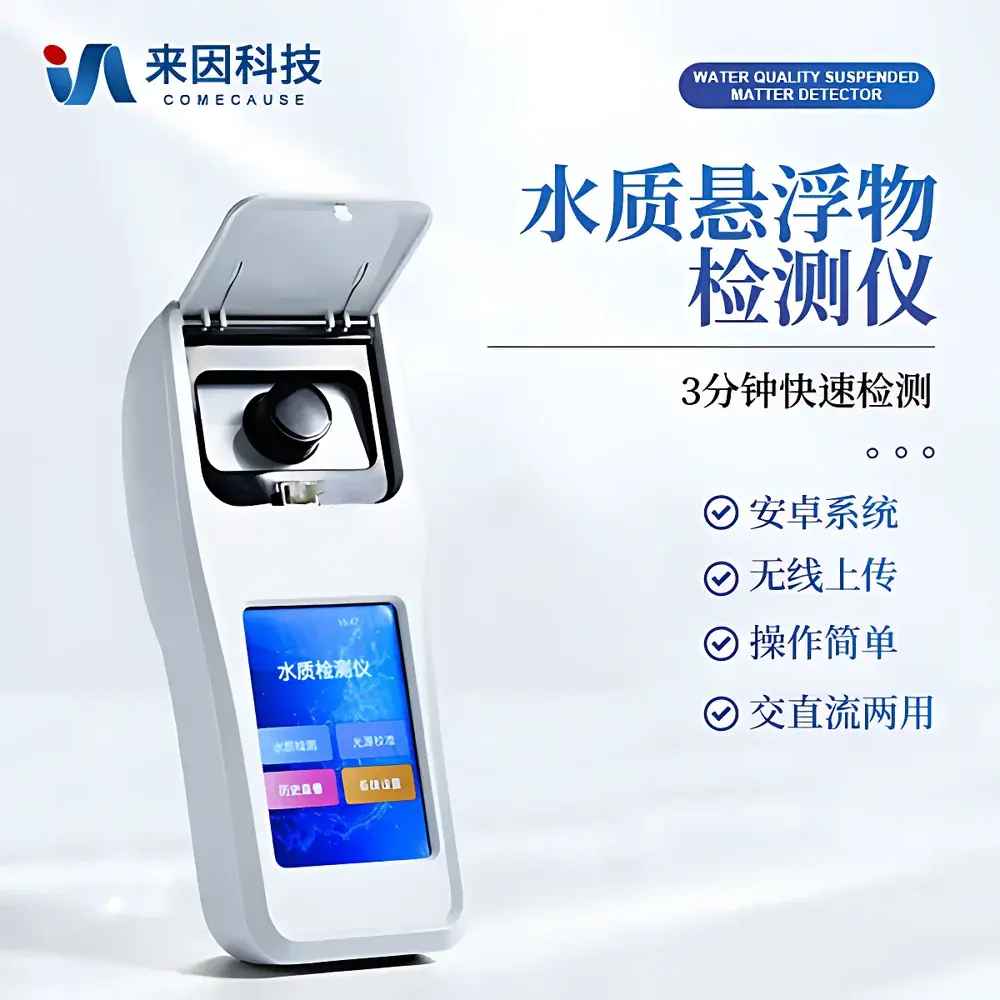
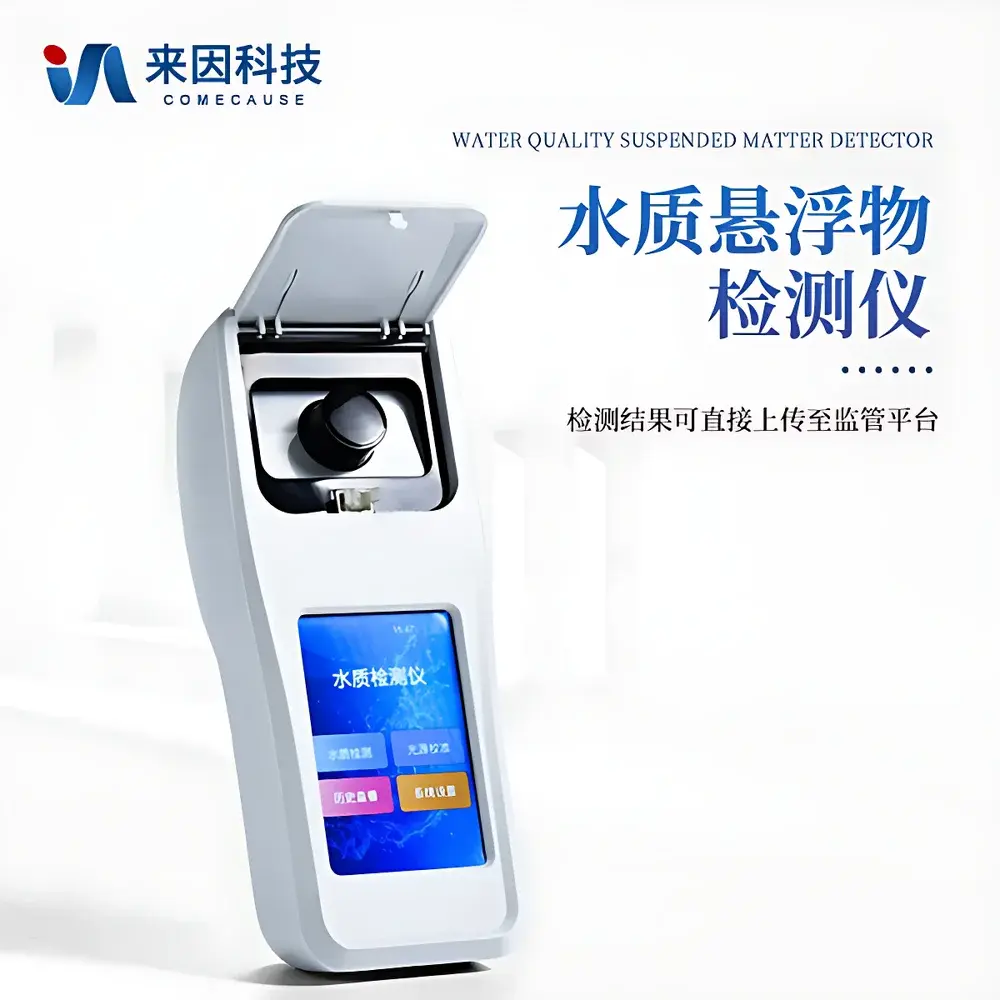
COMECAUSE IN-SS Portable Suspended Solids Analyzer
| Brand | COMECAUSE |
|---|---|
| Origin | Shandong, China |
| Manufacturer Type | Manufacturer |
| Country of Origin | China |
| Model | IN-SS |
| Instrument Type | Portable |
| Detection Range | 1–600 mg/L |
| Standard Compliance | GB 13200-91 |
| Wavelength Range | 340–800 nm |
| Measurement Principle | Photometric Colorimetry |
| Repeatability | <0.5% |
| Stability | <0.5% |
| Wavelength Selection | Automatic |
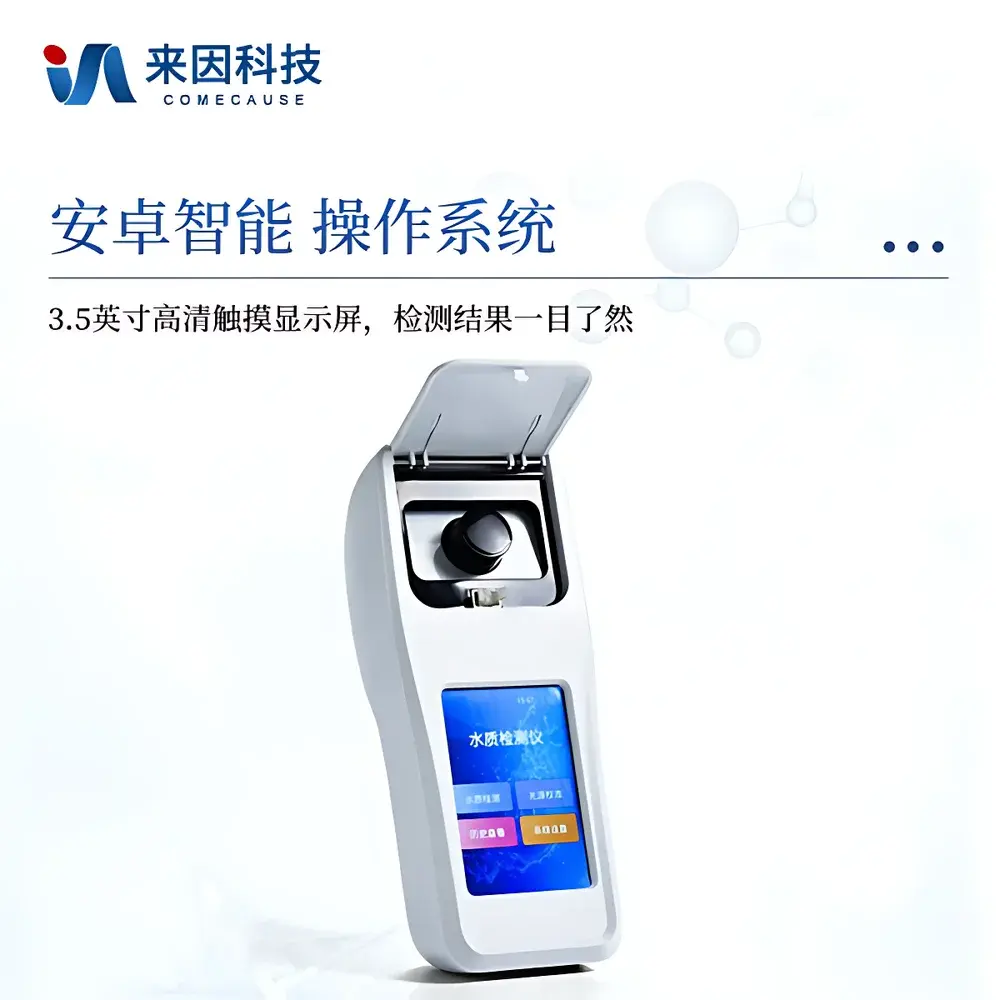
| Operating System | Android-based UI |
| Display | 3.5-inch color LCD touchscreen |
| Absorbance Sensitivity | 0.001 AU |
| Environmental Operating Conditions | 0–50 °C, 0–90% RH (non-condensing) |
| Data Storage Capacity | >80,000 records |
| Connectivity | USB Type-C, Wi-Fi, Bluetooth, Mobile Hotspot |
| Battery | 5600 mAh rechargeable Li-ion |
| Continuous Operation Time | Up to 8 hours |
| Power Supply | 5 V DC |
| Dimensions | 180 × 80 × 70 mm |
| Weight | 700 g |
| Light Source | Imported cold-light LED (rated lifetime ≥100,000 h) |
| Dual Power Mode | AC adapter & internal battery |
Overview
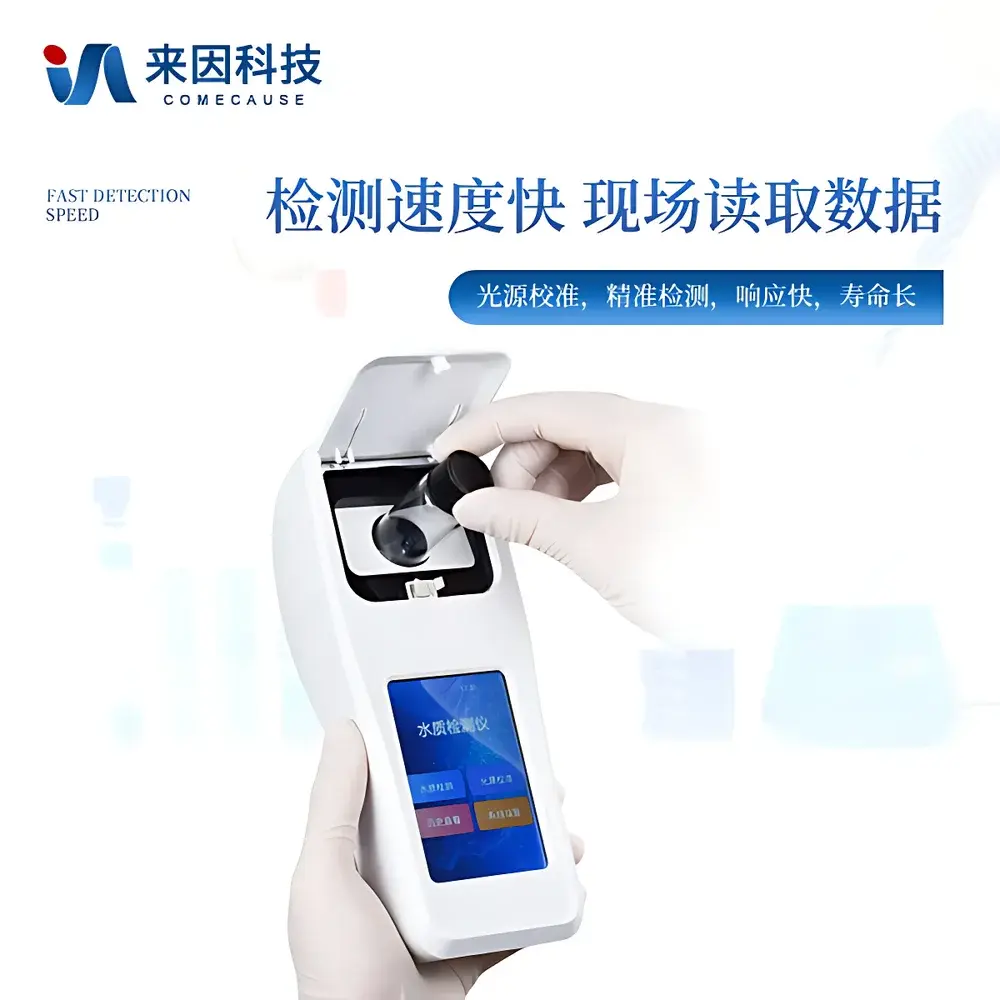
The COMECAUSE IN-SS Portable Suspended Solids Analyzer is a field-deployable photometric instrument engineered for rapid, on-site quantification of suspended solids (SS) in water and transparent aqueous solutions. It operates on the principle of turbidimetric photometry—measuring the attenuation and scattering of incident light (340–800 nm) caused by insoluble particulate matter suspended in the sample matrix. Unlike gravimetric SS determination—which requires filtration, drying, and laboratory-based weighing—the IN-SS delivers quantitative results in seconds via calibrated optical response, traceable to Chinese national standard GB 13200-91. Its compact form factor, ruggedized enclosure, and dual-power architecture (AC adapter + 5600 mAh Li-ion battery) make it suitable for unattended operation in remote sampling locations, mobile monitoring units, or emergency response scenarios where lab infrastructure is unavailable.
Key Features
- Android-based embedded operating system with intuitive touchscreen interface—no specialized training required for routine operation.
- Integrated cold-light LED source with spectral stability and extended service life (>100,000 h), eliminating lamp drift and reducing calibration frequency.
- Automatic wavelength selection and real-time photometric compensation ensure consistent measurement fidelity across varying sample matrices.
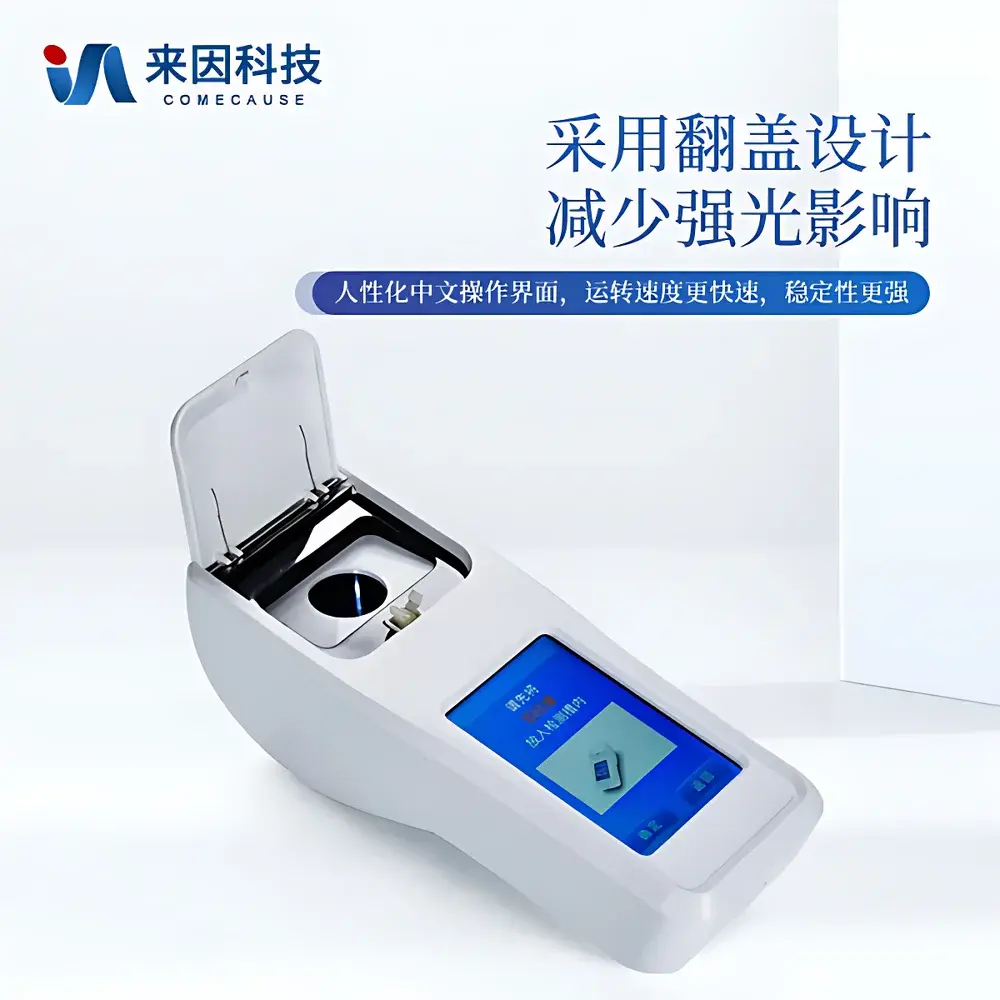
- High-resolution 3.5-inch color LCD display supports both English and Simplified Chinese language modes, enabling cross-regional deployment.
- Robust data management architecture: stores >80,000 measurement records locally with timestamp, GPS-tagged location (when enabled via connected device), and operator ID fields.
- Multi-mode wireless connectivity—including Wi-Fi client/hotspot, Bluetooth 5.0, and USB Type-C—enables seamless synchronization with centralized regulatory platforms or LIMS environments.
- IP65-rated housing provides protection against dust ingress and incidental water exposure during field use.
Sample Compatibility & Compliance
The IN-SS is validated for use with potable water, surface water, wastewater effluents, process water in food & beverage manufacturing (e.g., brewing, bottling), pharmaceutical clean utilities, and municipal distribution systems. It complies with GB 13200-91 for turbidity-related suspended solids estimation and aligns with methodological expectations outlined in ISO 7027-1:2016 (turbidity measurement) and ASTM D3977-98 (standard practice for suspended solids in water). While not certified for GLP/GMP production release testing, its audit-trail-capable data logging and user-accessible calibration logs support adherence to internal quality control protocols and environmental reporting requirements under China’s MEP Order No. 39 and EU Water Framework Directive (WFD) Annex II monitoring guidelines.
Software & Data Management
The analyzer ships with COMECAUSE CloudLink™ firmware, enabling encrypted data upload to web-based dashboards via HTTPS. All measurements include metadata (date/time, instrument ID, calibration status, ambient temperature/humidity) and support CSV/Excel export for third-party statistical analysis (e.g., R, Python pandas, JMP). Firmware updates are delivered over-the-air (OTA), and configuration templates (e.g., site-specific alarm thresholds, unit preferences) can be deployed en masse across fleet instruments. Audit trail functionality logs all user actions—including calibration events, parameter modifications, and data deletions—with immutable timestamps, satisfying basic requirements for data integrity under ISO/IEC 17025:2017 Clause 7.5.2.
Applications
- Real-time verification of filtration efficiency in drinking water treatment plants and membrane bioreactor (MBR) systems.
- Routine monitoring of influent/effluent SS concentrations at wastewater pumping stations and decentralized treatment facilities.
- Process control in breweries and dairy processing lines where yeast or protein particulates affect product clarity.
- Environmental field surveys assessing sediment resuspension following dredging, stormwater runoff, or construction activity.
- Emergency response screening during flood events or industrial spills to prioritize high-turbidity zones for further lab analysis.
- Educational use in university environmental science labs for teaching photometric principles and water quality assessment workflows.
FAQ
What is the measurement principle used by the IN-SS?
It employs photometric turbidimetry—quantifying light scattering intensity at selectable wavelengths between 340 nm and 800 nm, correlated to suspended solids concentration via factory-established calibration curves.
Does the IN-SS require regular recalibration?
Yes—calibration verification using certified reference standards (e.g., Formazin or AMCO AEPA standards) is recommended before each daily shift or after exposure to extreme environmental conditions.
Can the instrument be used for seawater samples?
It is designed for freshwater and low-salinity applications; high ionic strength may affect optical path consistency and is outside the scope of GB 13200-91 validation.
Is the data export format compatible with EPA-approved reporting tools?
CSV exports contain all mandatory fields for integration into EPA STORET-compatible databases and meet minimum metadata requirements for submission to provincial environmental monitoring centers in China.
How is battery health monitored during operation?
The system displays remaining capacity as a percentage on-screen and triggers audible/visual alerts at ≤15% charge; battery diagnostics are accessible via maintenance mode.
Related Products







