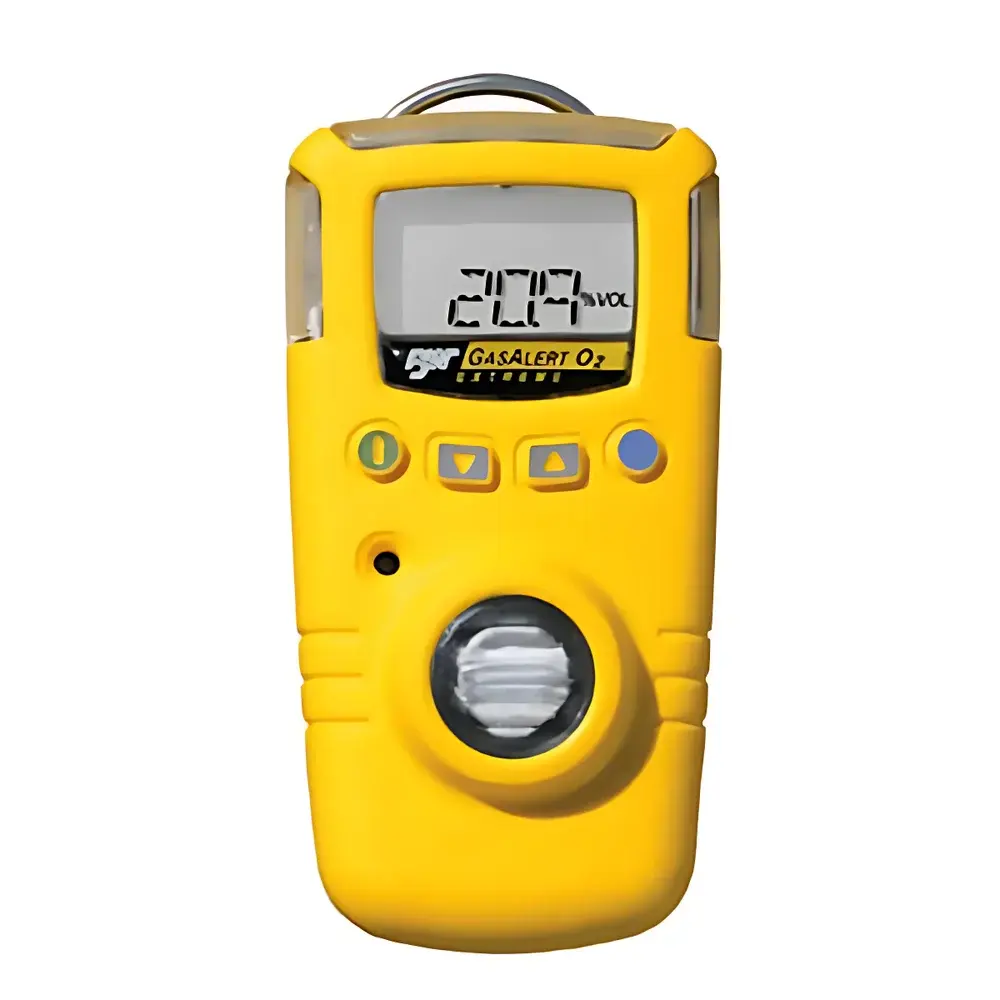
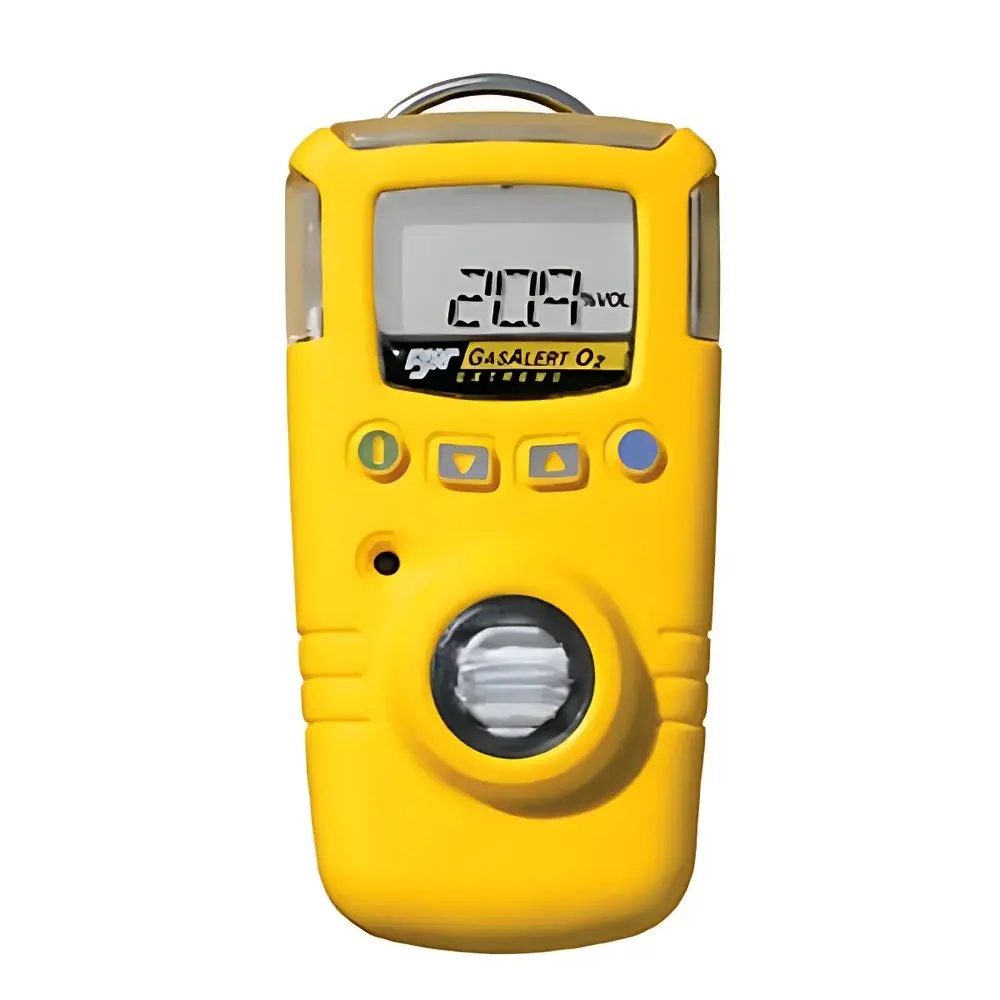
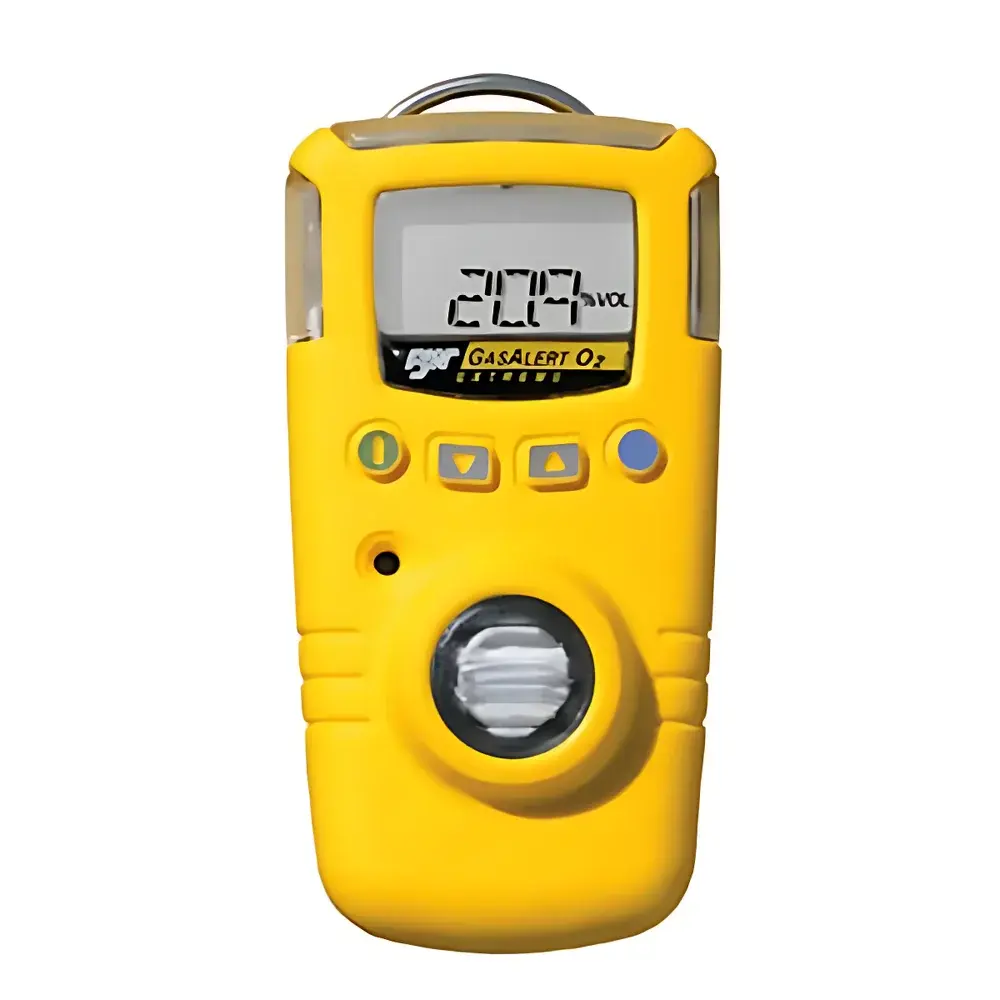
BW GasAlert Extreme GAXT Series Single-Gas Detector
| Brand | BW |
|---|---|
| Origin | Canada |
| Model | GAXT |
| Detection Gases | H₂S, CO, O₂, SO₂, Cl₂, HCN, NO₂, NH₃, PH₃, EtO, ClO₂, O₃, NO |
| Alarm Types | Visual (bright wide-angle LED), Vibration, Audible (95 dB) |
| Calibration | Auto-calibration compatible with BW MicroDock II |
| Ingress Protection | IP66/IP67 |
| Certifications | ATEX Ex ia IIC T4, IECEx Ex ia IIC T4X, UL Class I Div 1 Groups A–D / Class II Div 1 Groups E–G, ABS, CE |
| Dimensions | 2.8 × 5.0 × 9.5 cm |
| Weight | 82 g |
| Battery | Replaceable 3V lithium |
| Data Logging | Internal event and exposure history |
| Display | Backlit LCD with real-time concentration readout |
| Languages | English, French, German, Spanish, Portuguese |
| Environmental Compliance | EMC Directive 89/336/EEC |
| Safety Standards | Meets requirements for OSHA, NIOSH, and ISO 4031 for portable gas monitoring |
Overview
The BW GasAlert Extreme GAXT Series is a compact, intrinsically safe single-gas detector engineered for continuous personal exposure monitoring in demanding industrial environments. Utilizing electrochemical (for toxic gases), catalytic bead (for combustibles), or galvanic (for O₂) sensing technologies—depending on the configured sensor—the device delivers high reproducibility and rapid response (T90 < 30 s for most gases). Designed to meet the operational rigor of confined space entry, refinery turnaround, wastewater treatment, pulp & paper manufacturing, and municipal infrastructure maintenance, the GAXT Series operates under stringent North American and global hazardous area classifications. Its architecture complies with IEC 60079-0 and IEC 60079-11 for intrinsic safety, ensuring reliable operation in flammable atmospheres without risk of ignition. The detector continuously measures gas concentration in real time and compares readings against pre-programmed exposure limits—including short-term exposure limit (STEL), time-weighted average (TWA), and low/high alarm thresholds—enabling proactive hazard mitigation aligned with OSHA 29 CFR 1910.120 and EU Directive 90/394/EEC.
Key Features
- Real-time backlit LCD display showing instantaneous gas concentration, battery status, and alarm mode
- Ultra-compact form factor (2.8 × 5.0 × 9.5 cm) and lightweight design (82 g) for ergonomic long-shift wearability
- Triple-mode alarm system: high-intensity wide-angle visual strobe, 95 dB audible alert, and tactile vibration—critical in high-noise or low-visibility zones
- Full power-on self-test verifying sensor integrity, circuit continuity, battery voltage, and alarm functionality
- Intrinsically safe housing with IP66/IP67-rated ingress protection—resistant to dust, water immersion (up to 1 m for 30 min), and mechanical shock
- Automated calibration protocol fully compatible with BW MicroDock II automated test and calibration stations, supporting traceable, auditable calibration records per ISO/IEC 17025 requirements
- Password-protected configuration menu preventing unauthorized parameter modification—essential for GLP/GMP-regulated operations
- Internal data logger capturing alarm events, bump test results, calibration history, and TWA/STEL exposure summaries
- Multi-language interface (English, French, German, Spanish, Portuguese) facilitating deployment across multinational worksites
Sample Compatibility & Compliance
The GAXT Series supports 14 distinct gas configurations—including H₂S (0–100 ppm or 0–500 ppm), CO (0–1000 ppm), O₂ (0–30.0% vol), Cl₂ (0–50 ppm), NH₃ (0–100 ppm or 0–400 ppm), PH₃ (0–5 ppm), ClO₂ (0–1 ppm), and O₃ (0–1 ppm)—each utilizing application-optimized electrochemical cells with temperature and humidity compensation algorithms. All sensors are factory-calibrated and certified to NIST-traceable standards. Regulatory compliance includes ATEX Directive 2014/34/EU (Ex ia IIC T4), IECEx Scheme (Ex ia IIC T4X), UL 913 8th Edition (Class I, Div 1, Groups A–D; Class II, Div 1, Groups E–G), and CE marking under the Electromagnetic Compatibility Directive 2014/30/EU. Device firmware adheres to FDA 21 CFR Part 11 principles for electronic records and signatures where data logging is enabled.
Software & Data Management
Data retrieval is performed via USB connection to BW’s proprietary Docking Station software or third-party platforms compliant with Modbus RTU or ASCII serial protocols. Logged datasets include timestamped gas readings, alarm activations (type and duration), calibration dates and span values, bump test outcomes, and battery discharge profiles. Audit trails support full traceability for regulatory inspections—including ISO 45001 occupational health audits and EPA RMP program verification. Optional integration with BW’s Fleet Manager cloud platform enables centralized fleet monitoring, predictive maintenance alerts, and automated report generation (PDF/CSV) aligned with corporate EHS reporting templates.
Applications
The GAXT Series is routinely deployed in metallurgical smelting facilities for H₂S and SO₂ monitoring near sulfur recovery units; in petrochemical refineries for CO and Cl₂ leak detection during catalyst handling; in municipal wastewater plants for H₂S and O₂ profiling in lift stations and digesters; in pharmaceutical cleanrooms for EtO residual verification post-sterilization; and in fire and rescue operations for rapid CO and HCN assessment in structural firefighting scenarios. Its robustness and certification portfolio make it suitable for offshore platforms (ABS-approved), underground mining (per MSHA guidelines), and food processing environments requiring NSF/ANSI 51-compliant materials contact.
FAQ
What gas types can the GAXT Series detect?
The GAXT Series offers dedicated models for H₂S, CO, O₂, SO₂, Cl₂, HCN, NO₂, NH₃, PH₃, EtO, ClO₂, O₃, and NO—with each unit configured for one specific gas.
Is the GAXT compatible with automated calibration systems?
Yes—it is fully interoperable with BW MicroDock II docking stations for zero/span calibration, bump testing, and firmware updates with full audit trail generation.
Does the device meet international hazardous area standards?
Yes—certified to ATEX Ex ia IIC T4, IECEx Ex ia IIC T4X, UL Class I Div 1 Groups A–D, and ABS Type Approval for marine use.
How is data security and integrity ensured?
Configuration parameters are protected by user-defined passwords; all logged events include immutable timestamps and digital signatures compliant with 21 CFR Part 11 Annex 11 requirements.
What is the expected service life of the electrochemical sensors?
Typical sensor lifetime is 24 months under normal operating conditions (20–25°C, 40–60% RH); performance validation is required every 180 days per OSHA 1910.146 Appendix B.
Related Products