
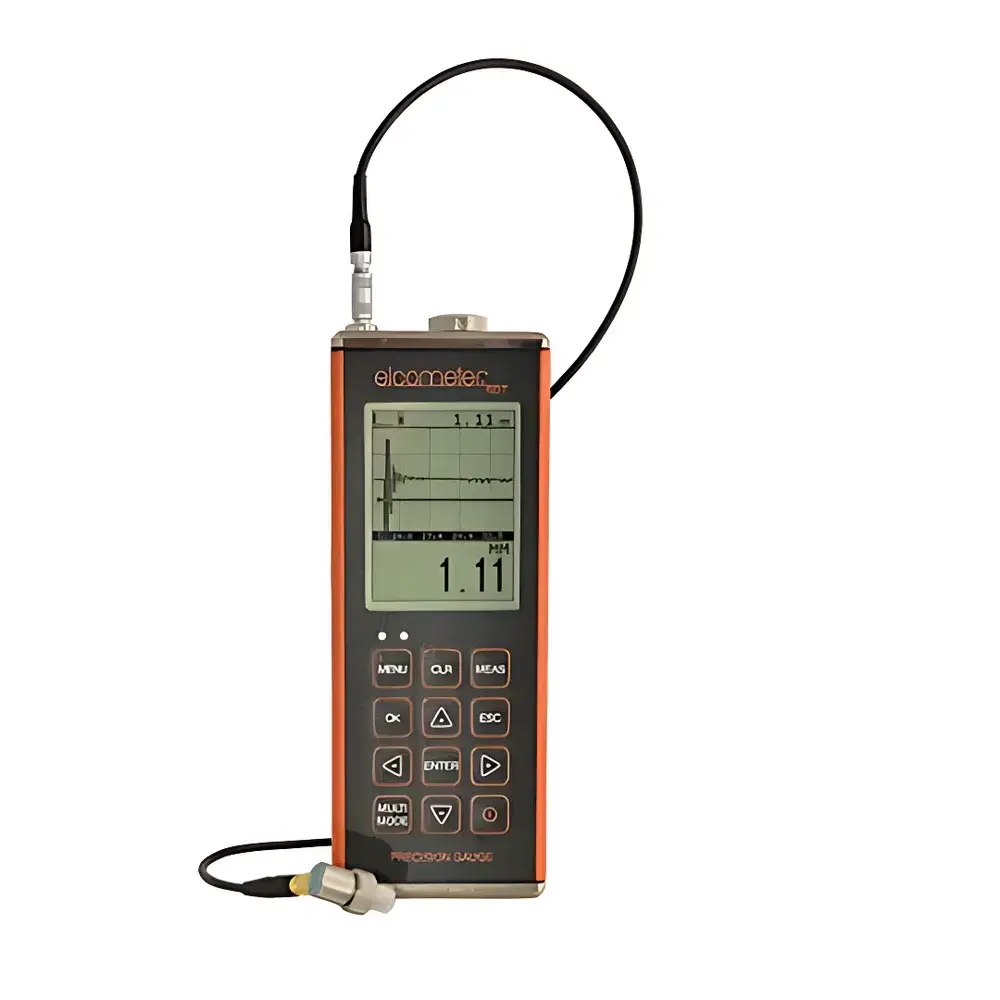
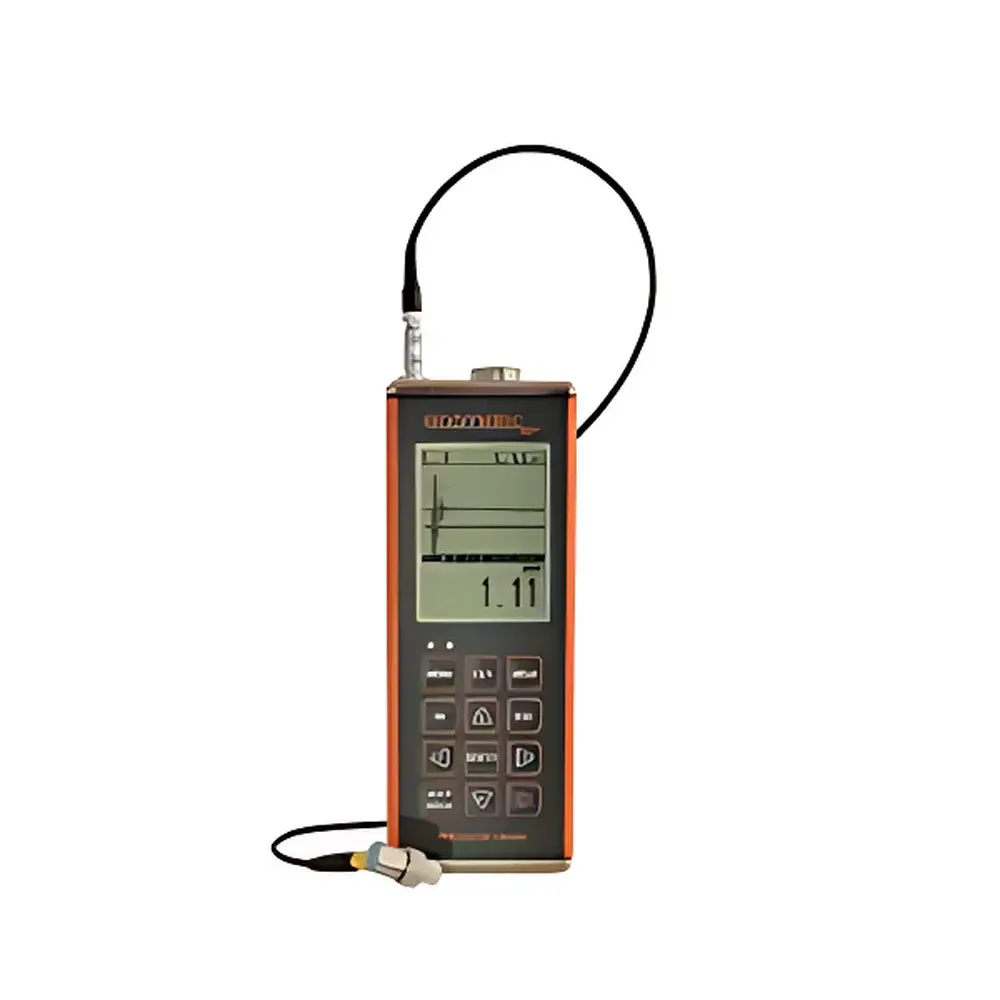
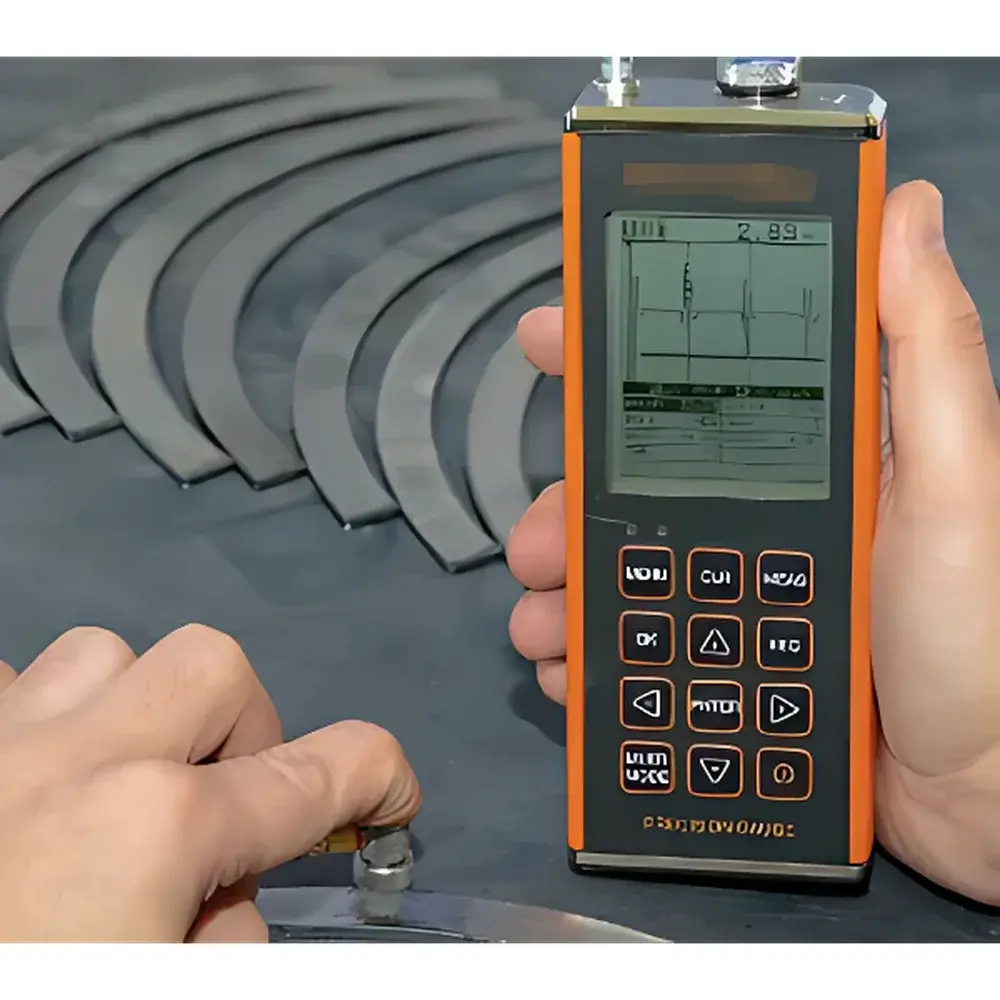
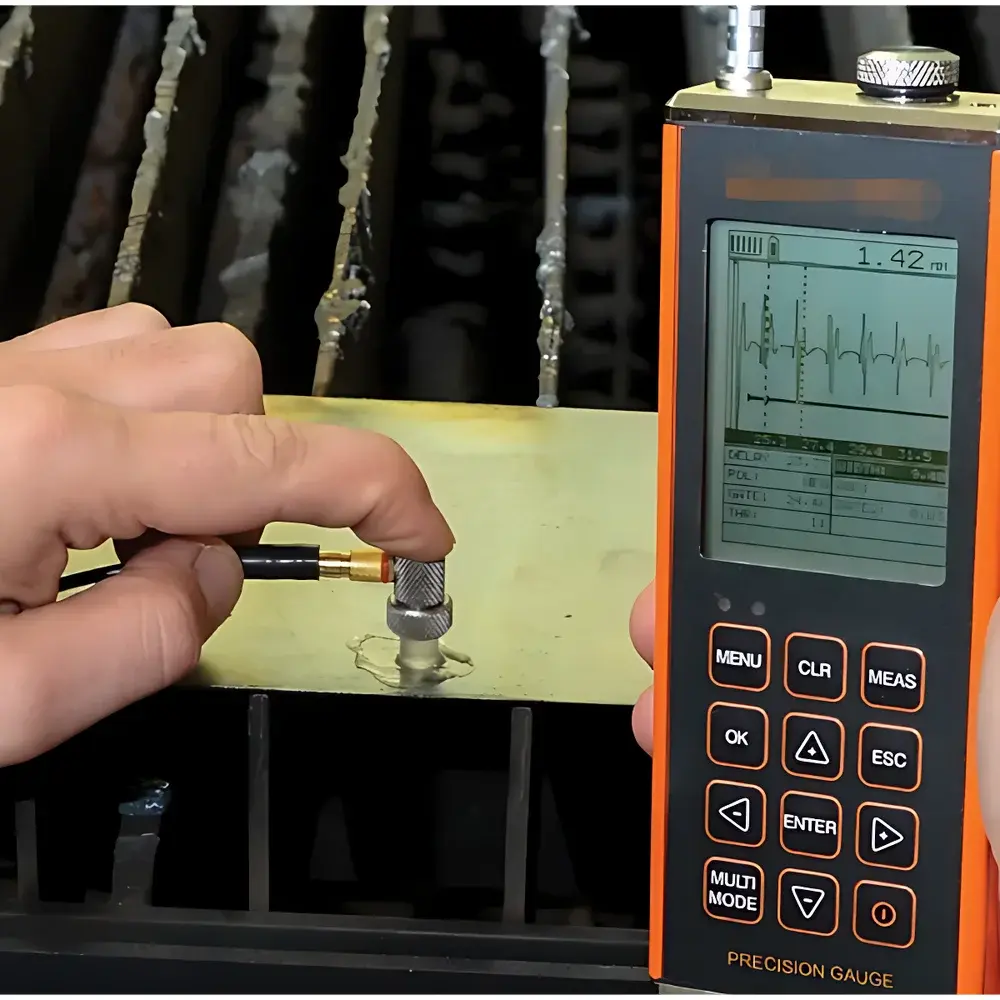
Starwood PG70ABDL Handheld Ultrasonic Thickness Gauge
| Brand | Starwood |
|---|---|
| Origin | Beijing, China |
| Manufacturer Type | Manufacturer |
| Product Category | Domestic |
| Model | PG70ABDL |
| Pricing | Upon Request |
Overview
The Starwood PG70ABDL Handheld Ultrasonic Thickness Gauge is an industrial-grade precision instrument engineered for non-destructive thickness measurement of metallic and non-metallic materials using pulse-echo and multiple echo ultrasonic principles. It operates on time-of-flight (TOF) methodology, where a high-frequency acoustic pulse is transmitted into the material via a transducer; the elapsed time between the initial pulse and its reflection(s) from internal interfaces (e.g., backwall or coating–substrate boundary) is converted to thickness using calibrated sound velocity. Designed for field and shop-floor use, the PG70ABDL supports critical applications in corrosion monitoring, quality control of rolled plates, pipe wall integrity assessment, and aerospace component verification—where accuracy, repeatability, and operational robustness are governed by ASTM E797, ISO 16809, and EN 15317 standards.
Key Features
- High-resolution display options: selectable 0.001 mm (0.0001″) or 0.01 mm (0.001″) resolution across all measurement modes
- Multi-mode ultrasonic operation: Pulse-Echo (PE), Interface-Echo (IE), Echo-Echo (EE), Interface-Echo-Echo (IEE), and Echo-Echo with V-path correction (EEV)
- Real-time waveform visualization: Full RF A-scan, rectified positive/negative half-wave, and B-scan cross-sectional imaging with user-adjustable time-base and amplitude scaling
- High-speed scanning mode: up to 250 measurements per second with automatic minimum-thickness capture and visual/audible alerting
- Intelligent pass/fail evaluation: dual configurable upper/lower limits with red/green LED indicators and audible tone feedback
- Advanced signal conditioning: manual or auto-gain control (AGC) over 110 dB range, time-dependent gain (TDG), six damping settings (35–1500 Ω), and adjustable square-wave pulsing (100–200 V, variable width)
- Dual calibration flexibility: single-point, two-point, and velocity-based calibration with 64 user-defined material presets transferable via USB
- Integrated data integrity tools: real-time repeatability indicator (6-bar stability meter), low-battery warning, auto-sensing power management, and OBSTRUCT flag for inaccessible measurement zones
Sample Compatibility & Compliance
The PG70ABDL accommodates a broad spectrum of engineering materials—including carbon steel, stainless steel, aluminum, copper, titanium, plastics, composites, and glass—provided they exhibit sufficient acoustic coupling and minimal attenuation. It supports dual-element (delay-line) and single-element contact probes with frequency ranges from 1 MHz to 25 MHz, enabling optimized performance on thin-walled tubing (≥0.5 mm), clad plates, and coated substrates. The instrument complies with electromagnetic compatibility (EMC) requirements per IEC 61326-1 and meets safety standards under IEC 61010-1. Its measurement traceability aligns with ISO/IEC 17025 practices when used with NIST-traceable reference blocks and validated probe calibration protocols. For regulated environments, audit-ready data export (batch ID, timestamp, waveform bitmap, grid log) supports GLP/GMP documentation workflows.
Software & Data Management
Equipped with 4 GB of internal flash memory, the PG70ABDL stores raw thickness readings, full A-scan waveforms, B-scan images, and metadata—including alphanumeric batch identifiers, operator tags, and GPS-stamped location data (when paired with external module). Data export occurs via USB 2.0 to Starwood’s ElcoMaster® desktop software or third-party inspection platforms compliant with ASTM E2371 and ISO 10816-3 reporting templates. ElcoMaster® enables statistical analysis (mean, SD, min/max, histogram), comparative trend mapping across inspection campaigns, and automated PDF/CSV report generation with embedded waveform thumbnails. All stored records include immutable timestamps and firmware version stamps—supporting FDA 21 CFR Part 11 compliance when deployed with user-access controls and electronic signature configuration.
Applications
- Corrosion mapping of pipelines, storage tanks, and pressure vessels in oil & gas and chemical processing facilities
- In-service thickness verification of aircraft skins, wing spars, and engine casings per FAA AC 43.13-1B guidelines
- Quality assurance during rolling mill production of cold-rolled steel strips and aluminum foil
- Coating-independent substrate thickness measurement on painted, galvanized, or enamel-coated components
- Research-grade validation of additive-manufactured metal parts for porosity-induced thickness deviation
- Education and training labs requiring multi-mode ultrasonic demonstration with real-time waveform interpretation
FAQ
What ultrasonic measurement modes does the PG70ABDL support?
It supports Pulse-Echo (PE), Interface-Echo (IE), Echo-Echo (EE), Interface-Echo-Echo (IEE), and Echo-Echo with V-path correction (EEV) for accurate thickness determination through coatings or layered structures.
Can the instrument store and export full A-scan waveforms?
Yes—each measurement can retain its complete RF waveform, which is saved alongside thickness values and retrievable via USB for offline analysis in ElcoMaster® or compatible third-party software.
Is the PG70ABDL suitable for measuring very thin materials?
With resolution down to 0.001 mm and dedicated thin-material calibration routines, it reliably measures substrates as thin as 0.5 mm when used with appropriate high-frequency delay-line probes.
How does the V-path correction mode improve accuracy?
V-path correction compensates for non-linear time–thickness relationships inherent in dual-element transducers, ensuring linear output when measuring curved or irregular surfaces where the acoustic path deviates from direct perpendicular incidence.
Does the device meet regulatory requirements for pharmaceutical or nuclear QA/QC?
While not intrinsically certified for nuclear-grade use, its data logging architecture, audit trail capabilities, and traceable calibration support integration into validated GxP environments when implemented with documented SOPs and periodic metrological verification.



