
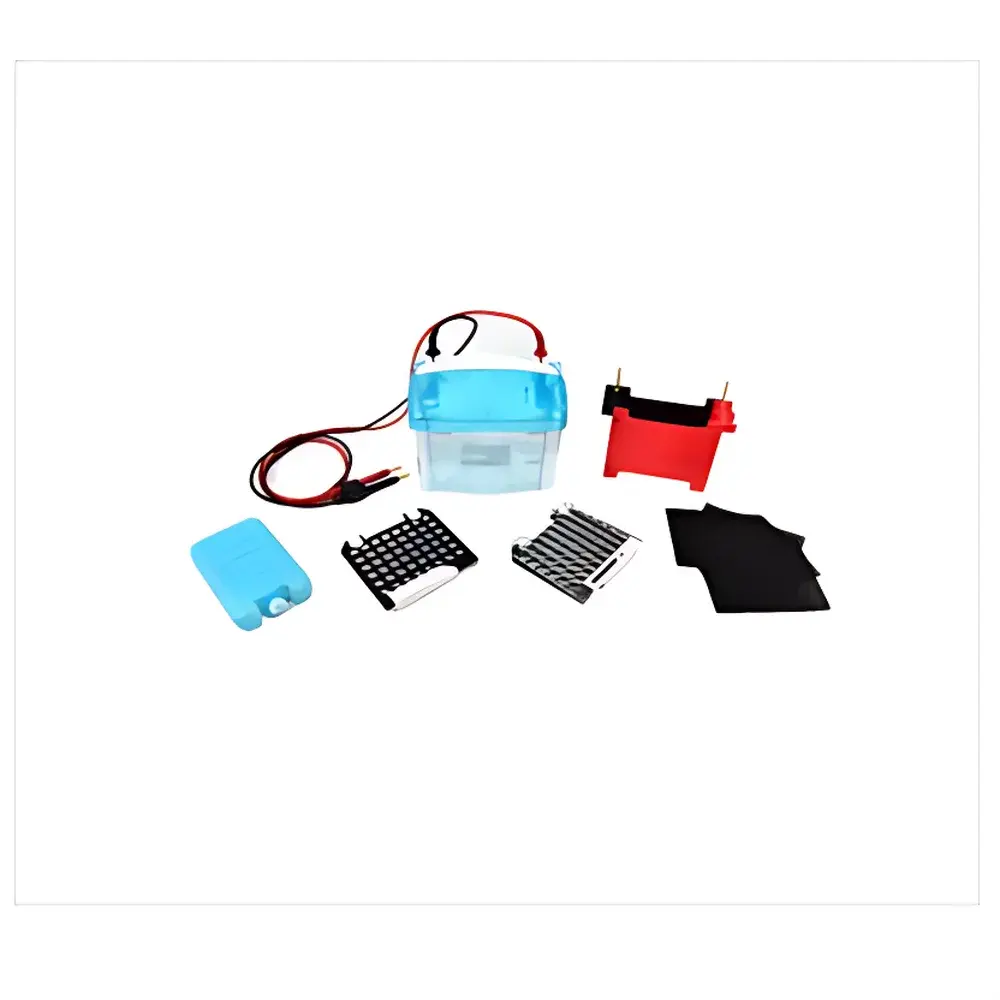
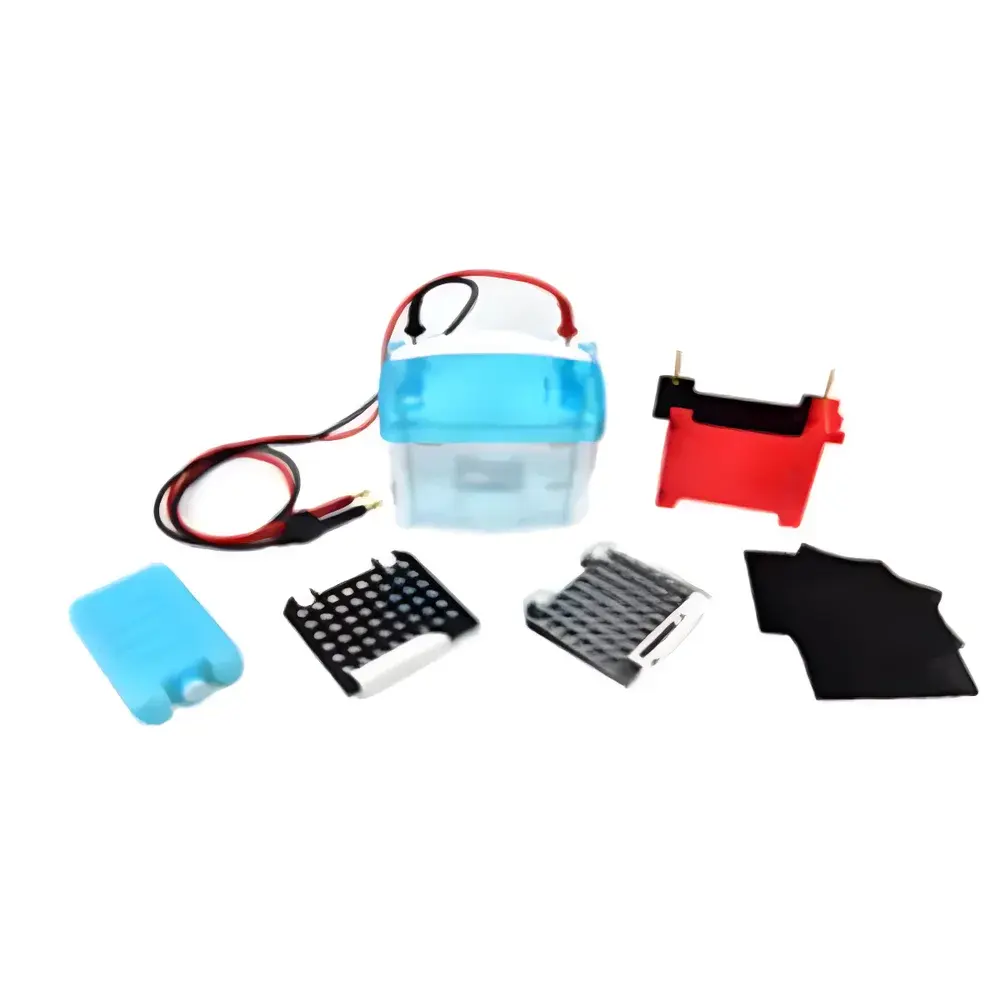
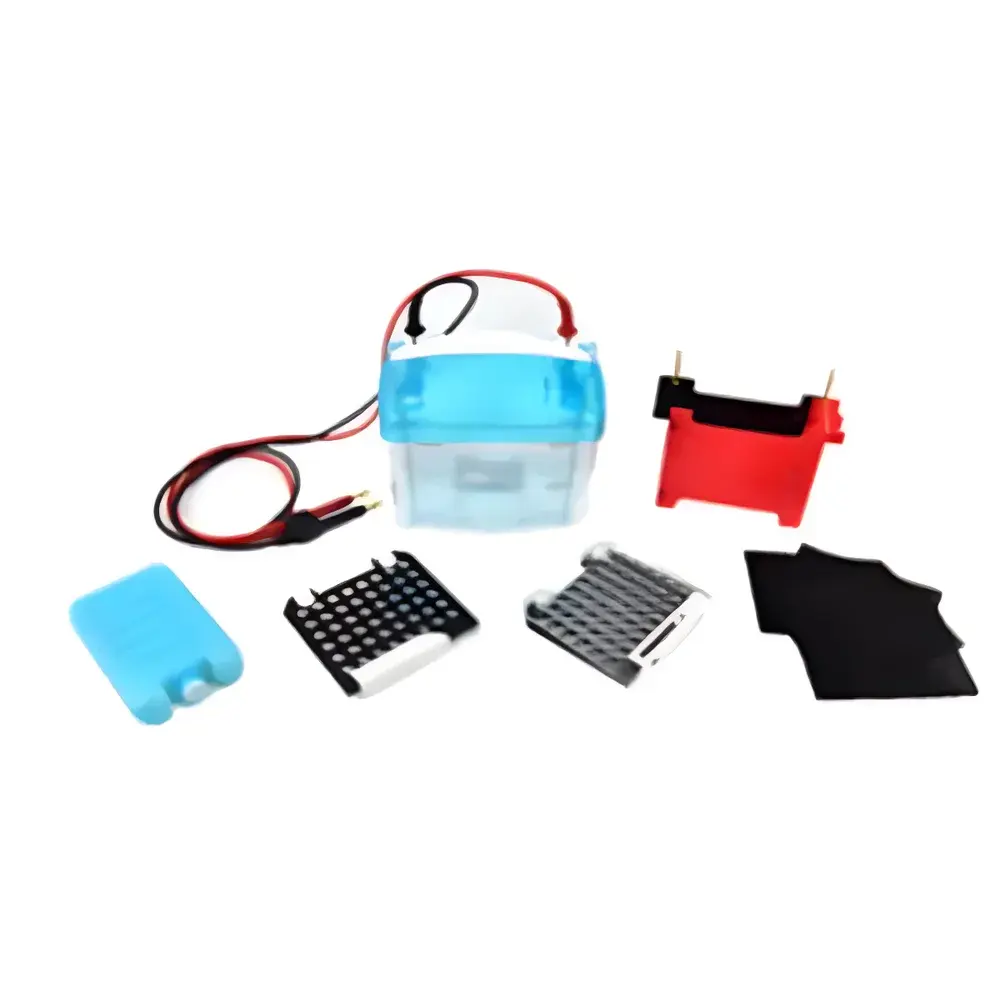
Beijing Liuyi DYCZ-TRANS2 Semi-Dry Electrophoretic Transfer Apparatus
| Brand | Beijing Liuyi (LY) |
|---|---|
| Origin | Beijing, China |
| Model | DYCZ-TRANS2 |
| Instrument Type | Semi-Dry Electrophoretic Transfer System |
| Gel Compatibility | 180 × 190 mm 2D gels (dual-gel capacity) |
| Sample Throughput | Up to 2 mini-gels simultaneously |
| Voltage Range | 20–200 V DC |
| Electrode Spacing | 4 cm |
| Transfer Plate Dimensions | 10 × 7.5 cm |
Overview
The Beijing Liuyi DYCZ-TRANS2 is a benchtop semi-dry electrophoretic transfer apparatus engineered for reproducible, high-efficiency protein transfer from polyacrylamide or agarose gels to solid supports—including nitrocellulose, PVDF, and nylon membranes. Unlike traditional wet-transfer systems, the DYCZ-TRANS2 employs a semi-dry configuration in which filter papers saturated with transfer buffer serve as both electrolyte reservoirs and thermal conductors, enabling rapid, low-resistance current pathways across the gel-membrane sandwich. Its optimized 4 cm electrode spacing establishes a uniform, high-field-strength electric field (up to 1.5 V/cm at 200 V), significantly accelerating electrophoretic migration of proteins while minimizing Joule heating and diffusion artifacts. Designed for compatibility with standard 180 × 190 mm two-dimensional (2D) electrophoresis gels—and capable of processing two mini-gels (e.g., 8 × 10 cm) in parallel—the system supports both rapid transfers (30–60 min at 15–25 V) and controlled overnight protocols (15–25 V, 12–16 h), making it suitable for labs requiring flexibility across diverse sample types and downstream detection modalities (chemiluminescence, fluorescence, colorimetric staining).
Key Features
- Dual-gel capacity: Accommodates two independent gel-membrane sandwiches using color-coded transfer clamps—red for anode (positive), black for cathode (negative)—ensuring unambiguous orientation and eliminating reversal errors during assembly.
- Optimized electrode geometry: Parallel stainless-steel wire electrodes spaced precisely 4 cm apart generate a homogeneous electric field distribution across the entire transfer area, improving transfer linearity and reducing edge effects.
- Thermally stable design: Integrated aluminum heat-sink plates and low-thermal-mass buffer matrix minimize temperature rise during high-voltage operation, preserving protein integrity and membrane binding efficiency.
- Modular clamp system: Interchangeable 10 × 7.5 cm transfer plates support standardized mini-gel formats; optional accessories include pre-cut blotting paper sets, cooling plates, and alignment jigs for 2D gel handling.
- DC power compatibility: Operates with standard laboratory DC power supplies (20–200 V, constant voltage mode); no integrated power source required—enabling seamless integration into existing electrophoresis workstations.
Sample Compatibility & Compliance
The DYCZ-TRANS2 is validated for use with SDS-PAGE, native PAGE, and 2D electrophoresis gels ranging from 10 to 200 kDa molecular weight ranges. It maintains consistent transfer efficiency for both high-abundance and low-abundance proteins when paired with recommended transfer buffers (e.g., 25 mM Tris, 192 mM glycine, 20% methanol). The system conforms to routine quality control benchmarks defined in ISO 15195:2018 (clinical laboratory calibration requirements) and supports GLP-compliant documentation workflows when used with traceable power supplies and calibrated timers. While not FDA 21 CFR Part 11-certified out-of-the-box, its manual operation and lack of embedded software allow full audit-trail control via external lab information management systems (LIMS) or electronic lab notebooks (ELN).
Software & Data Management
The DYCZ-TRANS2 is a hardware-only platform with no onboard firmware, microcontroller, or digital interface. All operational parameters—including voltage, duration, and buffer composition—are manually configured and recorded externally. This architecture ensures zero risk of firmware corruption, eliminates cybersecurity vulnerabilities, and simplifies validation in regulated environments. Users are advised to log transfer conditions per ICH-GCP Annex 4 and maintain hard-copy or LIMS-integrated records including gel lot numbers, membrane type, antibody batch IDs, and development times. Optional companion documentation templates (PDF/Excel) are available for download to support SOP alignment and internal QA audits.
Applications
- Western blotting: High-fidelity transfer of denatured and native proteins for immunodetection with monoclonal/polyclonal antibodies.
- 2D proteomics: Reliable transfer of complex, high-resolution 2D gels for spot excision, mass spectrometry identification, and comparative expression analysis.
- Post-translational modification (PTM) studies: Preservation of phosphorylation, glycosylation, and ubiquitination epitopes under low-heat transfer conditions.
- Quality control in biopharmaceutical production: Verification of recombinant protein purity, degradation profiles, and host-cell protein clearance.
- Academic and core facility use: Cost-effective, service-free operation ideal for teaching labs and high-throughput screening platforms requiring minimal maintenance.
FAQ
What gel formats does the DYCZ-TRANS2 support?
It is optimized for 180 × 190 mm 2D gels and accommodates two standard mini-gels (up to 10 × 7.5 cm each) simultaneously using dual clamp assemblies.
Can the system perform wet transfer?
No—it is strictly a semi-dry transfer apparatus. Wet transfer requires separate tank-based systems with circulating buffer and cooling units.
Is cooling required during operation?
Not under standard protocols (≤25 V, ≤60 min); however, for extended high-voltage runs (>100 V), supplemental air cooling or passive heat-sink extension is recommended.
Does the DYCZ-TRANS2 include a power supply?
No. It must be connected to an external DC power supply capable of delivering 20–200 V with current limiting appropriate for the chosen buffer conductivity and gel thickness.
How is orientation verified during assembly?
Color-coded electrodes (black = cathode, red = anode) and corresponding markings on the transfer clamps enforce correct gel-membrane stacking order—cathode side always faces the gel, anode side faces the membrane.




