
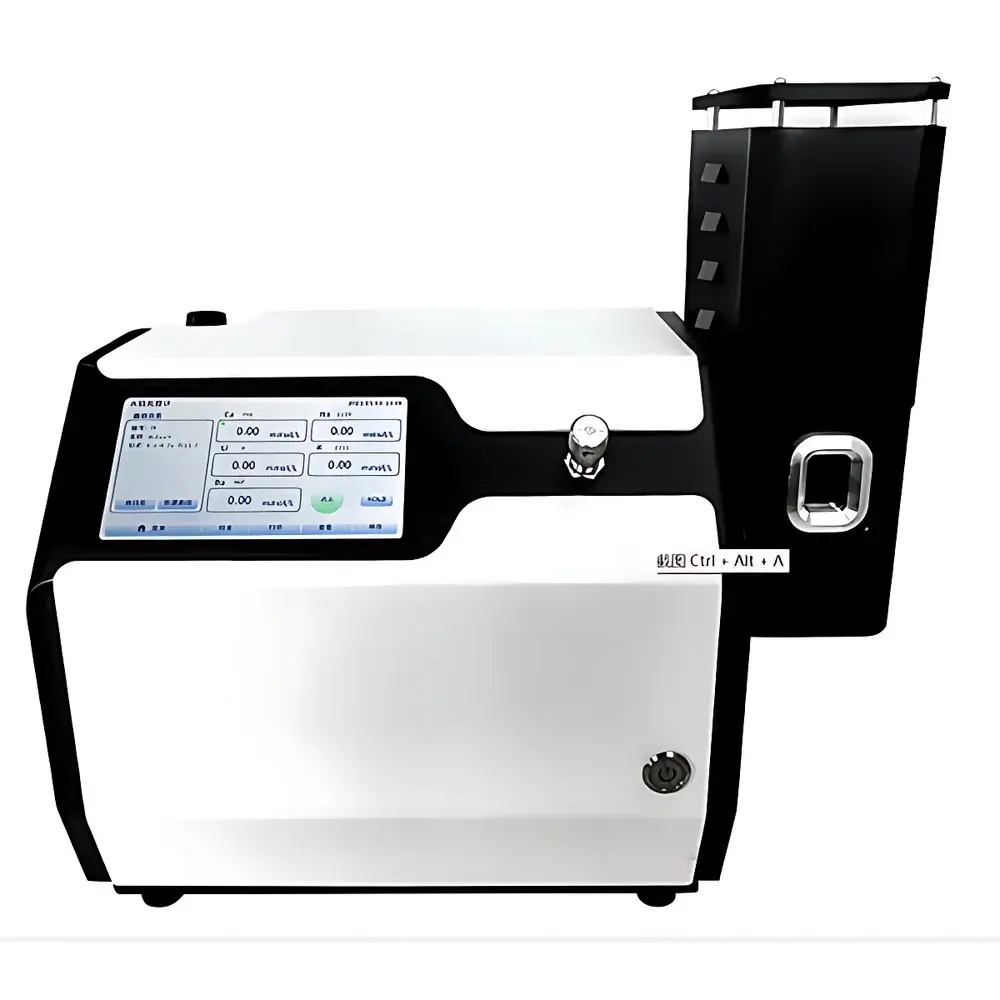
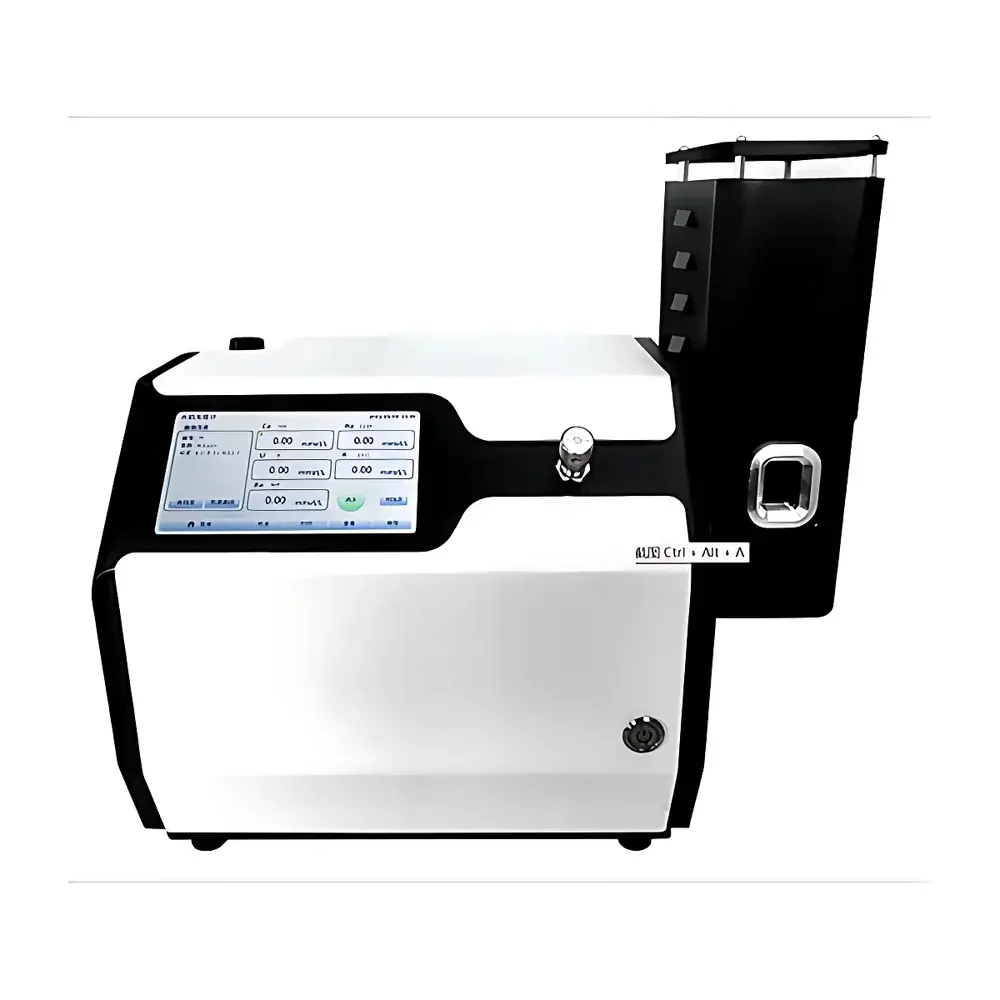
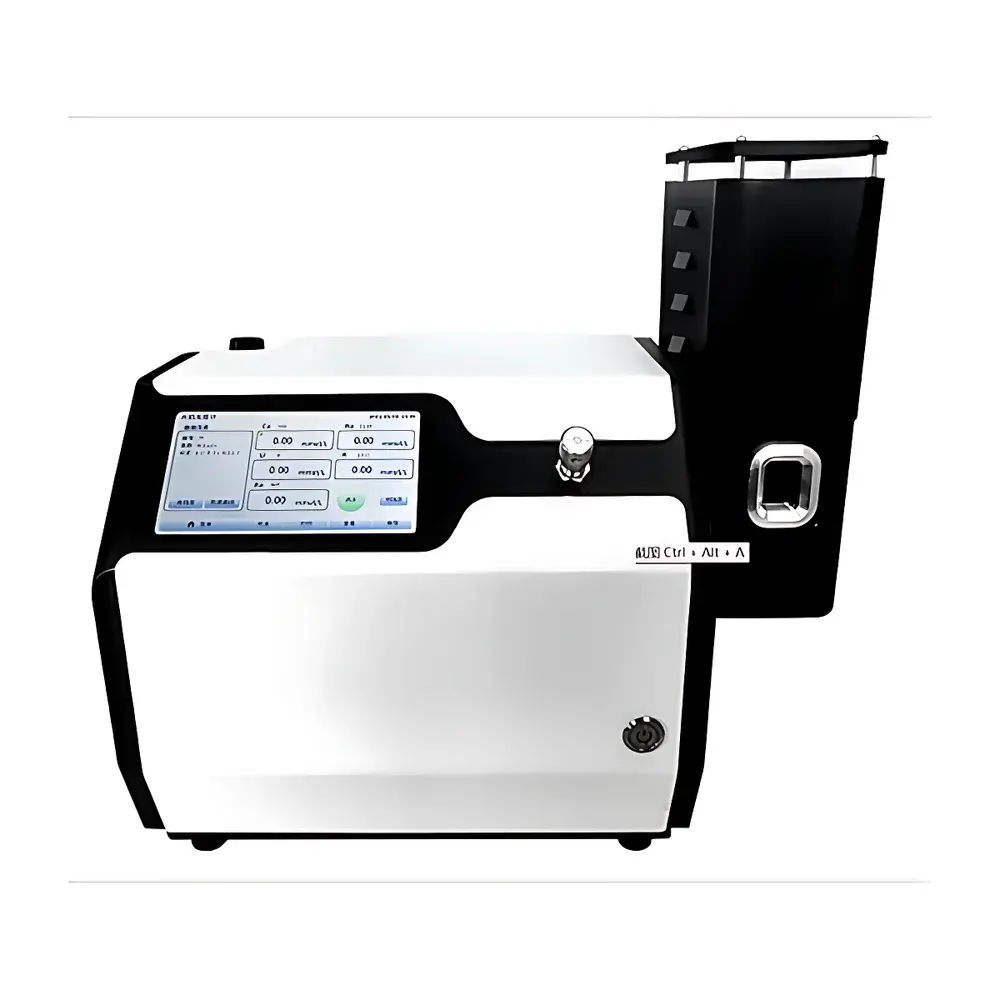
Yoke FP6432 Dual-Channel Flame Photometer
| Brand | Yoke |
|---|---|
| Origin | Shanghai, China |
| Model | FP6432 |
| Measurement Range | K: 0–100 µg/mL |
| Na | 0–100 µg/mL |
| Ba | 0–3000 µg/mL |
| Detection Limit | K ≤ 0.004 mmol/L |
| Response Time | < 8 s |
| Repeatability | ≤ 3% |
| Sample Flow Rate | < 6 mL/min |
| Wavelength Accuracy | K/Li/Ca/Ba ≤ ±7 nm |
| Bandwidth (FWHM) | ≤ 15 nm for all elements |
| Background Transmittance | ≤ 0.5% |
| Power Supply | AC 220 ± 22 V, 50 ± 1 Hz |
| Rated Power | 30 W |
| Display | 7-inch capacitive touch LCD |
| Data Storage | 10-point calibration curves (max), 200 sample records |
| Connectivity | USB port, U-disk export, cloud-enabled interface |
| Safety Features | Flame-out detection, gas leak alarm |
Overview
The Yoke FP6432 Dual-Channel Flame Photometer is a benchtop atomic emission spectrometer engineered for quantitative determination of alkali and alkaline earth metals—including potassium (K), sodium (Na), and barium (Ba)—in aqueous solutions. It operates on the principle of flame atomic emission spectroscopy (FAES): samples are nebulized into a premixed air-propane flame, where thermal excitation promotes valence electrons to higher energy states; upon relaxation, characteristic wavelength photons are emitted and isolated via interference filters before detection by photodiodes. This method delivers high specificity for target elements without requiring complex optics or monochromators, making the FP6432 particularly suited for routine analysis in quality control, environmental testing, and academic teaching laboratories where robustness, ease of operation, and regulatory traceability are prioritized over ultra-trace sensitivity.
Key Features
- Dual-channel simultaneous or sequential measurement capability for K and Na, with optional Ba quantification via dedicated filter and calibration protocol
- 7-inch high-resolution capacitive touch LCD interface enabling intuitive navigation, real-time signal monitoring, and on-device curve fitting
- Automated calibration workflow supporting both linear and piecewise linear (broken-line) standard curve generation with automatic correlation coefficient (R²) calculation
- Integrated safety architecture featuring flame-out detection circuitry and propane gas leakage sensing—compliant with IEC 61010-1 requirements for laboratory electrical equipment
- Onboard data management: stores up to 10 multi-point calibration sets and 200 raw measurement records with timestamp, sample ID, and concentration output
- USB host port and USB device interface for direct connection to PCs or portable storage devices (U-disk export in CSV format)
- Cloud connectivity module supporting remote firmware updates, centralized instrument status logging, and secure data synchronization with LIMS-compatible endpoints
Sample Compatibility & Compliance
The FP6432 accepts clarified aqueous samples within defined viscosity and suspended solids limits (< 1 cP, < 0.1 µm particulates). It is validated for use with acid-digested soil extracts (per ASTM D5056), clinical serum/plasma dilutions (CLSI EP9-A3 harmonized protocols), fertilizer solutions (ISO 11267), and ceramic glaze filtrates. Filter specifications meet ISO 10110-7 tolerances for spectral bandwidth and out-of-band rejection. Instrument stability complies with ISO 8466-1 for calibration function validation, and repeatability (≤3% RSD) satisfies USP criteria for elemental impurity assays in pharmaceutical excipients. Optional printer module supports GLP-compliant hardcopy reporting with audit trail metadata.
Software & Data Management
Data acquisition and processing are handled by embedded firmware compliant with FDA 21 CFR Part 11 Annex 11 principles: user authentication (role-based access), electronic signatures, immutable audit logs, and secure data export. Calibration parameters—including slope, intercept, and R²—are digitally signed at time of entry. All exported CSV files include embedded metadata headers (instrument ID, operator, date/time, method version). The cloud interface supports TLS 1.2 encrypted transmission and integrates with common laboratory informatics systems via RESTful API endpoints. No proprietary software installation is required for basic operation; advanced reporting templates can be deployed remotely through the web portal.
Applications
- Cement & Ceramics: Quantification of alkali content (Na₂O + K₂O) per ASTM C114 to predict alkali-silica reaction (ASR) potential
- Agricultural Science: Soil extract analysis for exchangeable K⁺ and Na⁺ using ammonium acetate or Mehlich-3 extraction protocols
- Clinical Chemistry: Serum potassium and sodium monitoring in point-of-care and core lab settings—aligned with IFCC reference measurement procedures
- Environmental Testing: Monitoring of Ba²⁺ in groundwater per EPA Method 200.7 (modified for flame photometric screening)
- Materials Research: Batch consistency verification of barium titanate precursors and glass frit compositions
- Academic Instruction: Teaching atomic emission fundamentals, calibration statistics, and instrumental error propagation in undergraduate analytical chemistry labs
FAQ
What elements can the FP6432 measure simultaneously?
The instrument performs dual-channel detection optimized for K and Na in parallel mode. Ba is measured sequentially using a separate filter wheel position and calibration curve.
Is the FP6432 compliant with GLP or GMP requirements?
Yes—its audit trail functionality, electronic signature support, and calibrated data export meet baseline GLP documentation standards per OECD Series on Principles of Good Laboratory Practice. For GMP environments, validation packages (IQ/OQ/PQ) are available upon request.
Can it interface with LIMS systems?
Yes, via its RESTful API and standardized CSV output format. Pre-built connectors exist for Thermo Fisher SampleManager, LabVantage, and LabWare LIMS platforms.
What maintenance is required for long-term accuracy?
Daily: Nebulizer cleaning with 5% nitric acid; weekly: burner head inspection and alignment verification; annually: optical filter transmittance validation against NIST-traceable standards.
Does it support internal standardization or matrix-matched calibration?
The firmware supports manual entry of internal standard ratios and allows user-defined dilution factors per sample group, though full internal standard correction requires external spreadsheet integration.




