
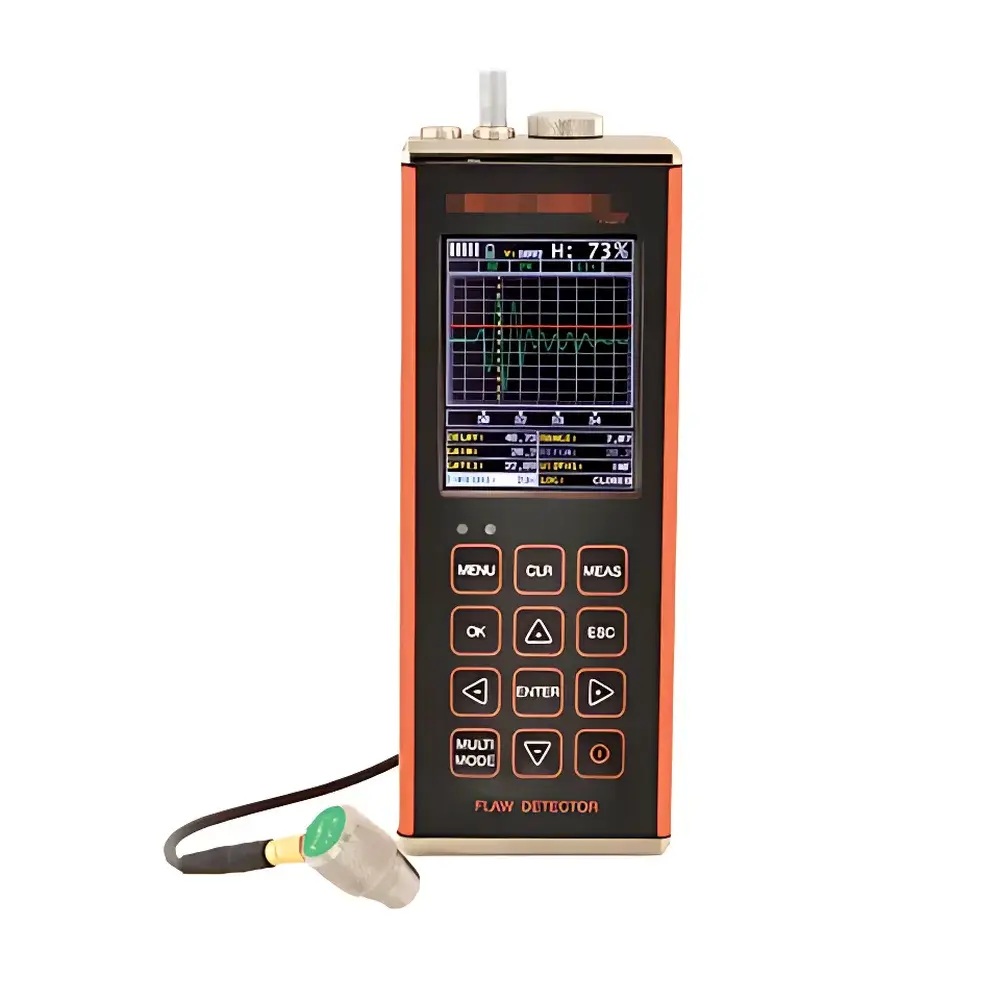
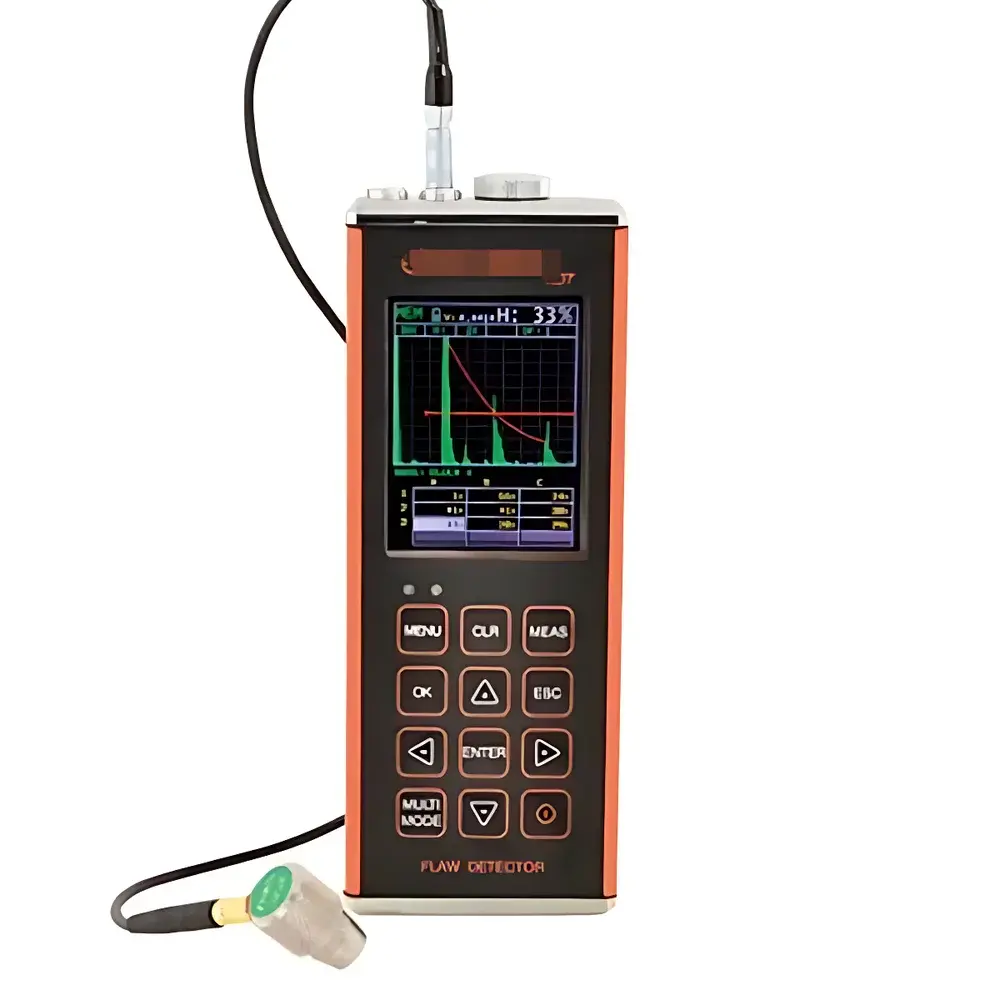
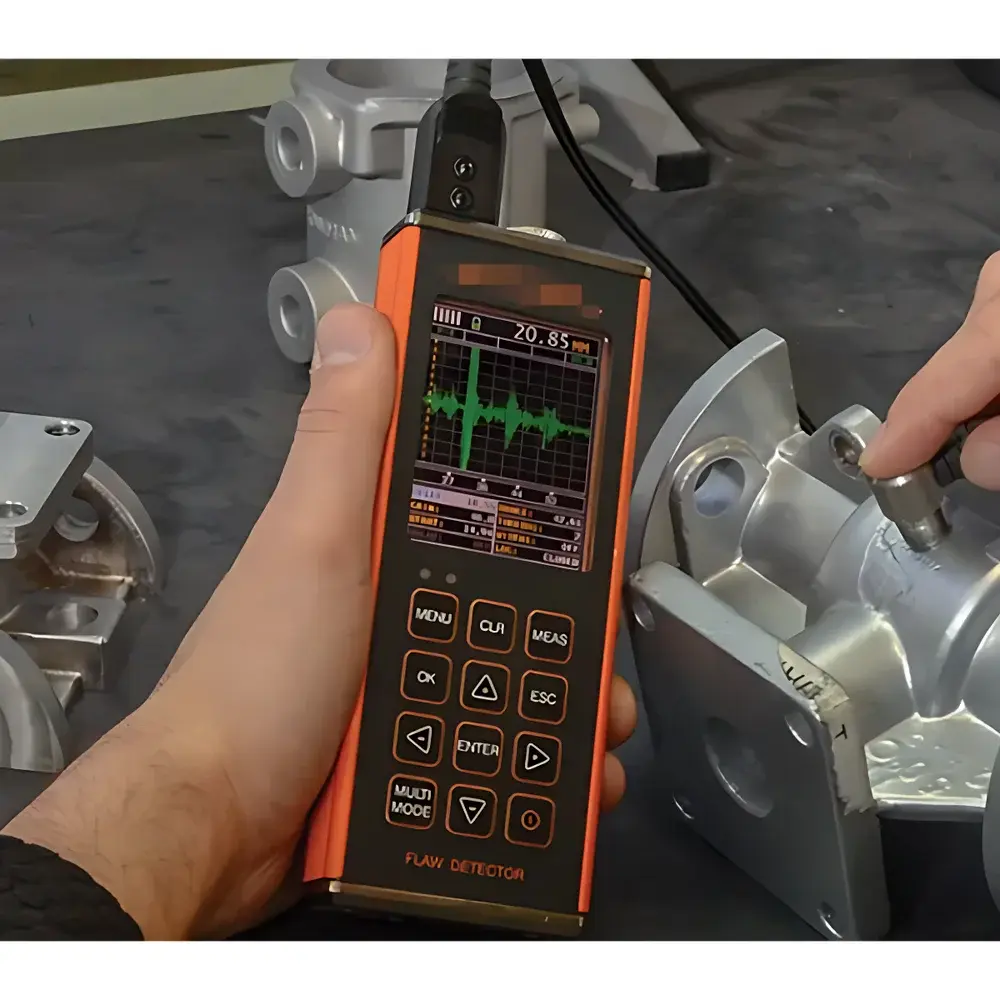
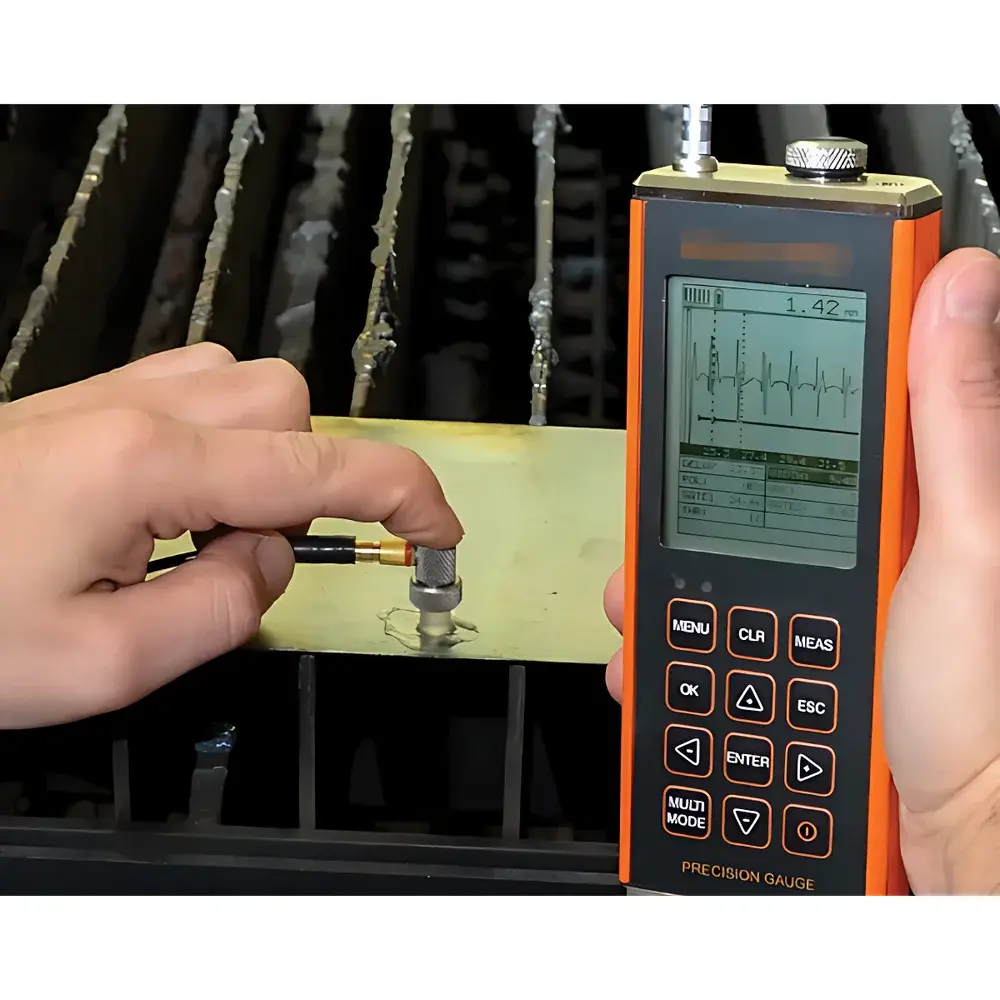
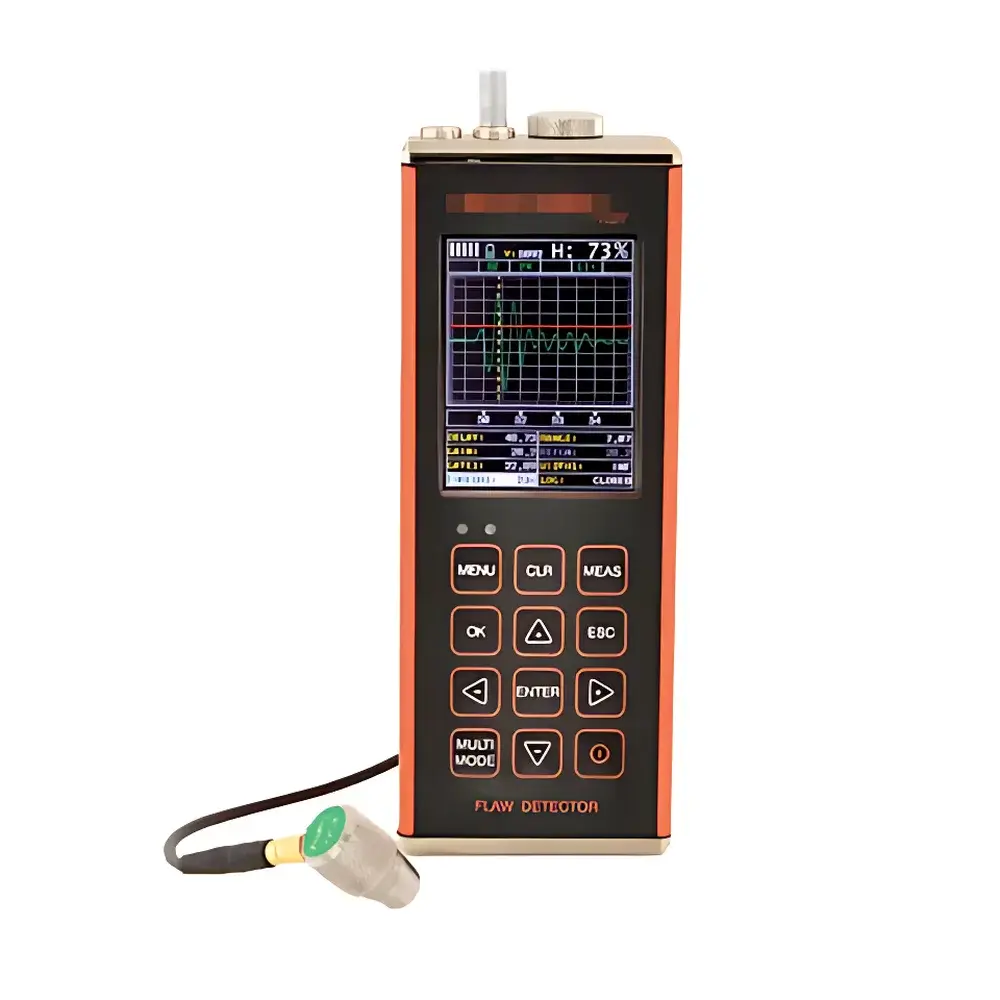
Starwood FD700 Handheld Ultrasonic Flaw Detector
| Brand | Starwood |
|---|---|
| Origin | Beijing, China |
| Manufacturer Type | Manufacturer |
| Product Category | Domestic (China-made) |
| Model | FD700 |
| Pricing | Upon Request |
Overview
The Starwood FD700 Handheld Ultrasonic Flaw Detector is an engineered solution for field-deployable and laboratory-based non-destructive testing (NDT), delivering precise ultrasonic pulse-echo and through-transmission measurements in accordance with ASTM E114, ISO 16810, and EN 12668-1 standards. Built upon a dual-channel, high-stability digital architecture, the FD700 employs time-of-flight diffraction (TOFD)-compatible signal processing and advanced digital signal acquisition—featuring an 8-bit, 100 MHz sampling ADC and 25 MHz TCXO timing reference—to ensure repeatable flaw sizing, depth positioning, and material thickness quantification. Its core measurement principle relies on controlled generation of broadband ultrasonic pulses (1.8–19 MHz bandwidth), propagation through metallic and non-metallic test objects, and analysis of reflected echo amplitude, time delay, and waveform morphology to identify discontinuities—including cracks, lack of fusion, porosity, and delaminations—as well as to determine remaining wall thickness in corrosion monitoring applications.
Key Features
- Quarter-VGA (320 × 240) AMOLED color display with sunlight-readable contrast and adjustable 60/120 Hz refresh rate
- Multi-mode ultrasonic evaluation: Pulse-Echo (PE), Through-Thickness (TT), Echo-Echo (EE), Echo-Echo Variable (EEV), Coating Thickness (CT), and Painted-Echo-Correction Technology (PECT)
- Time-Corrected Gain (TCG) with up to 8-point curve definition and 50 dB dynamic range (20 dB/µs)
- Automated calibration routines: single/dual-point zero offset, velocity/material-type selection, automatic probe recognition, and temperature-compensated PETP mode
- Three user-configurable gates (start, stop, width) with adjustable threshold, damping, and impedance matching for optimal transducer coupling
- Programmable PRF from 8 Hz to 2000 Hz in discrete steps; pulse width selection (40/80/400 ns) for resolution vs. penetration trade-off
- Integrated DAC (Distance-Amplitude Curve) per AWS D1.1 and EN ISO 13588, with reference levels at –2/–6/–10 dB or custom multi-point curves
- DGS/AVG evaluation using stored probe characterization data for amplitude-based flaw sizing without reference blocks
Sample Compatibility & Compliance
The FD700 supports inspection of ferrous and non-ferrous metals, composites, plastics, and ceramics across industrial sectors including power generation, petrochemical infrastructure, aerospace component maintenance, and structural steel fabrication. It accommodates standard single-element contact probes (0°, angle-beam, delay-line), dual-element TR probes, and immersion transducers via compatible adapters. All measurement modes comply with ISO 2400 (ultrasonic thickness gauging), ASTM E797 (contact ultrasonic pulse-echo), and ASME BPVC Section V, Article 4. The instrument’s firmware implements audit-trail-capable calibration logging and supports GLP/GMP-aligned data integrity practices when used with ElcoMaster® software for traceable record retention.
Software & Data Management
The FD700DL+ variant enables comprehensive data capture: up to 8,000 A-scan/B-scan waveforms with full instrument configuration metadata, 210,000 thickness readings (including min/max/coating values), alphanumeric batch identifiers, grid/sequence mapping, and OBSTRUCT flagging for inaccessible zones. Data export occurs via bidirectional RS232 interface to ElcoMaster® desktop software, which provides report generation, waveform overlay comparison, gate parameter trending, and CSV/PDF export compliant with FDA 21 CFR Part 11 requirements for electronic records and signatures. Firmware updates and custom setup profiles (up to 64 user-defined configurations) are managed through the same platform.
Applications
- In-service inspection of piping, pressure vessels, and weld joints under ASME B31.4/B31.8
- Critical thickness monitoring in refinery assets subject to erosion-corrosion mechanisms
- Manufacturing QA/QC of castings, forgings, and rolled plate where internal voids or laminations must be excluded
- Field verification of repair weld integrity per AWS D1.1 Annex K procedures
- Coating thickness assessment on carbon steel substrates without substrate interference (EE/EEV/PECT modes)
- Calibration validation against NIST-traceable reference standards (e.g., IIW Block, Step Wedge, Notch Calibration Blocks)
FAQ
What ultrasonic standards does the FD700 conform to?
The FD700 complies with EN 12668-1 (instrument performance), ASTM E114 (manual ultrasonic testing), ISO 16810 (general NDT principles), and supports methodology alignment with ASME Section V and ISO 2400.
Can the FD700 perform TOFD inspections?
While not a dedicated TOFD system, the FD700 supports TOFD-compatible data acquisition via its dual-gate architecture, high PRF capability (up to 2000 Hz), and precise time-of-flight measurement—enabling manual TOFD setup when paired with appropriate wedge assemblies and linear encoder integration.
Is probe auto-recognition supported across all transducer types?
Yes—the FD700 automatically detects and applies stored sensitivity, frequency, and near-field correction parameters for recognized Starwood-certified probes; third-party probe data may be manually loaded via ElcoMaster®.
How is measurement traceability maintained during field use?
Each saved scan includes embedded timestamp, operator ID (if configured), calibration date, velocity setting, gate positions, and gain value—ensuring full metrological traceability when exported and archived in ElcoMaster®.
Does the FD700 support battery-powered operation in hazardous locations?
The device operates on three AA alkaline cells (12-hour typical runtime) but is not intrinsically safe certified; use in classified zones requires external explosion-proof enclosures or site-specific risk assessment per IEC 60079-0.



