
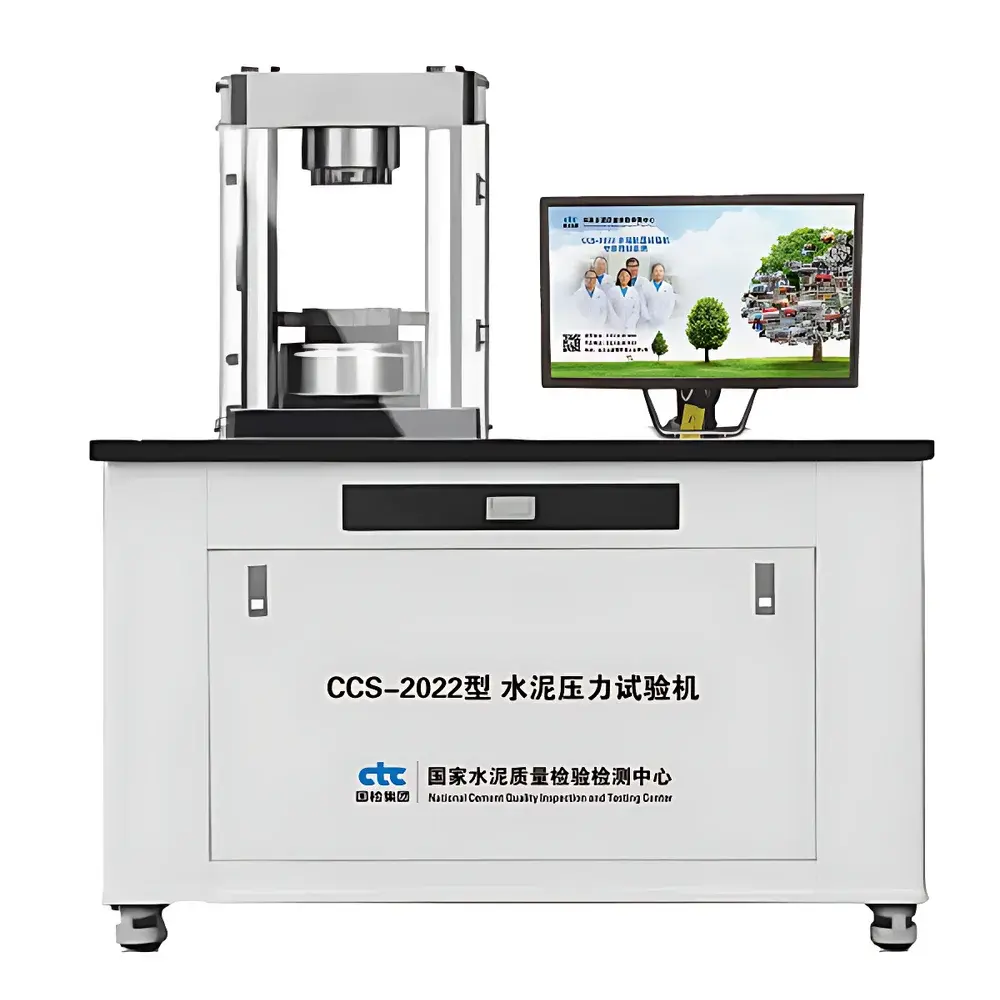
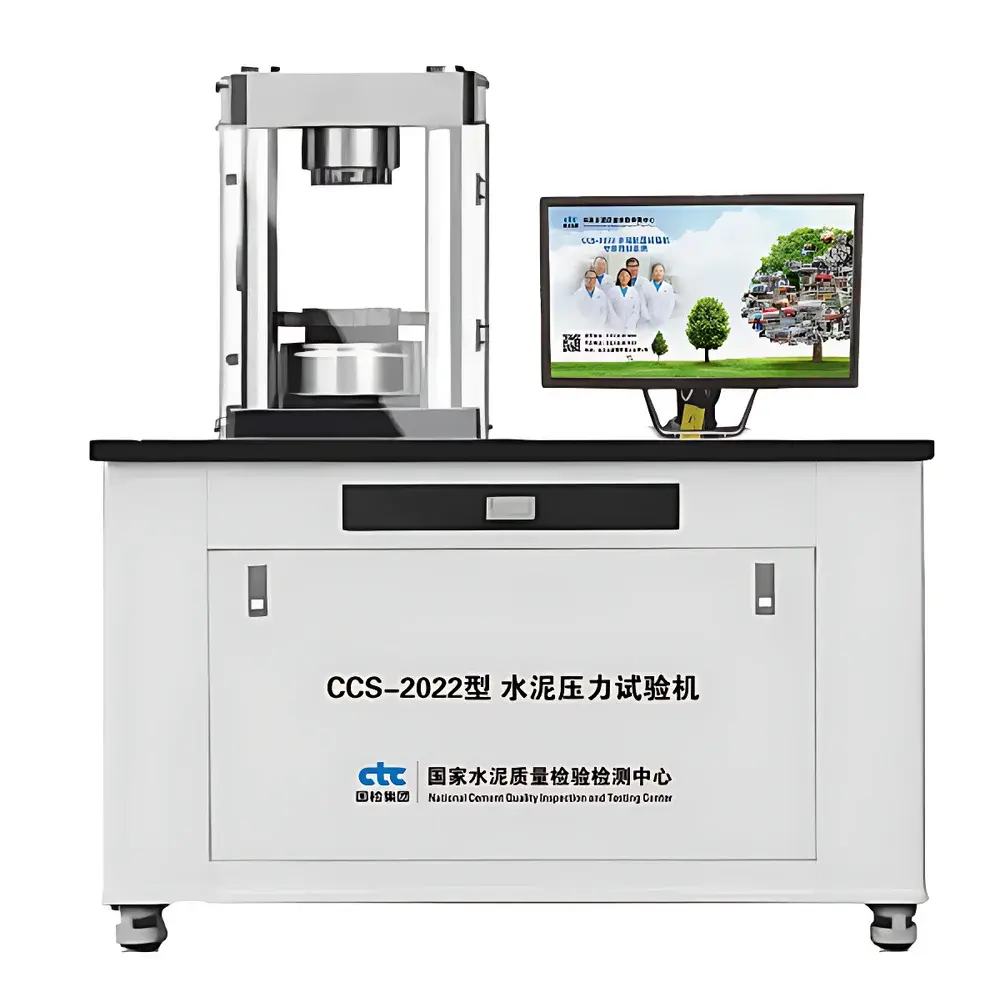
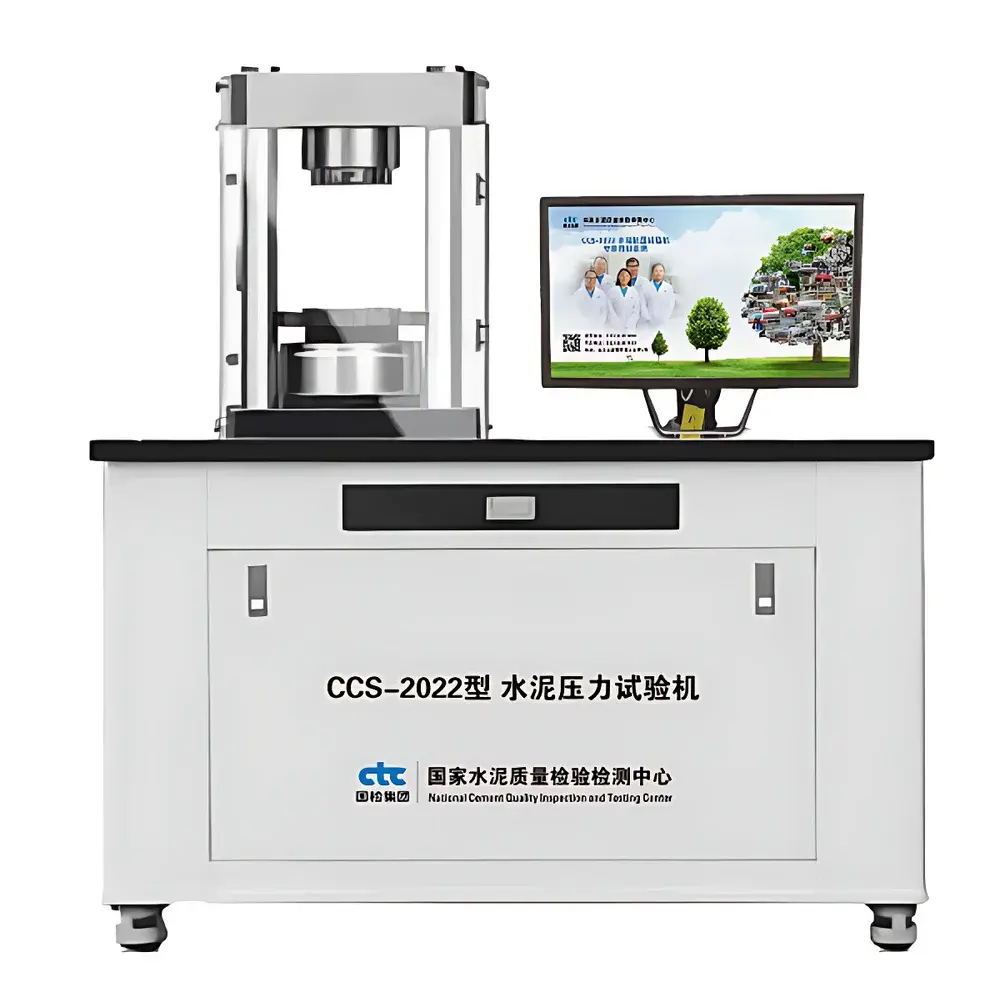
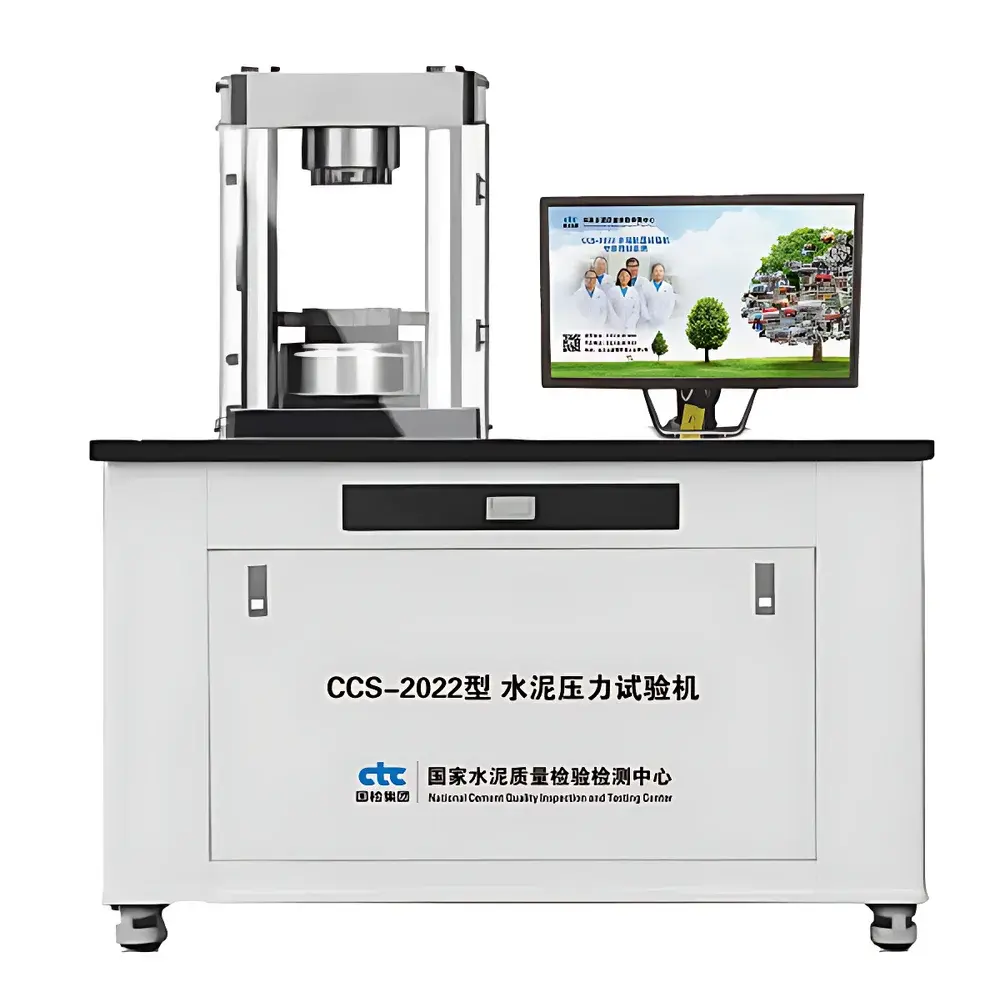
Starwood CCS-2022 Cement Compression Testing Machine
| Brand | Starwood |
|---|---|
| Origin | Beijing, China |
| Manufacturer Type | Direct Manufacturer |
| Country of Origin | China |
| Model | CCS-2022 |
| Max Test Force | 300 kN |
| Constant Load Rate Range | 0.3–9.9 kN/s |
| Platen Spacing (Max) | 185 mm |
| Compression Platen Diameter | φ120 mm |
| Piston Stroke (Max) | 90 mm |
| Indicated Value Relative Error (Accuracy Class) | ±0.5% |
| Repeatability Relative Error | 0.5% |
| Return-to-Zero Relative Error | ±0.1% |
| Force Display Resolution | 0.5% |
| Zero Drift | ≤±0.1% |
| Servo Motor Power | 1500 W (Single-Phase) |
| Supply Voltage | 220 V AC |
| Dimensions (W×D×H) | 1300×580×1340 mm |
| Net Weight | 480 kg |
Overview
The Starwood CCS-2022 Cement Compression Testing Machine is a digitally controlled, electro-mechanical compression tester engineered for high-precision mechanical strength evaluation of cement mortars and concrete specimens in accordance with international standard test protocols. Unlike conventional hydraulic systems—prone to fluid leakage, thermal drift, and inconsistent load-rate delivery—the CCS-2022 employs a closed-loop servo-controlled electromechanical actuation system coupled with a high-stability load cell. This architecture ensures traceable force application, minimal hysteresis, and long-term metrological stability. The machine operates under ISO 7500-1:2018 (static calibration of uniaxial testing machines) and fully complies with GB/T 17671–2021, the Chinese national standard equivalent to ISO 679:2009 for determination of compressive strength of cement mortars. Its 0.5 accuracy class—verified per JJG 139–2014 (Chinese verification regulation for compression testing machines)—exceeds the minimum requirement for routine QC labs and aligns with GLP-compliant cement certification laboratories.
Key Features
- Electromechanical Actuation: Eliminates hydraulic oil dependency; delivers silent, contamination-free operation with zero risk of fluid degradation or seal wear over extended service life.
- Closed-Loop Load Control: Supports both constant load rate (kN/s) and constant stress rate (MPa/s) modes, programmable within 0.3–9.9 kN/s range—critical for reproducing standardized loading profiles defined in GB/T 17671–2021 Annex A.
- High-Fidelity Force Measurement: Integrated high-linearity S-type load cell with <±0.5% full-scale relative error and <0.5% repeatability—validated via third-party calibration certificate (NIST-traceable).
- Precision Mechanical Architecture: Rigid C-frame design with hardened steel platens (φ120 mm diameter), parallelism tolerance <0.02 mm/m, and axial alignment maintained within ±0.1° across full stroke (90 mm).
- Digital Servo System: 1500 W single-phase servo motor with adaptive PID tuning enables dynamic response time <10 ms and sustained load-holding stability <±0.2% over 60 s.
- Robust Environmental Tolerance: Designed for ambient lab conditions (10–35°C, 30–80% RH non-condensing); zero-drift performance maintained at ≤±0.1% FS/8 h under stable temperature.
Sample Compatibility & Compliance
The CCS-2022 accommodates standard prismatic cement mortar specimens (40 mm × 40 mm × 160 mm) and cylindrical concrete cores (up to φ100 mm × 200 mm) within its 185 mm maximum platen separation. Compression platens are surface-hardened (≥60 HRC) and ground to Ra ≤0.8 µm to ensure uniform stress distribution and prevent premature specimen edge failure. All mechanical and software functions conform to mandatory requirements of GB/T 17671–2021, including ramp-linearity verification, zero-return validation, and data logging integrity. Optional calibration kits support periodic in-house verification per ISO/IEC 17025:2017 clause 6.5.2 (equipment verification). The system is compatible with accredited calibration services traceable to CNAS (China National Accreditation Service) and supports audit-ready documentation for GMP and construction materials certification workflows.
Software & Data Management
Bundled Starwood TestControl v3.2 software provides real-time force–displacement curve visualization, automatic peak detection, and ASTM E4-compliant report generation (PDF/CSV). All test parameters—including load rate, dwell time, and pass/fail thresholds—are pre-configurable and locked via role-based user accounts (Administrator, Technician, Viewer). Audit trail functionality logs every parameter change, test initiation, and calibration event with timestamp, operator ID, and IP address—meeting FDA 21 CFR Part 11 requirements for electronic records and signatures when deployed with Windows domain authentication. Raw data files retain native 1 kHz sampling resolution and are stored in encrypted SQLite format with SHA-256 checksum integrity verification.
Applications
- Compressive strength testing of Portland cement, slag cement, and pozzolanic blended cements per GB/T 17671–2021 and ASTM C109/C109M.
- Quality control of precast concrete elements in ready-mix plants and prefabrication facilities.
- Research-grade evaluation of admixture effects on early-age strength development (1-day, 3-day, 28-day curing).
- Verification of conformity for CE-marked cement products under EU Construction Products Regulation (CPR) Annex ZA.
- Third-party certification testing for ISO 9001:2015 and ISO 14001:2015 accredited laboratories.
FAQ
What standards does the CCS-2022 explicitly comply with?
It meets GB/T 17671–2021, ISO 679:2009, ISO 7500-1:2018, JJG 139–2014, and supports reporting formats aligned with ASTM E4 and EN 12390-3.
Can the machine perform flexural strength tests?
No—it is dedicated to uniaxial compression only. Flexural testing requires a separate universal testing machine equipped with bending fixtures per GB/T 17671–2021 Annex B.
Is remote diagnostics or firmware update supported?
Yes—via secure HTTPS-enabled web interface; updates require digital signature verification and are logged in the audit trail.
What maintenance intervals are recommended?
Load cell verification every 12 months; servo motor lubrication every 24 months; platen surface inspection before each test batch per ISO 7500-1:2018 section 7.3.
Does the system support integration with LIMS?
Yes—through RESTful API (JSON/XML) and optional OPC UA server module for bi-directional data exchange with laboratory information management systems.





