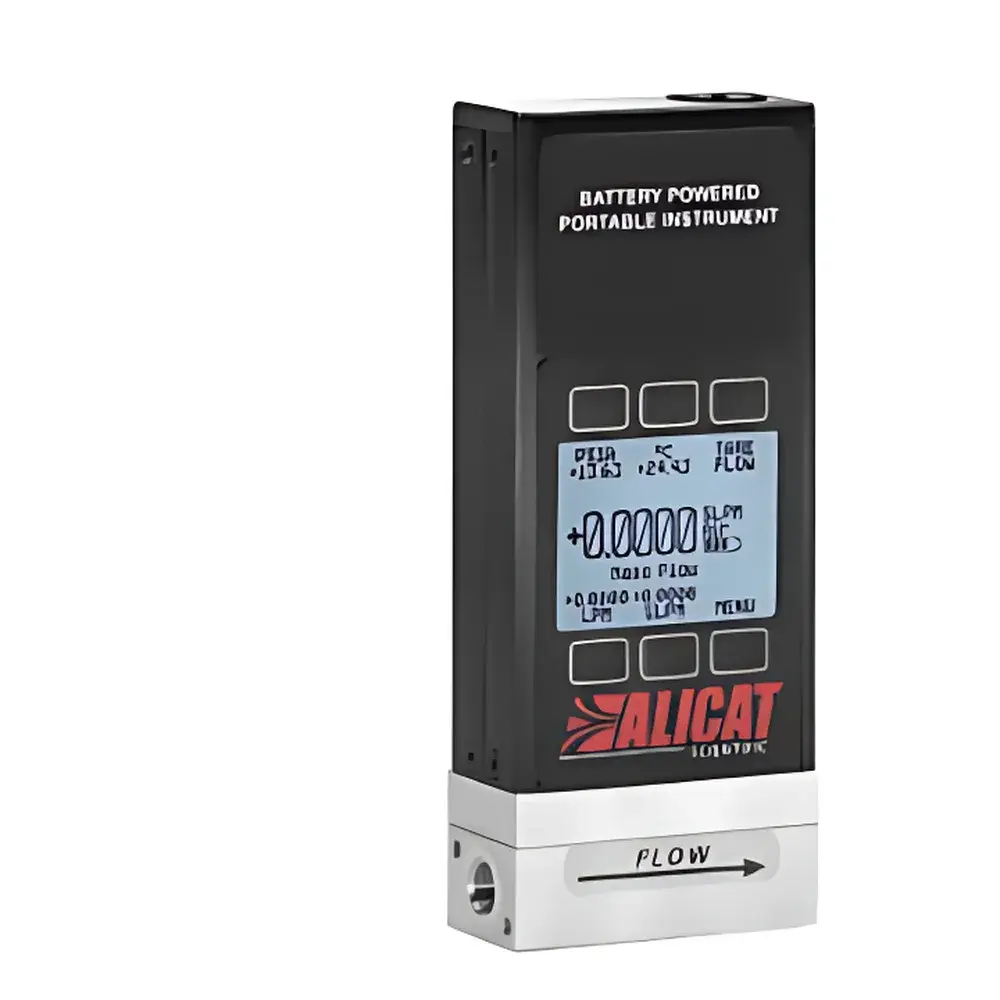
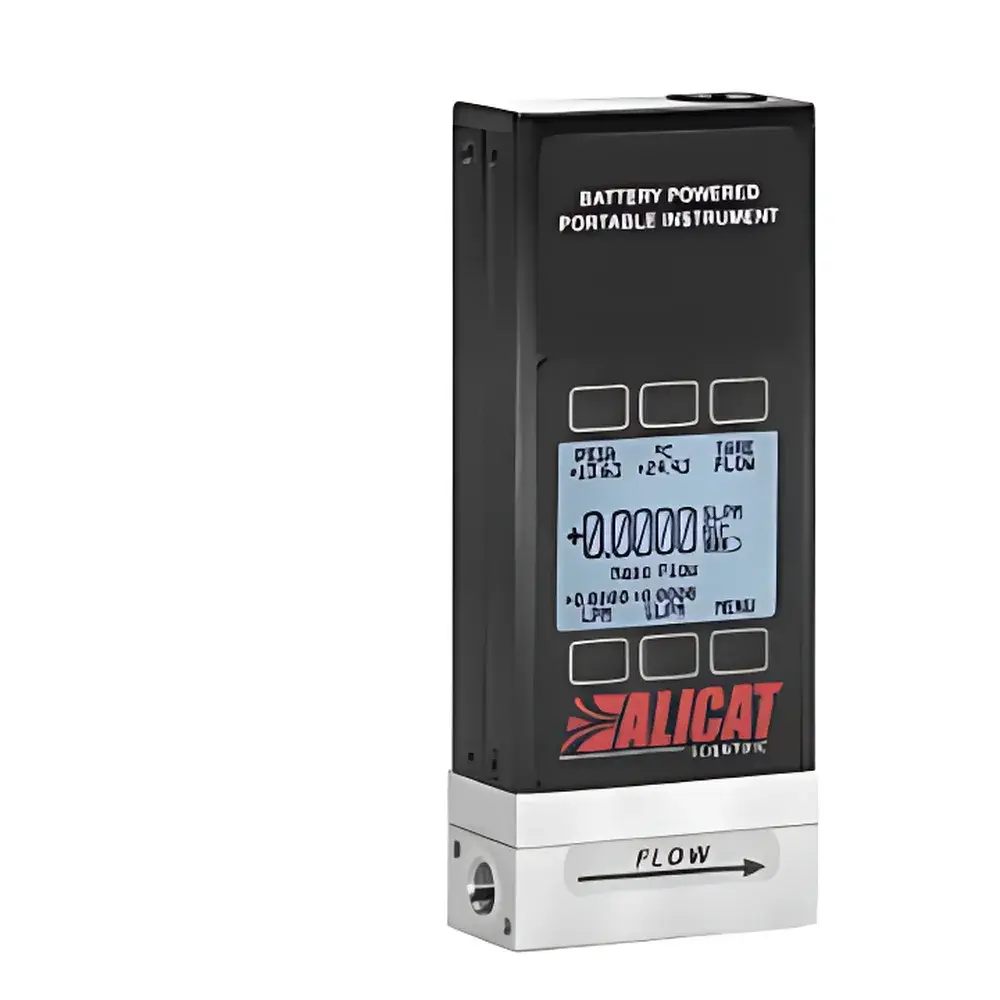
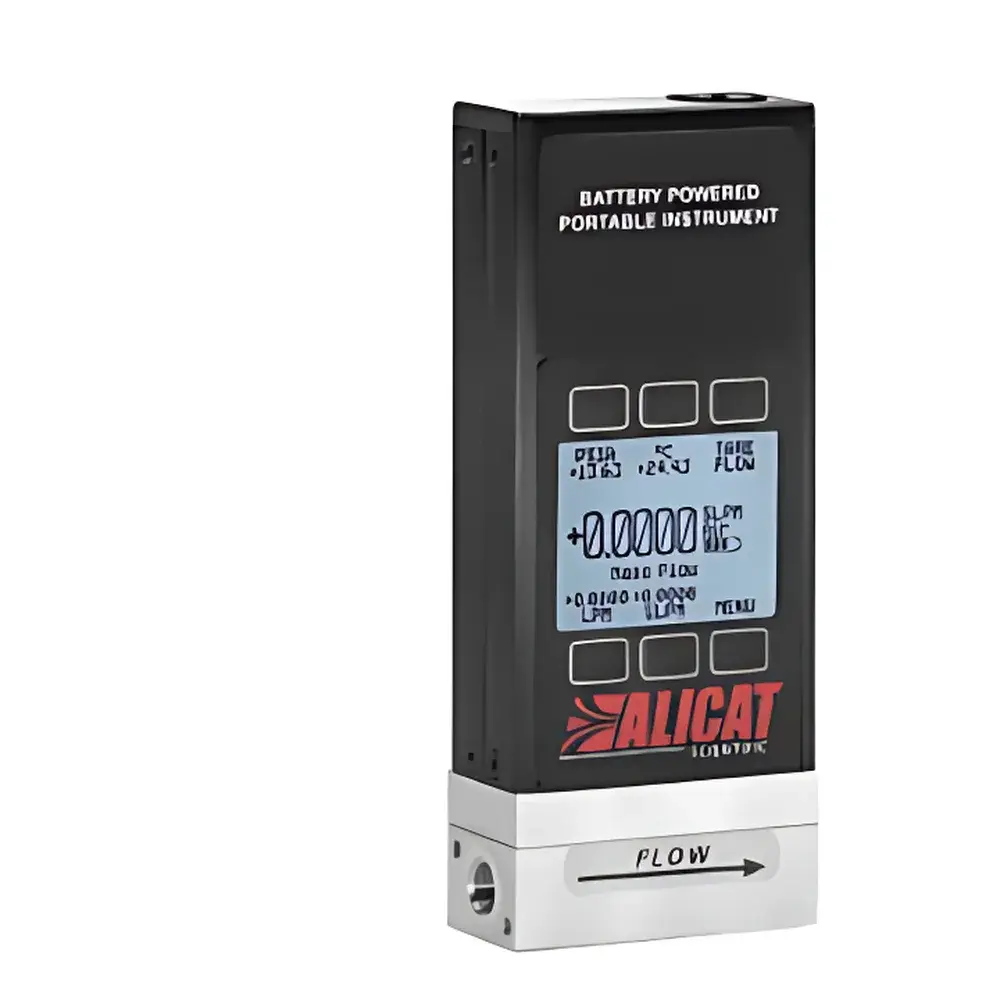
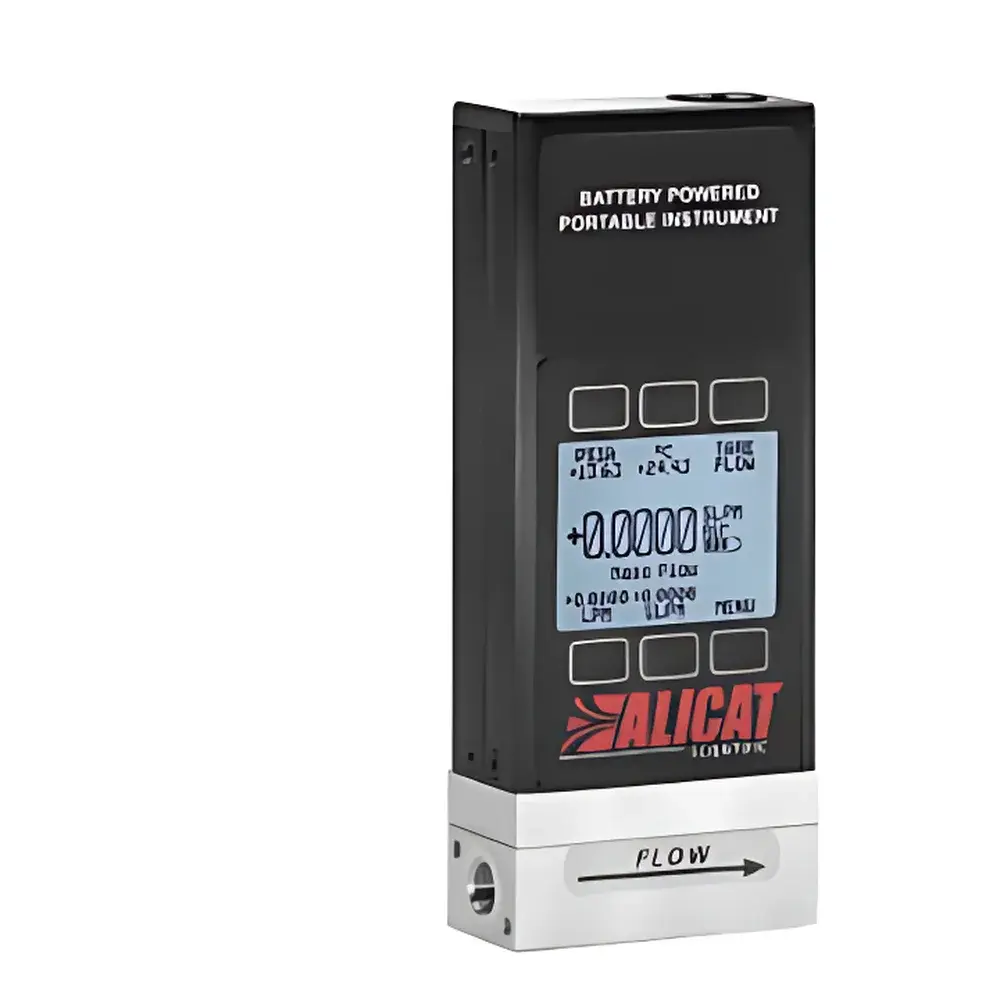
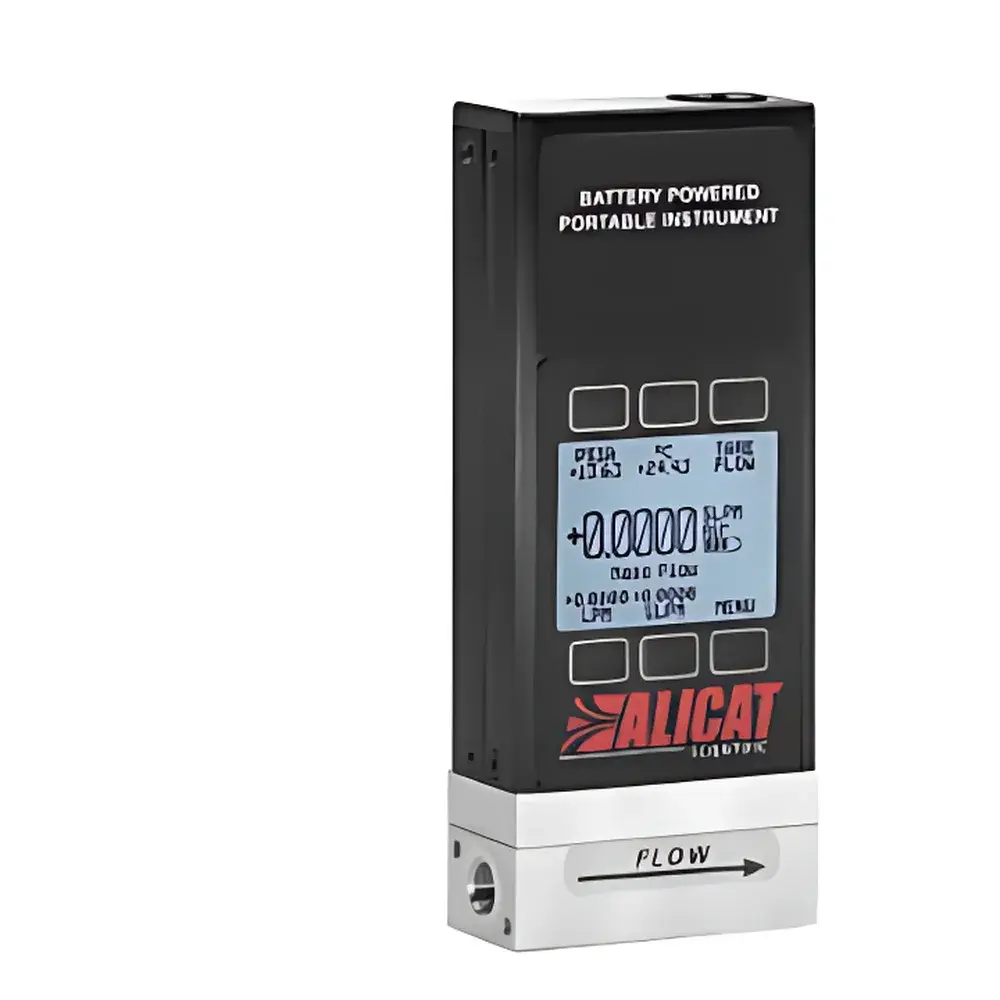
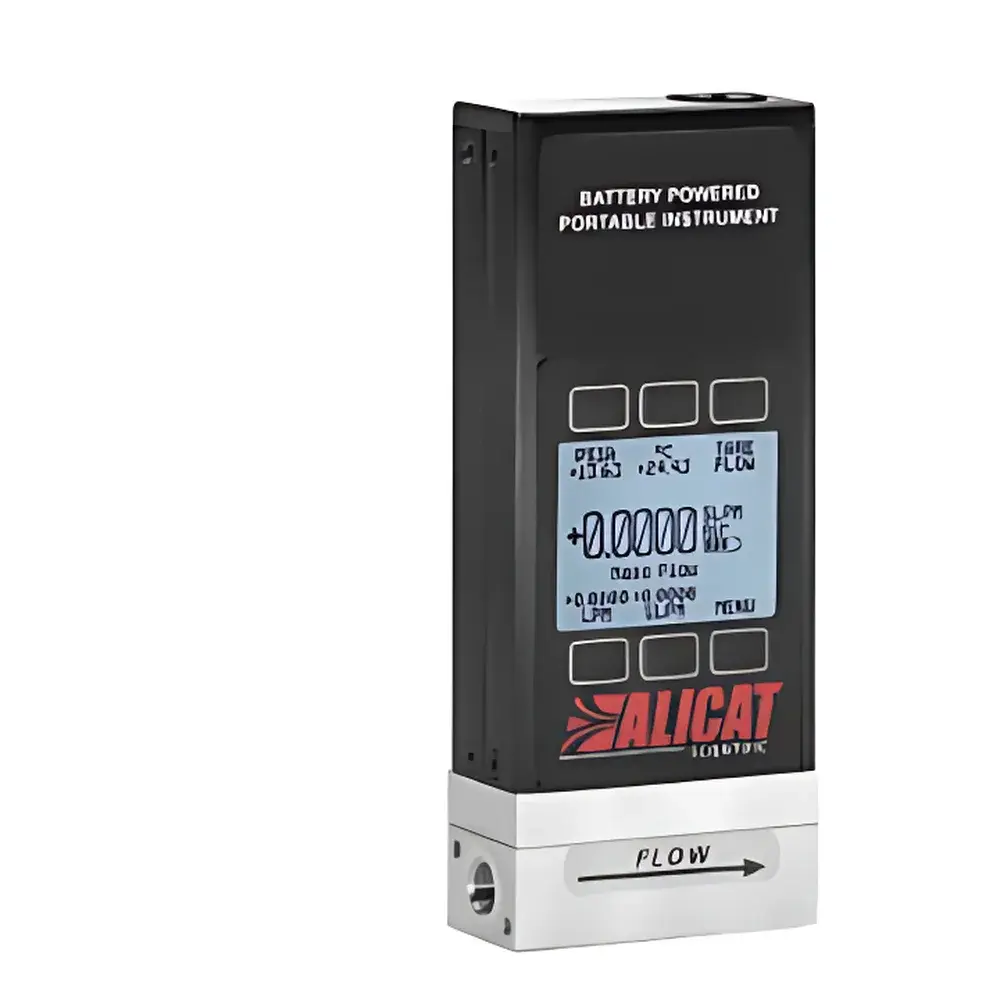
Starwood MBQ Series Portable High-Pressure Gas Mass Flow Meter
| Brand | Starwood |
|---|---|
| Origin | Beijing, China |
| Manufacturer Type | OEM Manufacturer |
| Product Origin | Domestic (China) |
| Model | MBQ Series |
| Pricing | Available Upon Request |
| Full-Scale Range | 10 SCCM to 3,000 SLPM |
| Accuracy | ±0.6% of reading or ±0.1% of full scale (whichever is greater) |
| Repeatability | ±0.1% of full scale |
| Response Time | <10 ms |
| Operating Temperature | –10°C to +60°C |
| Maximum Working Pressure | 320 PSIA (22 barA) |
| Battery Life | 18 hours |
| Gas Selection | 98+ NIST-traceable preloaded gases |
| Custom Gas Mixtures | Up to 5 components |
| Display & Control | Backlit LCD with integrated touchpad |
| Output Options | Integrated dual flow accumulators and alarm outputs (optional) |
| Certifications | NIST-traceable calibration certificate included |
Overview
The Starwood MBQ Series Portable High-Pressure Gas Mass Flow Meter is an engineered solution for precise, real-time measurement of mass and volumetric gas flow under elevated pressure conditions—up to 320 PSIA (22 barA). Unlike conventional thermal mass flow meters limited to near-atmospheric operation, the MBQ Series incorporates a thermally compensated, bridge-based sensor architecture designed specifically for high-pressure integrity and stable zero-point performance. Its core measurement principle relies on constant-temperature anemometry (CTA), where heat transfer dynamics between a heated element and flowing gas are quantified to derive mass flow rate independent of pressure and temperature fluctuations—provided compensation algorithms are applied. This enables direct mass flow output in standardized units (e.g., sccm, slm, kg/h) without external pressure/temperature transmitters. The device is calibrated traceably to NIST standards and supports both STP (0°C, 101.325 kPa) and NTP (20°C, 101.325 kPa) reference conditions, making it suitable for laboratory validation, field commissioning of gas delivery systems, and portable verification of industrial process skids.
Key Features
- High-pressure operational capability up to 320 PSIA (22 barA), validated per ASME B31.8 design margins for gas service
- Wide dynamic range: 10 SCCM to 3,000 SLPM full-scale, with linear response from 0.1% to 100% of full scale
- Simultaneous real-time measurement of mass flow, volumetric flow, absolute gas pressure, and gas temperature
- On-device configuration via backlit LCD touchscreen—no PC required for field setup or unit conversion
- Gas selection from 98+ NIST-traceable calibration curves; user-definable multi-component gas mixtures (up to 5 constituents)
- Integrated dual flow accumulators and programmable alarm outputs (optional hardware module)
- Rechargeable lithium-ion battery supporting continuous operation for up to 18 hours; USB-C charging compatibility
- Robust aluminum enclosure rated IP65 for dust and water resistance during field deployment
Sample Compatibility & Compliance
The MBQ Series is compatible with non-corrosive, non-condensing gases across a broad chemical spectrum—including nitrogen, oxygen, argon, helium, hydrogen, methane, CO₂, and synthetic air. It is not rated for use with aggressive halogenated compounds, ammonia, or vapors containing particulates or condensables above dew point. All factory calibrations are performed in accordance with ISO/IEC 17025-accredited procedures and documented in a NIST-traceable calibration certificate supplied with each unit. The instrument meets electromagnetic compatibility requirements per EN 61326-1:2013 and carries CE marking for conformity with EU directives. While not intrinsically safe certified, optional ATEX-compliant enclosures are available upon request for Zone 2 applications. Data logging and configuration changes comply with ALCOA+ principles when used in regulated environments; audit trail functionality is enabled via Flow Vision software integration.
Software & Data Management
Flow Vision software—provided free of charge—enables advanced configuration, firmware updates, data export (CSV, Excel), and graphical trend analysis. It supports FDA 21 CFR Part 11-compliant user access control (role-based permissions), electronic signatures, and immutable audit logs for GxP-regulated workflows. Raw sensor data—including timestamped pressure, temperature, and dual-flow accumulator values—is stored locally on the device’s internal memory (16 GB) and synchronized automatically upon USB connection. The software also facilitates creation and validation of custom gas mixture files using ideal gas law-based mixing algorithms, with uncertainty propagation reported per GUM (Guide to the Expression of Uncertainty in Measurement). Exported datasets include metadata headers compliant with ASTM E2500-14 for instrument qualification documentation.
Applications
- Field verification of high-pressure gas supply lines in semiconductor fab tool hookups
- Calibration transfer between primary flow standards and in-line process meters in petrochemical pilot plants
- Leak testing and flow characterization of cryogenic and supercritical fluid delivery systems
- Portable validation of medical gas manifold performance per ISO 7396-1
- Research-grade gas blending verification in catalysis and fuel cell laboratories
- QA/QC auditing of gas cylinder filling stations operating at pressures >150 PSIG
FAQ
Is the MBQ Series suitable for use with hydrogen at 200 bar?
Yes—the sensor housing and wetted materials (316L SS, Kalrez® seals) are qualified for hydrogen service up to 320 PSIA; however, users must confirm compatibility with local H₂ embrittlement protocols.
Can I change the gas type while the meter is pressurized?
No—gas selection must be performed at atmospheric pressure prior to pressurization to avoid calibration drift due to thermal transient effects.
Does the device support Modbus RTU over RS-485?
Yes—via optional communications cable (sold separately); protocol mapping follows Modbus function code 03 (read holding registers) with register layout documented in the Flow Vision SDK.
What is the warm-up time required before achieving specified accuracy?
Less than 60 seconds after power-on at ambient temperatures ≥15°C; extended stabilization (≤5 min) is recommended following rapid temperature shifts (>10°C/h).
How often should recalibration be performed?
Annual recalibration is recommended for ISO/IEC 17025 compliance; more frequent intervals may be required in high-cycle or harsh-environment applications per internal quality procedures.