
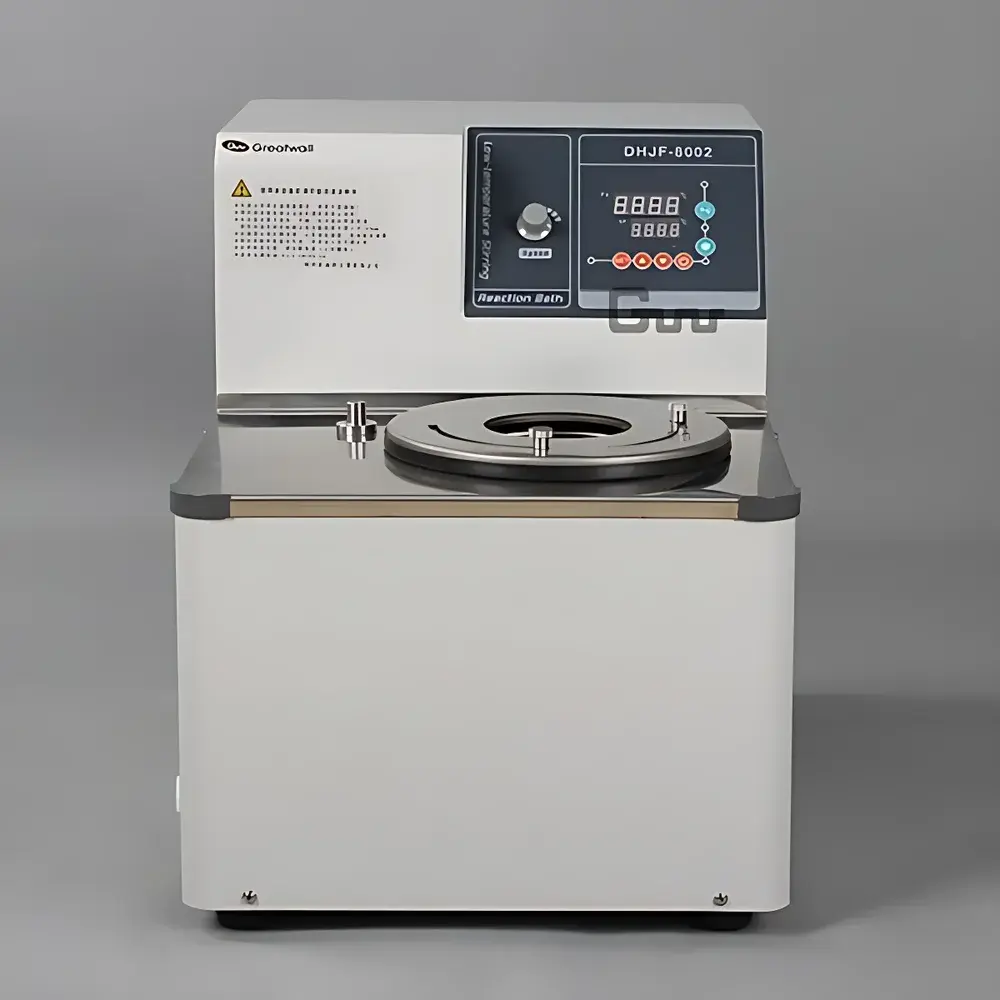
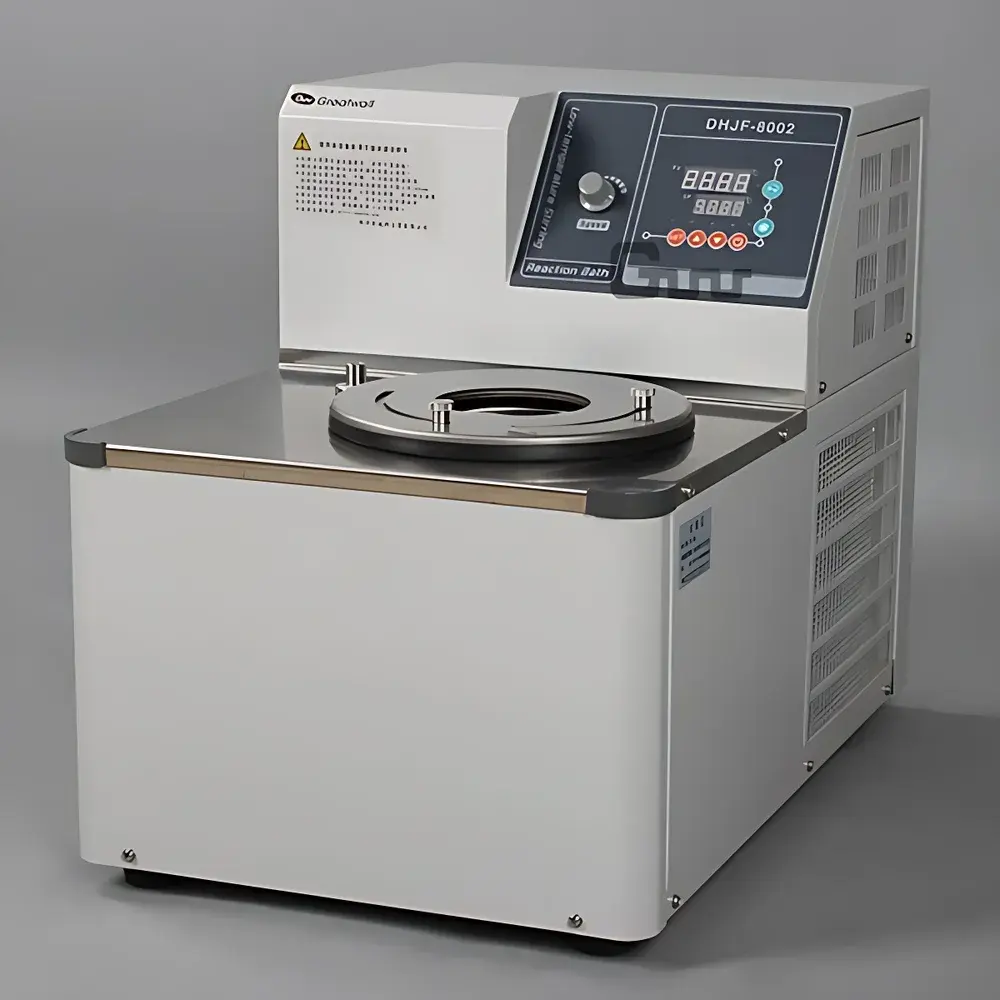
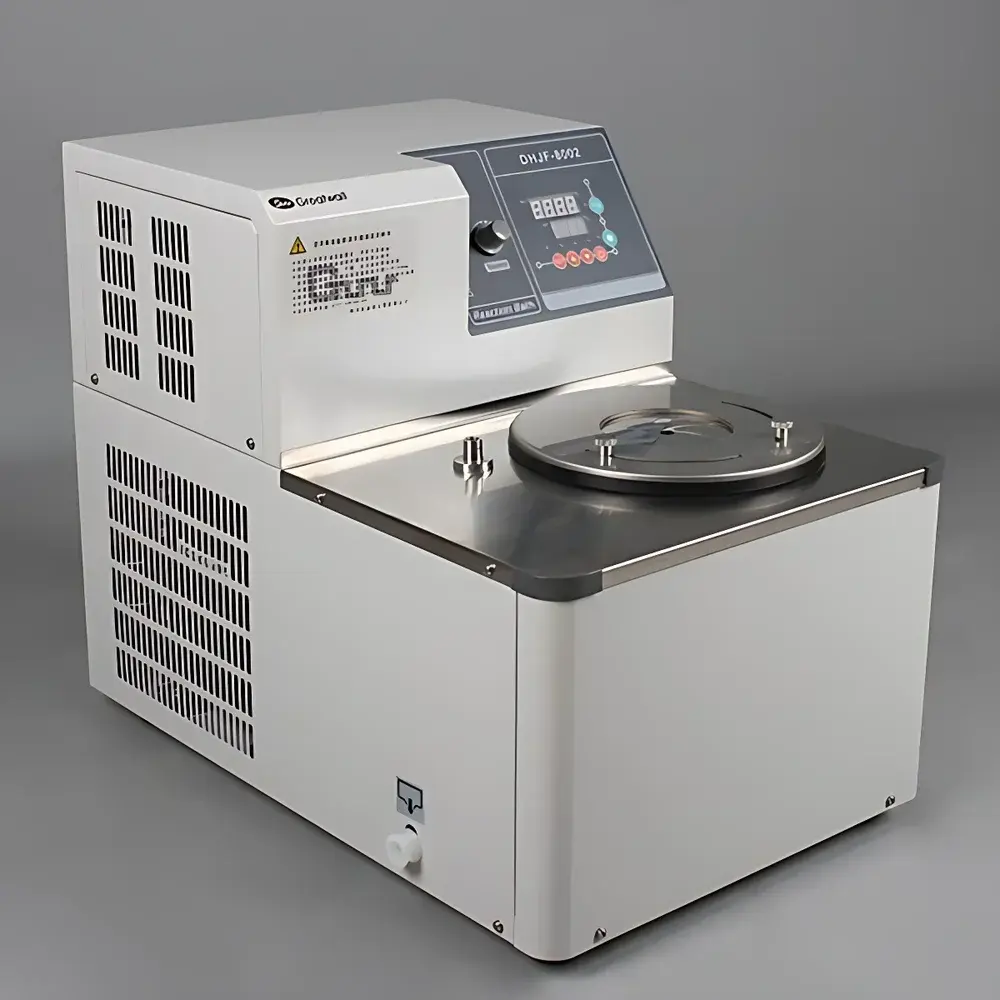
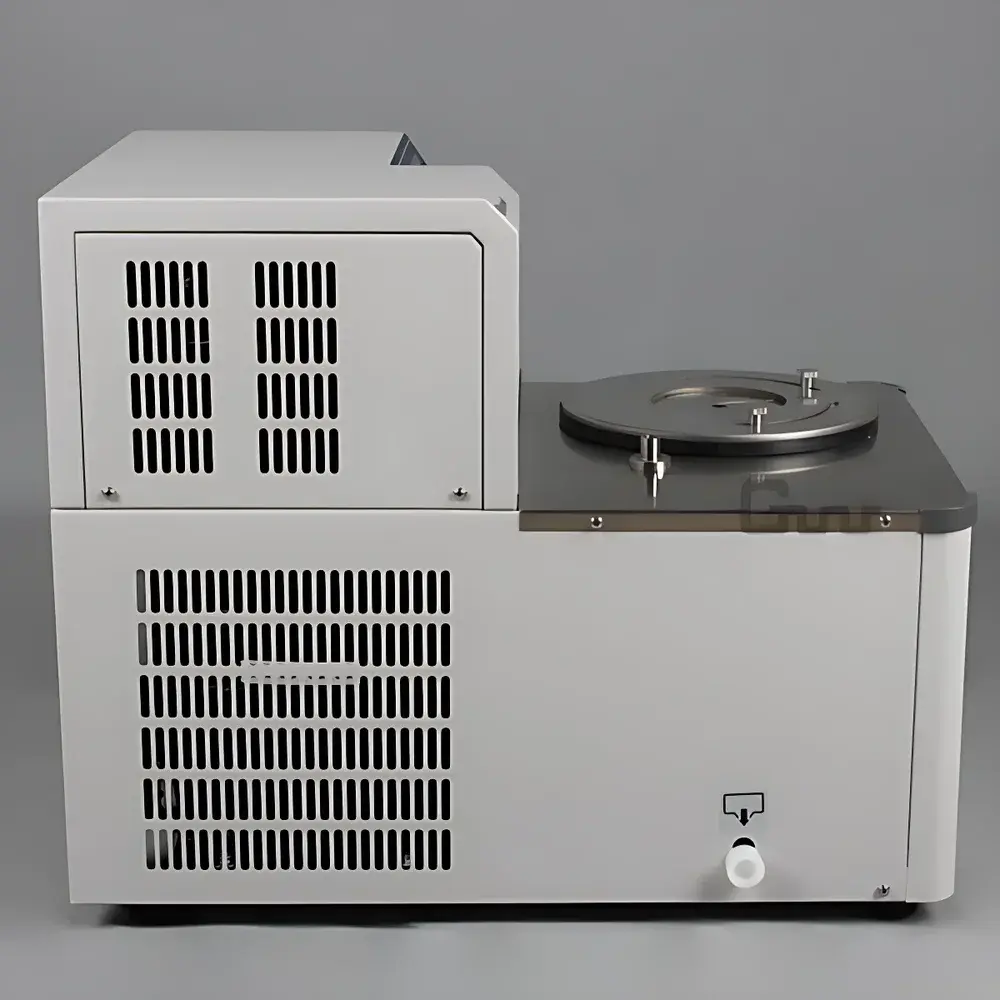
The Great Wall DHJF-8002W Low-Temperature Circulating Bath
| Brand | The Great Wall |
|---|---|
| Origin | Henan, China |
| Manufacturer Type | Authorized Distributor |
| Country of Origin | China |
| Model | DHJF-8002W |
| Cooling Capacity | 60–200 W |
| Temperature Range | −80 °C to +10 °C |
| Temperature Stability | ±2 °C |
| Bath Volume | 2 L |
| Bath Material | 304 Stainless Steel |
| Stirring | Internal Magnetic Stirrer (50 W, 100–1000 rpm) |
| Power Supply | 220–240 V~, 50 Hz |
| Total Power Consumption | 1024 W |
| Refrigerants | R404A / R23 |
| Condenser Type | Air-Cooled Finned-Tube with Oxygen-Free Copper Coiled Tube |
| Evaporator Design | Immersed Coil-Type in Reservoir |
| Control System | Digital PID Controller with Chinese UI |
| Safety Protections | Delay Start, Leakage Current Protection, Overcurrent & Overtemperature Protection |
| Ambient Operating Conditions | 5–35 °C, ≤70% RH |
| Dimensions (L×W×H) | 450 × 380 × 860 mm |
| Net Weight | 68 kg |
Overview
The Great Wall DHJF-8002W Low-Temperature Circulating Bath is an engineered solution for precise thermal control in laboratory-scale chemical synthesis, cryogenic reaction monitoring, and low-temperature material testing. It operates on a cascade refrigeration principle—employing two independent refrigeration circuits (R404A for pre-cooling and R23 for deep cooling)—to achieve stable operation down to −80 °C without liquid nitrogen dependency. Unlike single-stage systems, this architecture delivers improved thermodynamic efficiency, reduced compressor cycling, and enhanced long-term reliability under sustained sub-zero loads. The bath integrates a fully immersed coil-type evaporator directly within the 304 stainless steel reservoir, eliminating risk of evaporator rupture during accidental freezing of the heat transfer medium (e.g., ethanol/water or silicone oil mixtures). Its air-cooled condenser uses oxygen-free copper finned tubing with proprietary mechanical expansion bonding, ensuring high heat transfer coefficients (>350 W/m²·K), compact footprint, and serviceability without brazing tools.
Key Features
- Cascade refrigeration system enabling continuous operation from −80 °C to +10 °C with ±2 °C stability over 24-hour cycles
- Hermetically sealed Secop (formerly Danfoss) reciprocating compressors—rated for >20,000 hours MTBF and optimized for low-noise (<58 dB(A)) laboratory environments
- Integrated magnetic stirrer (50 W, 100–1000 rpm) with adjustable torque limiting to prevent motor stall during viscous media handling
- Digital PID temperature controller with real-time display, programmable ramp/soak profiles, and manual override mode
- Multi-layer safety architecture: compressor delay restart (3 min), Class II insulation leakage detection, dual-stage thermal cutoffs (evaporator & compressor windings), and electronic overcurrent protection
- Compact air-cooled design eliminates external water supply requirements—compliant with ISO 14644-1 Class 8 cleanroom-compatible installation
Sample Compatibility & Compliance
The DHJF-8002W accommodates standard laboratory glassware up to 500 mL capacity via its Φ140 mm open-top reservoir (internal dimensions: Φ160 × 105 mm depth). The 304 stainless steel bath vessel resists corrosion from common cryogenic solvents including methanol, acetone, ethylene glycol/water blends, and low-viscosity silicone oils (cSt < 50). All electrical components meet IEC 61010-1:2010 Edition 3 safety standards for laboratory equipment. While not certified to UL/CSA or CE for direct EU market placement, the unit conforms to GB/T 20975.1–2022 (Chinese national standard for low-temperature equipment) and supports GLP-compliant workflows when paired with validated external data loggers. No hazardous substance declarations (RoHS/REACH) are provided by the manufacturer; users requiring full regulatory documentation should request material declarations from The Great Wall’s technical support team.
Software & Data Management
The DHJF-8002W operates as a standalone instrument with no native PC connectivity or firmware-upgradable software. Temperature setpoints, ramp rates, and hold durations are configured manually via front-panel membrane keys and confirmed through the 4-digit LED display. For traceable recordkeeping, laboratories may integrate third-party USB or RS-485 data loggers (e.g., Omega OM-DAQPRO-5300 or Testo 176 T4) using the analog 0–5 V output signal (±0.5% FS accuracy) available at the rear I/O terminal block. This configuration satisfies basic FDA 21 CFR Part 11 requirements for audit trails when combined with validated logging software and user access controls. No embedded audit trail, electronic signature, or password-protected parameter locking is implemented in the base controller.
Applications
- Low-temperature Grignard and organolithium reactions requiring strict thermal control below −60 °C
- Cryogenic crystallization studies of pharmaceutical intermediates per USP <1058> guidance
- Calibration of infrared spectrometers and FTIR detectors across extended cold operating ranges
- Thermal cycling validation of polymer-based medical device components (ISO 10993-12)
- Pre-cooling of GC injectors and detector zones in ambient-uncontrolled labs
- Material property testing—including tensile strength and impact resistance—per ASTM D746 and ISO 974
FAQ
What types of heat transfer fluids are compatible with the DHJF-8002W?
Ethanol/water mixtures (e.g., 30/70 v/v), methanol, acetone, and low-viscosity silicone oils (≤50 cSt at 25 °C) are verified for use. Avoid glycerol-water solutions above 20% concentration due to increased viscosity-induced pump cavitation risk.
Can the unit maintain −80 °C while stirring at 1000 rpm?
Yes—thermal load from the internal stirrer is factored into the 200 W maximum cooling capacity specification. However, sustained operation at both extremes reduces compressor duty cycle life; we recommend limiting simultaneous −80 °C + 1000 rpm use to ≤90 minutes per session.
Is remote monitoring possible without hardware modification?
No. The controller lacks Ethernet, Wi-Fi, or Bluetooth interfaces. Integration requires external analog-to-digital acquisition hardware connected to the 0–5 V process output.
Does the unit include a drain valve for fluid replacement?
Yes—a brass quick-release drain valve is located at the lowest point of the reservoir housing, accessible after removing the bottom service panel.
What maintenance intervals are recommended for optimal performance?
Compressor oil inspection every 12 months; condenser coil cleaning with compressed air every 3 months in dusty environments; refrigerant charge verification every 24 months via manifold gauge set and superheat/subcooling analysis.



