
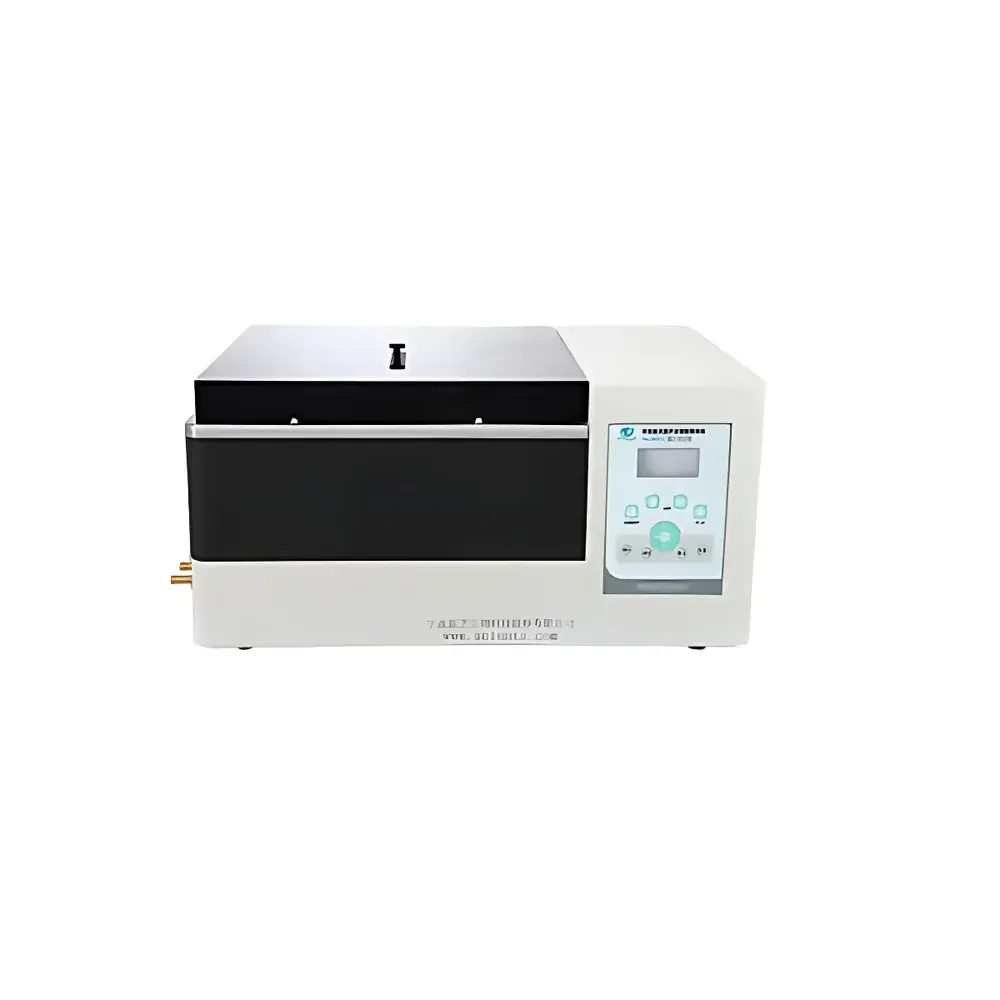
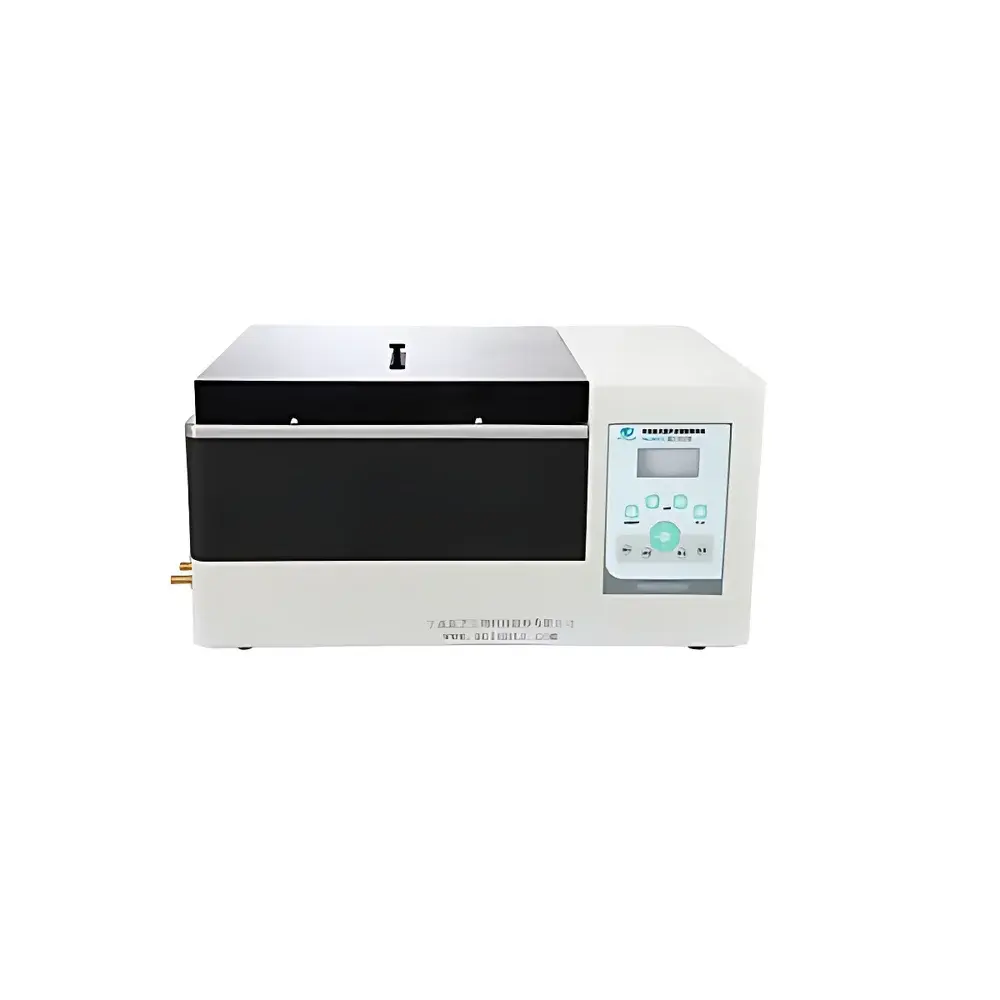
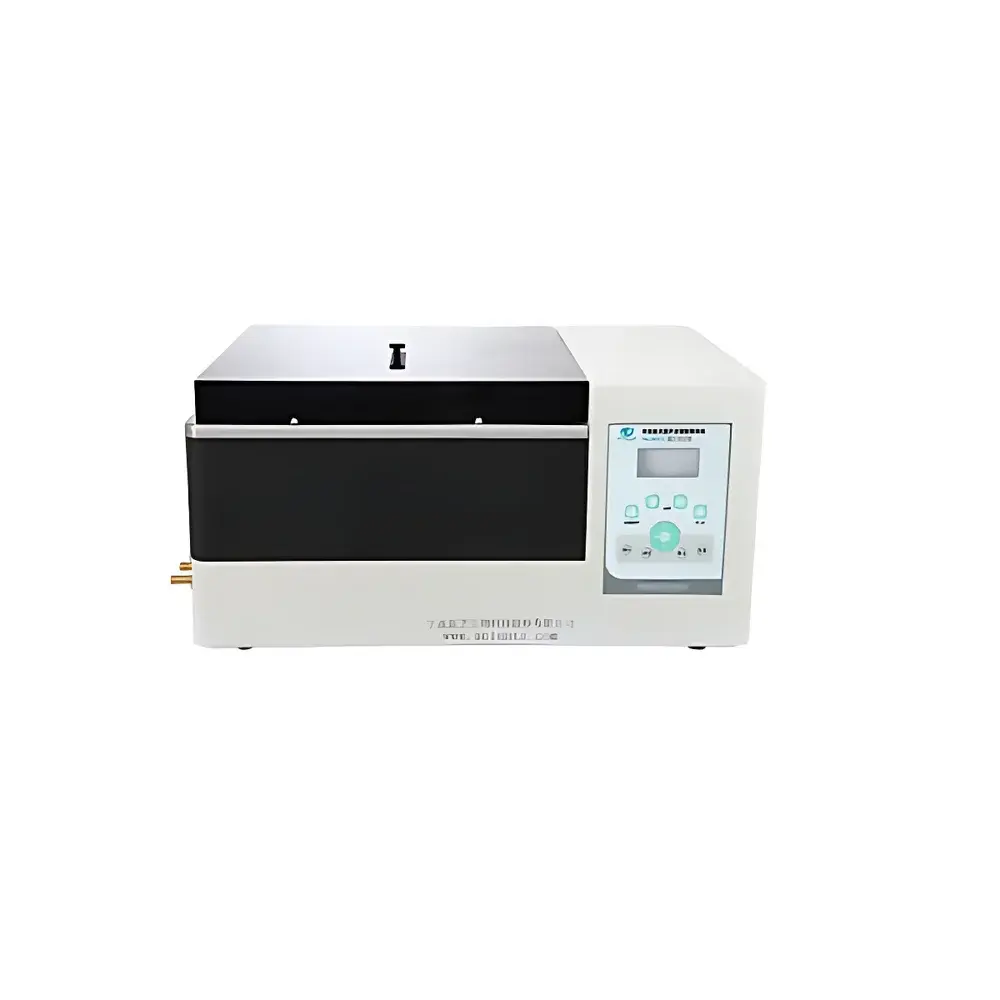
Ningbo Scientz SCIENTZ-08-II Non-Contact Ultrasonic Cell Disruptor
| Brand | Scientz |
|---|---|
| Origin | Zhejiang, China |
| Model | SCIENTZ-08-II |
| Instrument Type | Non-contact ultrasonic cell disruptor (cup-horn system) |
| Operating Frequency | 40 kHz |
| Adjustable Ultrasonic Power | 1800 W |
| Sample Volume Range | 5 µL – 15 mL |
| Sample Capacity | 1–16 tubes |
| Power Adjustment Range | 1–99% |
| Timer Range | 1–999 min |
| Duty Cycle | 0.1–99.9% |
| Tank Volume | 1.5 L |
| Compatible Vessel Formats | 1–2 mL × 16 wells, 5 mL × 8 wells, 10–15 mL × 8 wells |
| Temperature Monitoring | Yes |
| Input Voltage | 220/110 V ±0.5%, 50/60 Hz |
Overview
The Ningbo Scientz SCIENTZ-08-II Non-Contact Ultrasonic Cell Disruptor is an engineered solution for controlled, reproducible, and contamination-free lysis of biological cells and subcellular structures using focused ultrasonic energy in a sealed, water-bath–coupled configuration. Unlike probe-based sonicators that transmit acoustic energy directly into samples via immersed titanium horns—posing risks of metal shedding, cross-contamination, and thermal heterogeneity—the SCIENTZ-08-II employs a cup-horn transducer design. In this architecture, ultrasonic vibrations are generated externally and transmitted through the walls of sealed microcentrifuge or conical tubes immersed in a temperature-regulated water bath. This non-invasive coupling enables uniform cavitation field distribution across multiple samples simultaneously, making it particularly suitable for chromatin shearing in ChIP-seq workflows, epigenetic sample preparation, and high-throughput nucleic acid fragmentation where consistency, sterility, and low sample loss are critical.
Key Features
- Non-contact operation: Eliminates physical probe contact with samples, preventing metal particulate contamination, cross-sample carryover, and degradation of sensitive biomolecules—especially essential when handling pathogenic organisms (e.g., Mycobacterium spp., viral lysates) or precious clinical specimens.
- Multi-sample parallel processing: Accommodates up to 16 tubes per run in standardized formats (1–2 mL × 16, 5 mL × 8, or 10–15 mL × 8), significantly increasing throughput while maintaining inter-sample comparability.
- Precision parameter control: Independent adjustment of ultrasonic power (1–99%), duty cycle (0.1–99.9%), and timing (1–999 min) allows method optimization for diverse cell types—including yeast, mammalian cells, bacteria, and plant tissues—without manual intervention during operation.
- Thermal management integration: Built-in temperature monitoring and compatibility with external recirculating chillers enable isothermal processing between 4 °C and 10 °C, minimizing heat-induced DNA denaturation, protein aggregation, or RNase activation.
- Rotating sample holder: Motorized rotation ensures homogeneous exposure of tube surfaces to the acoustic field, reducing standing-wave artifacts and improving fragment size distribution uniformity—critical for NGS library preparation.
- Micro-volume capability: Validated performance down to 5 µL sample volume supports applications involving rare primary cells, limited biopsy material, or single-cell derived lysates.
Sample Compatibility & Compliance
The SCIENTZ-08-II is compatible with standard polypropylene microcentrifuge tubes (1.5–2 mL), cryovials (5 mL), and conical tubes (10–15 mL), eliminating the need for proprietary consumables. Its closed-system operation meets biosafety Level 2 (BSL-2) containment requirements for handling moderate-risk agents, and its non-invasive design aligns with Good Laboratory Practice (GLP) principles for traceable, auditable sample preparation. While not certified to ISO/IEC 17025, the instrument’s programmable parameters support SOP-driven workflows compliant with CLIA, CAP, and FDA 21 CFR Part 11 when integrated with validated electronic lab notebook (ELN) systems and audit-trail-enabled software.
Software & Data Management
The SCIENTZ-08-II operates via an embedded digital interface with real-time display of setpoints and active parameters (power %, elapsed time, temperature). Though it lacks native network connectivity or cloud synchronization, its deterministic control logic enables full protocol replication across instruments. Users may document settings manually or integrate with third-party laboratory information management systems (LIMS) via screen capture or external timer logging. For regulated environments, validation packages—including IQ/OQ documentation templates and calibration checklists—are available upon request from authorized Scientz distributors.
Applications
- Chromatin immunoprecipitation (ChIP) and ChIP-seq: Controlled fragmentation of crosslinked chromatin to 200–700 bp fragments with narrow size distribution.
- Next-generation sequencing (NGS) library prep: Shearing of genomic DNA, cfDNA, and FFPE-derived DNA prior to adapter ligation.
- Membrane protein extraction: Gentle disruption of Gram-negative bacteria and eukaryotic cells while preserving integral membrane domain integrity.
- Subcellular fractionation: Isolation of nuclei, mitochondria, or exosomes without probe-induced organelle damage.
- Emulsification and nanoparticle dispersion: Homogenization of lipid nanoparticles (LNPs), liposomes, and polymeric micelles in formulation development.
- Activation of inert biochemical reactions: Accelerating enzymatic digestion or chemical derivatization under controlled acoustic energy input.
FAQ
Is the SCIENTZ-08-II compatible with temperature-controlled operation?
Yes—integrated temperature sensing and support for external recirculating chillers allow sustained operation between 4 °C and 10 °C.
Can I process different tube sizes simultaneously in one run?
No—each run requires uniform vessel geometry and fill volume to ensure consistent acoustic coupling; mixing formats within a single batch is not recommended.
What maintenance is required for long-term reliability?
Routine cleaning of the stainless-steel tank and periodic inspection of the transducer coupling surface are sufficient; no consumable parts or recalibration are required under normal use.
Does the instrument meet electromagnetic compatibility (EMC) standards for laboratory deployment?
It complies with CE marking requirements (EN 61326-1:2013) for electromagnetic emissions and immunity in laboratory environments.
How is reproducibility ensured across different operators or laboratories?
By standardizing power %, duty cycle, time, temperature, and rotor speed—parameters that are fully user-defined and repeatable—inter-operator variability is minimized when protocols are documented and followed precisely.




