
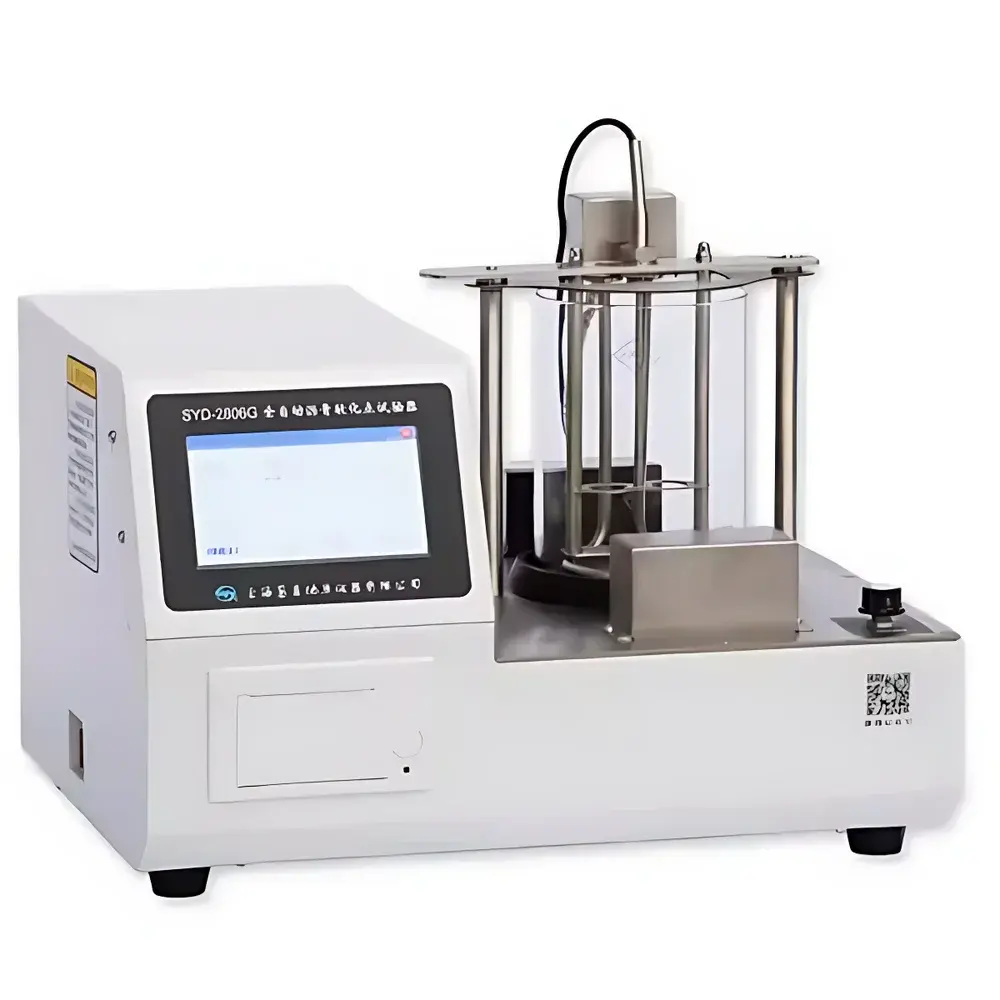
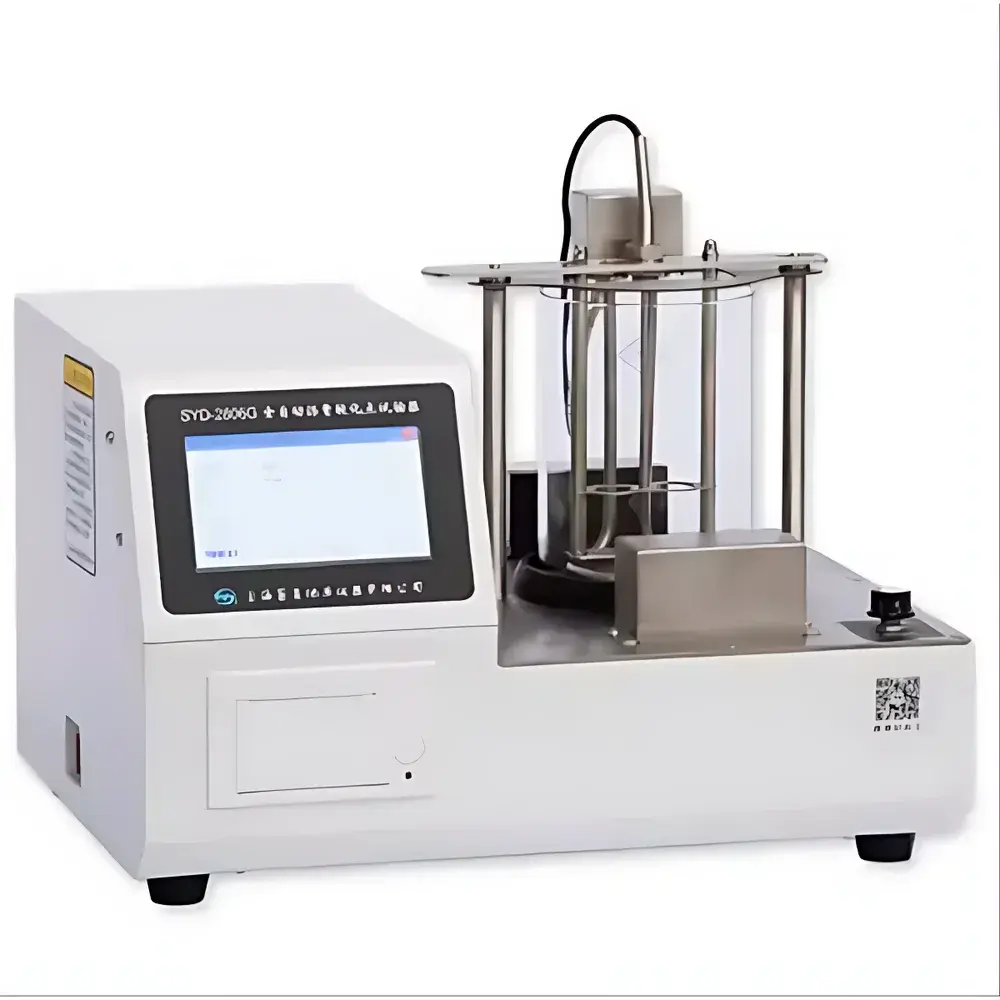
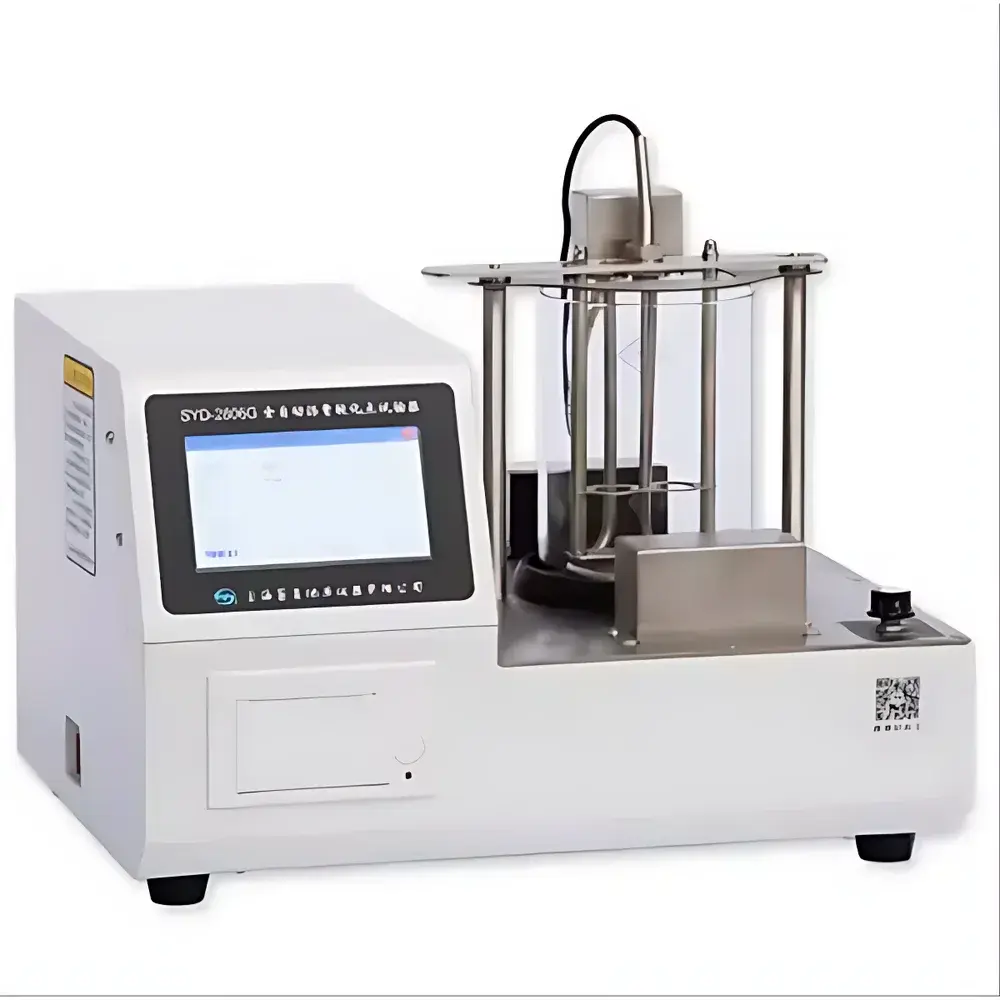
Changji Instruments SYD-2806G Bitumen Softening Point Tester (Ring-and-Ball Method)
| Brand | Changji Instruments |
|---|---|
| Origin | Shanghai, China |
| Model | SYD-2806G |
| Power Supply | AC 220 V ±10%, 50 Hz |
| Max. Power Consumption | ≤700 W |
| Temperature Resolution | 0.1 °C |
| Measurement Range | 5–80 °C (for samples with softening point ≤80 °C) |
| Heating Rate | (5.0 ±0.5) °C/min (activated automatically after 3 min from test initiation) |
| Stirring | Magnetic stirring, 0–300 rpm |
| Beaker Capacity | ~1000 mL |
| Display | Touch-enabled LCD panel |
| Communication Interface | RS-232C |
| Operating Environment | 15–35 °C, RH ≤85% |
| Dimensions (L×W×H) | 400 × 300 × 250 mm |
Overview
The Changji Instruments SYD-2806G Bitumen Softening Point Tester is a precision laboratory instrument engineered for the determination of the softening point of bituminous materials using the standardized ring-and-ball method. It operates in strict accordance with key international and national specifications—including ASTM D36 (Standard Test Method for Softening Point of Bitumen (Ring-and-Ball Apparatus)), ISO 4625:1980 (Petroleum products — Bitumen and bituminous binders — Determination of softening point — Ring-and-ball method), and Chinese standards GB/T 4507 and JTG E20-2011 (T 0606-2011). The device employs controlled linear heating, microprocessor-based temperature regulation, and real-time thermal monitoring to ensure compliance with the prescribed ramp rate of (5.0 ±0.5) °C/min—initiated precisely three minutes after test commencement. Its dual-sample configuration enables parallel evaluation of two specimens under identical thermal conditions, enhancing throughput and inter-sample comparability in quality control and R&D environments.
Key Features
- Microprocessor-controlled heating system with automatic ramp initiation and real-time deviation correction to maintain nominal heating rate within ±0.5 °C/min tolerance.
- Dual independent test stations with calibrated steel ball assemblies and brass rings conforming to dimensional requirements specified in ASTM D36 and GB/T 4507.
- High-stability magnetic stirrer (0–300 rpm) ensuring uniform heat distribution throughout the glycerin or water bath medium (1000 mL capacity).
- Integrated touch-enabled LCD display providing simultaneous visualization of real-time temperature, elapsed time, and status indicators for both test channels.
- RS-232C serial interface supporting bidirectional communication with external PCs for automated data logging, report generation, and integration into LIMS or QA/QC workflows.
- Compact benchtop design (400 × 300 × 250 mm) optimized for space-constrained laboratories while maintaining full compliance with safety and operational environmental limits (15–35 °C ambient, ≤85% RH).
Sample Compatibility & Compliance
The SYD-2806G is validated for use with road-grade petroleum bitumen, coal tar pitch, cutback and emulsified bitumens, and modified asphalt binders containing polymer additives (e.g., SBS, EVA). It accommodates standard sample preparation per ASTM D36 and JTG E20-2011 protocols, including proper ring filling, leveling, cooling cycle, and ball placement. All mechanical components—including the borosilicate glass beaker, stainless-steel support frame, and precision-machined brass rings—meet dimensional and material traceability requirements outlined in ISO/IEC 17025-accredited calibration practices. The instrument’s temperature measurement system is traceable to NIST-certified reference thermometers, supporting audit readiness for GLP, GMP, and ISO 9001-compliant laboratories.
Software & Data Management
While the SYD-2806G operates as a standalone unit with embedded firmware, its RS-232C port enables seamless integration with third-party laboratory software platforms. Users may configure custom data acquisition intervals, assign sample IDs, timestamp results, and export ASCII-formatted logs compatible with Excel, LabArchives, or ELN systems. Optional companion software (available separately) provides automated pass/fail evaluation against specification limits (e.g., AASHTO M226, EN 1427), statistical process control (SPC) charting, and 21 CFR Part 11–compliant electronic signature and audit trail functionality when deployed on validated Windows-based hosts.
Applications
This tester serves critical roles across asphalt production QC labs, highway construction material testing centers, pavement engineering research groups, and academic departments specializing in civil infrastructure materials. Typical applications include incoming raw material verification, batch release testing of oxidized or straight-run bitumens, performance grading (PG) binder characterization prior to RTFO and PAV aging, and comparative evaluation of bio-modified or recycled asphalt binders. Its reproducibility supports ASTM repeatability criteria (≤0.5 °C for duplicate determinations), making it suitable for interlaboratory round-robin studies and accreditation assessments.
FAQ
What temperature medium is required for testing above 80 °C?
Glycerin or silicone oil must be used as the heating medium for softening point determinations exceeding 80 °C, in accordance with ASTM D36 Section 6.2.
Does the instrument support automatic pass/fail judgment against specification limits?
Yes—when connected to optional PC software, users can define upper/lower specification thresholds and generate immediate compliance flags with traceable result records.
Is calibration certificate included with shipment?
A factory calibration report (traceable to national standards) is provided; however, field calibration using certified reference thermometers and NIST-traceable weights is recommended prior to first use and at scheduled intervals per ISO/IEC 17025.
Can the SYD-2806G be operated in a fume hood?
Yes—the unit is designed for ambient operation and emits no hazardous vapors during normal use; however, appropriate ventilation is advised when using glycerin above 150 °C due to potential thermal decomposition.
What maintenance is required for long-term accuracy?
Routine cleaning of the beaker and ring assemblies after each test, periodic verification of stirrer torque and heater response time, and annual verification of temperature sensor linearity are recommended per the manufacturer’s maintenance schedule.




