
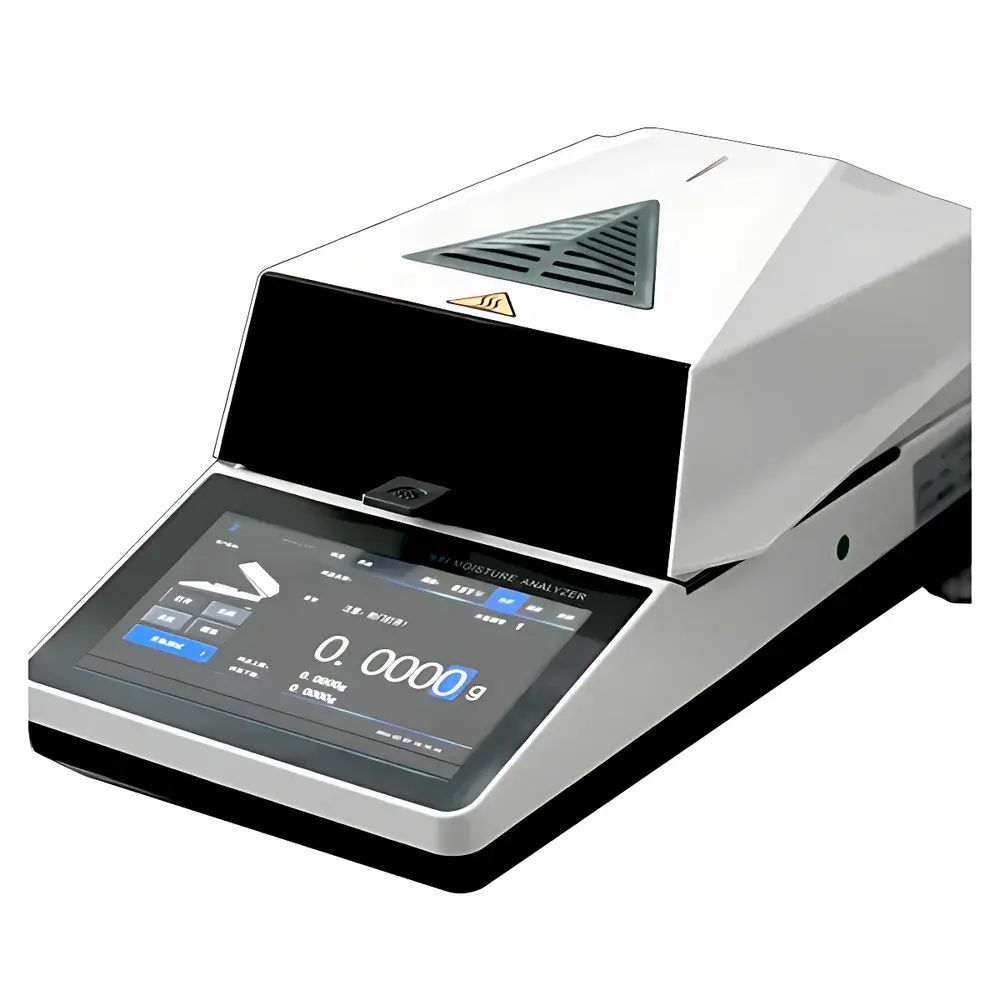
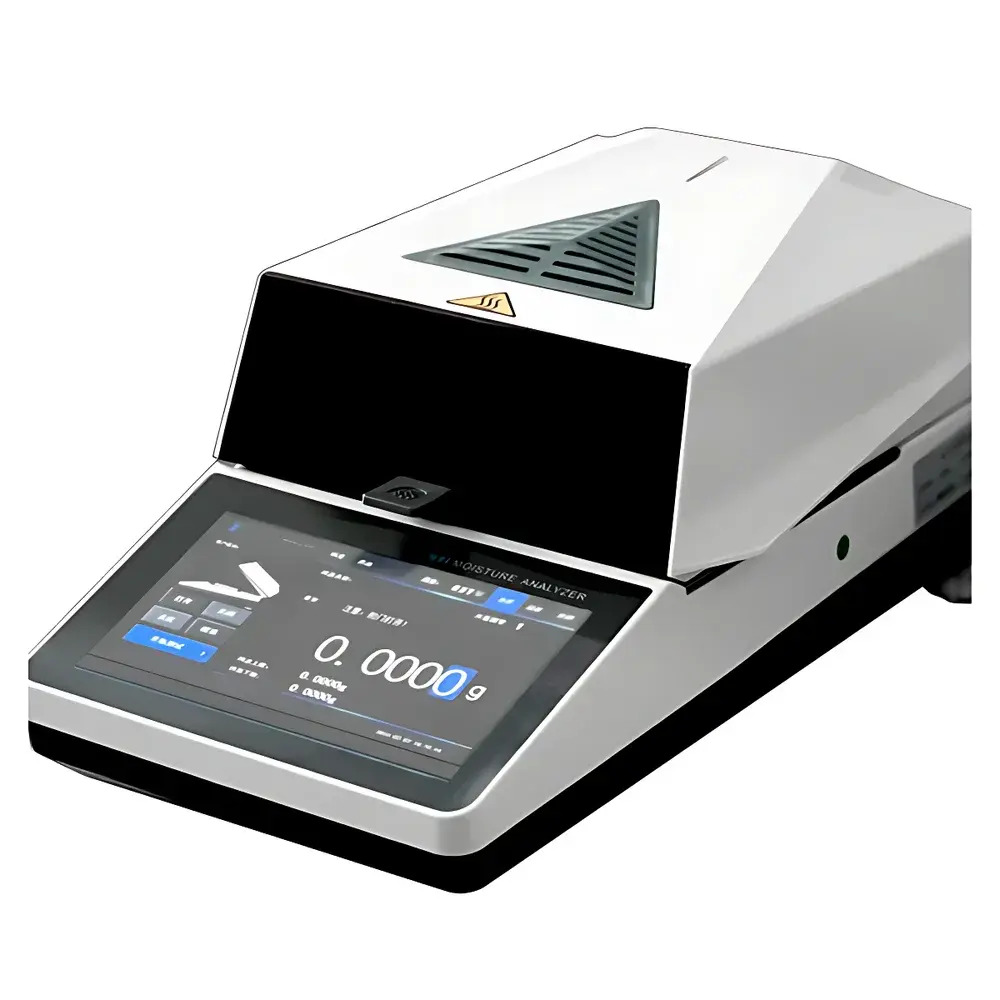
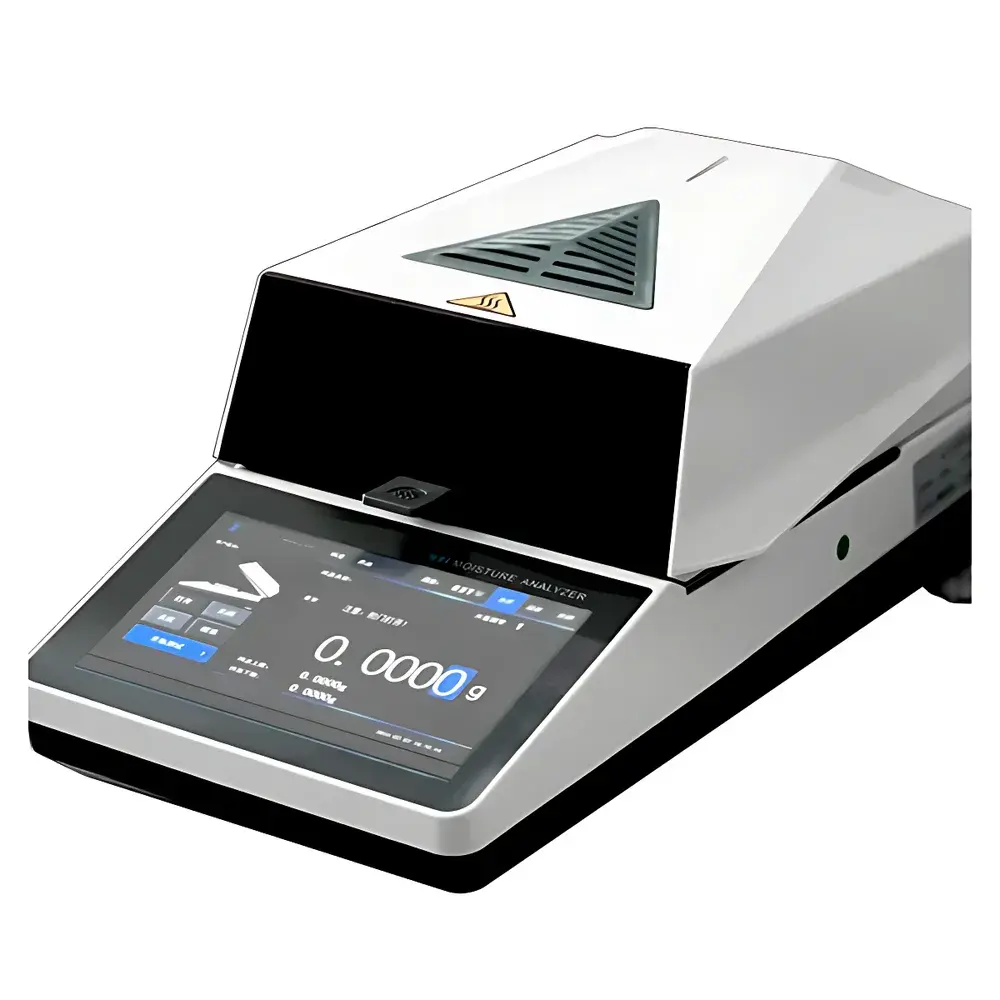
DELEITE DMS-4KEA Halogen Moisture Analyzer
| Brand | DELEITE |
|---|---|
| Origin | Shanghai, China |
| Manufacturer Type | Authorized Distributor |
| Product Origin | Domestic (China) |
| Model | DMS-4KEA |
| Price | USD 2,150 (FOB Shanghai) |
| Heating Method | Halogen Lamp |
| Weighing Range | 0–110 g |
| Weighing Accuracy | ±0.001 g |
| Moisture Determination Range | 0.001–100% |
| Temperature Control Range | 40–200 °C |
| Typical Measurement Time | ≤8 min |
| Display | 7-inch capacitive touchscreen |
| Language Support | English & Chinese |
| Built-in Functions | Auto-tare, one-touch preheat, temperature calibration, label printing, silent cooling fan, dual-drive automatic door opening |
| Optional Connectivity | Bluetooth 5.0 & Wi-Fi 802.11 b/g/n |
| User Management | Administrator & operator accounts with password protection |
| Internal Calibration | Scheduled interval setting with audit trail |
| Compliance | ASTM D4052, ISO 1183, USP <921>, GB/T 29246–2012 |
Overview
The DELEITE DMS-4KEA Halogen Moisture Analyzer is an industrial-grade thermal gravimetric instrument engineered for rapid, precise moisture content determination across diverse solid and semi-solid matrices. It operates on the principle of loss-on-drying (LOD), wherein a halogen lamp delivers uniform, controllable radiant heating to accelerate moisture evaporation while an electromagnetic force-compensation balance continuously monitors mass loss in real time. This combination ensures high reproducibility (RSD <0.5% for repeat measurements under standardized conditions), minimal thermal lag, and robust performance across ambient temperature fluctuations. Designed for routine QC/QA laboratories, the DMS-4KEA meets functional requirements aligned with pharmacopeial methods—including USP “Water Determination” and EP 2.5.12—while maintaining full compatibility with GLP-compliant documentation workflows.
Key Features
- Halogen lamp heating system delivering fast thermal response (reaching setpoint in <15 s) and stable temperature distribution across the sample pan surface
- High-resolution electromagnetic balance with 0.001 g readability and 110 g maximum capacity, integrated with automatic drift compensation
- 7-inch capacitive touchscreen interface supporting bilingual operation (English/Chinese) and intuitive icon-driven navigation
- Dual-drive motorized door mechanism enabling hands-free opening/closing—reducing operator exposure and contamination risk during high-throughput workflows
- Silent axial cooling fan (≤42 dB[A]) ensuring low-noise operation in shared laboratory environments
- Onboard label printer supporting customizable templates for sample ID, batch number, date/time stamp, and moisture result
- Configurable internal calibration schedule with timestamped audit log, accessible only by administrator-level credentials
- Role-based user access control: separate administrator and operator profiles with password enforcement and session timeout
Sample Compatibility & Compliance
The DMS-4KEA accommodates samples ranging from fine powders (e.g., active pharmaceutical ingredients, herbal granules) to coarse particulates (e.g., cereal grains, polymer pellets) and viscous pastes (e.g., dairy concentrates, adhesives). Its adjustable temperature range (40–200 °C) allows method optimization per matrix—low-temperature drying for thermolabile botanicals, higher setpoints for hygroscopic salts or mineral fillers. The instrument supports compliance with multiple regulatory frameworks: ASTM D4052 (for petroleum products), ISO 1183 (plastics), GB/T 29246–2012 (Chinese national standard for feed analysis), and USP Category I and II procedures. All measurement data—including raw weight curves, endpoint detection logic, and calibration records—are timestamped and stored locally with immutable metadata for audit readiness.
Software & Data Management
Data export is supported via USB flash drive (CSV format) or optional wireless modules (Bluetooth 5.0 for point-to-point pairing with mobile devices; Wi-Fi 802.11 b/g/n for integration into local LAN-based LIMS or ELN systems). The embedded firmware maintains a secure local database retaining ≥10,000 test records with full traceability: operator ID, method name, start/end timestamps, final moisture %, and deviation flags (e.g., “overheating warning”, “pan imbalance”). Audit trail functionality complies with FDA 21 CFR Part 11 requirements when used in conjunction with external electronic signature validation—no proprietary software installation required. Firmware updates are delivered via signed .bin files verified through SHA-256 checksum validation.
Applications
- Pharmaceutical manufacturing: moisture verification of excipients, tablets, lyophilized powders, and packaging desiccants per ICH Q5C stability guidelines
- Food & agriculture: rapid QC of flour, coffee beans, spices, animal feed, and dried fruits to ensure shelf-life compliance and microbial safety thresholds
- Chemical & polymer industries: monitoring residual solvent in resins, moisture in catalyst carriers, and hydration state of silica gels
- Building materials: quantification of free water in gypsum board, cement additives, and fireproofing coatings prior to curing
- Academic research: method development for novel biomass drying kinetics, comparative studies of LOD vs. Karl Fischer titration
FAQ
What standards does the DMS-4KEA comply with for regulatory submissions?
It supports method execution consistent with USP , EP 2.5.12, ASTM D4052, and ISO 1183. Full audit trails and electronic records meet ALCOA+ principles when deployed in validated environments.
Can the instrument be integrated into a networked laboratory information management system (LIMS)?
Yes—via optional Wi-Fi module using standard TCP/IP protocols; CSV exports also enable manual ingestion into most LIMS platforms.
Is internal calibration traceable to national metrology institutes?
The built-in calibration function uses certified weights (supplied separately); users must maintain external traceability documentation per ISO/IEC 17025 requirements.
What maintenance is required beyond routine cleaning?
Annual verification of temperature uniformity and balance linearity is recommended; no consumables other than standard calibration weights and thermal shielding gaskets.
Does the device support method validation protocols (e.g., specificity, accuracy, precision)?
Yes—the instrument logs all raw weight-time data points, enabling retrospective evaluation of endpoint detection robustness, repeatability (n≥6), and intermediate precision across operators and days.






