
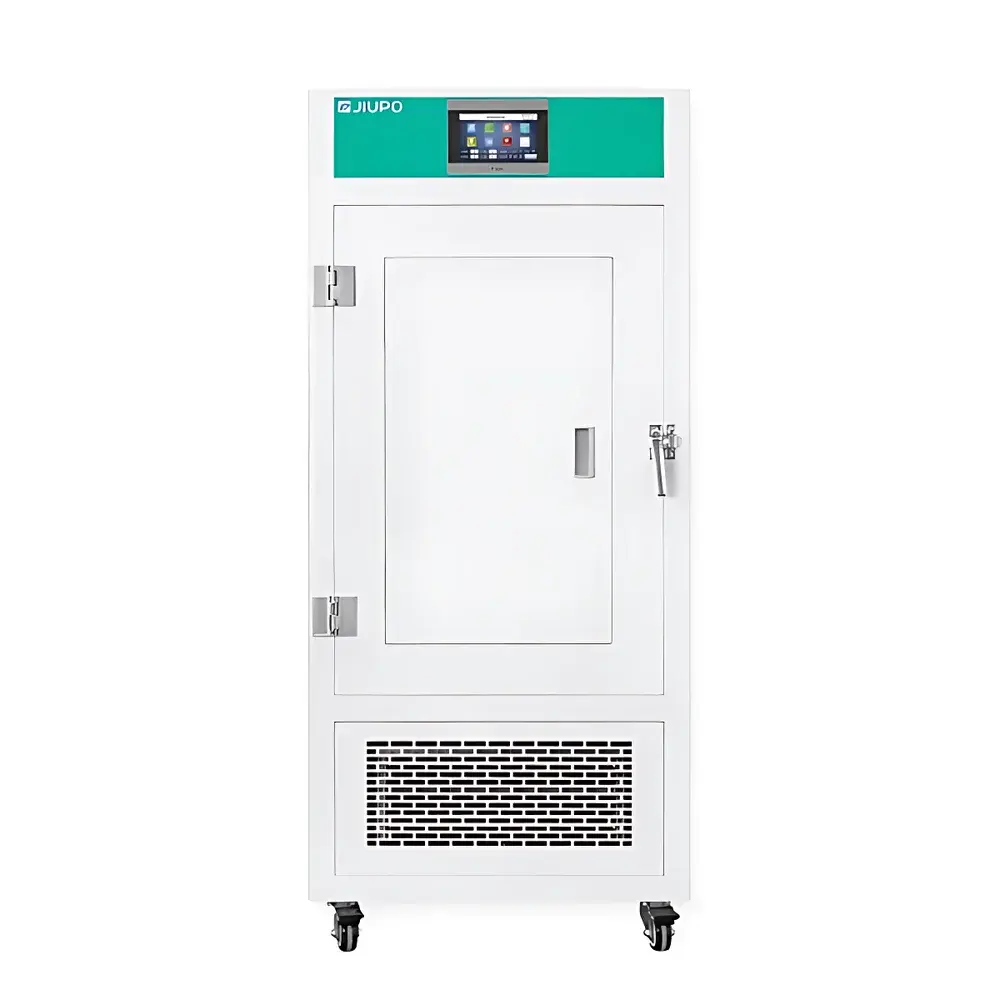
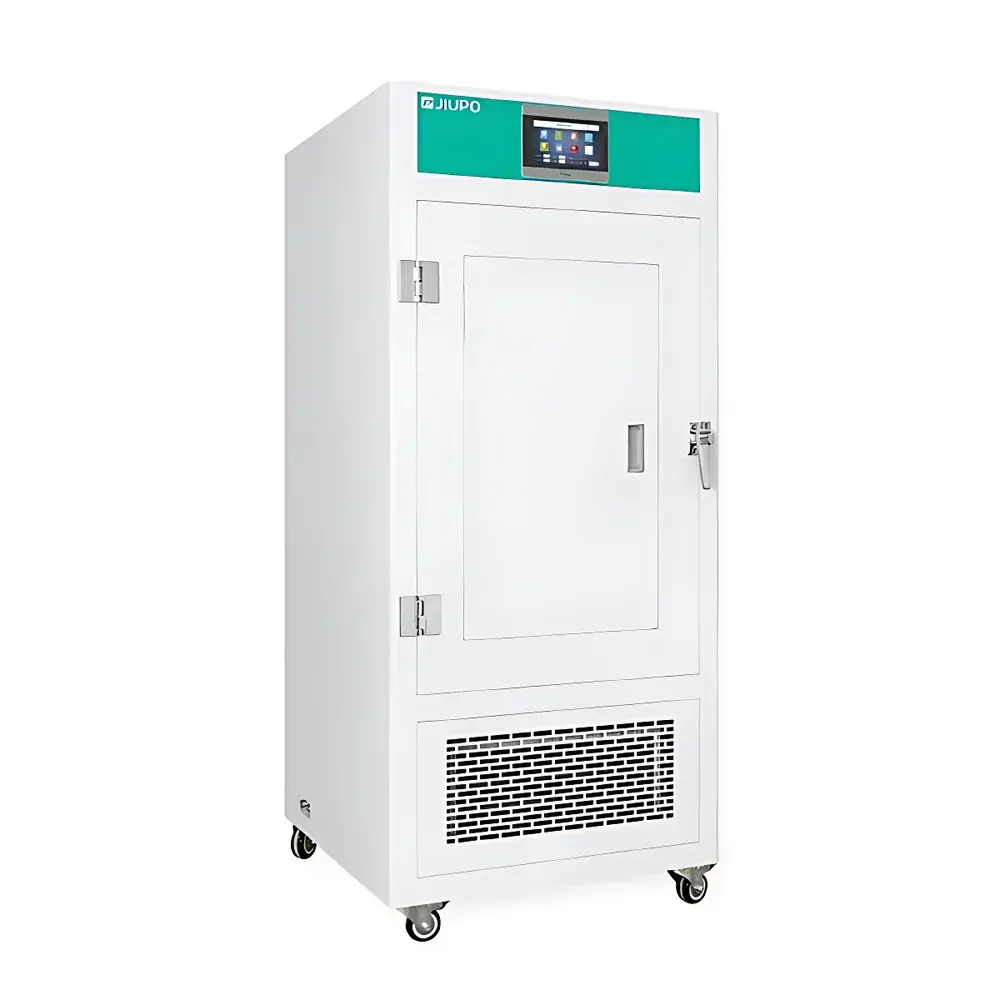
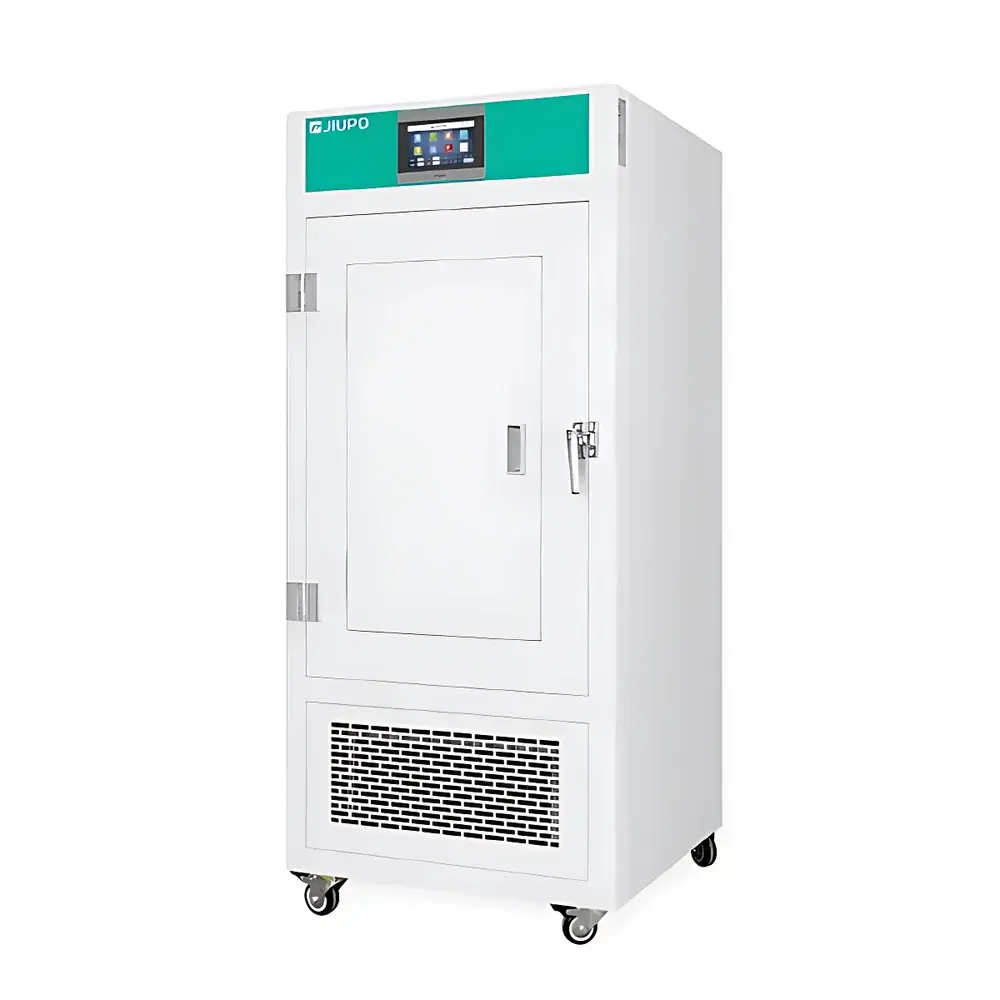
JIUPO TCC500 Plant Tissue Culture Incubator
| Brand | JIUPO |
|---|---|
| Origin | Fujian, China |
| Manufacturer Type | Direct Manufacturer |
| Product Category | Domestic |
| Model | TCC500 |
| Capacity | 510 L (Nominal 500–1000 L Range) |
| Temperature Range | 3–45 °C (Optional Low-Temp Version: −10–45 °C) |
| Internal Dimensions (W×D×H) | 816 × 578 × 1122 mm |
| External Dimensions (W×D×H) | 900 × 800 × 1940 mm |
| Temperature Uniformity | ±2 °C |
| Temperature Fluctuation | ≤0.5 °C |
| Temperature Resolution | 0.1 °C |
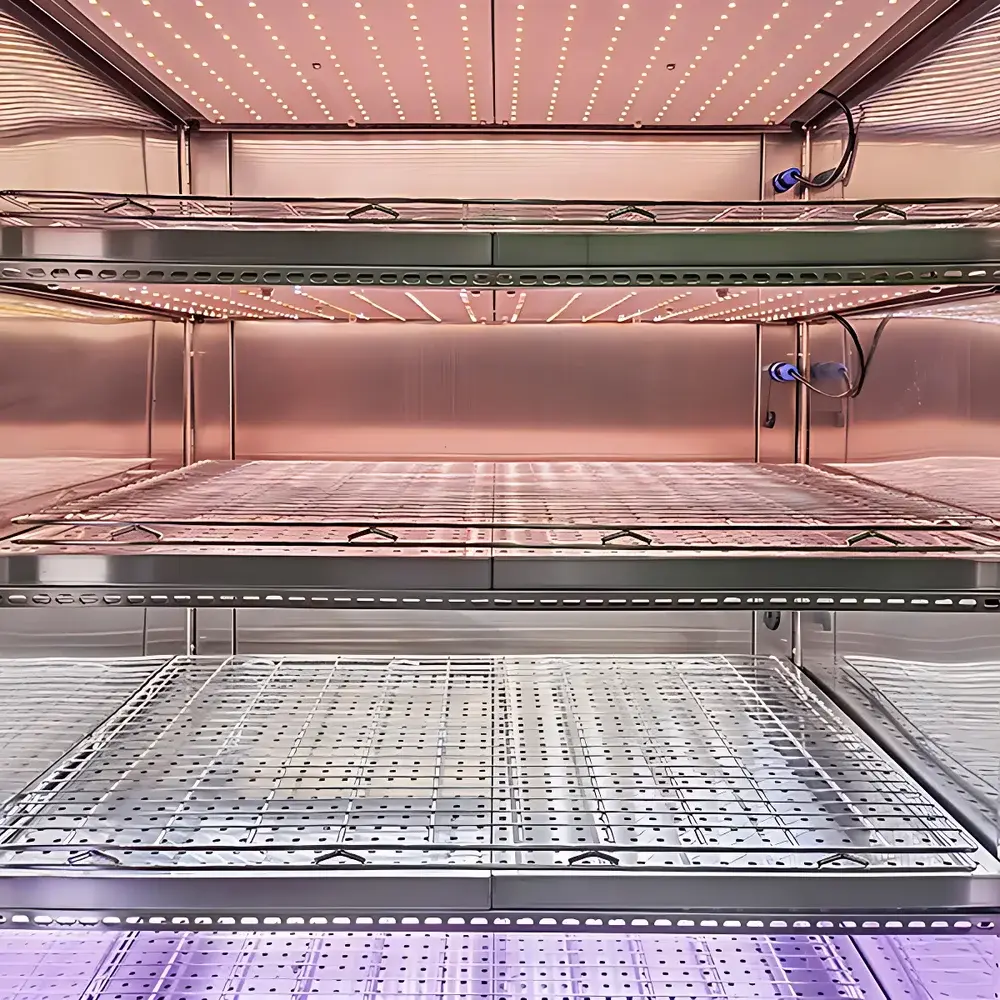
| Standard Lighting | Full-spectrum LED (380–780 nm), 300 µmol/m²·s @ 10 cm |
| Optional Spectra | Monochromatic (450 nm ±5 nm, 660 nm ±5 nm, 735 nm ±5 nm), RBIR, RBIRW, 18-band, UVA/UVB/UVC |
| Total Illuminated Area | 1.8 m² |
| Power Consumption (Peak) | 2.7 kW |
| Voltage/Frequency | 220 VAC / 50 Hz |
| Operating Ambient Temperature | 5–35 °C |
Overview
The JIUPO TCC500 Plant Tissue Culture Incubator is a purpose-built environmental control system engineered for precision plant in vitro propagation, micropropagation, callus induction, and photomorphogenic studies. Unlike general-purpose incubators, the TCC500 integrates photobiological regulation with tightly controlled thermo-hygrometric parameters—enabling reproducible, GxP-aligned cultivation of explants, meristems, and embryogenic cultures. Its core architecture employs a vertical air circulation pathway (bottom-outlet, top-return) to minimize thermal stratification across all four adjustable shelving levels, while patented heat recovery technology recaptures waste thermal energy from lighting and cooling subsystems—reducing net power draw by over 50% compared to conventional tissue culture cabinets without compromising setpoint fidelity or stability.
Key Features
- Patented Vertical Air Distribution: Optimized laminar airflow path ensures temperature uniformity of ±2 °C across the full 510 L internal volume—even under dynamic lighting and door-opening conditions.
- Multi-Spectral LED Lighting System: Standard full-spectrum (380–780 nm) illumination delivers 300 µmol/m²·s photon flux density at 10 cm; optional narrowband configurations (e.g., 450 nm ±5 nm blue, 660 nm ±5 nm red, 735 nm ±5 nm far-red) support spectral tuning for photoreceptor-specific experiments (phytochrome, cryptochrome, phototropin modulation).
- Intelligent Environmental Programming: PID-based temperature regulation achieves setpoint acquisition within <3 minutes; users define time-dependent profiles for temperature, light intensity (0–100% linear dimming), and spectral composition across up to 99 programmable segments per day.
- Energy-Efficient Thermal Architecture: Polyurethane foam-insulated chamber (≥80 mm thickness), stainless-steel interior, and embedded double-glazed observation door minimize thermal leakage; heat recovery loop reduces compressor duty cycle during high-light operation.
- Remote Monitoring & Control: Integrated Wi-Fi module supports real-time parameter visualization, alarm notification, and schedule modification via native iOS/Android application—fully compliant with local network security protocols (TLS 1.2+).
Sample Compatibility & Compliance
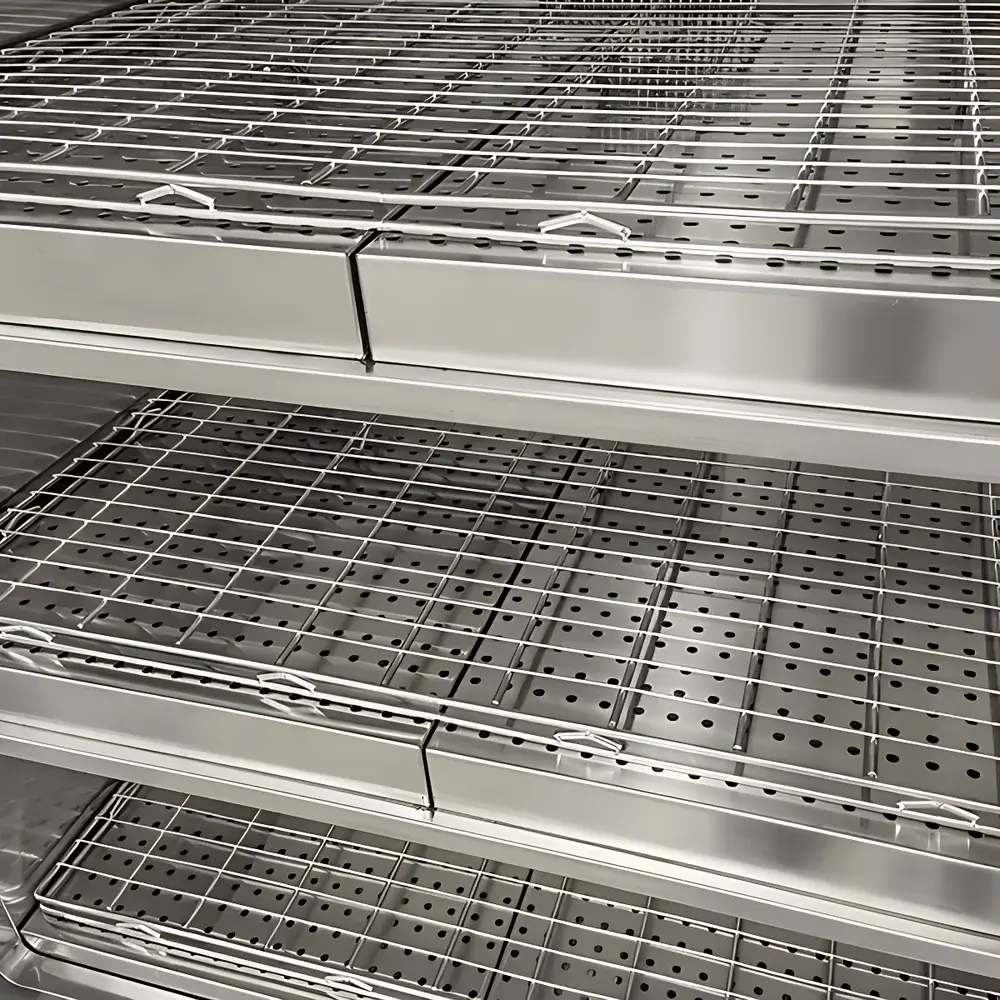
The TCC500 accommodates standard tissue culture vessels—including Magenta boxes, Petri dishes (90–150 mm), multiwell plates, and glass jars—across four independently height-adjustable shelves (26 cm spacing). Its stainless-steel interior (AISI 304) and seamless weld construction meet ISO 14644-1 Class 7 cleanroom compatibility requirements when operated in conjunction with HEPA-filtered air supply (optional add-on). While not certified to GLP or FDA 21 CFR Part 11 out-of-the-box, the system’s audit-trail-capable logging (timestamped parameter changes, user login events, alarm history) provides foundational traceability for internal quality systems aligned with ISO/IEC 17025 and OECD GLP principles.
Software & Data Management
The embedded controller records temperature, light intensity, and operational status at 1-minute intervals, storing ≥30 days of compressed data locally. Export is supported via USB-C dump (CSV format) or secure cloud sync (AES-256 encrypted). The mobile application enables role-based access control (administrator/operator), customizable alert thresholds (e.g., temperature deviation >1 °C for >5 min), and automated report generation for weekly QC reviews. All firmware updates are digitally signed and validated prior to installation—ensuring integrity and regulatory defensibility.
Applications
- Micropropagation of ornamental, medicinal, and crop species (e.g., Phalaenopsis, Artemisia annua, Solanum tuberosum)
- Photoperiodic and spectral-response assays for phytochrome-mediated hypocotyl elongation or flowering induction
- Callus initiation and somatic embryogenesis under defined light-quality regimes
- Long-term maintenance of germplasm collections requiring stable low-temperature (3–8 °C) storage with minimal photoinhibition
- Pre-acclimatization conditioning of in vitro-derived plantlets using ramped irradiance profiles
FAQ
Does the TCC500 support dual-wavelength or time-shifted spectral switching during a single growth cycle?
Yes—users can program up to 99 sequential light recipes per 24-hour period, enabling dynamic transitions between monochromatic, polychromatic, and white-light spectra at user-defined timestamps.
Is the temperature sensor calibrated and traceable to NIST standards?
Each unit ships with a factory calibration certificate referencing PT100 sensors calibrated against ISO/IEC 17025-accredited reference standards; on-site recalibration services are available upon request.
Can the incubator operate continuously for extended periods without maintenance intervention?
Designed for unattended 7×24 operation, the TCC500 features sealed compressors, brushless DC fans, and solid-state relays—validated for ≥50,000 hours MTBF under nominal load conditions.
What level of cybersecurity protection does the remote interface provide?
All communications use TLS 1.2 encryption; device authentication employs HMAC-SHA256 challenge-response; no default credentials are shipped—initial setup requires mandatory password creation.
Is UV-C irradiation compatible with the standard chamber materials?
UVC (254 nm) option is only available with quartz-glass observation window and PTFE-coated interior surfaces—standard stainless steel is not recommended for prolonged UVC exposure due to potential surface oxidation.




