
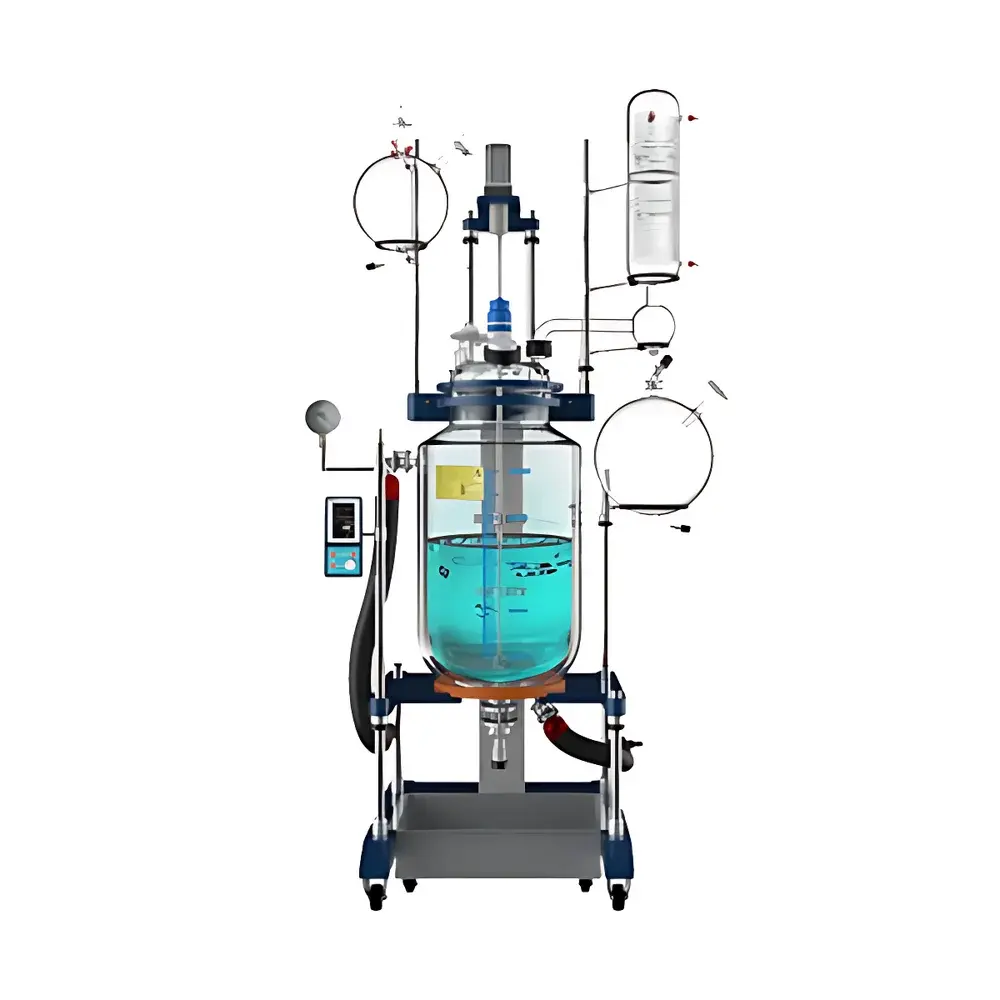
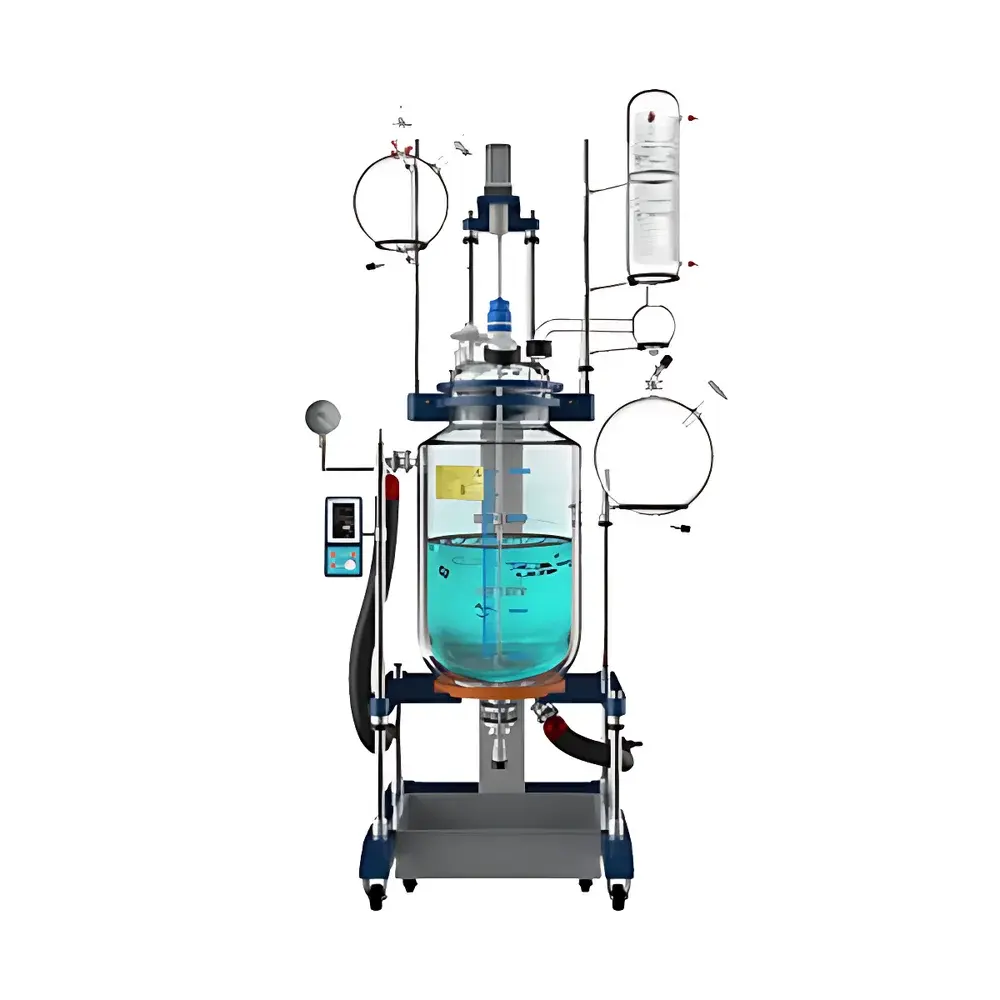
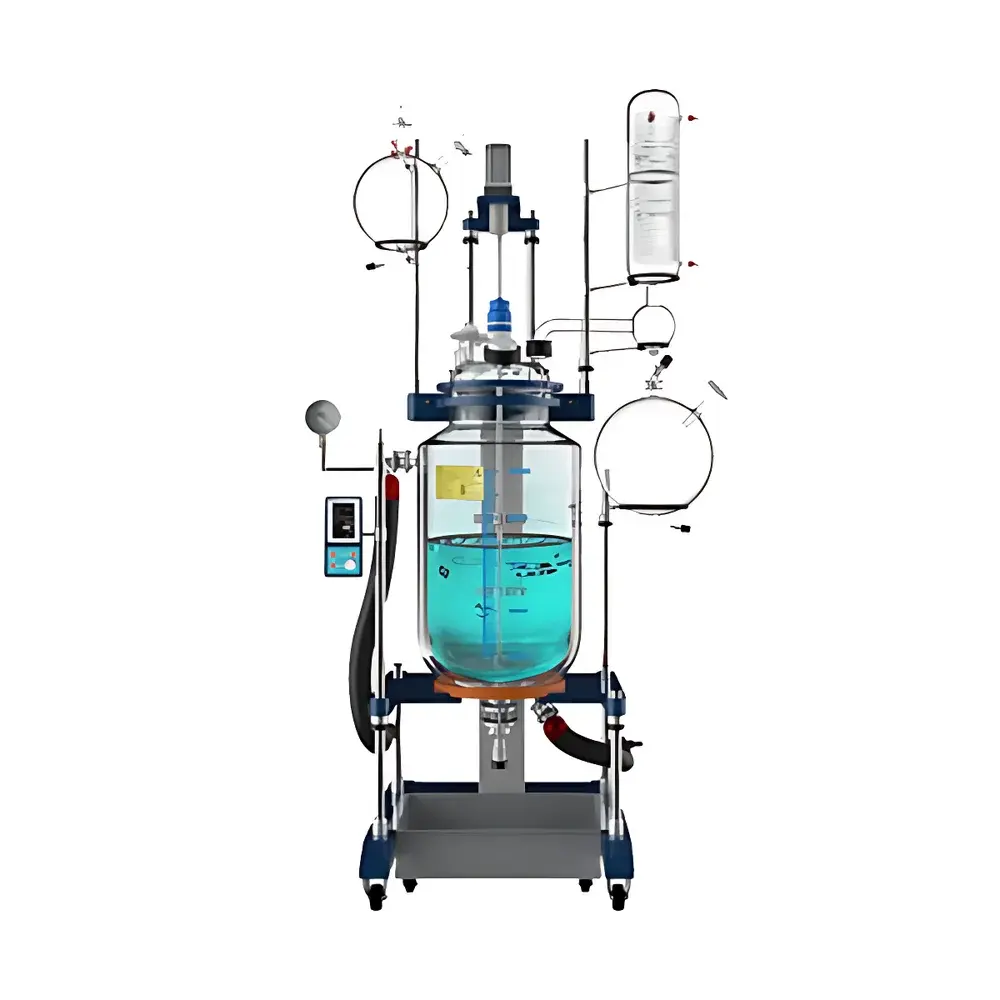
The Great Wall GRF-80CE Lifting Dual-Jacketed Glass Reactor
| Brand | The Great Wall |
|---|---|
| Origin | Henan, China |
| Manufacturer Type | Authorized Distributor |
| Country of Origin | China |
| Model | GRF-80CE |
| Instrument Category | Jacketed Glass Reactor |
| Volume Class | Medium-Scale |
| Construction Material | Borosilicate Glass 3.3 |
| Operating Pressure | Low Vacuum to Atmospheric (–0.1 to 0 MPa) |
| Capacity | 80 L |
| Ultimate Vacuum | –0.098 MPa |
| Jacket Volume | ~25 L |
| Condenser Heat Transfer Area | ~0.954 m² |
| Feed Bottle Volume | 10 L |
| Receiver Bottle Volume | 20 L |
| Temperature Range | –80 °C to +200 °C |
| Stirring Motor | 370 W DC Brushless |
| Speed Range | 20–500 rpm |
| Speed Accuracy | ±1 rpm (display), ±0.7% (≤300 rpm), ±1% (>300 rpm) |
| Max Torque | 5.4 N·m |
| Power Supply | 100–240 V AC, 50/60 Hz |
| Frame Material | Q235 + 6061-F Aluminum + SUS304 |
| Drip Tray Material | SUS316L |
| Stirrer Shaft & Blade | SUS304 core with PTFE cladding / PTFE blades |
| Sealing | Proprietary PTFE-coated bearing assembly |
| Temperature Sensor | PT100 (PTFE-sheathed) |
| Max ΔT (inner/outer wall) | ≤80 °C |
| Drain Valve | Zero-holdup PTFE-lined valve, 380 mm above floor |
| Interface | RS485 port on control panel |
| Port Configuration | 7 standard ground-glass and flanged openings (60# stirrer, 35# temp sensor, 50# condenser, dual 34# liquid feed, 40# feed bottle, 95# solid feed) |
Overview
The Great Wall GRF-80CE Lifting Dual-Jacketed Glass Reactor is an engineered solution for controlled, scalable laboratory-scale synthesis, distillation, extraction, and crystallization under variable temperature and vacuum conditions. Designed around the principles of thermal management, mechanical stability, and chemical inertness, the system integrates a borosilicate glass 3.3 vessel with dual-wall construction—enabling precise jacketed heating or cooling via external circulators. Its operational envelope spans –80 °C to +200 °C, with a pressure range from atmospheric to deep vacuum (–0.098 MPa), making it suitable for low-boiling solvent reflux, high-viscosity polymerization, cryogenic Grignard reactions, and gentle vacuum concentration of thermolabile compounds. The lifting mechanism allows vertical adjustment of the reactor body relative to the base frame—facilitating safe, ergonomic access during charging, sampling, or cleaning without disassembly.
Key Features
- Borosilicate glass 3.3 components (reactor body, condenser, feed/receiver bottles) certified to ISO 3585 standards for hydrolytic resistance (Class HGB), thermal shock tolerance (>100 K), and chemical durability against organic solvents, acids, and alkalis.
- Integrated lifting column with precision lead-screw actuation and locking collar—enables repeatable height positioning within ±1 mm, reducing operator strain during batch transfer.
- DC brushless stirring motor (370 W) delivering continuous torque up to 5.4 N·m across 20–500 rpm, with digital speed feedback, real-time torque monitoring, and programmable ramp profiles via LED interface.
- Zero-holdup PTFE-lined discharge valve positioned 380 mm above floor level—ensures complete material evacuation without residue, minimizing cross-contamination between batches and supporting GLP-compliant documentation of emptying procedures.
- Modular port configuration including seven standardized openings: 60# flange (stirrer), 35# flange (PT100 sensor), 50# spherical joint (condenser), dual 34# standard taper joints (liquid addition), 40# taper joint (feed bottle), and 95# flange (solid charging)—enabling flexible integration with auxiliary modules (e.g., dropping funnels, gas inlets, pH probes).
- Corrosion-resistant structural frame combining powder-coated Q235 steel, anodized 6061-F aluminum panels, and SUS304 support elements—designed for long-term exposure to solvent vapors and routine wipe-down decontamination.
- SUS316L stainless steel drip tray with raised perimeter walls—captures incidental spills and condensate runoff, preventing floor contamination and simplifying compliance with OSHA lab safety protocols.
Sample Compatibility & Compliance
The GRF-80CE accommodates heterogeneous reaction mixtures—including slurries, viscous polymers, and suspended catalysts—without compromising seal integrity or thermal uniformity. All wetted surfaces (glass, PTFE, SUS316L, and PTFE-sheathed PT100) meet USP Class VI biocompatibility requirements for non-invasive contact with pharmaceutical intermediates. The system supports ASTM E2877-22 (standard guide for vacuum system validation in lab reactors) and aligns with ISO 14001 environmental management criteria through its energy-efficient DC motor and minimal solvent retention design. While not intrinsically rated for hazardous area use (ATEX/IECEx), optional grounding kits and static-dissipative tubing adapters are available to mitigate electrostatic risk during flammable solvent handling.
Software & Data Management
The reactor’s embedded control panel includes an RS485 serial interface compliant with Modbus RTU protocol—enabling bidirectional communication with third-party SCADA systems, LIMS platforms, or custom Python-based acquisition scripts. Logged parameters include real-time RPM, torque %, setpoint vs. actual temperature (via PT100), elapsed time, and vacuum status. Data export is supported in CSV format; timestamped records include operator ID (if integrated with network authentication) and audit trail metadata per FDA 21 CFR Part 11 Annex 11 expectations for electronic records. Firmware updates are performed via USB port using digitally signed binaries to ensure traceability and integrity.
Applications
- Process development of active pharmaceutical ingredients (APIs) under ICH Q5A–Q5E guidelines, including hydrogenation, esterification, and enantioselective catalysis.
- Academic research in organometallic chemistry requiring strict moisture/oxygen exclusion—compatible with Schlenk line integration via 95# flange and vacuum-tight PTFE seals.
- Food-grade emulsion synthesis (e.g., nanoencapsulated flavors) validated under ISO 22000 hygiene management frameworks.
- Materials science workflows involving sol-gel processing, nanoparticle precipitation, and controlled solvent evaporation for thin-film precursor preparation.
- Educational laboratories demonstrating mass/energy balance principles, reaction kinetics (Arrhenius analysis), and vacuum distillation theory.
FAQ
What vacuum level can the GRF-80CE sustain during extended operation?
The system achieves and maintains –0.098 MPa (≤2 mbar abs) using compatible vacuum pumps (e.g., diaphragm or scroll type); sustained performance depends on seal integrity, ambient humidity, and condenser cooling efficiency.
Is the PT100 temperature sensor calibrated and traceable to NIST standards?
The factory-installed PT100 is pre-calibrated at three points (0 °C, 100 °C, 200 °C) with uncertainty ≤±0.15 °C; full calibration certificates with NIST-traceable reference data are available upon request.
Can the reactor be operated unattended overnight?
Yes—when configured with external temperature/vacuum interlocks, emergency stop circuitry, and remote monitoring via RS485, the GRF-80CE meets institutional requirements for supervised unattended operation under written SOPs.
What maintenance intervals are recommended for the stirring seal and bearing assembly?
Under typical usage (8 h/day, moderate viscosity), inspect PTFE seals every 500 h and replace bearings every 2,000 h; replacement kits include dimensional verification gauges and torque-spec fasteners.
Does the lifting mechanism require periodic lubrication or alignment checks?
The lead screw and guide rails are pre-greased with NSF H1-certified lubricant; no routine re-lubrication is required within the first 10,000 lift cycles—alignment verification is recommended annually using the supplied laser collimation jig.



