
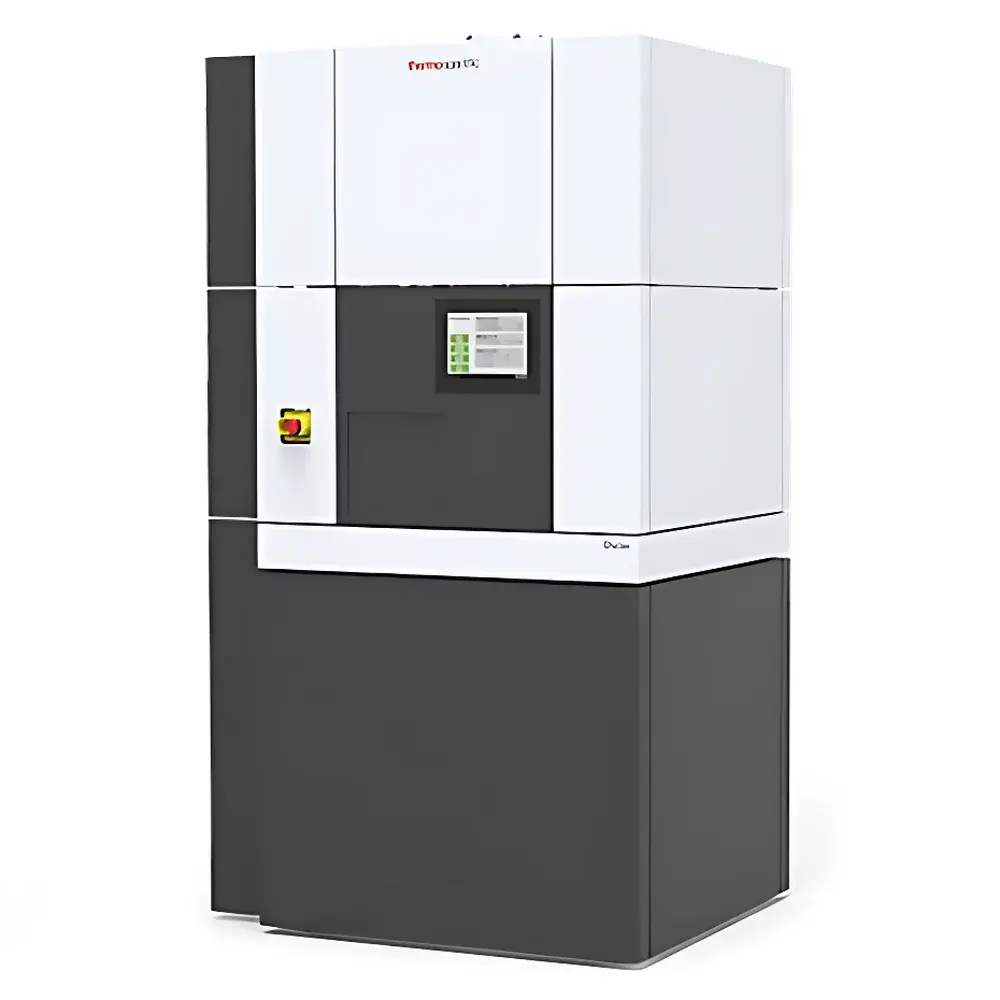
Thermo Scientific™ Glacios™ Cryo-Transmission Electron Microscope
| Brand | Thermo Fisher |
|---|---|
| Origin | USA |
| Manufacturer Type | Authorized Distributor |
| Origin Category | Imported |
| Model | Thermo Scientific™ Glacios™ |
| Price Range | USD $2.5M–$3.8M (FOB) |
| Accelerating Voltage | 80–200 kV |
| Magnification | Up to 10,000,000× |
| Electron Source | 200 kV X-FEG (Cold Field Emission Gun) |
| Automation | Integrated Autoloader with cryo-transfer compatibility |
| Software Platform | EPU v3.x for Single-Particle Analysis (SPA) |
| Detector Compatibility | Supports Direct Electron Detectors (e.g., Falcon 4, Gatan K3) and Volta Phase Plate (VPP) |
| Footprint | < 8 m² (including service access) |
Overview
The Thermo Scientific™ Glacios™ Cryo-Transmission Electron Microscope (Cryo-TEM) is a purpose-engineered 200 kV high-brightness cold field emission transmission electron microscope designed specifically for robust, reproducible single-particle analysis (SPA) workflows in structural biology and materials science. Operating on the fundamental principle of electron wave diffraction through vitrified biological specimens under cryogenic conditions (≤−180 °C), the Glacios delivers high-contrast, low-dose imaging essential for preserving native macromolecular conformations. Its optical architecture integrates a stable X-FEG source, high-stability objective lens system, and precision-aligned condenser optics—enabling consistent beam coherence and minimal chromatic aberration across extended acquisition sessions. Unlike conventional TEM platforms requiring dedicated infrastructure or extensive facility retrofitting, the Glacios is engineered for compact installation in standard laboratory environments without compromising optical performance or thermal-mechanical stability.
Key Features
- Compact, High-Stability Platform: Optimized mechanical design reduces floor space requirements to under 8 m²—including full service access—minimizing civil engineering modifications during installation and enabling deployment in shared or multi-user core facilities.
- Automated Cryo-Sample Handling: Integrated Autoloader enables unattended transfer of up to 12 cryo-grids per session with sub-100 nm positional repeatability, maintaining specimen temperature below −175 °C throughout loading, stage positioning, and imaging.
- EPU v3.x Native SPA Workflow Integration: Fully automated grid mapping, ice-thickness classification, particle pre-screening, and dose-symmetric data acquisition—all executed within a single software environment compliant with FAIR data principles.
- Self-Diagnostic Optical Calibration: Real-time assessment of lens alignment, stigmator status, and beam tilt via built-in reference patterns; provides actionable feedback for corrective procedures without user intervention.
- Cross-Platform Sample Interoperability: Standardized capsule-and-box format ensures seamless, contamination-free transfer between Glacios, Arctica, and Krios G3i Cryo-TEM systems—preserving experimental continuity across screening and high-resolution data collection tiers.
Sample Compatibility & Compliance
The Glacios supports vitrified biological specimens prepared by plunge-freezing (e.g., using Vitrobot™ Mark IV or Chameleon™ systems), as well as thin-sectioned cryo-lamellae generated via FIB-SEM. It accommodates standard 3 mm copper or gold grids (Quantifoil®, C-flat®, UltrAuFoil®), with optional support for graphene oxide or continuous carbon films. All hardware and software components comply with ISO 9001:2015 quality management standards. The EPU software platform supports audit trails, electronic signatures, and user role-based access control—meeting foundational requirements for GLP-compliant structural characterization and aligning with FDA 21 CFR Part 11 guidance for regulated biopharmaceutical development workflows.
Software & Data Management
Data acquisition, preprocessing, and metadata annotation are unified within the EPU v3.x software suite. Raw micrographs are stored in standardized TIFF or MRC formats with embedded acquisition parameters (dose rate, defocus range, magnification, pixel size). Batch processing pipelines integrate seamlessly with downstream reconstruction tools including RELION, cryoSPARC, and cisTEM via open API protocols. All session logs—including instrument configuration changes, autoloader events, and user authentication records—are archived with timestamped integrity verification. Optional integration with Thermo Fisher’s Connect™ cloud platform enables secure remote monitoring, cross-site collaboration, and centralized instrument usage analytics—without exposing raw image data to external networks.
Applications
- Pre-screening and quality assessment of cryo-EM grids prior to high-resolution data collection on Krios or Arctica systems
- De novo structure determination of membrane proteins, viral capsids, and large ribonucleoprotein complexes at intermediate resolution (4–6 Å)
- Routine structural validation of antibody-antigen complexes and therapeutic protein formulations
- In situ cryo-tomography of cellular sections using serial tilt-series acquisition
- Materials characterization of nanoscale catalysts, battery electrode interfaces, and 2D layered materials under cryogenic conditions
FAQ
What is the minimum required facility infrastructure for Glacios installation?
A standard Class 10,000 cleanroom or vibration-isolated lab space with stable HVAC (±0.5 °C), grounded electrical supply (208–240 V, 60 A), and dry nitrogen purge capability is sufficient. No magnetic shielding or active floor damping is required due to its passive stability architecture.
Can Glacios operate without a direct electron detector?
Yes—it is fully compatible with high-sensitivity CCD and CMOS cameras (e.g., Gatan Ultrascan, TVIPS TemCam); however, optimal SPA throughput and resolution require a direct electron detector (e.g., Falcon 4 or K3) for dose-fractionated movie acquisition.
Is EPU software included with the instrument purchase?
Yes—EPU v3.x is supplied as part of the base configuration, including perpetual license for one primary workstation and concurrent remote access for up to three additional users.
How does Glacios ensure long-term imaging stability during multi-hour sessions?
Through a combination of thermally anchored pole-piece design, active lens current stabilization, and real-time drift compensation algorithms that adjust stage position based on fiducial tracking in low-dose preview mode.
Does Glacios support Volta phase plate (VPP) imaging?
Yes—VPP-compatible holder and alignment routines are factory-integrated, enabling enhanced contrast for small particles (<100 kDa) without sacrificing signal-to-noise ratio or introducing phase artifacts.




