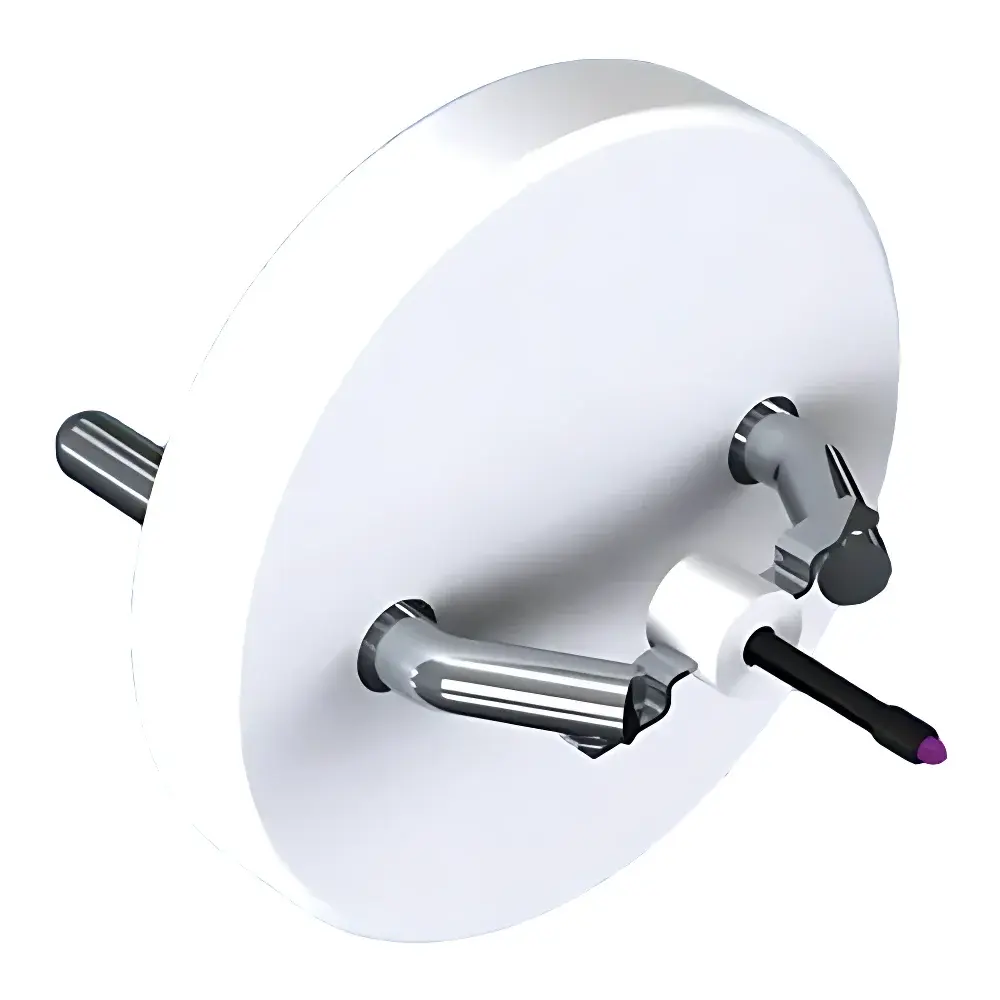
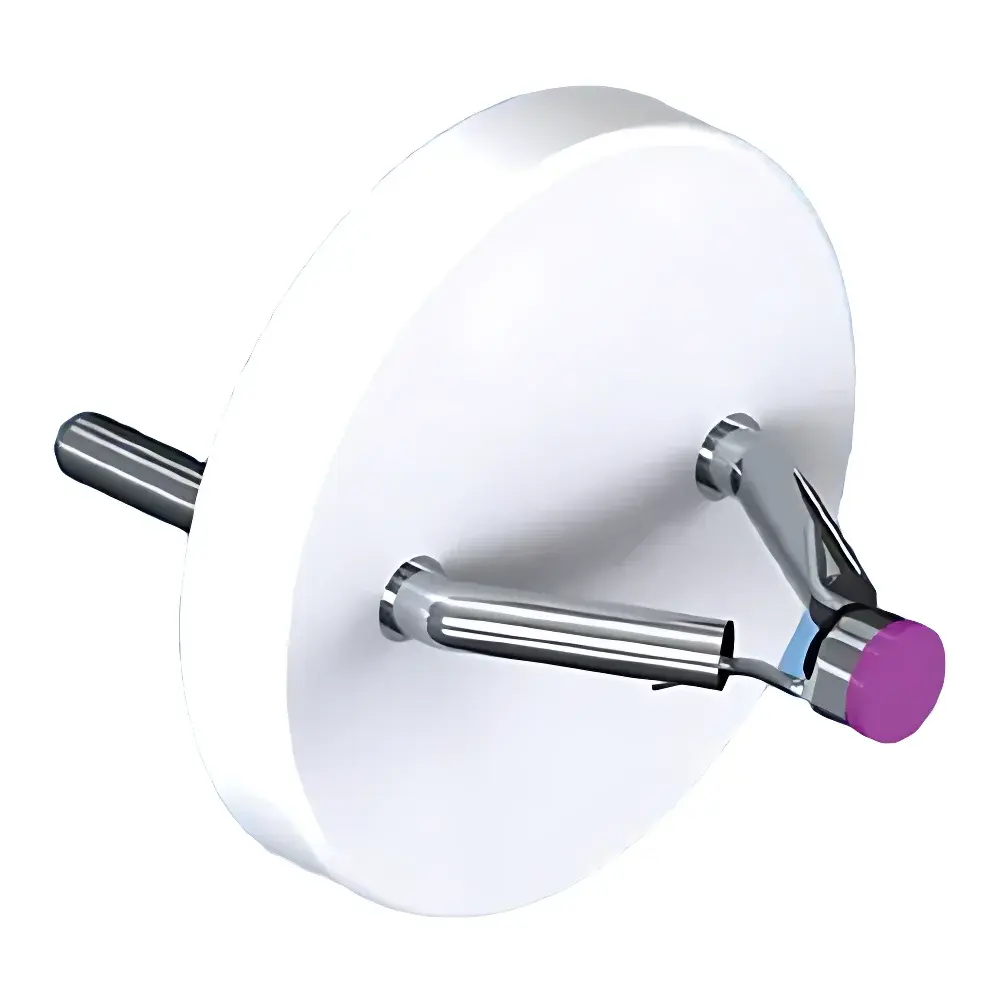
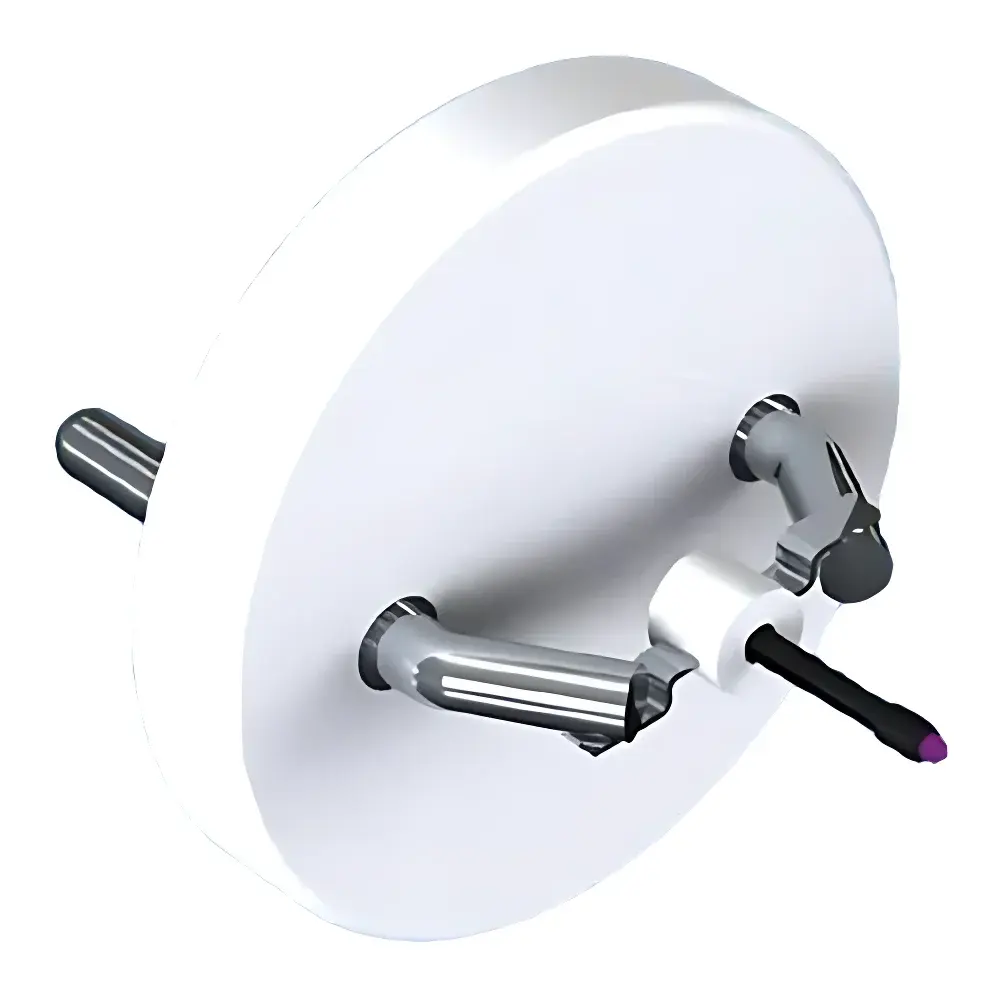
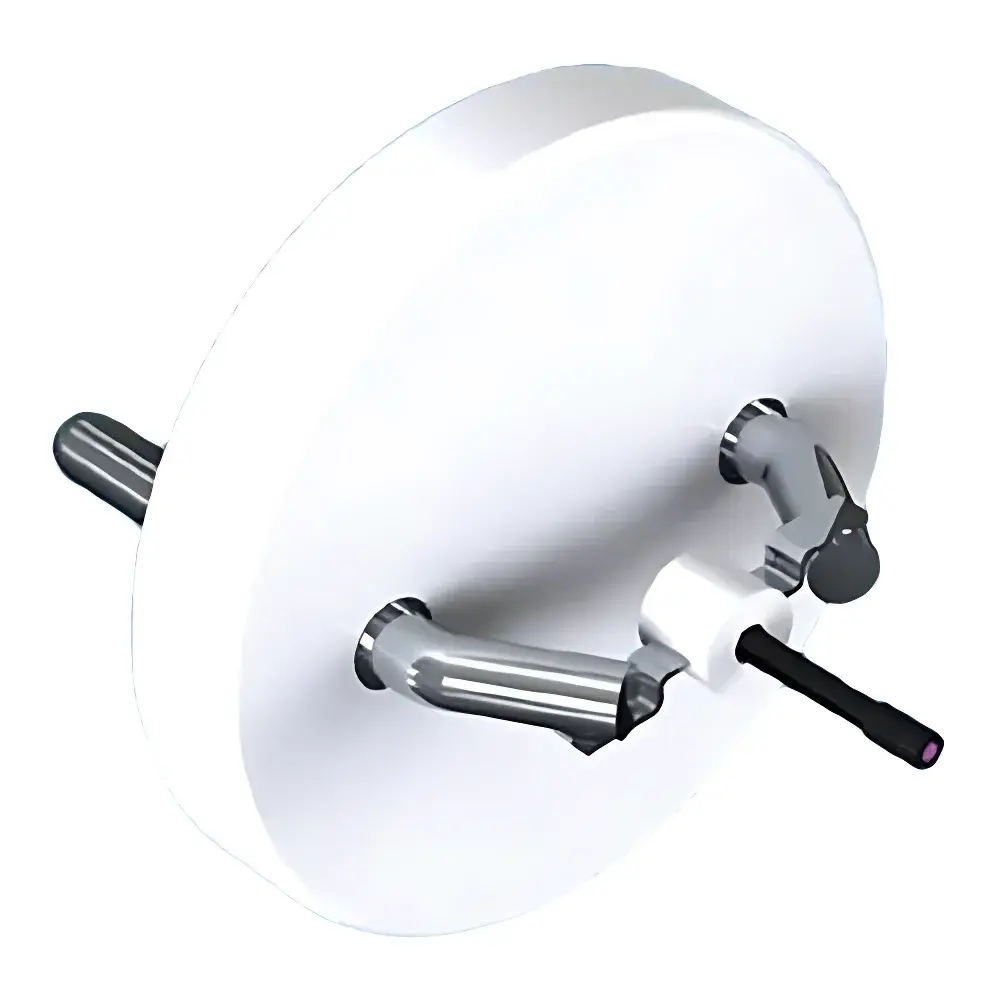
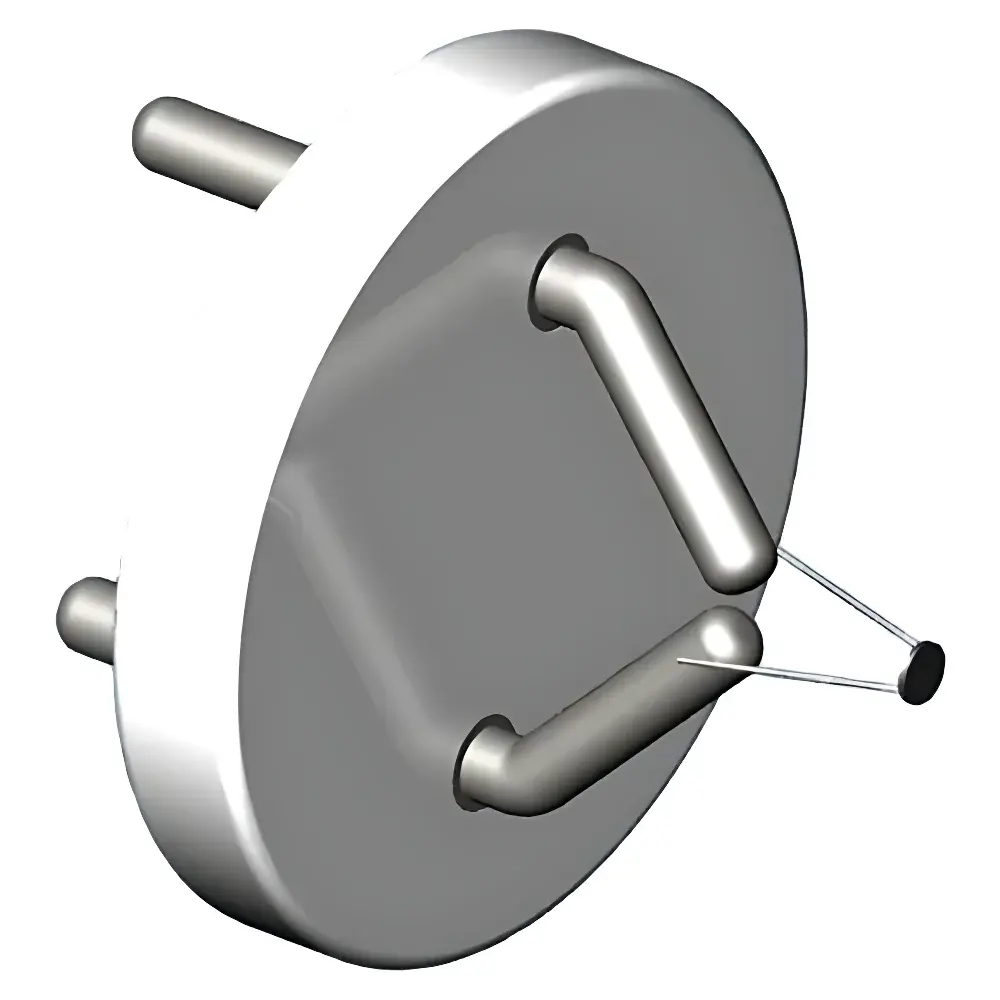
Kimball Physics ES-Microscopy Lanthanum Hexaboride (LaB₆) Cathode for Electron Microscopy
| Brand | Kimball Physics, Inc. |
|---|---|
| Origin | USA |
| Model | ES-Microscopy |
| Emission Current Density | Up to 30 A/cm² |
| Operating Pressure | < 10⁻⁷ Torr |
| Cathode Type | Single-Crystal LaB₆, Micro-Flat Geometry |
| Mounting Interface | Ceramic AEI-compatible Base or Custom Microscope-Specific Flange |
| Lifetime | Extended under UHV Conditions |
| Compliance | Designed for Integration into SEM, TEM, and STEM Column Systems |
Overview
The Kimball Physics ES-Microscopy is a high-performance, single-crystal lanthanum hexaboride (LaB₆) thermionic cathode engineered specifically for integration into advanced electron microscopy systems—including scanning electron microscopes (SEM), transmission electron microscopes (TEM), and scanning transmission electron microscopes (STEM). Unlike tungsten filaments, LaB₆ cathodes operate via thermionic emission at lower work function (2.7 eV), enabling significantly higher brightness (~10⁶ A·cm⁻²·sr⁻¹) and current density (up to 30 A/cm² at optimal temperature and vacuum) while maintaining superior energy spread stability (< 1.5 eV FWHM). The ES-Microscopy variant features a precision-machined micro-flat emission surface optimized for minimal spherical aberration and compatibility with standard electron optical column apertures. Its robust ceramic AEI-style base ensures thermal and electrical isolation, mechanical rigidity, and seamless integration into existing UHV-compatible microscope columns operating below 10⁻⁷ Torr.
Key Features
- Single-crystal LaB₆ emitter with atomically ordered (100) orientation, delivering high coherence and long-term emission stability
- Micro-flat geometry (typical emission area: 50–100 µm diameter) tailored for high-resolution probe formation and reduced chromatic aberration
- Ceramic AEI-compatible mounting base with integrated heater leads and thermocouple ports for real-time temperature monitoring and closed-loop thermal control
- UHV-rated construction using oxygen-free copper shanks, alumina insulators, and vacuum-brazed joints—validated for continuous operation at pressures < 10⁻⁷ Torr
- No external activation required; stable emission achieved after standard outgassing and conditioning protocols per ASTM E1557-22 (Standard Guide for Vacuum System Characterization)
- Thermal design minimizes thermal drift and supports rapid thermal cycling without crystal fracture or grain boundary degradation
Sample Compatibility & Compliance
The ES-Microscopy cathode is not a standalone measurement instrument but a critical subsystem component for electron optical columns. It is fully compatible with standard 2.75″, 4″, and 6″ CF flange interfaces used in commercial and research-grade electron microscopes. Its emission characteristics meet the operational requirements of ISO/IEC 17025-accredited laboratories performing materials characterization, failure analysis, and nanoscale metrology. When installed in systems compliant with IEC 61000-6-3 (EMC immunity) and IEC 61010-1 (safety for laboratory equipment), the cathode contributes to overall system conformance with GLP and GMP documentation frameworks. While the cathode itself does not carry CE or UKCA marking, its materials and fabrication adhere to RoHS Directive 2011/65/EU restrictions on hazardous substances.
Software & Data Management
As a passive thermionic source, the ES-Microscopy cathode does not incorporate embedded firmware or digital interfaces. However, its performance is fully monitorable and controllable via the host microscope’s electron optical control system—typically through analog voltage/current inputs for heater power regulation and optional thermocouple feedback loops. Emission current stability data can be logged via the microscope’s acquisition software (e.g., JEOL PC-SEM, Thermo Fisher Velox, or Bruker Esprit) and exported in CSV or HDF5 format for post-acquisition analysis. For audit-trail compliance in regulated environments (e.g., FDA 21 CFR Part 11), emission parameters may be recorded alongside imaging metadata when integrated into validated instrument control platforms supporting electronic signature and user-access logging.
Applications
- High-brightness electron sources for field-emission-assisted thermionic (FET) hybrid columns requiring enhanced signal-to-noise ratio at low kV
- Long-duration in situ TEM experiments where filament longevity and emission reproducibility are critical under dynamic gas or heating stages
- Electron beam lithography systems demanding stable, sub-100 pA current stability over multi-hour exposure sequences
- Energy-filtered TEM (EFTEM) and electron energy loss spectroscopy (EELS) setups benefiting from narrow energy distribution and low angular divergence
- Multi-beam SEM configurations utilizing arrayed LaB₆ sources for parallel imaging throughput enhancement
FAQ
What vacuum level is required for stable operation of the ES-Microscopy cathode?
Stable thermionic emission requires a base pressure ≤ 10⁻⁷ Torr. Residual gases—particularly oxygen and water vapor—accelerate LaB₆ oxidation; therefore, bake-out protocols and non-evaporable getter (NEG) pumps are recommended.
Can the ES-Microscopy cathode replace a Schottky field-emission gun (FEG)?
No. It is a thermionic source with higher energy spread and lower brightness than cold or thermal FEGs, but offers greater tolerance to moderate vacuum fluctuations and lower operational complexity.
Is cathode alignment adjustable after installation?
Yes—mechanical alignment is performed via standard three-axis tilt and translation stages within the gun assembly; no internal cathode repositioning is required.
What is the typical operational lifetime under routine use?
With proper vacuum maintenance and controlled heater current ramping, lifetimes exceeding 1,500 hours are routinely achieved in academic and industrial TEM facilities.
Does Kimball Physics provide OEM integration support?
Yes—custom flange designs, thermal modeling reports, and emission characterization data sheets are available under NDA for qualified OEM partners integrating the ES-Microscopy into proprietary microscope platforms.