
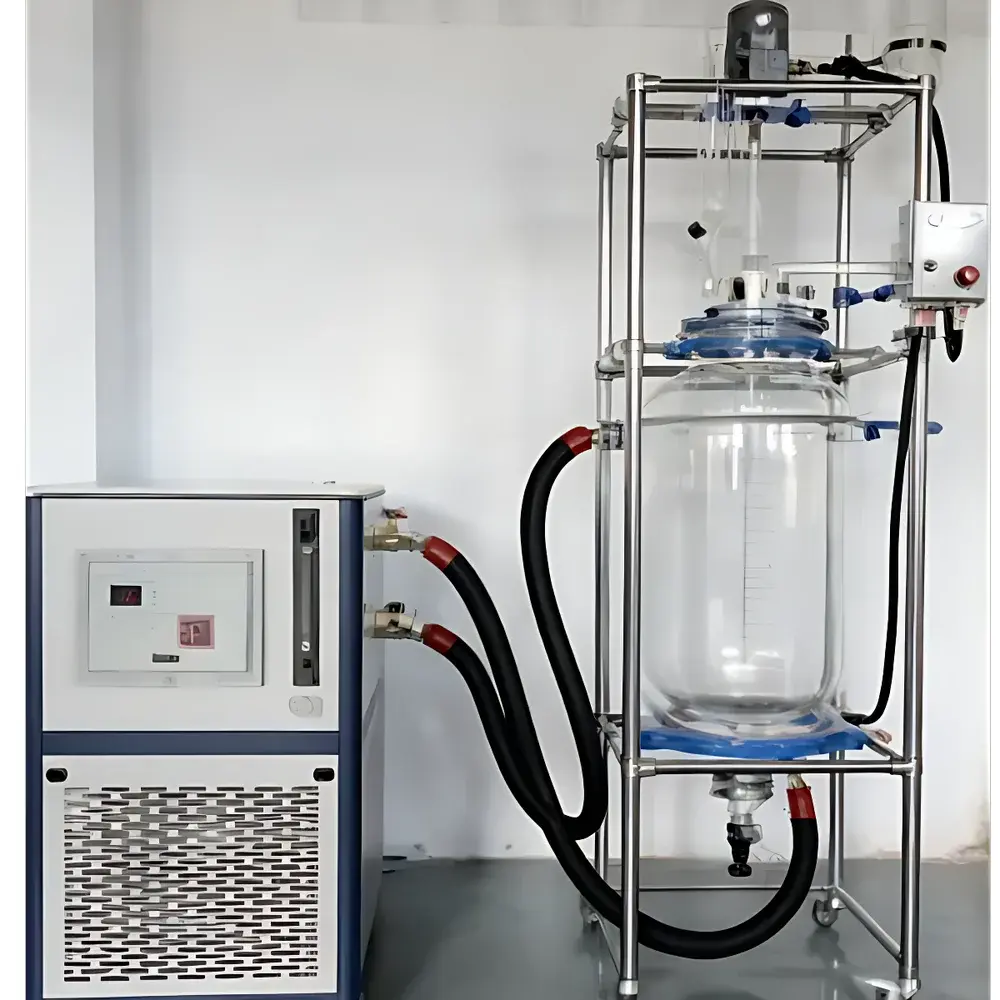
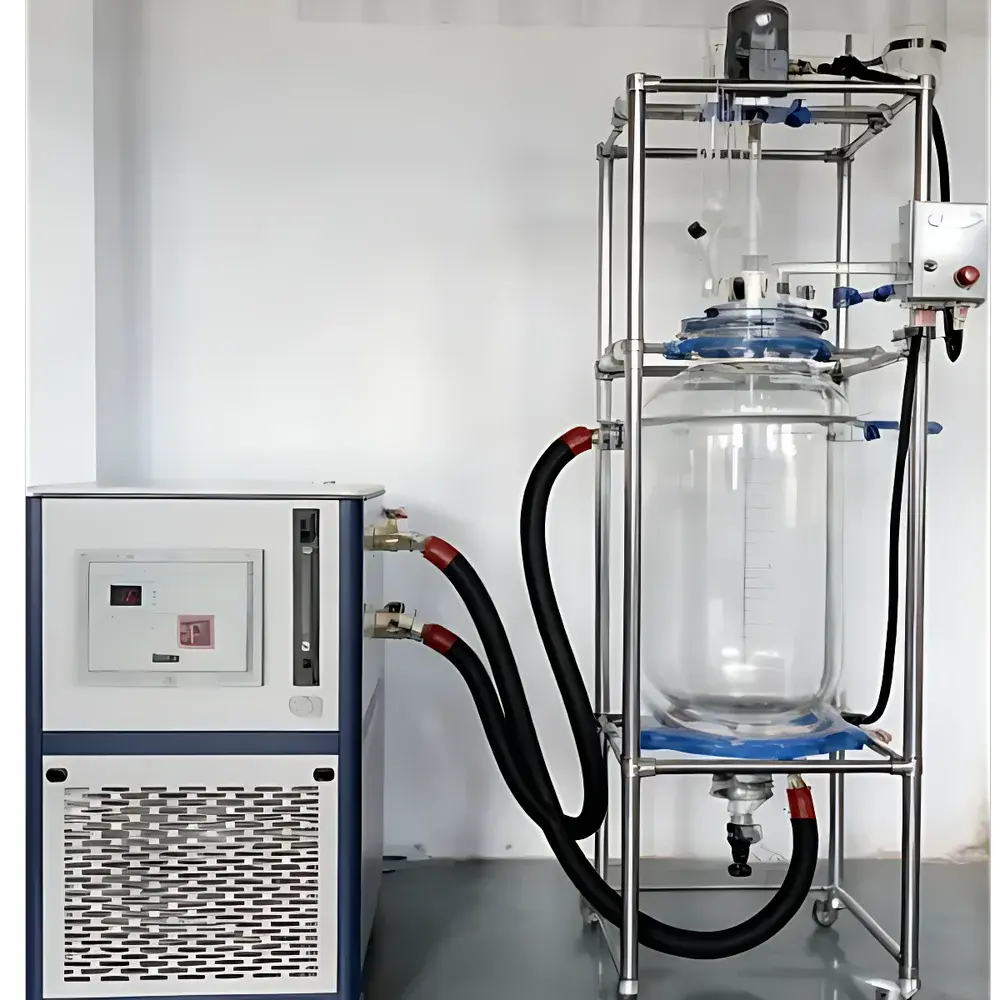
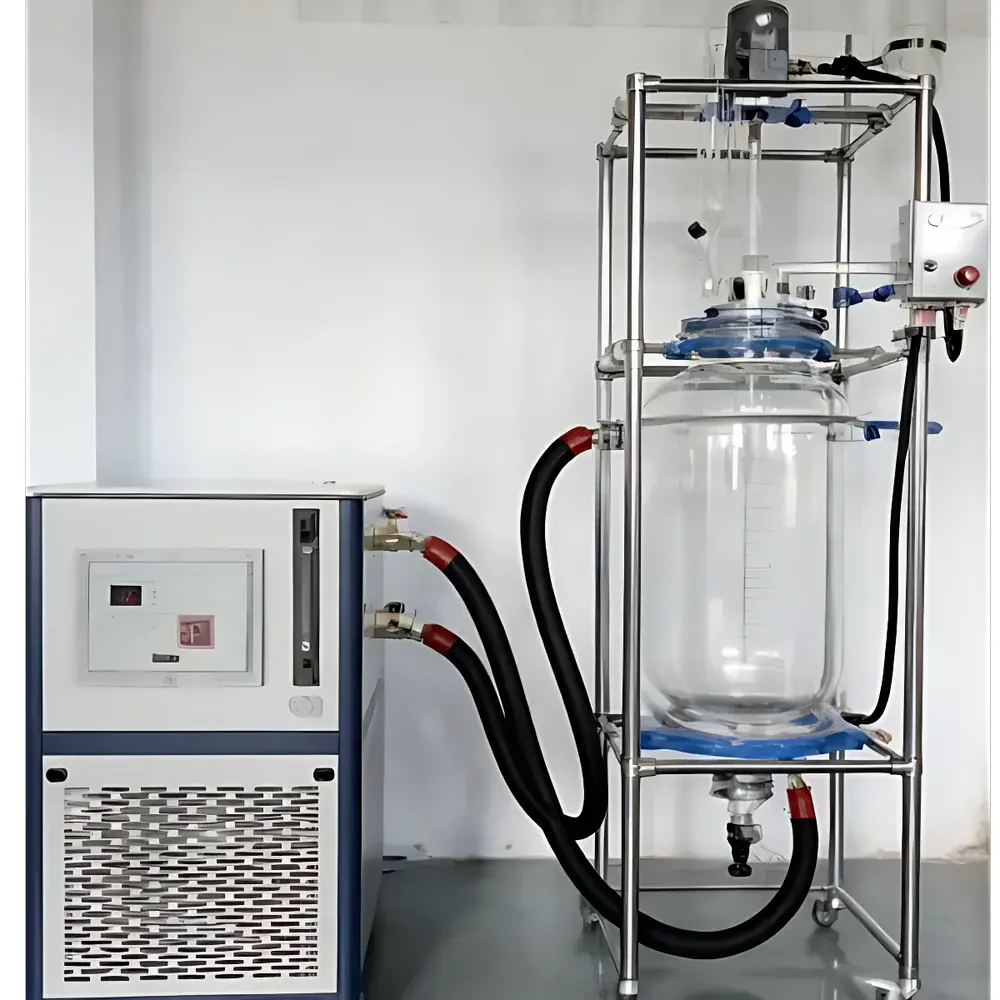
Deleite DLT-EPR-2L Explosion-Proof Dual-Layer Glass Reactor
| Brand | Deleite |
|---|---|
| Origin | Shanghai, China |
| Manufacturer Type | Authorized Distributor |
| Product Category | Domestic |
| Model | DLT-EPR-2L |
| Capacity | 2 L |
| Vessel Material | Borosilicate Glass 3.3 (Duran®/Pyrex® grade) |
| Operating Pressure Range | Ambient to –0.095 MPa (absolute) |
| Temperature Range | –60 °C to +200 °C |
| Stirring Speed | 0–800 rpm (digital speed control, explosion-proof motor) |
| Motor Power | 120 W |
| Sealing System | Mechanical seal with ceramic–PTFE hybrid components |
| Stirrer Type | Single-layer anchor impeller (PTFE-coated stainless steel shaft, Ø8 mm) |
| Lid Configuration | 5-port standard ground-glass interface (1× 19# for temperature probe |
| Cooling/Heating Jacket | Dual-layer borosilicate glass with Φ12 mm jacket inlet/outlet (PTFE tubing compatible) |
| Base Frame | 304 stainless steel |
| Bottom Discharge Valve | Glass–PTFE composite plug valve |
| Electrical Supply | 220 V AC, 50 Hz |
| Compliance | Designed for GLP-compliant laboratory synthesis under vacuum or atmospheric conditions |
Overview
The Deleite DLT-EPR-2L Explosion-Proof Dual-Layer Glass Reactor is an engineered platform for controlled, scalable chemical synthesis and process development under vacuum or ambient pressure. Constructed entirely from high-purity borosilicate glass 3.3 (equivalent to DIN ISO 3585 specifications), the reactor features a double-walled design enabling precise thermal management via external circulation of heating or cooling media—such as silicone oil, glycol–water mixtures, or cryogenic fluids—through the annular jacket. Its operational envelope spans –60 °C to +200 °C, supporting low-temperature lithiation, exothermic Grignard additions, reflux distillations, and solvent-free condensations. The system integrates a certified Class II explosion-proof AC motor (120 W) coupled with digital speed regulation (0–800 rpm), ensuring stable agitation across viscosity ranges without spark generation—critical when handling flammable solvents (e.g., diethyl ether, THF, acetone) or oxygen-sensitive reagents. Unlike single-wall reactors, the dual-glass architecture provides inherent thermal insulation, reduces condensation on external surfaces, and enables real-time visual monitoring of reaction homogeneity, phase separation, or crystallization kinetics without compromising containment integrity.
Key Features
- Explosion-proof motor assembly compliant with IEC 60079-0 and GB 3836.1 standards for use in hazardous environments involving volatile organic compounds
- Five-port standardized ground-glass lid (DIN 15885 / ISO 2955): includes dedicated ports for PT100 temperature probe insertion (19#), mechanical stirring shaft (35#), vertical condenser (29#), pressure-equalizing dropping funnel (29#), and inert gas/vacuum venting (29#)
- Ceramic–PTFE hybrid mechanical seal offering >10⁶ cycles service life, zero leakage at –0.095 MPa vacuum, and compatibility with strong acids (e.g., HCl, H₂SO₄), bases (NaOH), and halogenated solvents
- PTFE-coated stainless steel anchor impeller (Ø8 mm shaft) optimized for high-torque, low-shear mixing of viscous slurries or heterogeneous catalytic suspensions
- Integrated bottom discharge valve fabricated from fused glass–PTFE composite, delivering rapid, residue-free material transfer while maintaining vacuum integrity during batch unloading
- Stainless steel 304 support frame with non-slip rubber feet and adjustable leveling screws for stable operation on fume hood benches or mobile reactor carts
Sample Compatibility & Compliance
The DLT-EPR-2L is validated for use with organic, inorganic, and organometallic systems under non-pressurized conditions. It supports ASTM E2877-22 (standard guide for vacuum-assisted synthesis) and aligns with ISO 17025 requirements for equipment qualification in accredited laboratories. The glass body meets DIN 7080 hydrolytic resistance class HGB 1, ensuring minimal alkali leaching during prolonged alkaline hydrolysis. All wetted PTFE components conform to USP Class VI biocompatibility testing. The reactor is explicitly excluded from applications requiring internal pressures exceeding atmospheric (i.e., no autoclave or hydrogenation service). Documentation includes factory calibration certificates for speed controller linearity (±1 rpm accuracy) and vacuum integrity test reports (leak rate <5×10⁻³ mbar·L/s per ISO 20484).
Software & Data Management
While the DLT-EPR-2L operates as a standalone analog–digital hybrid unit, its modular port configuration enables seamless integration into automated workflows. The digital speed controller outputs 0–10 V analog signal and RS485 Modbus RTU protocol for connection to LabVIEW, DeltaV, or custom SCADA systems. Optional add-ons include a DIN-rail mounted PID temperature controller (with 4–20 mA output to external chiller/heater units) and a USB data logger recording rpm, elapsed time, and vacuum level (via optional Pirani gauge). Audit trails comply with FDA 21 CFR Part 11 when paired with validated third-party software—supporting electronic signatures, user access levels, and immutable event logs for GMP/GLP audits.
Applications
- Process optimization of API intermediates under inert atmosphere (N₂/Ar purging via vent port)
- Low-temperature anionic polymerization of styrene or butadiene using cryogenic coolant circulation
- Solvent recovery via rotary evaporation coupling (condenser port accepts standard 29# Keck clips)
- Heterogeneous catalysis studies (e.g., Pd/C hydrogenations conducted under vacuum-degassed conditions)
- Photochemical reactions using UV-transparent glass body and optional quartz condenser extension
- Extraction and concentration of natural products using simultaneous reflux and vacuum stripping
FAQ
Can the DLT-EPR-2L be used for hydrogenation reactions under H₂ pressure?
No. This reactor is rated exclusively for vacuum (down to –0.095 MPa) and atmospheric pressure operation. It lacks pressure certification and safety interlocks required for pressurized gas reactions.
Is the glass body resistant to hydrofluoric acid (HF)?
No. Borosilicate glass 3.3 exhibits severe etching upon HF exposure. Use only with HF-compatible alternatives (e.g., PFA-lined reactors) for such applications.
What vacuum pumps are recommended for optimal performance?
A two-stage oil-sealed rotary vane pump (e.g., KNF NRP series) or a corrosion-resistant diaphragm pump (e.g., Vacuubrand MD 4C) is advised. Avoid water aspirators due to insufficient ultimate vacuum and backstreaming risk.
Does the system include a temperature probe or external thermostat?
The base configuration includes a 19# port for third-party PT100 or thermocouple insertion but does not ship with a probe or circulator. These must be selected based on thermal fluid compatibility and ramp rate requirements.
How often should the mechanical seal be serviced?
Under continuous operation, inspect the ceramic–PTFE interface every 500 hours. Replace the static O-ring annually or after exposure to >150 °C sustained temperatures.



