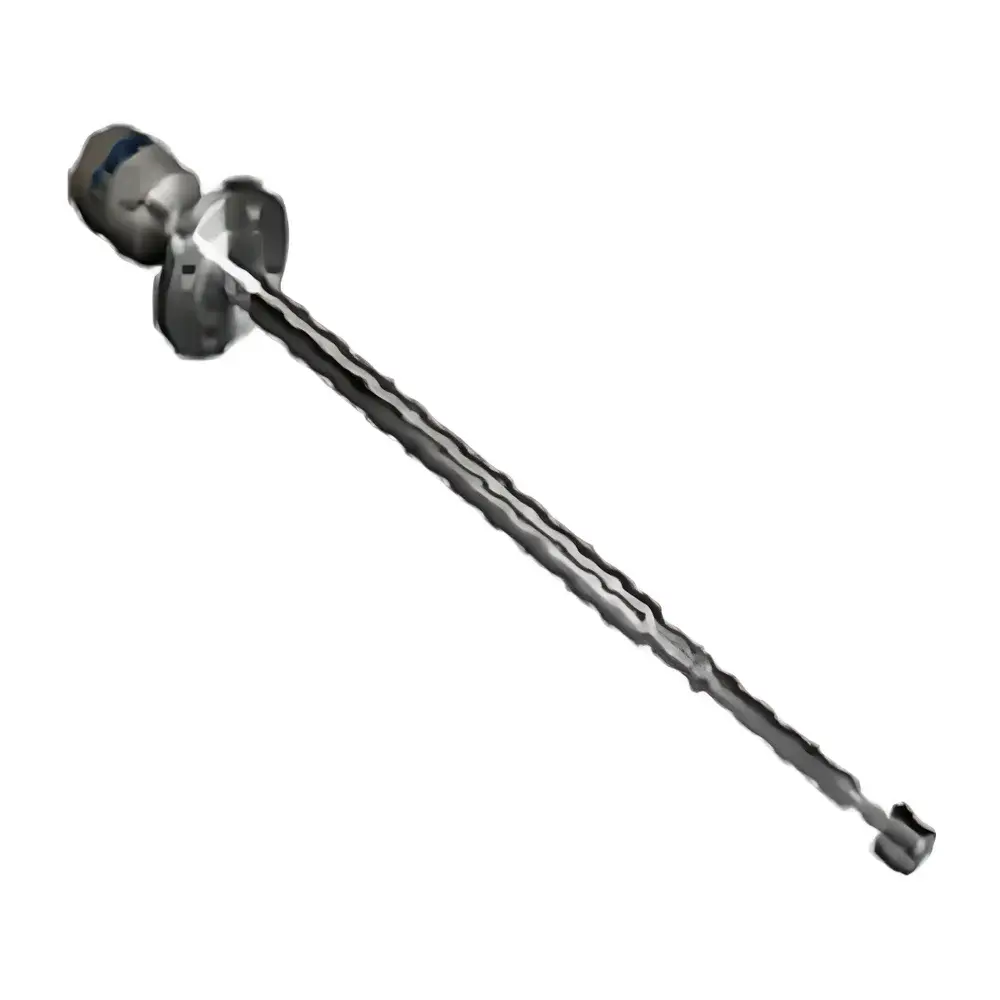
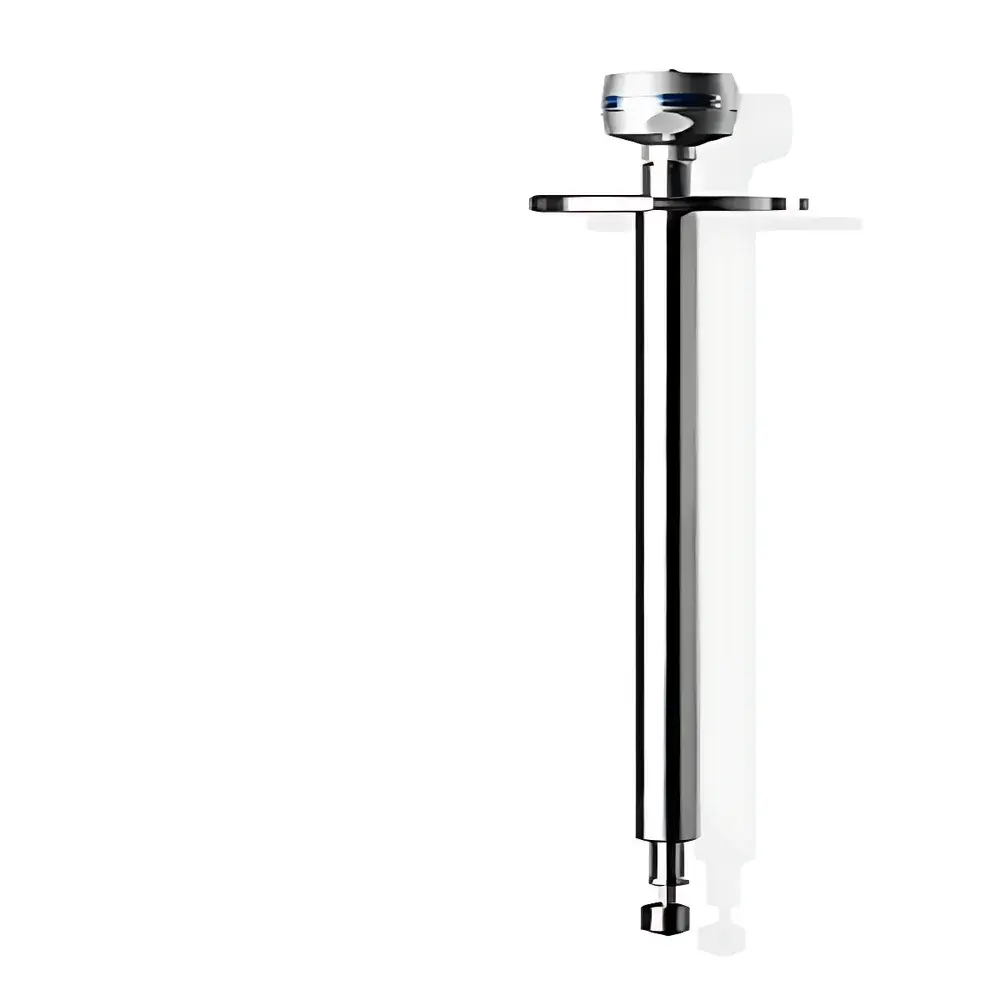
Hydramotion XL7-LR Long-Range Online Viscometer
| Brand | Hydramotion |
|---|---|
| Origin | United Kingdom |
| Model | XL7-LR |
| Measurement Range | 0–1 cP to 0–10⁹ cP |
| Accuracy | ±1% of reading or ±1 digit |
| Repeatability | ±0.3% of reading or ±1 digit |
| Response Time | 1 second |
| Temperature Range (Standard) | −50°C to +150°C |
| HT Option | −50°C to +400°C |
| Pressure Rating | Standard process-rated fittings |
| Process Connections | Tri-clamp, RJT, IDF, DIN, SMS, Varivent®, NPT, BSPP, custom flanges |
| Electrical Interface | Digital intrinsically safe (IS) output |
| Enclosure Rating | IP67 |
| Wetted Materials | Standard 316/316L stainless steel (EN 1.4401 / 1.4404) |
| optional alloys | Alloy C22 (EN 2.4602), Alloy C276 (EN 2.4819), S32750 duplex (EN 1.4410) |
| Surface Finish | Ra < 0.4 µm (electropolished standard) |
| CIP Compatibility | Fully compatible |
| Hazardous Area Certification | ATEX 2014/34/EU, IECEx Ex ia IIC T1–T6 Ga, Ex ia IIIC T135°C Da, UL/cUL Class I Div 1 Groups A–D, IS certified for Zone 0 |
Overview
The Hydramotion XL7-LR Long-Range Online Viscometer is an intrinsically safe, fully welded, in-line rotational viscometer engineered for continuous, real-time viscosity monitoring in demanding industrial process environments. Unlike conventional capillary or vibrational viscometers, the XL7-LR employs Hydramotion’s proprietary torsional resonant sensor technology—based on the principle of forced oscillation of a solid stainless-steel sensing rod immersed directly in the process stream. The system measures the damping torque required to maintain a constant resonant frequency, which correlates directly to dynamic viscosity under laminar flow conditions. This physics-based approach eliminates reliance on calibration fluids and ensures high reproducibility across wide shear rate profiles typical of non-Newtonian and shear-thinning materials. Designed specifically for applications where tank geometry, level fluctuation, or physical layout constraints necessitate extended insertion lengths—up to several meters—the XL7-LR maintains measurement integrity without signal degradation, even with long sensor extensions. Its robust architecture supports uninterrupted operation in continuous production lines across food & beverage, pharmaceuticals, biotechnology, paints & coatings, and specialty chemicals.
Key Features
- Fully welded, seamless sensor rod construction with Ra < 0.4 µm electropolished surface finish—eliminates crevices, prevents biofilm accumulation, and ensures full CIP/SIP compatibility.
- Intrinsically safe (IS) digital output certified for Zone 0 (ATEX/IECEx/UL) — enables safe installation in explosive atmospheres without explosion-proof enclosures or complex barrier systems.
- Modular process connection portfolio: standard support for tri-clamp, RJT, IDF, DIN 11851, SMS, Varivent®, and custom flanged/threaded interfaces—minimizes retrofit engineering effort.
- Extended-range capability: configurable insertion lengths from standard to multi-meter deployments without performance compromise or recalibration.
- Wide operational envelope: −50°C to +150°C standard; high-temperature variant supports up to +400°C; pressure-rated configurations available for elevated process pressures.
- Material flexibility: wetted parts supplied as standard in ASTM A312 TP316/316L (EN 1.4401/1.4404); optional corrosion-resistant alloys include UNS N06022 (Alloy C22), UNS N10276 (Alloy C276), and UNS S32750 (super duplex).
Sample Compatibility & Compliance
The XL7-LR is validated for use with Newtonian and non-Newtonian liquids exhibiting viscosities from 0–1 cP (e.g., solvents, aqueous buffers) up to 0–10⁹ cP (e.g., polymer melts, heavy bitumen, gels). It complies with EU Regulation (EC) No 1935/2004 for materials in contact with foodstuffs. All standard wetted components meet FDA 21 CFR §177.1550 (fluoropolymers) and EHEDG Doc. 8 (hygienic design). The device satisfies ISO 22000, GMP Annex 11, and USP <1058> requirements for analytical instrument qualification when integrated into validated manufacturing systems. Its intrinsically safe certification enables deployment in classified areas per IEC 60079-0, IEC 60079-11, and NEC 500/505 standards.
Software & Data Management
ViscoLink PC software provides secure, time-stamped data acquisition, visualization, trend analysis, and export to CSV or OPC UA-compatible SCADA/MES platforms. The software supports audit trail functionality compliant with FDA 21 CFR Part 11 when deployed with appropriate system controls (e.g., electronic signatures, role-based access, change history logging). Raw sensor data—including viscosity, temperature, damping factor, and resonant frequency—is streamed at 1 Hz resolution. Optional integration with DeltaV, Siemens PCS7, or Rockwell FactoryTalk enables closed-loop process control via analog 4–20 mA or Modbus TCP outputs. Firmware updates are performed remotely over Ethernet without process interruption.
Applications
- Real-time viscosity control in polymerization reactors and extrusion feed lines.
- In-line monitoring of syrup concentration, starch gelatinization, and emulsion stability in food processing.
- Batch release verification of injectables, suspensions, and ointments in pharmaceutical manufacturing.
- Consistency assurance during pigment dispersion and resin synthesis in paint & coatings plants.
- Quality gate enforcement for cleaning validation cycles using conductivity-viscosity correlation models.
- Monitoring thermal degradation onset in heat-sensitive biologics during sterile filtration hold steps.
FAQ
What is the maximum allowable insertion length for the XL7-LR?
Standard configurations support up to 3 m; custom-engineered variants exceed 6 m using reinforced sensor rods and CFD-validated flow dynamics modeling.
Can the XL7-LR measure viscosity in multiphase or suspended-solid streams?
Yes—its torsional resonant principle is insensitive to particle loading up to 40 vol% (subject to erosion assessment and material selection).
Is temperature compensation automatic?
Yes—integrated Pt100 RTD provides real-time temperature feedback; viscosity values are automatically referenced to user-defined base temperatures (e.g., 25°C) per ISO 3219.
How is calibration traceability maintained?
Factory calibration is performed against NIST-traceable mineral oil standards; field verification uses certified reference fluids per ASTM D2196 or ISO 2555.
Does the XL7-LR support predictive maintenance diagnostics?
Yes—ViscoLink monitors mechanical damping trends, resonance drift, and thermal stress signatures to flag potential sensor fouling or structural fatigue prior to failure.
Related Products