
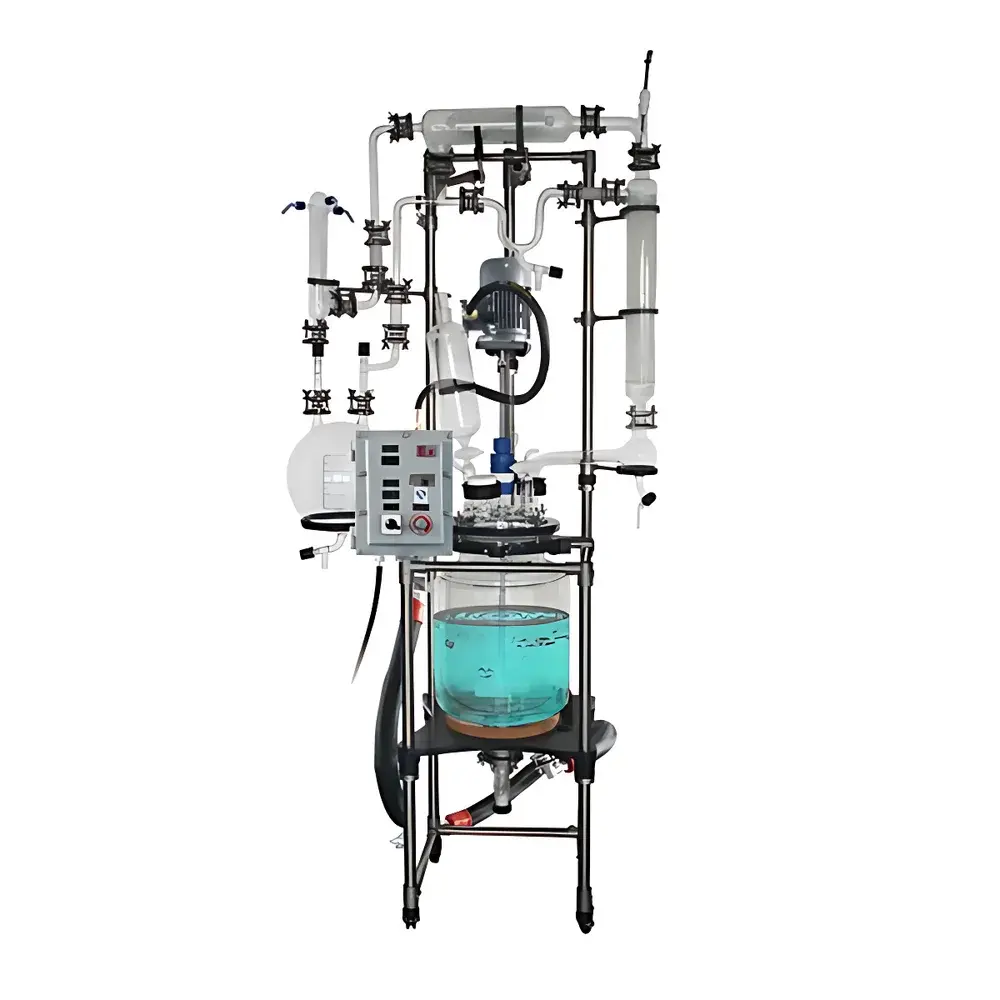
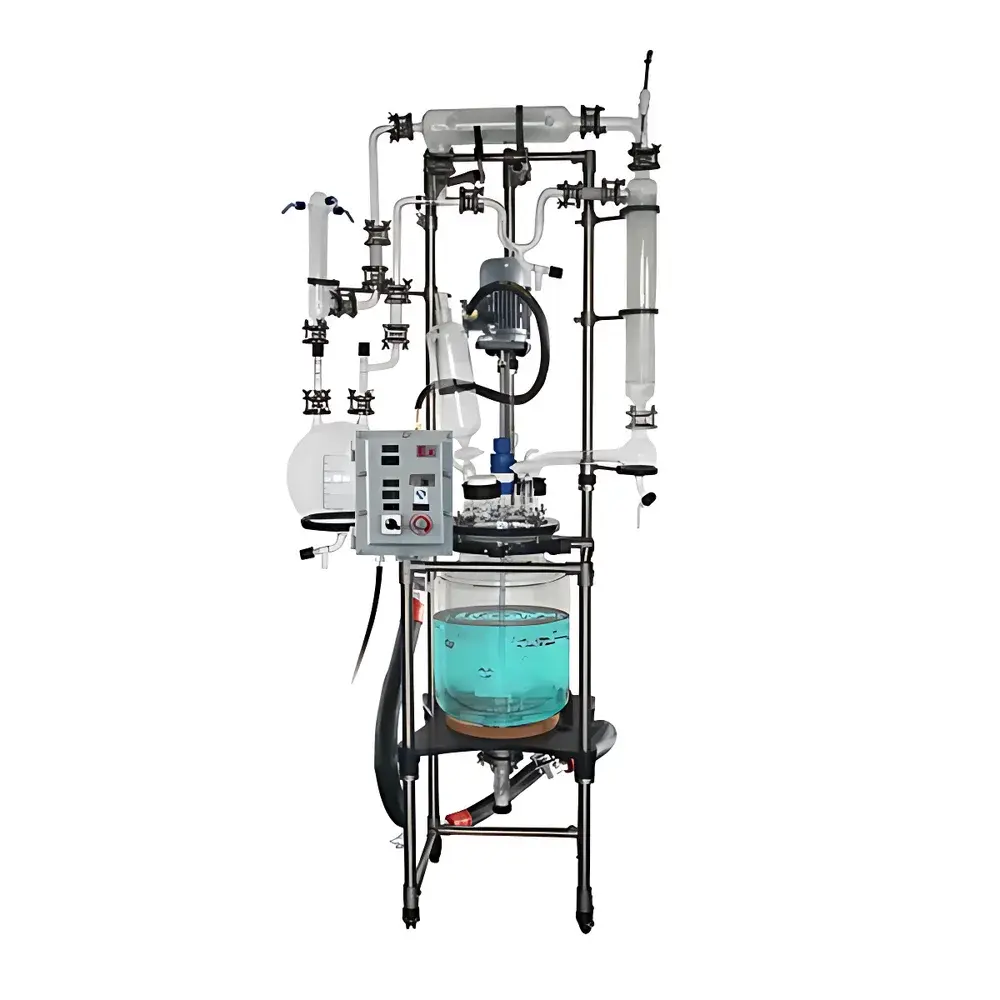
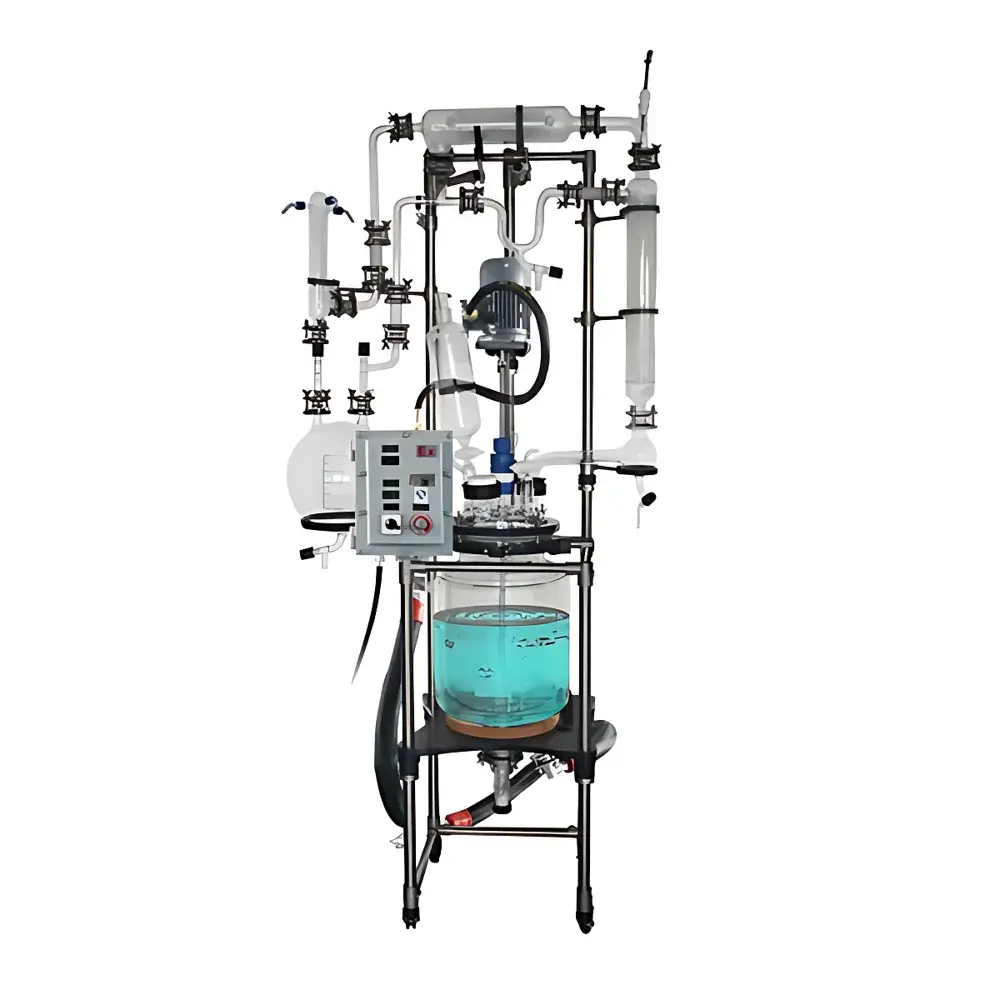
The Great Wall GR-20TEx Explosion-Proof Fractional Distillation Reactor
| Brand | The Great Wall |
|---|---|
| Origin | Henan, China |
| Manufacturer Type | Authorized Distributor |
| Origin Category | Domestic |
| Model | GR-20TEx |
| Instrument Classification | Reaction Vessel |
| Usable Volume | Small-Scale |
| Construction Material | Borosilicate Glass 3.3 |
| Operating Pressure | Low-Pressure |
| Capacity | 20 L |
| Vacuum Range | −0.1 MPa to 0.0 MPa |
| Jacket Volume | ~6.0 L |
| Condenser Heat Transfer Area | ~0.249 m² |
| Constant-Pressure Funnel Capacity | 2000 mL |
| Temperature Range | −80 °C to +200 °C |
| Max. ΔT (Jacket–Vessel) | ≤80 °C |
| Jacket Pressure Limit | ≤0.03 MPa |
| Number of Lid Ports | 6 |
| Temperature Sensor | Pt100 (±0.1 °C display accuracy) |
| Frame Material | SUS304 Stainless Steel |
| Mobility | Equipped with Locking Casters |
| Motor | 180 W Three-Phase Asynchronous Motor |
| Speed Control | Variable-Frequency Drive (50–500 rpm) |
| Stirrer Type | Paddle Agitator with PTFE Blades |
| Stirrer Shaft | SUS304 core with PTFE cladding |
| Sealing Bearings | Precision Ceramic-Enhanced |
| Explosion Protection | Exd II BT4 Certified (All explosion-proof components independently certified) |
| Feed/Discharge Valve | Corrosion-Resistant Side-Outlet Design with Zero Liquid Retention |
| Cooling/Heating Interface | Stainless Steel Flexible Insulated Hoses |
| Ambient Operating Conditions | 5–35 °C, ≤70% RH |
| Discharge Valve Height | ~320 mm above floor |
Overview
The Great Wall GR-20TEx Explosion-Proof Fractional Distillation Reactor is an integrated, bench-to-pilot-scale glass reaction system engineered for safe, precise, and reproducible synthesis, solvent recovery, and multi-stage purification under controlled vacuum and temperature conditions. Designed in accordance with fundamental principles of vapor–liquid equilibrium and continuous fractional distillation, the GR-20TEx combines a high-integrity borosilicate glass 3.3 vessel with certified explosion-proof electrical architecture, enabling operation in Class I, Division 1 hazardous environments where flammable vapors (e.g., ethers, alcohols, hydrocarbons) may be present. Its modular configuration supports both batch and semi-continuous distillation workflows, with a 20 L working volume optimized for scalability from laboratory discovery through process development. The reactor operates across a broad thermal envelope (−80 °C to +200 °C), supported by a jacketed heating/cooling system rated to 0.03 MPa and compatible with silicone oil, glycol, or dry ice–acetone baths. All pressure and vacuum operations are constrained within the certified low-pressure range (−0.1 MPa to 0.0 MPa), ensuring mechanical integrity while complying with ASME BPVC Section VIII, Div. 1 design margins for glass-lined and jacketed vessels.
Key Features
- Borosilicate glass 3.3 construction (DIN ISO 3585 compliant) for exceptional thermal shock resistance (ΔT ≤ 80 °C), chemical inertness against organic solvents, strong acids, and alkalis, and optical clarity for real-time process observation.
- Explosion-proof certification to Exd II BT4 per IEC 60079-1 and GB 3836.1–2010, covering motor, control cabinet, junction boxes, and all field-mounted instrumentation—each component bearing independent third-party certification marks.
- Integrated 85 mm × 700 mm fractionation column packed with glass Raschig rings, supporting theoretical plate estimation and manual reflux ratio adjustment via calibrated needle valve.
- Stirring system featuring a PTFE-coated SUS304 paddle agitator, ceramic-reinforced shaft bearings, and sealed dual-lip mechanical seals to prevent particle shedding and ensure long-term vacuum integrity.
- Pt100 temperature sensor (IEC 60751 Class A) embedded in SUS304 sheath with PTFE insulation, delivering ±0.1 °C display resolution and traceable calibration compatibility.
- No-holdup side discharge valve with PTFE-seated ball mechanism, positioned at 320 mm clearance for direct connection to receivers or downstream collection lines without siphoning or residual pooling.
- Structural frame fabricated from electropolished SUS304 stainless steel with locking casters, facilitating repositioning within fume hoods or dedicated hazardous-area labs while maintaining static stability during agitation.
Sample Compatibility & Compliance
The GR-20TEx is validated for use with thermally labile organics, halogenated solvents, acidic or basic aqueous mixtures, and moisture-sensitive intermediates—provided operating parameters remain within specified limits. It conforms to key international safety and quality frameworks including IEC 60079 series for explosive atmospheres, ISO 14644-1 (cleanroom-compatible surface finish), and GLP-relevant documentation requirements for equipment qualification (IQ/OQ). While not FDA 21 CFR Part 11–enabled out-of-the-box, its analog control architecture supports integration into validated environments via external data loggers with audit-trail capability. All glass joints meet ISO 2768-mK general tolerances; ground-glass interfaces utilize standardized ISO 2977 taper dimensions (e.g., 24/40, 29/32) for interchangeability with common condensers, adapters, and traps.
Software & Data Management
The GR-20TEx employs a stand-alone analog-digital hybrid control panel with LED-based rpm and temperature displays, eliminating embedded firmware dependencies. For traceable process recording, users may interface the Pt100 output (4–20 mA or 0–10 V) and tachometer signal (pulse output) with external PLCs, SCADA systems, or validated data acquisition platforms (e.g., LabVIEW, DeltaV, or Siemens Desigo CC). Optional RS485 Modbus RTU expansion enables centralized monitoring in multi-reactor installations. Calibration records, maintenance logs, and explosion-proof certification documentation are supplied with each unit and align with ISO/IEC 17025 clause 6.4.10 requirements for measurement traceability.
Applications
- Low-pressure fractional distillation of heat-sensitive natural product extracts (e.g., terpenes, alkaloids) under nitrogen blanket.
- Solvent recycling in pharmaceutical API synthesis, particularly for ethyl acetate, THF, and dichloromethane recovery under −0.09 MPa vacuum.
- Multi-step Grignard or organolithium reactions requiring strict exclusion of moisture/oxygen and simultaneous distillative removal of by-products.
- Process optimization studies for esterification, transesterification, or amidation kinetics under controlled reflux ratios and jacket temperature ramps.
- Educational demonstration of Raoult’s law deviations, azeotrope breaking, and minimum-boiling mixture behavior in university chemistry laboratories.
FAQ
Is the GR-20TEx suitable for hydrogenation reactions under H₂ pressure?
No. The GR-20TEx is rated exclusively for low-pressure/vacuum service (−0.1 to 0.0 MPa); it is not designed or certified for positive-pressure gas-phase reactions.
Can the glass column be replaced with a Vigreux or spinning-band variant?
Yes—standard ISO 29/32 or 24/40 ground-glass ports allow direct mechanical coupling of alternative columns, provided external support and weight distribution are verified.
Does the system include validation documentation for GMP environments?
It includes factory calibration certificates for Pt100 and speed sensor, explosion-proof certification dossiers, and material declarations (RoHS/REACH); full IQ/OQ protocol development requires site-specific execution.
What maintenance intervals are recommended for the stirring seal and bearings?
Under continuous operation at ≤300 rpm and ambient temperatures <40 °C, inspect mechanical seals every 500 operational hours; replace ceramic bearings after 2,000 hours or upon audible wear indication.
Is remote monitoring possible without modifying the control panel?
Yes—via analog signal taps (temperature, rpm) and optional Modbus RTU add-on module; no internal firmware modification is required or advised.



