
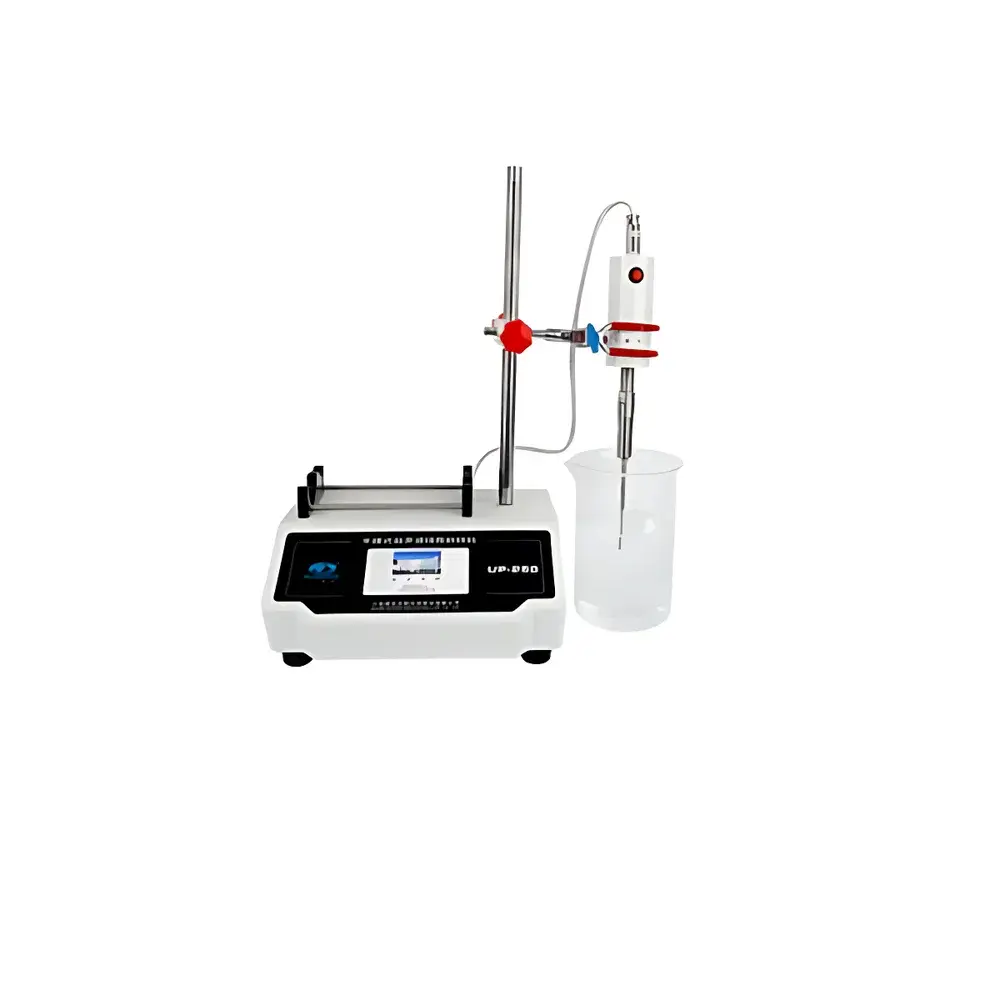
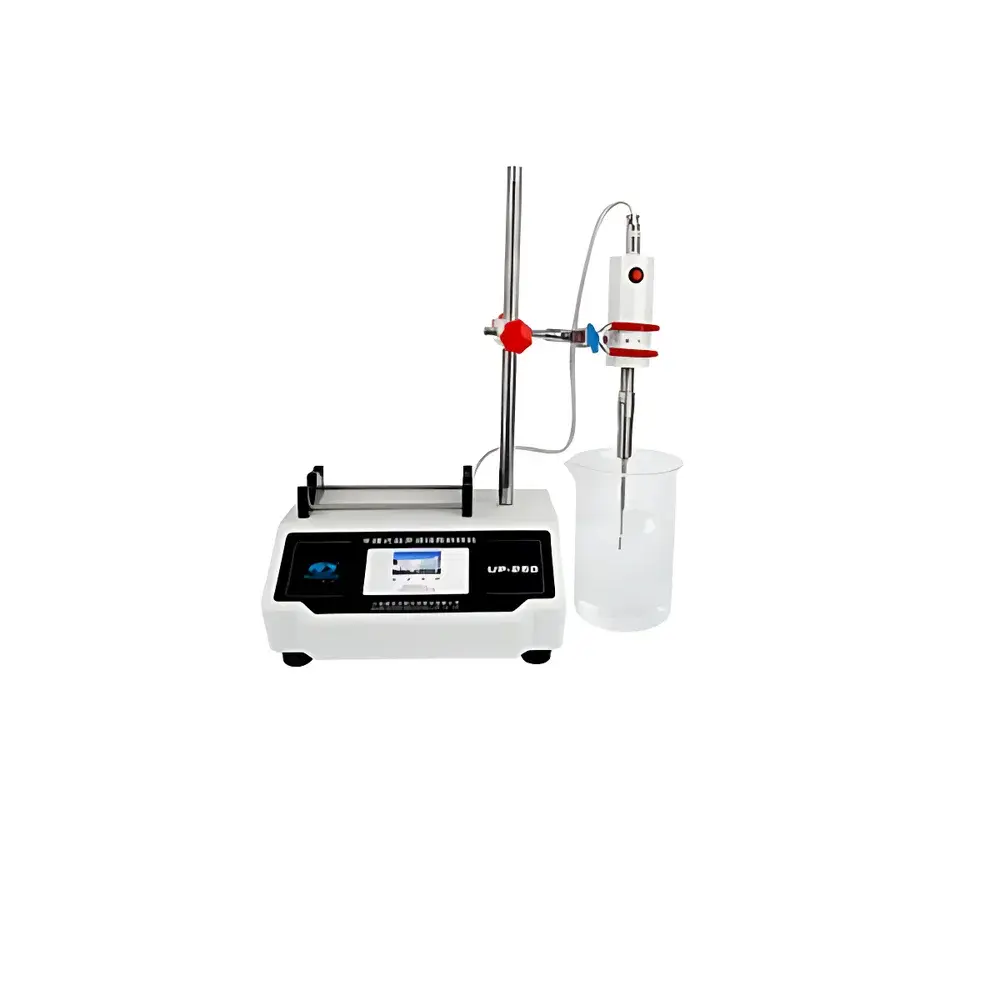
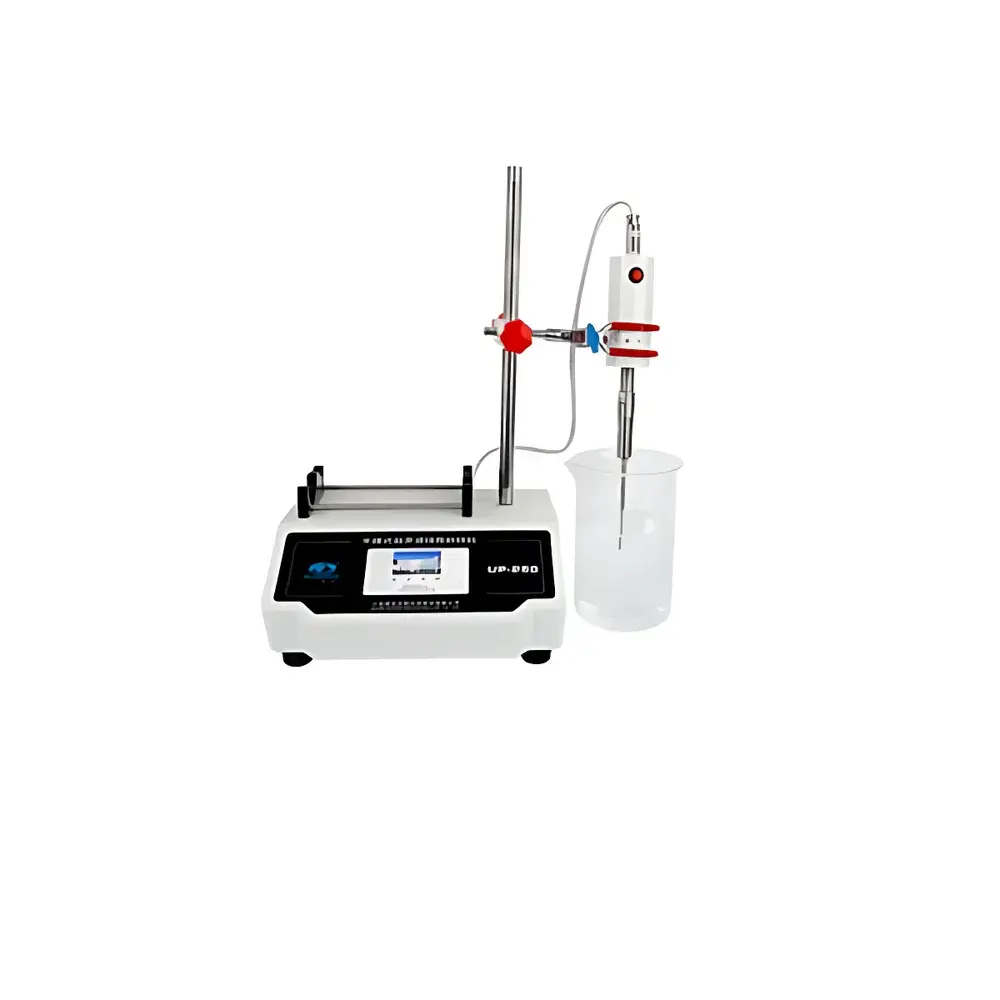
SCIENTZ UP-250 Handheld Ultrasonic Cell Disruptor
| Brand | SCIENTZ |
|---|---|
| Origin | Zhejiang, China |
| Model | UP-250 |
| Instrument Type | Ultrasonic Cell Disruptor |
| Operating Frequency | 19–25 kHz |
| Ultrasonic Output Power | 250 W |
| Sample Volume Capacity | 0.5–10 mL |
| Display | 4.3-inch Touchscreen |
| Control Modes | Automatic & Manual (footswitch optional) |
| Pulse Duration | 0.1–99 s (on/off) |
| Total Sonication Time | 0.1–99 min |
| Horn Diameter | 3 mm |
| Dimensions (UP-250) | 270 × 245 × 116 mm |
| Power Supply | 220 V / 50 Hz |
Overview
The SCIENTZ UP-250 Handheld Ultrasonic Cell Disruptor is an engineered solution for rapid, reproducible, and scalable cell lysis and sample homogenization in life science laboratories, field-deployable diagnostics, and quality control environments. It operates on the physical principle of acoustic cavitation: high-frequency ultrasonic energy (19–25 kHz) is transmitted through a titanium alloy probe (3 mm diameter horn) into liquid samples, generating transient microbubbles that collapse asymmetrically near cellular structures. This implosive collapse produces localized shockwaves, intense shear forces, and microstreaming—mechanically disrupting membranes, organelles, and macromolecular complexes without significant thermal denaturation when operated under pulsed conditions. Unlike fixed-position bath or cup-horn systems, the UP-250’s handheld architecture enables direct, real-time sonication of individual tubes, microcentrifuge vials, and multi-well plates—including 96-well formats—minimizing cross-contamination risk and maximizing throughput in high-sample-volume workflows.
Key Features
- Portable, ergonomic handheld design with integrated 4.3-inch capacitive touchscreen interface for intuitive parameter input and real-time monitoring
- 250 W peak ultrasonic output power with precise digital control over pulse duration (0.1–99 s), duty cycle, and total sonication time (0.1–99 min)
- Dual operation modes: automatic mode with pre-set protocols and manual mode with instant trigger activation; footswitch compatibility available for hands-free operation
- Real-time temperature monitoring with visual alert and automatic shutdown upon exceeding user-defined thermal thresholds—critical for preserving labile biomolecules such as RNA and native proteins
- Optimized for low-volume applications: effective processing of samples ranging from 100 µL to 10 mL, including direct sonication in standard 1.5 mL microtubes and enzyme-linked immunosorbent assay (ELISA) plates
- Robust titanium alloy probe (3 mm tip diameter) designed for consistent energy transfer and resistance to corrosion during repeated exposure to aqueous and organic solvents
Sample Compatibility & Compliance
The UP-250 is validated for use with diverse biological matrices including bacterial cultures (E. coli, Bacillus spp.), mammalian cell suspensions (HEK293, CHO, Jurkat), plant tissues (leaf homogenates, root extracts), and yeast lysates. It supports both contact-mode lysis (direct probe immersion) and non-contact configurations when used with specialized microplate adapters. All operational parameters comply with ISO 13485-aligned manufacturing practices, and the device meets CE marking requirements for electromagnetic compatibility (EMC Directive 2014/30/EU) and low-voltage safety (LVD Directive 2014/35/EU). For regulated environments, the system supports audit-ready documentation via timestamped protocol logs stored locally on internal memory—facilitating alignment with GLP and GMP documentation expectations.
Software & Data Management
While the UP-250 does not require external software for basic operation, its embedded firmware records all executed protocols—including date/time stamp, power setting, pulse sequence, total duration, and temperature history—for traceability. Data export is supported via USB-C interface for integration into laboratory information management systems (LIMS). The touchscreen interface allows creation and naming of up to 20 user-defined protocols, each with unique identifiers for version control. No cloud connectivity or remote access functionality is implemented, ensuring data sovereignty and compliance with institutional IT security policies. Firmware updates are performed offline using signed binary files distributed through authorized SCIENTZ technical support channels.
Applications
- Biological sample preparation: mechanical lysis of prokaryotic and eukaryotic cells for downstream nucleic acid isolation (genomic DNA, plasmid DNA, total RNA), protein extraction, and chromatin shearing in ChIP-seq workflows
- Nanomaterial synthesis: dispersion of carbon nanotubes, graphene oxide, and metal-organic frameworks (MOFs) in aqueous and organic media
- Pharmaceutical R&D: emulsification of liposomal formulations, particle size reduction in suspension-based drug delivery systems, and accelerated dissolution testing
- Food safety and environmental monitoring: pathogen lysis (Salmonella, Listeria) from enrichment broths prior to PCR detection; pesticide residue extraction from fruit/vegetable homogenates
- Industrial biotechnology: disruption of microbial consortia in fermentation broth analysis and recovery of intracellular enzymes
FAQ
What is the recommended maintenance schedule for the ultrasonic horn?
Inspect the titanium horn tip before each use for pitting or erosion; replace if surface irregularities exceed 0.1 mm depth. Clean immediately after use with 70% ethanol followed by deionized water rinse and air drying.
Can the UP-250 be used for cryogenic sonication?
No. The device is not rated for sub-zero ambient or sample temperatures. Operation below 5 °C may impair piezoelectric transducer performance and compromise thermal sensor accuracy.
Is the UP-250 compatible with sterile processing requirements?
Yes. The probe can be autoclaved at 121 °C for 20 minutes (standard gravity cycle); verify post-sterilization calibration using a reference hydrophone or calibrated calorimetric assay.
Does the instrument support FDA 21 CFR Part 11 compliance?
The UP-250 does not include electronic signature capability or role-based user authentication. However, its local audit trail (with immutable timestamps and protocol IDs) serves as foundational evidence for Part 11–aligned validation studies when deployed within a broader compliant workflow.
How is acoustic output calibrated across different operators?
SCIENTZ provides a factory calibration certificate traceable to NIST standards. Users should perform quarterly verification using a calibrated hydrophone or calorimetric method per ASTM E1001-22 guidelines to ensure inter-operator reproducibility.




