
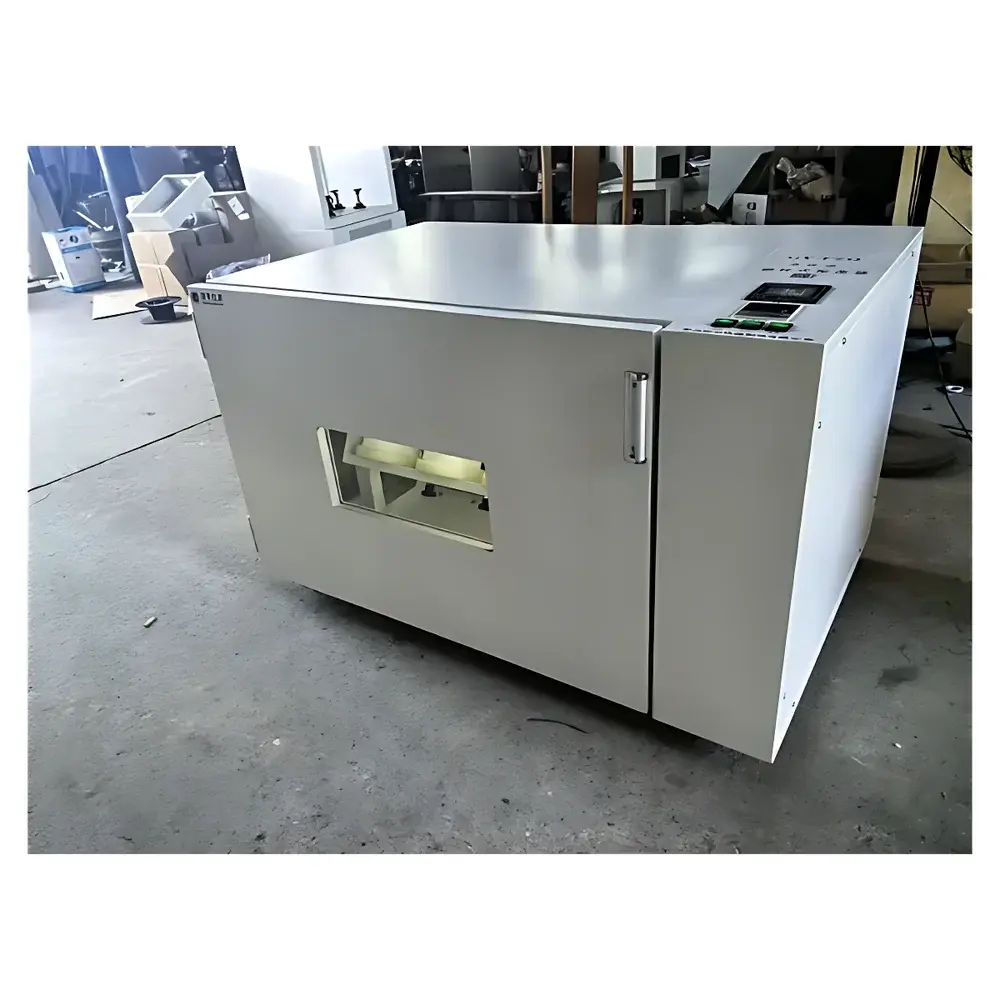
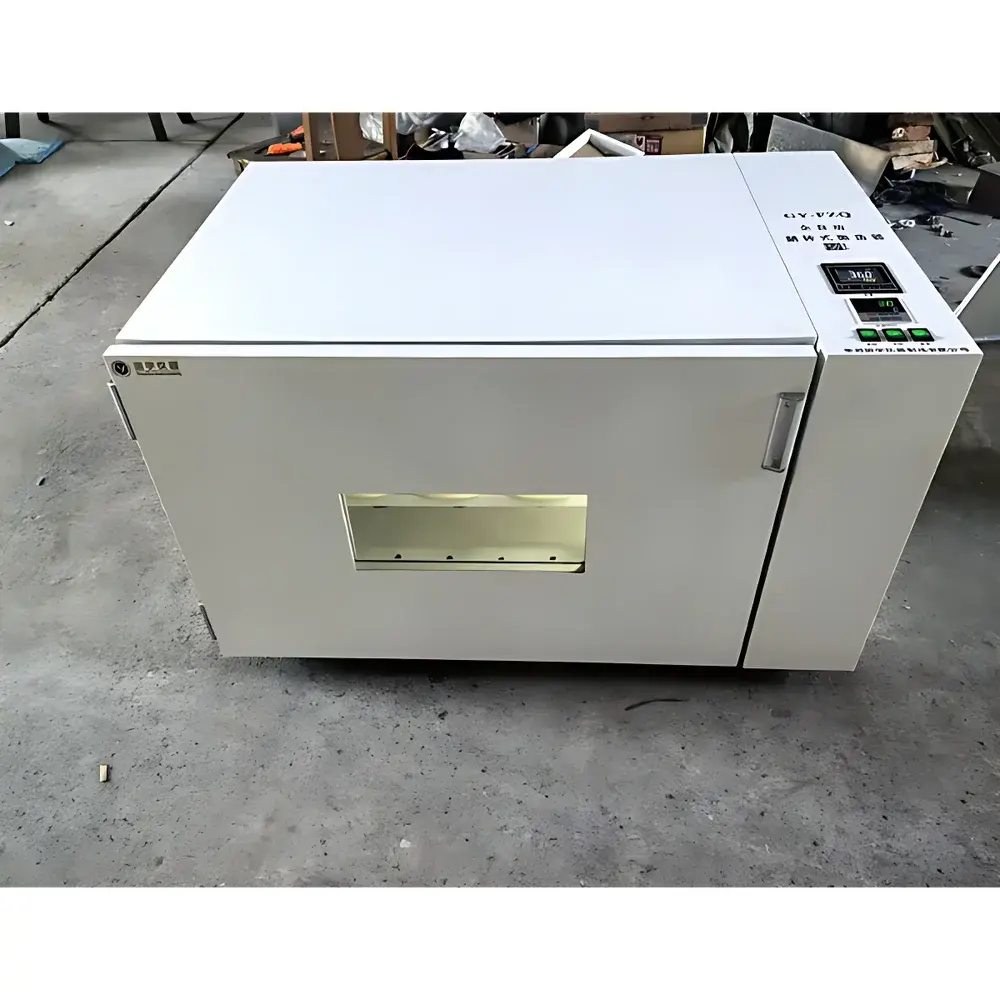
CZGY GY-FZQ Automated Tilt-Action Extraction Shaker
| Brand | CZGY |
|---|---|
| Origin | Jiangsu, China |
| Manufacturer Type | Direct Manufacturer |
| Instrument Type | Tilt-Action Extraction Shaker |
| Timer Range | 0–9999 min |
| Oscillation Speed | 5–300 rpm |
| Stroke Amplitude | 20 mm |
| Temperature Range | Ambient to 65 °C |
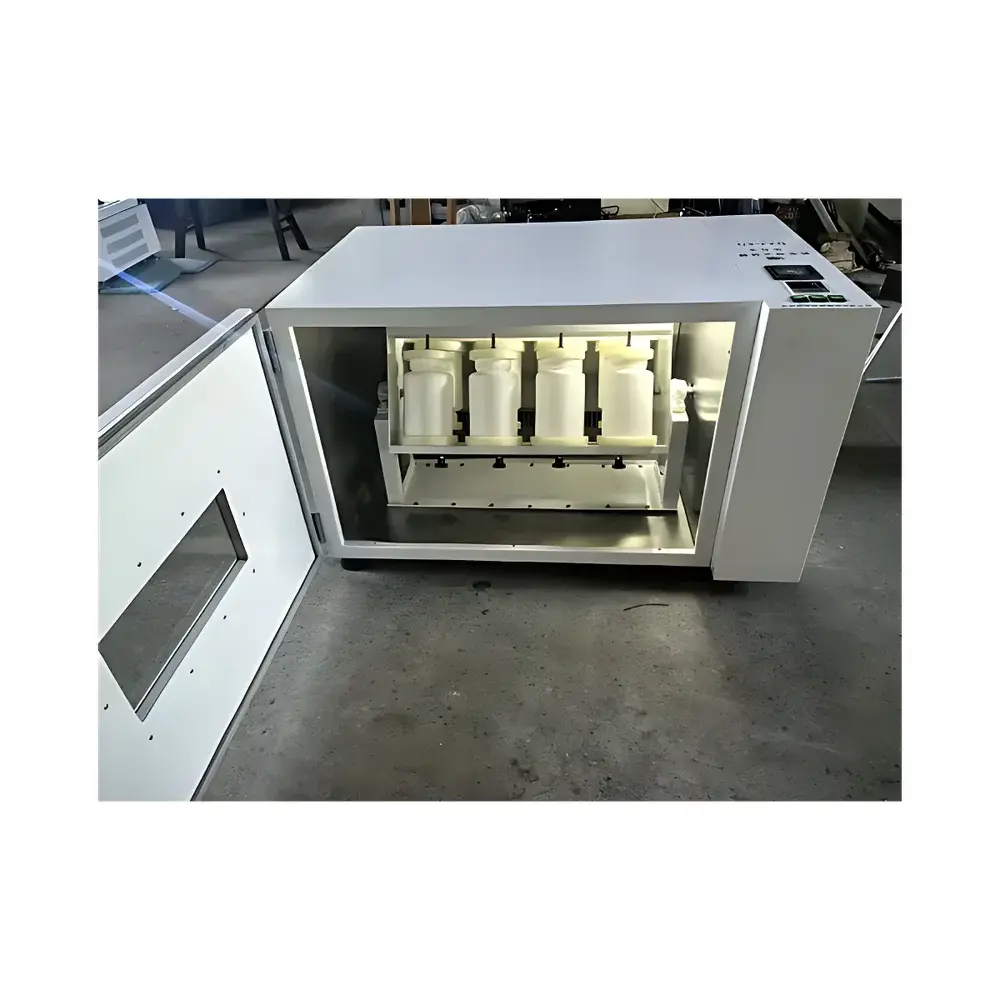
| Shelf Configurations | 4-, 6-, 8-, 10-, or 12-bottle platforms |
Overview
The CZGY GY-FZQ Automated Tilt-Action Extraction Shaker is an engineered platform for standardized leaching toxicity testing of solid waste matrices in compliance with internationally recognized environmental regulatory protocols. It operates on a precisely controlled tilt-and-rotate motion—alternating forward and reverse rotation at user-defined intervals—to simulate field-relevant percolation dynamics under controlled laboratory conditions. This mechanical action ensures uniform, reproducible contact between solid-phase samples and extraction reagents (e.g., sulfuric–nitric acid mixture per EPA Method 1311 or acetic acid buffer per HJ/T 300–2007), enabling quantitative release of inorganic contaminants and semi-volatile organic compounds (SVOCs). Designed for long-duration operation (≥18 h continuous duty), the shaker integrates thermal regulation, programmable timing, and inert-material sample contact surfaces to support GLP-aligned workflows in environmental fate studies, hazardous waste characterization, and regulatory compliance testing.
Key Features
- Regulatory-compliant tilt-action mechanism meeting HJ/T 299–2007, HJ/T 300–2007, and U.S. EPA Method 1311 requirements
- Microprocessor-controlled dual-mode operation: programmable alternating tilt (2 min forward / 5 s pause / 2 min reverse / 5 s pause) or continuous unidirectional rotation
- Precise speed control from 5 to 300 rpm in 1-rpm increments; factory-default setpoint at 30 ± 2 rpm for extended stability
- Temperature-controlled chamber operating from ambient up to 65 °C with ±0.5 °C accuracy and overtemperature alarm
- Multiple platform configurations: interchangeable 4-, 6-, 8-, 10-, and 12-position decks accommodating standard 2-L containers
- Full 360° enclosed tilting motion with integrated safety interlocks: lid-open power cutoff, leakage current protection, and motor overload safeguard
- Inert wetted materials including PTFE-coated stainless steel, borosilicate glass-compatible fixtures, and chemically resistant polymer housings
Sample Compatibility & Compliance
The GY-FZQ accommodates 2-L sample vessels fabricated from PE, borosilicate glass, PTFE, or Teflon®, as well as zero-headspace extraction (ZHE) containers—ensuring compatibility with volatile analyte preservation protocols. Its design eliminates adsorption or leaching from fixture surfaces, maintaining sample integrity across repeated extraction cycles. The system supports full traceability under Good Laboratory Practice (GLP) frameworks and aligns with ISO/IEC 17025 method validation requirements for environmental testing laboratories. While not certified to IEC 61000-4 electromagnetic immunity standards out-of-box, its electrical architecture conforms to GB/T 14710 (Chinese industrial equipment environmental adaptability) and includes grounding terminals compliant with IEC 60364-5-54.
Software & Data Management
Operation is managed via a dedicated microcontroller interface with tactile membrane keypad and dual-line LED display. All parameters—including speed, tilt cycle duration, dwell time, total run time (0–9999 min), and temperature setpoint—are stored in non-volatile memory and retain settings after power interruption. The controller logs operational status (run/stop), active setpoints, and fault codes (e.g., overtemperature, lid open, motor stall) for audit trail generation. Optional RS-232 or USB-to-serial adapters enable integration with LIMS platforms for automated data capture. Though native software does not provide 21 CFR Part 11 electronic signature functionality, timestamped parameter change logs meet minimum ALCOA+ (Attributable, Legible, Contemporaneous, Original, Accurate) data integrity criteria for regulated environments.
Applications
- Hazardous waste classification per U.S. RCRA and China’s National Hazardous Waste Catalogue
- Leachate risk assessment for landfill liner design and closure planning
- Extraction efficiency validation for metals (As, Pb, Cd, Cr), cyanide, fluoride, and SVOCs (PAHs, PCBs, phthalates)
- Method development and inter-laboratory comparison studies under ISO 17043 proficiency testing schemes
- Soil and sediment remediation feasibility screening in contaminated site investigations
- Regulatory submission support for EPA Toxicity Characteristic Leaching Procedure (TCLP) and Synthetic Precipitation Leaching Procedure (SPLP) equivalents
FAQ
What regulatory methods does the GY-FZQ support?
It is validated for HJ/T 299–2007 (sulfuric–nitric acid method), HJ/T 300–2007 (acetic acid buffer method), and U.S. EPA Method 1311 (TCLP).
Can the shaker operate without temperature control?
Yes—ambient-mode operation is enabled by setting temperature to “OFF” or leaving it at default ambient reading.
Is custom bottle capacity support available?
Yes; optional mounting fixtures accommodate 100 mL, 250 mL, and 500 mL containers upon request—subject to mechanical load verification.
How is calibration traceability maintained?
Speed and temperature sensors are factory-calibrated against NIST-traceable references; users may perform field verification using calibrated tachometers and PT100 probes.
Does the unit include documentation for quality system audits?
Standard delivery includes a Factory Calibration Certificate, Electrical Safety Test Report (per GB 4793.1), and Operating Manual with maintenance log templates for GLP/GMP recordkeeping.
Related Products




