
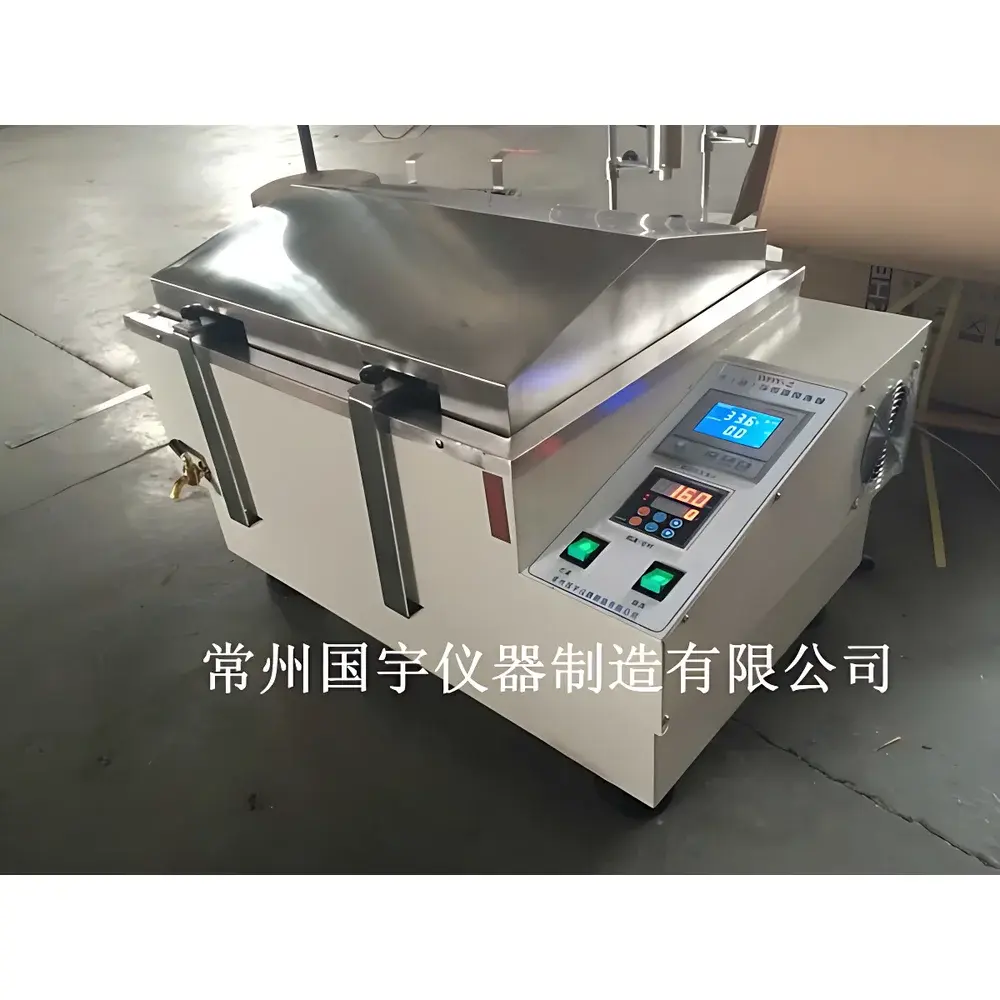
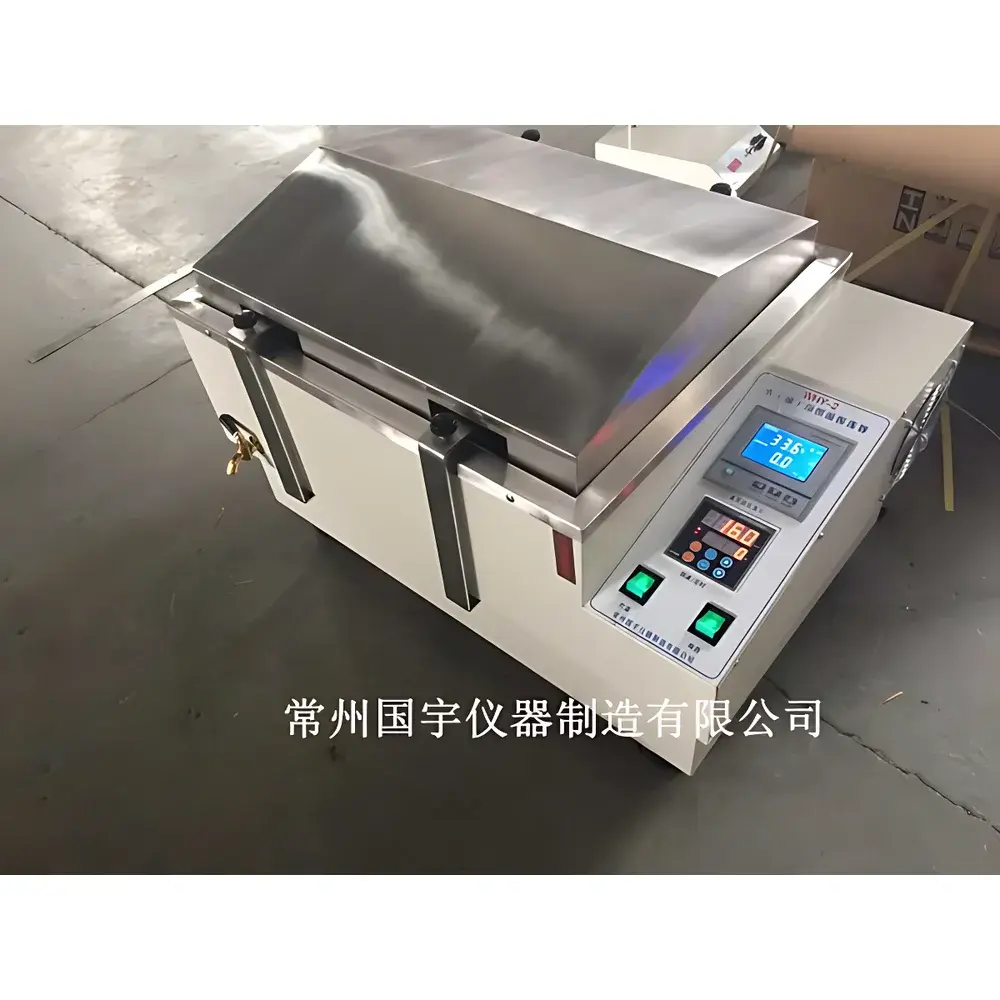
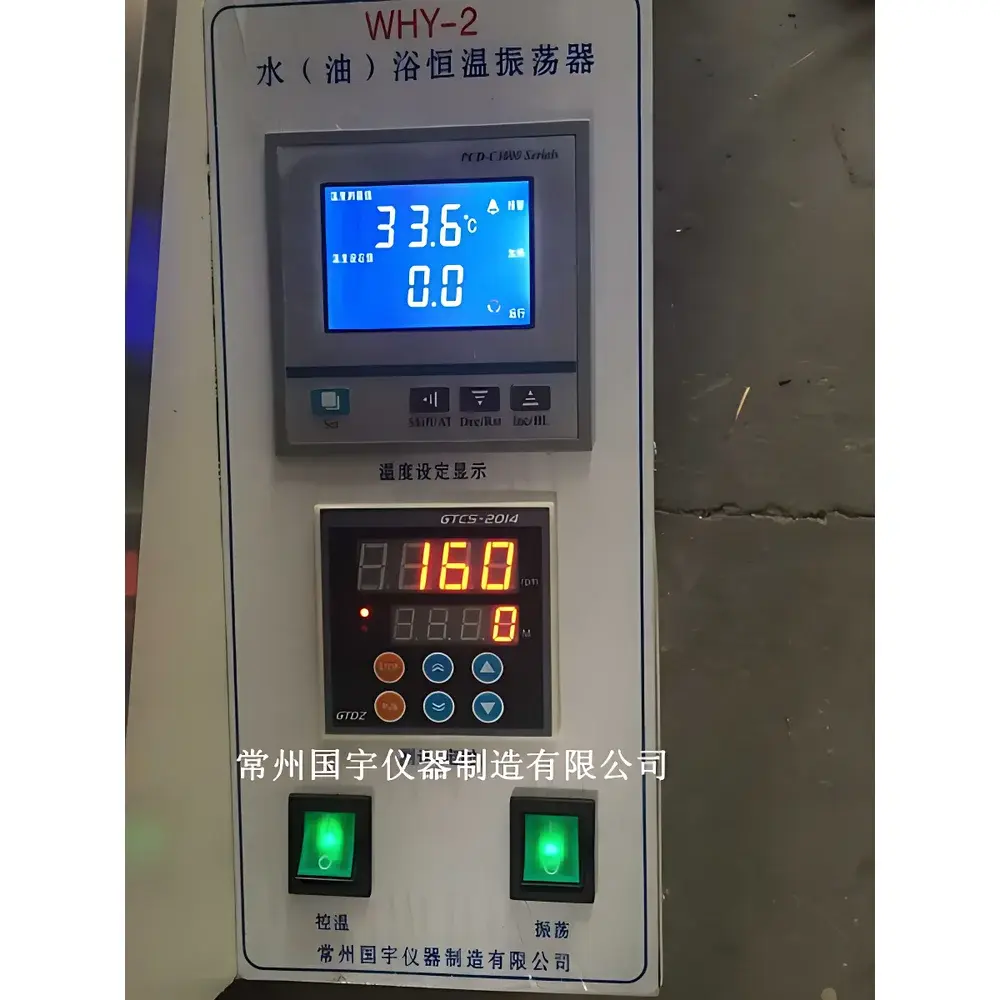
CZGY WHY-2 Oil Bath Constant-Temperature Orbital Shaker
| Brand | CZGY |
|---|---|
| Origin | Jiangsu, China |
| Manufacturer Type | Direct Manufacturer |
| Instrument Category | Domestic |
| Model | WHY-2 Oil Bath |
| Price Range | USD 140–700 (FOB) |
| Instrument Type | Oil/Water Bath Constant-Temperature Shaker |
| Timer Range | Temperature Control Timer: 0–9999 min |
| Oscillation Timer | 0–9999 min |
| Oscillation Frequency | 60–300 rpm |
| Oscillation Amplitude | 20 mm |
| Temperature Range | Ambient +5°C to 300°C |
| Platform Quantity | 1 |
| Power Supply | 220 V, 50 Hz |
| Heating Power | 1800 W |
| Oscillation Motor Power | 150 W |
| Temperature Accuracy | ±0.5°C |
| Temperature Resolution | 0.1°C |
| Platform Dimensions | 405 × 310 mm |
| Speed Accuracy | ±1 rpm |
Overview
The CZGY WHY-2 Oil Bath Constant-Temperature Orbital Shaker integrates precise thermostatic control with uniform orbital agitation in a single compact platform. Engineered for reproducible thermal and mechanical stimulation of biological and chemical samples, it utilizes oil or water as a high-thermal-capacity heat-transfer medium—enabling stable temperature maintenance across the full operating range from ambient +5°C up to 300°C. Unlike air-bath shakers, this design minimizes thermal gradients and ensures rapid, uniform heat distribution around reaction vessels, making it especially suitable for high-temperature enzymatic assays, lipid solubilization, polymerization kinetics, and thermally sensitive cell culture protocols requiring both sustained heating and gentle mixing. The unit employs a segmented LCD interface with advanced fuzzy PID temperature regulation, delivering ±0.5°C stability and 0.1°C resolution under dynamic load conditions.
Key Features
- Robust stainless-steel bath chamber resistant to corrosion and thermal stress at elevated temperatures
- Dual independent timer system: separate programmable timers for temperature hold and oscillation duration (0–9999 minutes each)
- Precision DC motor drive with digital speed control (60–300 rpm, ±1 rpm accuracy) and 20 mm orbital amplitude for consistent mixing efficiency
- High-power 1800 W heating element coupled with intelligent thermal compensation to maintain setpoint during prolonged operation
- 405 × 310 mm single-platform configuration optimized for standard flasks (50–2000 mL), test tubes, and multi-well plates with compatible adapters
- Integrated safety architecture including ground-fault protection, over-temperature cutoff, and real-time status LED indicators (green = running, red = standby/stop)
Sample Compatibility & Compliance
The WHY-2 accommodates a broad spectrum of sample containers—including borosilicate glass flasks, stainless-steel reactors, and silicone-sealed vials—without compromising thermal integrity or mechanical stability. Its oil-bath design supports applications requiring extended exposure above 100°C, such as protein denaturation studies (e.g., thermal shift assays), solvent-based extractions, and high-viscosity media incubation. While not certified for GMP manufacturing environments, the instrument meets general laboratory safety standards per IEC 61010-1 for electrical equipment used in laboratory settings. Its temperature and timing parameters are traceable and repeatable under ISO/IEC 17025-aligned calibration practices; users may implement internal SOPs referencing ASTM E2995 (Standard Guide for Laboratory Equipment Calibration) for routine verification.
Software & Data Management
The WHY-2 operates via embedded firmware without external PC dependency. All operational parameters—including setpoints, timers, and runtime logs—are retained in non-volatile memory across power cycles. Though no proprietary software is provided, the device supports manual data logging via external thermocouple probes (e.g., Type K) connected to third-party data acquisition systems. For regulated environments, users may integrate the unit into broader lab-wide monitoring networks using analog output modules (0–5 V or 4–20 mA) for continuous temperature and RPM telemetry. Audit trails and electronic records must be maintained externally in accordance with FDA 21 CFR Part 11 requirements if used in GLP or preclinical research workflows.
Applications
- Thermal optimization of enzyme-catalyzed reactions under controlled agitation
- Accelerated aging studies of pharmaceutical excipients and biopolymer formulations
- Extraction of heat-stable natural products (e.g., curcuminoids, waxes, resins) using organic solvents
- Preparation of homogeneous nanoparticle dispersions in high-boiling-point media
- Cell lysis and antigen retrieval protocols requiring combined thermal and mechanical energy input
- Calibration validation of high-temperature reference standards in metrology labs
FAQ
What types of heat-transfer media are compatible with the WHY-2?
Mineral oil, silicone oil, and distilled water are all supported. Viscosity and flash point must be selected according to the target temperature—silicone oil is recommended above 200°C.
Can the shaker operate continuously without a time limit?
Yes. Setting both timers to 0:00 enables uninterrupted operation until manually stopped.
Is the platform removable for cleaning or customization?
The single oscillating platform is fixed but accessible; bath fluid and chamber surfaces can be cleaned using non-abrasive, non-chlorinated agents after cooling to ambient temperature.
Does the unit support external temperature probe feedback?
No native port exists, but the bath temperature sensor output can be accessed via service-mode diagnostics for integration with external controllers.
What maintenance intervals are recommended for long-term reliability?
Oil level and clarity should be verified every 200 operating hours; heater element resistance and motor brush wear should be inspected annually per manufacturer’s technical bulletin TB-WHY2-REV4.





