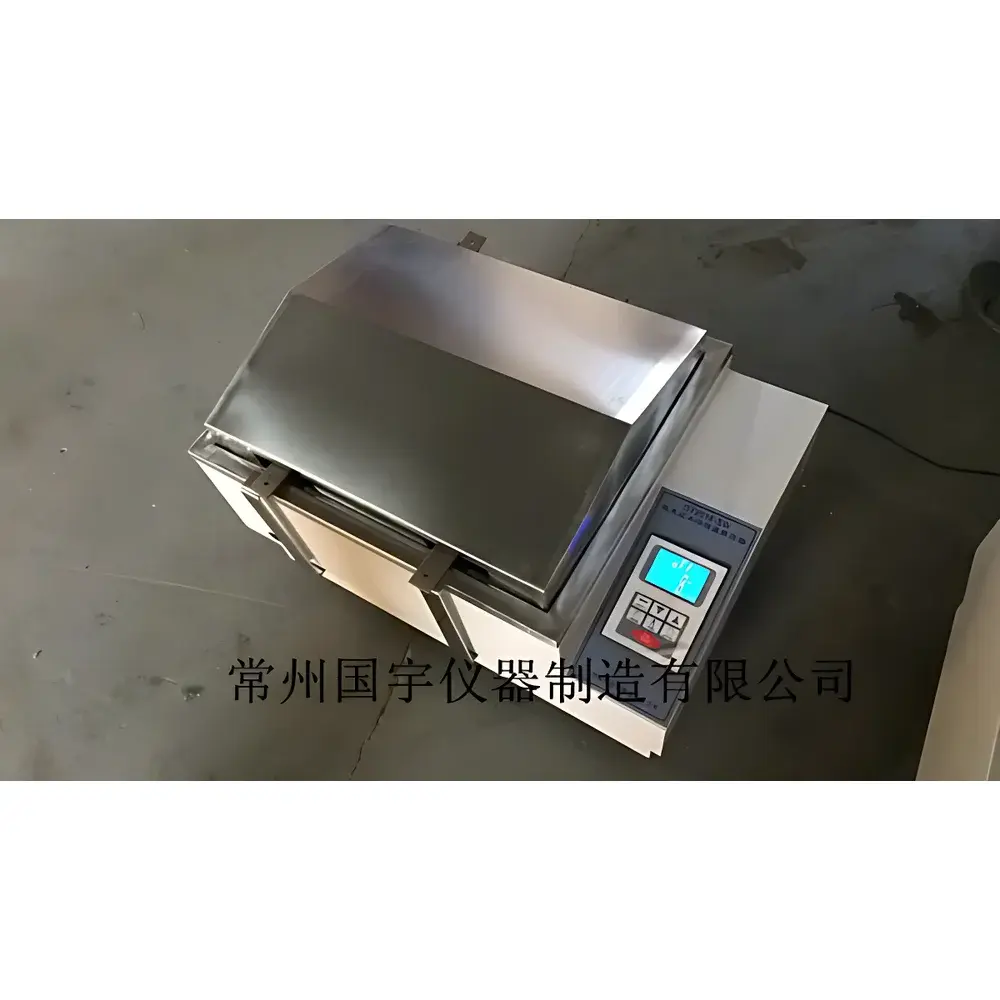
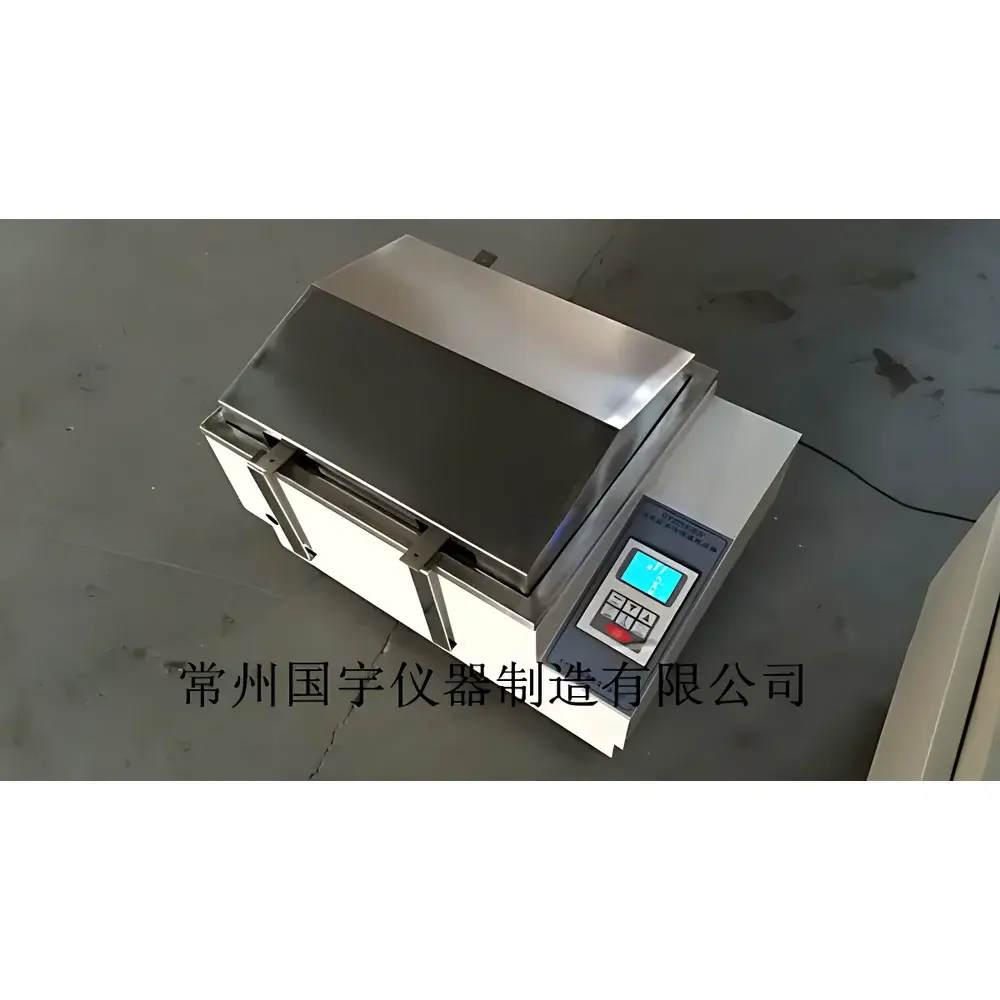
CZGY GY2016-SW Reciprocating Water-Bath Constant-Temperature Shaker
| Brand | CZGY |
|---|---|
| Origin | Jiangsu, China |
| Manufacturer Type | Direct Manufacturer |
| Instrument Type | Water-Bath Constant-Temperature Shaker |
| Model | GY2016-SW |
| Timing Range | Continuous (Unlimited) |
| Oscillation Frequency | 40–300 rpm, ±1 rpm accuracy |
| Oscillation Amplitude | 20 mm |
| Temperature Range | Ambient +5°C to 100°C, ±0.5°C stability |
| Number of Platforms | 1 |
| Power Supply | 220 V, 50 Hz |
| Total Power | 1800 W |
| Operating Mode | Reciprocating (customizable to orbital upon request) |
Overview
The CZGY GY2016-SW Reciprocating Water-Bath Constant-Temperature Shaker is an engineered platform for precise, thermally stable agitation of biological and biochemical samples under controlled aqueous thermal conditions. Unlike air-bath shakers, this unit employs a fully immersed water bath—providing uniform heat transfer across the entire sample volume via conduction and natural convection—making it especially suitable for temperature-sensitive applications such as enzyme kinetics, microbial growth studies, solubility testing, and cell culture pre-incubation. Its reciprocating motion profile generates linear back-and-forth displacement along a single horizontal axis, optimizing mixing efficiency for viscous or sediment-prone suspensions while minimizing shear-induced cellular damage compared to orbital or vortex agitation. The system integrates dual-loop digital control: a fuzzy PID algorithm governs thermal regulation with <±0.5°C steady-state deviation and minimal overshoot (<0.3°C), while a closed-loop brushless DC motor drive manages speed via coordinated current and velocity feedback—ensuring consistent torque delivery across the full 40–300 rpm range.
Key Features
- Fully submersible stainless-steel water bath chamber with integrated heating element and PT100 temperature sensor for high-fidelity thermal monitoring
- Dual-loop motor control architecture featuring programmable acceleration/deceleration ramps and adjustable power limiting to prevent mechanical overload during start-up or high-viscosity loading
- Segmented LCD display with dedicated numeric fields for real-time temperature setpoint, actual bath temperature, speed setpoint, and actual RPM
- Comprehensive fault diagnostics including motor stall detection, Hall-effect sensor failure alerts, bus voltage monitoring (under/over-voltage), and communication integrity verification
- Robust mechanical design with reinforced aluminum alloy frame, precision-machined reciprocating carriage, and corrosion-resistant fasteners compliant with ISO 9001 manufacturing protocols
- Single-platform configuration optimized for standard 250–2000 mL flask capacity; optional clamping fixtures available for Erlenmeyer flasks, test tubes, and custom vessels
Sample Compatibility & Compliance
The GY2016-SW accommodates a broad spectrum of sample formats—including liquid cultures in glass or polypropylene flasks, suspension-based immunoassays, protein dialysis cassettes, and solid-phase extraction cartridges—provided they are compatible with aqueous immersion and operate within the specified temperature envelope. Its thermal performance meets ASTM E2550-22 requirements for laboratory shaker temperature uniformity testing, and its electrical safety design conforms to IEC 61010-1:2010 for laboratory equipment. While not certified for GMP environments out-of-the-box, the instrument supports GLP-compliant operation when paired with external audit-trail-capable data loggers and validated SOPs. All firmware logic adheres to deterministic timing constraints, enabling reproducible experimental replication across multi-site academic and industrial laboratories.
Software & Data Management
The GY2016-SW operates as a standalone analog-digital hybrid controller without embedded network interfaces or proprietary software dependencies. Temperature and speed parameters are configured locally via membrane keypad inputs; all operational states—including fault codes and runtime hours—are retained in non-volatile memory for traceability. For integration into automated workflows, RS-485 Modbus RTU serial output is available as a factory-configurable option, permitting bidirectional communication with SCADA systems, LIMS platforms, or custom Python/Node-RED scripts. When used with third-party validation packages (e.g., IQ/OQ documentation kits), the device satisfies FDA 21 CFR Part 11 requirements for electronic record integrity through timestamped parameter logging and user-access-level password protection on configuration changes.
Applications
- Microbial propagation and fermentation optimization under defined thermal-agitation profiles
- Antibody-antigen binding kinetics in buffer-suspended immunoassays
- Extraction efficiency studies for phytochemicals or environmental analytes from solid matrices
- Thermal denaturation assays requiring synchronized heating and gentle agitation
- Pre-analytical sample homogenization prior to HPLC, GC-MS, or NMR analysis
- Teaching laboratory demonstrations of Arrhenius behavior and Q₁₀ temperature coefficients
FAQ
Can the oscillation mode be changed from reciprocating to orbital after purchase?
Yes—orbital conversion is supported via factory-installed mechanical retrofit kits, which include a new eccentric drive assembly and recalibrated firmware. Contact CZGY technical support for part numbers and installation guidance.
Is the water bath depth sufficient for full immersion of 2-L flasks?
The bath depth is 180 mm, accommodating standard 2-L Erlenmeyer flasks up to 75% fill level without overflow risk when mounted on the included adjustable clamp rack.
Does the unit comply with electromagnetic compatibility (EMC) standards for shared lab environments?
It meets EN 61326-1:2013 Class B emission limits and EN 61000-4-3 immunity requirements for laboratory instrumentation operating in non-residential settings.
What maintenance intervals are recommended for long-term reliability?
Annual inspection of heater element resistance, bath water conductivity monitoring (recommended replacement every 3 months), and lubrication of linear guide rails per ISO 13849-1 preventive maintenance guidelines.
Is external temperature calibration traceable to NIST standards supported?
Yes—the onboard PT100 sensor accepts two-point calibration using certified reference thermometers (e.g., Fluke 1523 with 0.02°C uncertainty); calibration certificates can be generated per ISO/IEC 17025 if performed by an accredited lab.
Related Products